Schedule Book
CN → US| HS Code | Tariff Rate | Origin | Destination | Doc |
|---|---|---|---|---|
| 4820102010 | 35.0% | CN | US | Official Doc |
| 4820102060 | 35.0% | CN | US | Official Doc |
| 4911914040 | 17.5% | CN | US | Official Doc |
Product Images

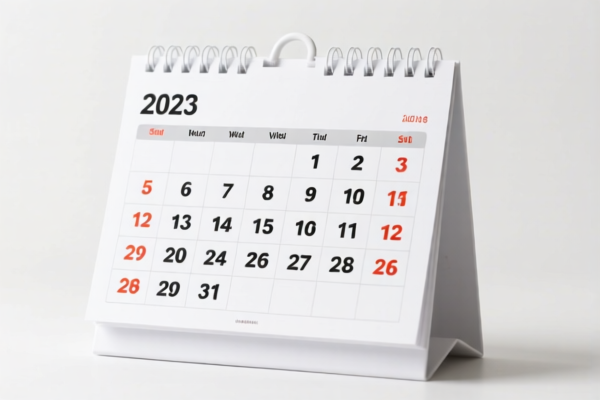


AI Analysis
🗓️ Schedule Book (Diaries, Planners & Address Books)
🌐 HS Code Reference & Clearance Guide | 2026 Latest Tariff Analysis | Professional Customs Strategy
📌 I. Product Definition & Classification: What Exactly is a "Schedule Book"?
A "Schedule Book" in international trade typically refers to paper-based stationery items used for recording appointments, tasks, or contacts. Depending on its specific structure and primary function, it falls into one of two main categories:
- Diary/Planner Type (Diary Books & Address Books): Items specifically designed for daily recording of events, meetings, or contact details. These are treated as "writing or stationery goods."
- Printed Matter Type (Other Printed Items): Items that are primarily informational or record-keeping documents printed on paper, such as loose-leaf schedule sheets, detailed logbooks, or non-bound printed records.
⚠️ Key Distinction Point:
- If the item is a bound book with specific layouts for dates/contacts →归入 4820.10 (Diary books and address books).
- If the item is a loose-leaf sheet or a general printed record without a specific diary structure →归入 4911.91 (Other printed matter).
📦 II. HS Code Classification Details (2026 Latest Tariff Authority Comparison)
Based on the provided data, here are the three specific HS Codes and their corresponding tax treatments:
| HS Code | Product Description | Application Scenario | Tax Rate (Total) | Tax Breakdown |
|---|---|---|---|---|
4820.10.20.10 |
Diary Books & Address Books (Specific Record-Keeping) | Bound diaries, planners, address books with structured layouts for daily use. | 35.0% | Base: 0% Added: 25% Sec 301/122: 10% |
4820.10.20.60 |
Other Diary/Notebook Items (Paper-Based) | Unspecified paper-based notebooks or schedule books not fitting other specific subheadings. | 35.0% | Base: 0% Added: 25% Sec 301/122: 10% |
4911.91.40.40 |
Other Printed Matter (Paper Printing) | Loose schedule sheets, printed logbooks, or general printed records not classified as binding goods. | 17.5% | Base: 0% Added: 7.5% Sec 301/122: 10% |
🔍 Important Reminder:
- Structure Matters: If the product is a bound book intended for daily use (4820.10), it faces a higher total tariff (35%).
- Form Factor Matters: If it is a simple printed sheet or unbound record (4911.91), it enjoys a lower total tariff (17.5%).
- Both categories are subject to US trade restrictions on Chinese goods (Section 301/122), hence the mandatory 10% surcharge.
💰 III. 2026 Latest Tariff Rate Details (Including Surcharges & Policy Add-ons)
✅ Applicable Country: United States (US)
✅ Origin: China (CN)
✅ Effective Time: Current rates apply (Based on 122 Clause/Section 301 additions)
🎯 1. 4820.10.20.10 & 4820.10.20.60 —— Diary/Planner Category
| Item | Content |
|---|---|
| Base Duty Rate | 0% (ad valorem) |
| Section 301/122 Surcharge | +25.0% (Added Duty for Chinese Origin) |
| Additional Clause Tax | +10.0% (122 Clause / Specific Trade Action) |
| Total Tax Rate | 35.0% |
| Tax Calculation | CIF Value × 35% |
| De Minimis Exemption | ❌ Not Eligible (High tariff rates typically exclude small parcel exemptions from certain enforcement actions, though de minimis status depends on specific CBP enforcement at the time. Note: Data implies full taxation.) |
| Legal Basis Path | HTS:4820.10.20 → Section 301: 25% → Clause 122: 10% |
📌 Explanation:
- These codes fall under "Diary Books and Address Books."
- They are subject to the maximum 25% Section 301 tariff plus the specific 10% additional duty, totaling 35%.
- This is a high-cost category for importers. Misclassifying these as simple printed matter to avoid the 25% rate is a major compliance risk.
🎯 2. 4911.91.40.40 —— Printed Matter Category
| Item | Content |
|---|---|
| Base Duty Rate | 0% (ad valorem) |
| Section 301/122 Surcharge | +7.5% (Reduced/Specific Added Duty for Printed Matter) |
| Additional Clause Tax | +10.0% (122 Clause / Specific Trade Action) |
| Total Tax Rate | 17.5% |
| Tax Calculation | CIF Value × 17.5% |
| De Minimis Exemption | ❌ Not Eligible |
| Legal Basis Path | HTS:4911.91.40 → Section 301: 7.5% → Clause 122: 10% |
📌 Explanation:
- This code applies to "Other Printed Matter."
- The added duty is significantly lower at 7.5% compared to the diary category.
- However, the 10% 122 Clause tax still applies.
- Total 17.5% is still substantial, but nearly half of the diary classification cost.
🛠️ IV. Customs Clearance Practical Advice (Actionable Pitfall Guide)
✅ 1. Document Checklist (Required for Clear Classification)
| Document | Required | Description |
|---|---|---|
| ✅ Product Photo | ✔️ | Must show if the item is bound (spine/cover) or loose/unbound. Bound = 4820; Unbound/Loose = 4911. |
| ✅ Product Specification | ✔️ | Details on layout: Is it a "Daily Planner" (dates/contacts) or a "General Log/Record"? |
| ✅ Commercial Invoice | ✔️ | Clearly state "Schedule Book" or "Diary." Avoid vague terms like "Paper Products" if bound. |
| ✅ Material Description | ✔️ | Confirm paper content. All listed items are paper-based. |
✅ 2. Declaration Strategy (Key Mnemonics)
🔥 “Bound Diary = 35%, Loose Print = 17.5%. Don’t Mix Up!”
| Scenario | Correct HS Code | Consequence of Error |
|---|---|---|
| Bound Diary/Planner | 4820.10.20.10 or 4820.10.20.60 |
If declared as 4911, customs may assess 35% + penalties for under-declaring duty. |
| Loose Schedule Sheets | 4911.91.40.40 |
If declared as 4820, you pay 35% unnecessarily. |
| Combo Pack (Bound + Loose) | Split Declaration or Primary Function Rule | Mixing them in one line item with the wrong code causes delays and audits. |
✅ 3. Special Case Handling
| Situation | Advice |
|---|---|
| Customized Corporate Diaries | Still 4820. Provide samples to prove it is a "Diary" (structured for daily use). |
| Digital/Planner Accessories | If it includes pens/holders, the Essential Character test applies. Usually, the book dominates. |
| E-Book/Planner (Non-Paper) | Not Covered in Data. Paper-only items are listed. Digital planners fall under different chapters (e.g., 8523 or 9900). |
| Small Gifts (< $800) | Check current De Minimis rules. While 4911 might have lower rates, the 10% Clause often negates savings for de minimis shipments if enforced. |
🌍 V. Global Market Comparison (2026 Latest)
| Market | Recommended HS Code | Total Tax (China Origin) | Notes |
|---|---|---|---|
| 🇺🇸 USA | 4820.10.20.x or 4911.91.40 |
35% or 17.5% | High tariffs due to Section 301 & 122 Clause. |
| 🇨🇳 China | 4820.10.20 or 4911.91 |
~0% - 5% | Domestic production is low-cost. |
| 🇪🇺 EU | 4820.10.20 or 4911.91 |
0% - 6% | No Section 301 equivalent. |
| 🇬🇧 UK | 4820.10.20 or 4911.91 |
0% - 6% | Post-Brexit tariffs apply, but no US-style surcharges. |
📌 Conclusion:
- The US market is uniquely expensive for Chinese stationery due to political tariffs (301/122).
- $4820$ (Diaries) is twice as expensive as $4911$ (Printed Matter).
- Importers should carefully evaluate if their product structure allows for $4911$ classification (e.g., selling loose schedule pads instead of bound books) to save 17.5% on duty.
📌 VI. Common Mistakes & Pitfalls (Lessons Learned)
❌ Mistake 1: Declaring a Bound Planner as "Loose Paper" (4911) to save tax.
👉 Result: Customs inspection reveals the binding. Back taxes (17.5%) + Penalties + Audit.
❌ Mistake 2: Using "Stationery" as a generic description.
👉 Result: Customs has discretion to classify it as the highest applicable duty rate. Always specify "Diary" or "Printed Record."
❌ Mistake 3: Ignoring the 122 Clause (10%).
👉 Result: Even if you get a lower base rate (like 7.5%), the 10% is mandatory. Plan for 17.5% minimum.
✅ Correct Practice:
"Diary Book, Bound, Paper, for Daily Scheduling, Model X, Origin China" → Use
4820.10.20.10
"Schedule Log Sheets, Loose, Printed, Paper, Unbound" → Use4911.91.40.40
🎯 VII. Conclusion: Precision Saves Money!
🎯 Remember the Mnemonic:
🔹 "Bound Diary = 35%, Loose Print = 17.5%. 10% Clause Always Adds!"
🔹 "Check the Binding! It determines your cost!"
📌 Pro Tip:
If you are designing a new product, consider offering Loose-Leaf Schedule Pads (4911.91.40.40) instead of bound books (4820.10) for the US market to reduce duty costs by 50%. However, ensure the product marketing clearly supports it as a "printed record" rather than a "diary" to avoid misclassification.
📣 Immediate Action:
📞 Consult a customs broker to confirm if your specific "Schedule Book" structure qualifies for 4911.91.40.40.
🚀 Optimize your HS Code, Slash your duty, Boost your margin!
✨ Professional Clearance, Starts with Accurate Classification!
💼 Every percentage point counts!
Customer Reviews
About HS Code Classification
The Harmonized System (HS) is an internationally standardized nomenclature developed by the World Customs Organization (WCO) to classify traded products. Over 200 countries use the HS system as the basis for customs tariffs, trade statistics, and import/export regulations.
Each HS code follows a hierarchical structure:
- Chapter (2 digits) — Broad category of goods (e.g., Chapter 84: Machinery and Mechanical Appliances)
- Heading (4 digits) — More specific grouping within the chapter
- Subheading (6 digits) — Internationally standardized breakdown, used by all WCO member countries
- National subdivisions (8-10 digits) — Country-specific extensions for further classification, such as US HTSUS 10-digit codes
Correct HS code classification is essential for smooth customs clearance, accurate duty payment, and compliance with trade regulations. Misclassification can lead to customs delays, overpayment of duties, or penalties.
When importing from CN to US, the applicable tariff rates may include:
- Most-Favored-Nation (MFN) rate — The standard duty rate applied to WTO members
- General rate — Applied to countries without trade agreements
- Trade remedy duties — Additional tariffs such as Section 301 (anti-dumping), Section 232 (national security), or countervailing duties
The information provided on this page is for reference purposes only. For official classification, please consult with your local customs authority or a licensed customs broker.