School bag with outer layer of plastic or textile material
CN → US| HS Code | Tariff Rate | Origin | Destination | Doc |
|---|---|---|---|---|
| 6305330080 | 25.9% | CN | US | Official Doc |
| 6305390000 | 25.9% | CN | US | Official Doc |
| 4202923120 | 52.6% | CN | US | Official Doc |
Product Images
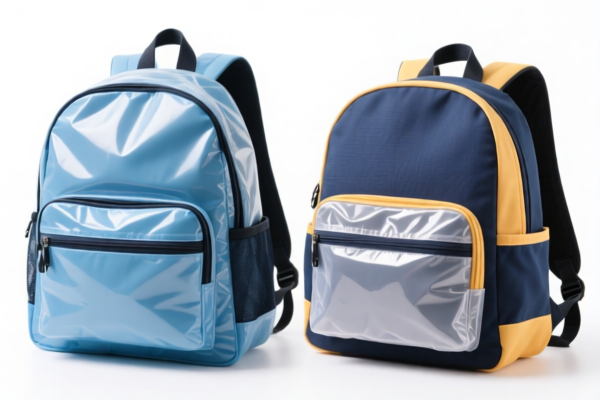
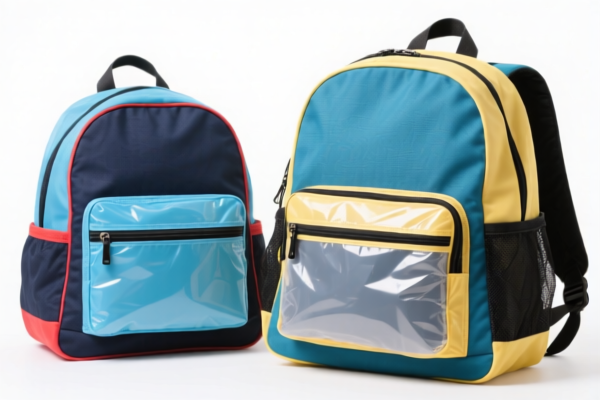
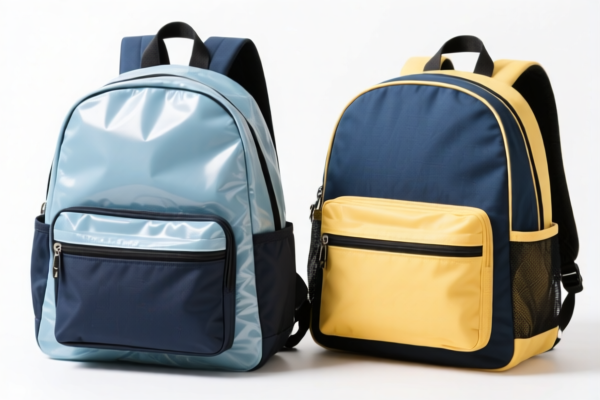
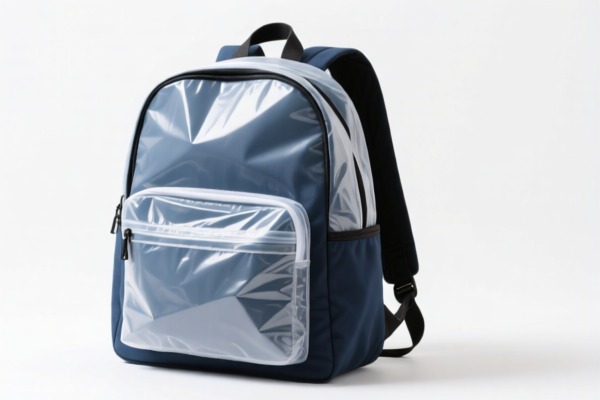
AI Analysis
🎒 School Bags with Outer Layer of Plastic or Textile Material
🌐 HS Code Reference & Customs Clearance Guide | 2026 Latest Tariff Analysis | Professional Clearance Strategy
📌 I. Product Definition & Classification: Do You Really Understand "School Bags"?
A school bag with an outer layer of plastic or textile material is a versatile accessory used for carrying books, laptops, and personal items. In international trade, classification depends heavily on the material composition, construction method, and primary function. While commonly referred to as "backpacks," their HS code classification can vary significantly based on specific structural and material details.
⚠️ Key Distinction Point:
- If the bag is primarily made of plastic sheets or textile materials and designed for packaging goods (even if repurposed), it may fall under Chapter 63 (Other Made Up Articles).
- If the bag is specifically designed as a personal carrier with structured compartments, straps, and a shape typical of a backpack, it may fall under Chapter 42 (Articles of Leather; Saddle Harness).
- Critical Note: The term "backpack" in the provided data appears in summaries, but the HS codes suggest a nuanced interpretation between "bags for packaging" (6305) and "personal luggage/backpacks" (4202).
📦 II. HS Code Classification Details (2026 Latest Tariff Authority Comparison)
| HS Code | Product Description | Application Scenario | Material/Structure Requirement |
|---|---|---|---|
6305.33.00.80 |
Plastic or textile outer layer bags; material: artificial textile materials or sacks; use: bags for packaging goods | Generic bags, reusable shopping bags, bulk packaging bags | ✅ Artificial textile/sack material |
6305.39.00.00 |
Plastic or textile outer layer bags; material covers artificial textile materials; meets attributes of bags for packaging | Similar to above but broader material coverage | ✅ Artificial textile material |
4202.92.31.20 |
Plastic or textile outer layer bags; material consistent with plastic or textile sheeting requirements; shape: backpack | Personal use backpacks, school bags with structured design | ✅ Plastic/textile sheeting |
🔍 Key Reminder:
- Chapter 63 (6305): Focuses on bags for packaging or general use, often less structured.
- Chapter 42 (4202): Focuses on personal luggage (backpacks, handbags), often more structured with specific fittings (zippers, straps, compartments).
- Misclassification Risk: Declaring a structured school backpack as a "packaging bag" (6305) can lead to underpayment of tariffs and potential penalties.
💰 III. 2026 Latest Tariff Rate Breakdown (Including Additional Taxes & Policy Surcharge)
✅ Applicable Country: United States (US)
✅ Origin: China (CN)
✅ Effective Date: Ongoing (Subject to current trade policies)
🎯 1. 6305.33.00.80 & 6305.39.00.00 — Bags for Packaging (Artificial Textile/Plastic)
| Item | Content |
|---|---|
| Base Tariff | 8.4% |
| Section 301 Surcharge | 7.5% |
| Section 122 Surcharge | 10% |
| Total Tariff Rate | 25.9% |
| Tax Calculation | CIF Value × 25.9% |
| De Minimis Exemption | ❌ Not Applicable (Section 301/122 duties apply) |
| Legal Basis Path | USITC:6305.33.00.80 → Section 301: 7.5% → Section 122: 10% |
📌 Explanation:
- These codes are classified under packaging bags, which carry a lower base tariff but are still subject to significant Section 301 and Section 122 surcharges.
- Total burden: 25.9%. This is moderate compared to other categories but still substantial.
🎯 2. 4202.92.31.20 — Backpacks (Plastic/Textile Material)
| Item | Content |
|---|---|
| Base Tariff | 17.6% |
| Section 301 Surcharge | 25.0% |
| Section 122 Surcharge | 10% |
| Total Tariff Rate | 52.6% |
| Tax Calculation | CIF Value × 52.6% |
| De Minimis Exemption | ❌ Not Applicable |
| Legal Basis Path | USITC:4202.92.31.20 → Section 301: 25.0% → Section 122: 10% |
📌 Warning:
- This code carries a significantly higher total tariff (52.6%).
- The base tariff (17.6%) is more than double that of the 6305 codes, and the Section 301 surcharge (25.0%) is more than triple.
- Misclassifying a backpack as a packaging bag can save ~26.7% in taxes but is illegal and risky.
🛠️ IV. Customs Clearance Practical Advice (Avoid Pitfalls)
✅ 1. Documentation Checklist (Mandatory)
| Document | Required | Description |
|---|---|---|
| ✅ Product Specifications | ✔️ | Detail materials (outer layer, lining, zippers), dimensions, weight |
| ✅ Structure Diagram | ✔️ | Show compartments, straps, and construction to prove "backpack" nature |
| ✅ Photos | ✔️ | Front, back, inside, and label views |
| ✅ Commercial Invoice | ✔️ | Clearly state: "School Bag/Backpack, Outer Material: Polyester/Plastic" |
| ✅ Packing List | ✔️ | Confirm items are not packaged in bulk packaging bags |
| ✅ Declaration Statement | ✔️ | Confirm compliance with Section 301 & 122 |
✅ 2. Declaration Tips (Key Formula)
🔥 "Structural Shape Defines Chapter, Material Defines Subheading, Origin Triggers Surcharge!"
| Scenario | Correct Declaration | Error Consequence |
|---|---|---|
| Structured backpack with straps/compartments | 4202.92.31.20 (52.6%) |
Misdeclare as 6305 → Penalty + Back Taxes |
| Generic tote/bag without specific backpack shape | 6305.33.00.80 or 6305.39.00.00 (25.9%) |
Overpay by declaring as 4202 → Unnecessary Cost |
| Plastic-only bag (no textile) | Verify if 6305 or other plastic bag code |
Misclassify → Delays |
✅ 3. Special Cases
| Scenario | Handling Advice |
|---|---|
| School Bags with Metal Fittings | Still classified under 4202 if primary function is personal carry |
| Foldable/Empty Bags | If sold empty, may still be 6305 if intended for reuse as packaging |
| OEM/Custom Designs | Provide design specs to prove "backpack" structure for 4202 classification |
🌍 V. Global Market Comparison (2026 Latest)
| Country/Region | Recommended HS Code | Tariff (China Origin) | Certification | Notes |
|---|---|---|---|---|
| 🇺🇸 USA | 4202.92.31.20 or 6305.33.00.80 |
52.6% or 25.9% | None specific | High Section 301/122 impact |
| 🇨🇳 China | 4202.92.31.20 or 6305.33.00.80 |
~10-15% | None | Lower base tariffs |
| 🇪🇺 EU | 4202.92.31.20 or 6305.33.00.80 |
4-6% | CE (if applicable) | No Section 301/122 |
| 🇦🇺 Australia | 4202.92.31.20 or 6305.33.00.80 |
5% | ACMA (if electronics) | No major surcharges |
📌 Conclusion:
- USA is the most challenging market due to Section 301 and Section 122 surcharges.
- Correct classification is critical: A $100 backpack declared as a packaging bag saves $26.70 but risks severe penalties.
- Consider supply chain diversification: If targeting the US, consider origin countries not subject to these surcharges.
📌 VI. Common Errors & Pitfalls (Lessons Learned)
❌ Error 1: Declaring a structured school backpack as a "packaging bag" (6305)
👉 Consequence: 52.6% vs 25.9%. If caught, 100% duty retrocharge + penalties.
❌ Error 2: Ignoring Section 122 and 301 surcharges in cost calculations
👉 Consequence: Profit margin erosion. Always calculate CIF × (Base + 301 + 122).
❌ Error 3: Providing vague descriptions like "bag"
👉 Consequence: Customs seizure or reclassification by CBP, leading to delays.
✅ Correct Practice:
"School Backpack, Outer Material: 600D Polyester, Lining: Polyester, Zippers: Metal, Straps: Padded, Model XYZ"
🎯 VII. Conclusion: Professional Classification, Risk Mitigation, Cost Optimization
🎯 Remember the Formula:
🔹 "Structure = 4202 (52.6%), Packaging = 6305 (25.9%)"
🔹 "Section 301 + 122 = No Exemption for China Origin"
🔹 "Declare Truthfully, Avoid Penalties, Protect Margins"
📌 Tips:
- If your bags are originating from Vietnam, Mexico, or Thailand, they may be exempt from Section 301/122, reducing tariffs significantly.
- Consider pre-classification rulings from CBP for large volumes to ensure compliance.
📣 Immediate Action:
📞 Consult Customs Brokers + Provide Product Specs + Apply for Advance Ruling
🚀 Ensure Smooth Clearance, Maximize Profits, Minimize Risks!
✨ Professional Classification Starts with Precision!
💼 Every Cent Saved is Profit Gained!
Customer Reviews
About HS Code Classification
The Harmonized System (HS) is an internationally standardized nomenclature developed by the World Customs Organization (WCO) to classify traded products. Over 200 countries use the HS system as the basis for customs tariffs, trade statistics, and import/export regulations.
Each HS code follows a hierarchical structure:
- Chapter (2 digits) — Broad category of goods (e.g., Chapter 84: Machinery and Mechanical Appliances)
- Heading (4 digits) — More specific grouping within the chapter
- Subheading (6 digits) — Internationally standardized breakdown, used by all WCO member countries
- National subdivisions (8-10 digits) — Country-specific extensions for further classification, such as US HTSUS 10-digit codes
Correct HS code classification is essential for smooth customs clearance, accurate duty payment, and compliance with trade regulations. Misclassification can lead to customs delays, overpayment of duties, or penalties.
When importing from CN to US, the applicable tariff rates may include:
- Most-Favored-Nation (MFN) rate — The standard duty rate applied to WTO members
- General rate — Applied to countries without trade agreements
- Trade remedy duties — Additional tariffs such as Section 301 (anti-dumping), Section 232 (national security), or countervailing duties
The information provided on this page is for reference purposes only. For official classification, please consult with your local customs authority or a licensed customs broker.