Schoolbag
CN → US| HS Code | Tariff Rate | Origin | Destination | Doc |
|---|---|---|---|---|
| 4202128910 | 52.6% | CN | US | Official Doc |
| 4202923120 | 52.6% | CN | US | Official Doc |
| 4820104000 | 35.0% | CN | US | Official Doc |
| 4202110030 | 43.0% | CN | US | Official Doc |
| 4202128920 | 52.6% | CN | US | Official Doc |
Product Images

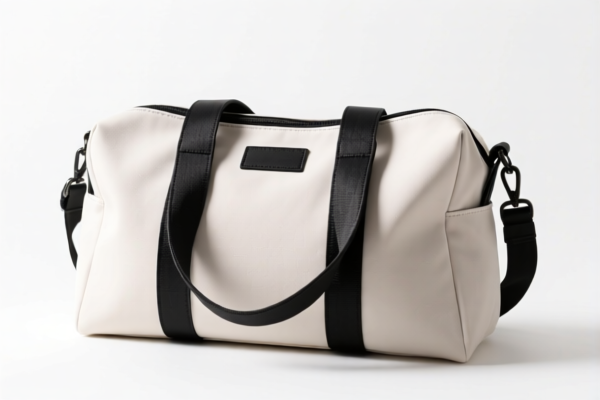
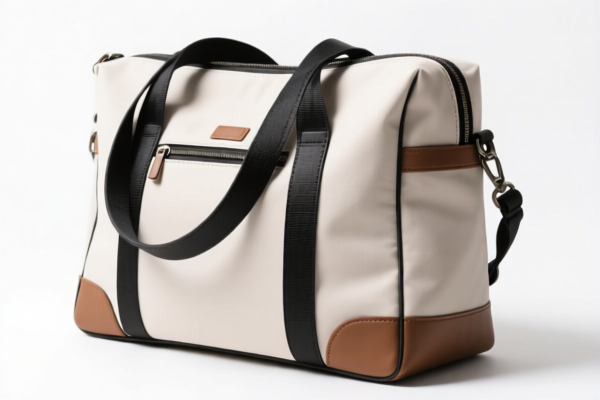

AI Analysis
🎒 Schoolbags (Backpacks & Bags for Carrying Articles)
🌐 HS Code Reference & Customs Clearance Guide | 2026 Latest Tariff Analysis | Professional-Level Strategy 📌 I. Product Definition & Classification: Do You Really Understand "Schoolbags"?
In international trade, "schoolbags" are not a single HS code. They are classified based on surface material and specific shape/use. The most common classification falls under Chapter 42 (Articles of leather or synthetic leather), specifically Heading 42.02 (Trunks, suitcases, handbags, backpacks, etc.).
However, material dictates the code. A "schoolbag" made of paper goes to Chapter 48. One made of leather goes to a different subheading than one made of synthetic fibers or textile materials.
⚠️ Key Distinction Points: - Leather/Synthetic Leather Surface → 4202.11 (e.g., PU leather, genuine leather backpacks) - Textile Material Surface → 4202.12 (e.g., Nylon, Polyester, Canvas backpacks) - Paper/Cardboard → 4820.10 (e.g., Paper folders, cardboard storage bags)
📦 II. HS Code Classification Details (2026 Latest Tariff Authority Match)
Based on the provided data for "Schoolbags," here is the precise mapping of materials to HS Codes and Tax Rates.
| HS Code | Product Summary | Material/Shape Match | Total Tax Rate |
|---|---|---|---|
4202.12.89.10 |
Fabric Schoolbag | Textile Material Surface (General) | 52.6% |
4202.92.31.20 |
Fabric Backpack | Synthetic Fibers Material (Backpack Shape) | 52.6% |
4820.10.40.00 |
Student Bag | Paper/Cardboard Material or Stationery Use | 35.0% |
4202.11.00.30 |
Student Bag | Leather or Synthetic Leather Surface | 43.0% |
4202.12.89.20 |
Student Bag | Textile Material Surface (Specific Sub-use) | 52.6% |
🔍 Critical Note: - Textile bags (Nylon/Polyester) are subject to the highest tariff (52.6%) due to specific duty structures. - Leather bags have a lower base rate (8%), resulting in a lower total tax (43.0%). - Paper bags fall under a completely different chapter (Chapter 48) with a 35.0% total tax.
💰 III. 2026 Latest Tariff Rate Breakdown (Including Surcharges & Policy Add-ons)
✅ Applicable Market: United States (US)
✅ Origin: China (CN)
✅ Effective Time: Ongoing (Includes Section 301 and Section 122 tariffs)
🎯 1. 4202.12.89.10 & 4202.12.89.20 & 4202.92.31.20
(Textile/Synthetic Fiber Schoolbags & Backpacks)
| Item | Content |
|---|---|
| Base Duty Rate | 17.6% (Standard MFN Duty for Textile Bags) |
| Section 301 Surcharge | +25.0% (Added tariff under Trade Act Section 301) |
| Section 122 Surcharge | +10.0% (Additional tariff under Section 122) |
| Total Tax Rate | 52.6% |
| Tax Calculation | CIF Value × 52.6% |
| De Minimis Exemption | ❌ Not Eligible (Deny De Minimis) |
| Legal Basis Path | Section 301 → Section 122 → USITC:4202.12/4202.92 |
📌 Explanation: - "Base Duty 17.6%": This is the standard Most-Favored-Nation (MFN) duty for textile bags. - "Section 301 Surcharge 25%": This is the famous US-China trade war tariff, applicable to most Chinese-made goods. - "Section 122 Surcharge 10%": An additional national security-related tariff imposed on specific categories of imports. - Total 52.6%: This is a very high tax burden. Importers must price accordingly.
🎯 2. 4202.11.00.30
(Leather or Synthetic Leather Student Bags)
| Item | Content |
|---|---|
| Base Duty Rate | 8.0% (Standard MFN Duty for Leather Bags) |
| Section 301 Surcharge | +25.0% |
| Section 122 Surcharge | +10.0% |
| Total Tax Rate | 43.0% |
| Tax Calculation | CIF Value × 43.0% |
| De Minimis Exemption | ❌ Not Eligible |
| Legal Basis Path | Section 301 → Section 122 → USITC:4202.11 |
📌 Comparison: - Compared to textile bags, leather bags save 9.6% in total tax due to the lower base rate (8% vs. 17.6%). - However, both are still subject to the 35% combined surcharge (25% + 10%).
🎯 3. 4820.10.40.00
(Paper/Cardboard Student Bags)
| Item | Content |
|---|---|
| Base Duty Rate | 0.0% (Duty-free for many paper products) |
| Section 301 Surcharge | +25.0% |
| Section 122 Surcharge | +10.0% |
| Total Tax Rate | 35.0% |
| Tax Calculation | CIF Value × 35.0% |
| De Minimis Exemption | ❌ Not Eligible |
| Legal Basis Path | Section 301 → Section 122 → USITC:4820.10 |
📌 Note: - While the base duty is 0%, the surcharges still apply. - This is the lowest total tax rate among the options, making paper-based school supplies more tax-efficient in this specific regulatory environment.
🛠️ IV. Customs Clearance Practical Advice (Pitfall Avoidance Guide)
✅ 1. Preparation Checklist (Must-Have)
| Document | Required | Description |
|---|---|---|
| ✅ Product Spec Sheet | ✔️ | Must clearly state material composition (e.g., 100% Nylon, PU Leather, Paper). |
| ✅ Material Breakdown | ✔️ | Customs will check if "Textile" vs. "Leather" is accurate. Misclassification leads to penalties. |
| ✅ Product Photos | ✔️ | Clear images of the bag, including lining, zippers, and labels. |
| ✅ Commercial Invoice | ✔️ | Must specify: "Schoolbag/Backpack," Material, Country of Origin (China). |
| ✅ Packing List | ✔️ | Weight and dimensions for accurate duty calculation. |
| ✅ Origin Certificate | ✔️ | Proof of Chinese origin to apply correct Section 301/122 tariffs. |
✅ 2. Declaration Tips (Key Mantras)
🔥 "Material Defines Code, Surcharge Adds 35%, Don't Split Shipment!"
| Scenario | Correct Declaration | Wrong Practice |
|---|---|---|
| Nylon Backpack | HS: 4202.12.89.10Name: "Nylon Backpack" |
Misdeclare as "Textile Tote" → Lower base rate but wrong code. |
| PU Leather Bag | HS: 4202.11.00.30Name: "PU Leather Student Bag" |
Misdeclare as "Fabric Bag" → Risk of audit & back taxes. |
| Paper Folder/Bag | HS: 4820.10.40.00Name: "Paper Student Storage Bag" |
Misdeclare as "Leather" → High tax + compliance issue. |
| Mixed Materials | Determine Outer Surface Material | Guessing material → Clearance delay. |
📌 Crucial Rule: - The HS Code is determined by the outer surface material. - If a bag has a textile outer but a leather trim, it is still classified as Textile (
4202.12). - If a bag has a leather outer with textile lining, it is Leather (4202.11).
✅ 3. Special Circumstances
| Situation | Handling Advice |
|---|---|
| OEM Custom Bags | Provide client design specs to prove material type. Avoid vague terms like "Synthetic" without specifying "Polyester" or "Nylon." |
| Bag with Electronics | If it contains a USB port or battery, it may be classified as a "Case for Electronics" (Chapter 85), not Chapter 42. High Risk! |
| Small Quantity (De Minimis) | ❌ Cannot use De Minimis (Section 321). Section 301 and 122 tariffs deny the $800 de minimis exemption for Chinese goods. Even small shipments are taxed. |
| Re-Export | If re-exporting to a non-US country, consider duty drawback programs, but tariffs are usually paid at import. |
🌍 V. Global Market Clearance Comparison (2026)
| Country/Region | Recommended HS Code | Tax Rate (China Origin) | Key Certification | Notes |
|---|---|---|---|---|
| 🇺🇸 USA | 4202.12.89.10 (Textile) |
52.6% | None (but C-TPAT helpful) | Highest Tariff due to 301+122. |
| 🇨🇳 China | 4202.12.89.10 |
17.6% (Base) | CCC (if applicable) | No Section 301/122 surcharges domestically. |
| 🇪🇺 EU | 4202.12.89.10 |
12% (Standard) | CE (if electronics) | No Section 301/122. Lower tax than US. |
| 🇦🇺 Australia | 4202.12.89.10 |
5% | SAA Certification | Lower tax burden. |
| 🇯🇵 Japan | 4202.12.89.10 |
8-10% | PSE (if electronics) | No extra surcharges. |
📌 Conclusion: - USA is the most expensive market for Chinese schoolbags due to Section 301 (+25%) and Section 122 (+10%) tariffs. - EU, Australia, and Japan offer significantly lower tax rates (5-12%), making them more competitive for Chinese exporters.
📌 VI. Common Errors & Pitfall Guide (Blood & Tears Lessons)
❌ Error 1: Declaring a "Textile Bag" as "Leather" to avoid 25% tariff
👉 Consequence: Customs audit → Back taxes + Penalties + Delay.
❌ Error 2: Ignoring Section 122 Tariff
👉 Consequence: Underpayment of 10% → Seizure of goods.
❌ Error 3: Assuming De Minimis ($800) applies
👉 Consequence: Goods held at border, taxed on every item. Chinese goods do not qualify for de minimis under current US trade policies.
❌ Error 4: Misidentifying "Synthetic Leather" as "Textile"
👉 Consequence: Tax discrepancy (43% vs. 52.6%). Small difference, but compliance risk.
✅ Correct Practice:
"Backpack, Nylon Outer, Polyester Lining, Zipper Closure, Model XYZ, Made in China"
🎯 VII. Conclusion: Professional Declaration, Save Costs!
🎯 Remember the Mantra:
🔹 "Textile 52%, Leather 43%, Paper 35%, Surcharge 35% Fixed!"
🔹 "De Minimis is Dead for China! Declare Accurately!"📌 Tip: - If you are shipping to the USA, consider supply chain diversification (e.g., manufacturing in Vietnam or India) to avoid Section 301 tariffs. - For non-US markets, leverage lower tariff rates by adjusting export destinations.
📣 Immediate Action:
📞 Contact a professional customs broker
📄 Prepare detailed material composition sheets
🚀 Accurate classification = Lower Risk + Predictable Costs
✨ Professional Clearance, Start with Accurate Classification! 💼 Every Cent in Tax Matters!
Customer Reviews
About HS Code Classification
The Harmonized System (HS) is an internationally standardized nomenclature developed by the World Customs Organization (WCO) to classify traded products. Over 200 countries use the HS system as the basis for customs tariffs, trade statistics, and import/export regulations.
Each HS code follows a hierarchical structure:
- Chapter (2 digits) — Broad category of goods (e.g., Chapter 84: Machinery and Mechanical Appliances)
- Heading (4 digits) — More specific grouping within the chapter
- Subheading (6 digits) — Internationally standardized breakdown, used by all WCO member countries
- National subdivisions (8-10 digits) — Country-specific extensions for further classification, such as US HTSUS 10-digit codes
Correct HS code classification is essential for smooth customs clearance, accurate duty payment, and compliance with trade regulations. Misclassification can lead to customs delays, overpayment of duties, or penalties.
When importing from CN to US, the applicable tariff rates may include:
- Most-Favored-Nation (MFN) rate — The standard duty rate applied to WTO members
- General rate — Applied to countries without trade agreements
- Trade remedy duties — Additional tariffs such as Section 301 (anti-dumping), Section 232 (national security), or countervailing duties
The information provided on this page is for reference purposes only. For official classification, please consult with your local customs authority or a licensed customs broker.