Scientific Color Film
CN → US| HS Code | Tariff Rate | Origin | Destination | Doc |
|---|---|---|---|---|
| 3702530030 | 38.7% | CN | US | Official Doc |
| 3702540030 | 38.7% | CN | US | Official Doc |
Product Images
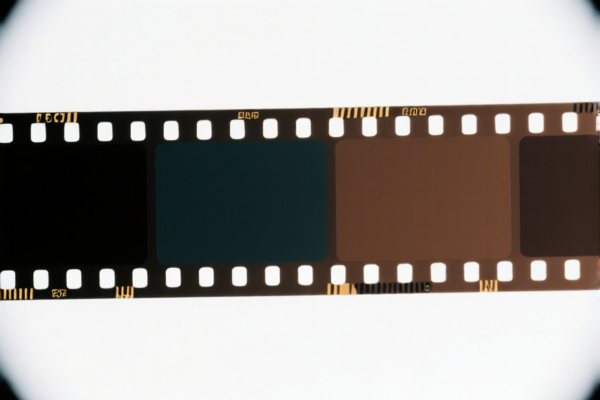
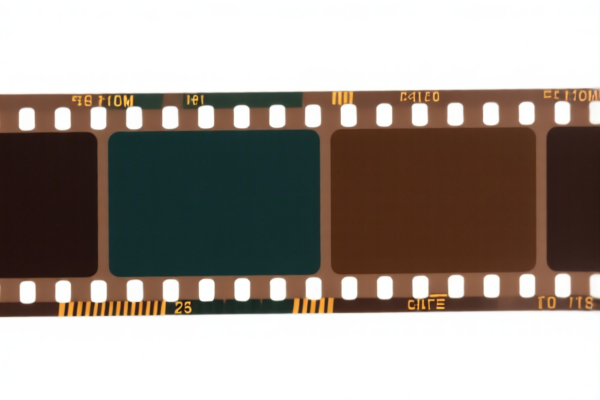
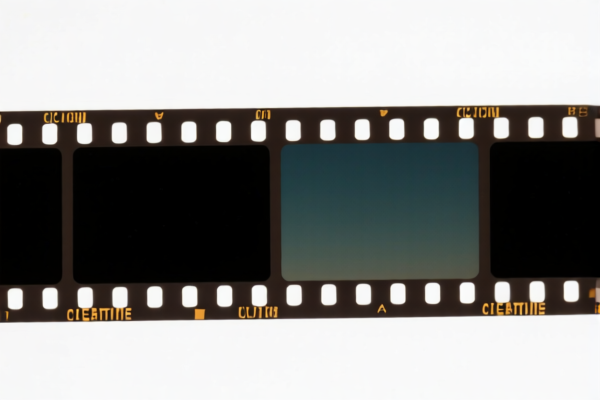

AI Analysis
{"content":[{"type":"text","text":"xml\n3702.54.90.00 | Photographic film, colour, for still photography, other, width >105mm but ≤35mm | General scientific still photography films (not microscopic) | ❌ Not microscopic |\n| 3702.54.10.00 | Photographic film, colour, for still photography, microscopic, width >105mm but ≤35mm | Microscopic scientific films (e.g., for biology labs) | ✅ Microscopic |\n| 3702.62.90.00 | Photographic film, colour, for still photography, other, width ≤105mm | Small-format scientific films not meeting microscopic criteria | ❌ Not microscopic |\n| 3702.62.10.00 | Photographic film, colour, for still photography, microscopic, width ≤105mm | Microscopic scientific films (small format) | ✅ Microscopic |\n| 3706.10.90.00 | Cinematographic film, exposed, unperforated, of a width of 35mm or more | Technical cinematography (e.g., industrial process recording) | ✅ Moving image |\n| 3706.90.80.00 | Other cinematographic film, exposed or unexposed | General technical cinematography | ✅ Moving image |\n| 3004.90.99.80 | Medicaments (including veterinary) consisting of mixed or unmixed products | Only if part of a ready-made diagnostic kit for medical use | ⚠️ Rare, depends on kit |\n\n> 🔍 Critical Reminder: \n> - Microscopic films are a distinct sub-category under 3702 with specific tariff implications. Do not misclassify them as general \"still photography film.\" \n> - Cinematographic films (3706) are treated differently from still films (3702) due to their format and usage (moving images). \n> - Medical vs. Scientific: Pure film for lab use is Chapter 37. If it’s part of a diagnostic device/kits for human/animal diagnosis, it might be Chapter 30 or 9018, but standalone film is almost always Chapter 37.\n\n---\n\n## 💰 III. 2026 Latest Tariff Rate Details (Including Surcharges & Policy Add-ons)\n\n> ✅ Applicable Country: United States (US) \n> ✅ Country of Origin: China (CN) \n> ✅ Effective Time: From November 10, 2025 (including subsequent imports)\n\n### 🎯 1. 3702.54.10.00 / 3702.62.10.00 —— Microscopic Colour Film (Still Photography)\n\n| Item | Content |\n|------|------|\n| Base Rate | 0% (ad valorem) |\n| USITC Surcharge | +25% (from USITC Footnote 9903.88.01) |\n| IEEPA Surcharge | +10% (against Chinese/HK products, from Nov 10, 2025) |\n| Total Rate | 45% |\n| Tax Calculation | CIF Value × 45% |\n| De Minimis Eligible? | ❌ No (deny_de_minimis) |\n| Legal Path | IEEPA:9903.01.25 → IEEPA:9903.01.24 → USITC:3702.54.10.00 → FOOTNOTE:9903.88.01 |\n\n> 📌 Explanation: \n> - The \"25% USITC surcharge\" is part of the Section 301 tariffs. \n> - The \"10% IEEPA surcharge\" is the additional China-specific tariff. \n> - Total 45% is a high tariff. Pre-calculation is essential.\n\n### 🎯 2. 3706.10.90.00 —— Cinematographic Film (Technical/Moving Image)\n\n| Item | Content |\n|------|------|\n| Base Rate | 0% |\n| USITC Surcharge | +25% |\n| IEEPA Surcharge | +10% |\n| Total Rate | 45% |\n| Tax Calculation | CIF × 45% |\n| De Minimis Eligible? | ❌ No |\n| Legal Path | IEEPA:9901.25 → IEEPA:9903.01.24 → USITC:3706.10.90.00 → FOOTNOTE:9903.88.01 |\n\n> 📌 Note: \n> - Cinematographic films also attract the same high combined tariff from China. \n> - \"Unexposed\" vs. \"Exposed\" does not change the base HS code significantly for tariff purposes, but must be declared accurately.\n\n---\n\n## 🛠️ IV. Clearance Practical Advice (Avoid Pitfalls)\n\n### ✅ 1. Required Documentation Checklist (Mandatory)\n\n| Document | Required | Description |\n|----------|----------|-------------|\n| ✅ Product Specification Sheet | ✔️ | Includes film format, sensitivity (ISO), spectral sensitivity, emulsion type |\n| ✅ Intended Use Statement | ✔️ | Explicitly state \"Scientific/Microscopic Use\" to justify 3702.54.10/3702.62.10 |\n| ✅ Product Photos | ✔️ | Show packaging, labels, and film strip |\n| ✅ MSDS (Material Safety Data Sheet) | ✔️ | Required for chemical products; film contains silver halides |\n| ✅ Commercial Invoice | ✔️ | Must specify \"Colour Photographic Film for Scientific Use\" |\n| ✅ Certificate of Origin (CO) | ✔️ | If not from China, can apply for preferential rates |\n| ✅ Packing List | ✔️ | Detail contents, including accessories (developing chemicals if sold together) |\n\n---\n\n### ✅ 2. Declaration Strategy (Key Mantra)\n\n> 🔥 \"Microscopic vs. General, Still vs. Cinematic, Label Clearly, Tariff Accurate!\"\n\n| Scenario | Correct Declaration | Wrong Practice |\n|----------|---------------------|----------------|\n| Film for Microscopes | 3702.54.10.00 or 3702.62.10.00 | Misdeclare as general film 3702.54.90 → Same rate but risk of audit |\n| Technical Cinematography | 3706.10.90.00 | Misdeclare as still film → Incorrect classification |\n| Film + Developer Kit | Declare separately | Combine incorrectly → May trigger Chapter 30 scrutiny |\n| Small Sample Rolls | 3702.62.10.00 | Misdeclare as larger format → Higher duty base |\n\n---\n\n### ✅ 3. Special Case Handling\n\n| Scenario | Handling Advice |\n|----------|-----------------|\n| OEM Scientific Film | Provide client orders + technical specs to prove scientific intent |\n| Exposed Film | Declare as \"Exposed.\" Note: Used chemical film may be hazardous waste |\n| Film for Medical Diagnostics | If part of a kit, consult for 3004/9018 classification; standalone is 37xx |\n| Film for Military/Aerospace | Declare appropriately; may require export control checks (ECCN) |\n\n---\n\n## 🌍 V. Global Market Clearance Comparison (2026 Latest)\n\n| Country/Region | Recommended HS Code | Tariff | Certification | Notes |\n|----------------|---------------------|--------|---------------|-------|\n| 🇺🇸 USA | 3702.54.10.00 / 3706.10.90.00 | 45% (China Origin) | N/A | High surcharges apply |\n| 🇨🇳 China | 3702.54.10.00 | 0% - 5% | N/A | Lower duty for import |\n| 🇪🇺 EU | 3702.54.10.00 | 0% - 6% | CE (if part of device) | No Section 301 equivalent |\n| 🇦🇺 Australia | 3702.54.10.00 | 5% | RCM | No surcharges |\n| 🇯🇵 Japan | 3702.54.10.00 | 0% - 3% | PSE | Low tariff |\n\n> 📌 Conclusion: \n> - USA imposes the highest tariffs on Chinese scientific film due to Section 301 + IEEPA. \n> - EU, Japan, Australia are more favorable for clearance costs. \n> - Consider supply chain diversification if targeting the US market heavily.\n\n---\n\n## 📌 VI. Common Mistakes & Pitfalls (Lessons Learned)\n\n❌ Mistake 1: Declaring \"Scientific Film\" as \"General Photography Film\" \n👉 Consequence: While base rates may be similar, mislabeling can lead to customs audits for fraud.\n\n❌ Mistake 2: Confusing \"Microscopic\" with \"Standard 35mm\" \n👉 Consequence: Incorrect HS code selection may delay clearance or result in reclassification penalties.\n\n❌ Mistake 3: Failing to provide MSDS \n👉 Consequence: Shipment held for hazardous material review (silver halides are chemical products).\n\n❌ Mistake 4: Combining film and developer chemicals in one HS code \n👉 Consequence: Incorrect classification. Film is 37xx; chemicals are 38xx or 30xx. Declare separately.\n\n✅ Correct Practice: \n> \"Unexposed Colour Photographic Film, 35mm Width, For Microscopic Scientific Use, ISO 100, Silver Halide Emulsion, No Chemicals Included\"\n\n---\n\n## 🎯 VII. Conclusion: Professional Declaration, Cost Savings!\n\n🎯 Remember the Mantra: \n> 🔹 \"Microscopic films get specific codes; \n> 🔹 Cinematic films are separate; \n> 🔹 Total 45% for China-US; \n> 🔹 Always provide MSDS and specs!\"\n\n---\n\n📌 Tips: \n- If your film is originated from Vietnam, Mexico, or Malaysia, you may apply for IEEPA exemptions, reducing rates to 0-5%. \n- Consider applying for an Advance Ruling from US Customs (CBP) to confirm classification for large shipments.\n\n---\n\n📣 Action Item: \n> 📞 Contact a professional customs broker + Provide product specs + Apply for HS Code Advance Ruling \n> 🚀 Ensure smooth clearance, cost efficiency, and compliance!\n\n---\n✨ Professional Clearance Starts with Accurate Classification! \n💼 Every cent counts in international trade!\n
Customer Reviews
About HS Code Classification
The Harmonized System (HS) is an internationally standardized nomenclature developed by the World Customs Organization (WCO) to classify traded products. Over 200 countries use the HS system as the basis for customs tariffs, trade statistics, and import/export regulations.
Each HS code follows a hierarchical structure:
- Chapter (2 digits) — Broad category of goods (e.g., Chapter 84: Machinery and Mechanical Appliances)
- Heading (4 digits) — More specific grouping within the chapter
- Subheading (6 digits) — Internationally standardized breakdown, used by all WCO member countries
- National subdivisions (8-10 digits) — Country-specific extensions for further classification, such as US HTSUS 10-digit codes
Correct HS code classification is essential for smooth customs clearance, accurate duty payment, and compliance with trade regulations. Misclassification can lead to customs delays, overpayment of duties, or penalties.
When importing from CN to US, the applicable tariff rates may include:
- Most-Favored-Nation (MFN) rate — The standard duty rate applied to WTO members
- General rate — Applied to countries without trade agreements
- Trade remedy duties — Additional tariffs such as Section 301 (anti-dumping), Section 232 (national security), or countervailing duties
The information provided on this page is for reference purposes only. For official classification, please consult with your local customs authority or a licensed customs broker.