Scientific Drying Plate
CN → US| HS Code | Tariff Rate | Origin | Destination | Doc |
|---|---|---|---|---|
| 3808997000 | 40.0% | CN | US | Official Doc |
| 6814100000 | 37.7% | CN | US | Official Doc |
| 6814900000 | 37.6% | CN | US | Official Doc |
| 3926909910 | 22.8% | CN | US | Official Doc |
| 3808999501 | 40.0% | CN | US | Official Doc |
Product Images
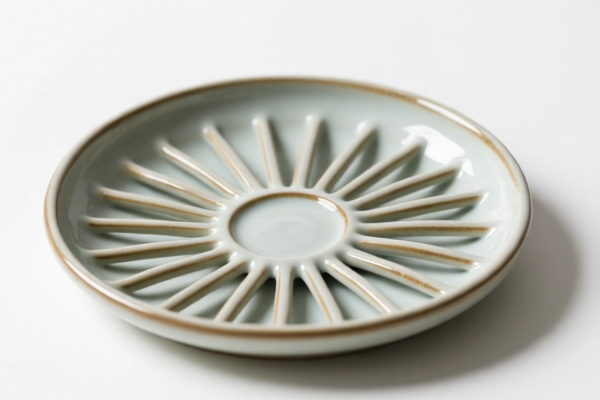
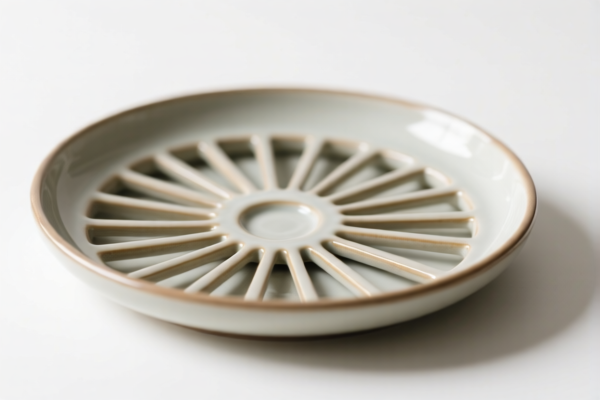


AI Analysis
🌬️ Scientific Drying Plate (Laboratory & Industrial Desiccant Board)
🌐 HS Code Reference & Customs Clearance Guide | 2026 Tariff Analysis | Professional Compliance Strategy
📌 I. Product Definition & Classification: What is a "Drying Plate"?
A "Scientific Drying Plate" is a specialized tool used in laboratory, industrial, or chemical processing environments to remove moisture from air, equipment, or specific chemical environments. Its classification depends heavily on material composition and functional intent.
Key Classification Dilemma:
Is it a Chemical Agent/Preparation (Chapter 38) or a Physical Product/Manufactured Good (Chapter 68 or 39)?
⚠️ Critical Distinction:
- If the product is primarily a chemical formulation (e.g., a board infused with silica gel or calcium chloride) used for its chemical adsorption properties, it leans toward Chapter 38.
- If the product is a physical substrate (e.g., a mica sheet, plastic panel, or ceramic tile) used as a structural support or platform that happens to be dry, it leans toward Chapter 68 (Mica/Ceramics) or Chapter 39 (Plastics).
📦 II. HS Code Classification Details (2026 Tariff Reference)
Based on the provided data, here are the five possible classifications, ranked by logical inference and tax efficiency.
| HS Code | Product Description | Inference Logic | Total Tax Rate |
|---|---|---|---|
3808.99.70.00 |
Chemical Preparations for Drying/Preservation | Function-First: Classified as a "similar product" or "preparation" for industrial/chemical use. No conflict with inorganic/agro-chemical nature. Bottom-line category for chemical aids. | 40.0% |
6814.10.00.00 |
Mica Plates, Sheets & Strips | Form & Material Match: "Plate" matches "Plates/Sheets". Infers material as Mica (due to heat/drying insulation properties). No material conflict with "coagulated/reconstituted mica". | 37.7% |
6814.90.00.00 |
Other Mica Products | Material Inference: "Drying plate" assumed to be Mica or Silicate-based industrial accessory. Fits "Other Mica Products" for non-specific forms. | 37.6% |
3926.90.99.10 |
Other Plastic Articles | Material Inference: Infers material as Plastic (common in lab ware/industrial plastic kits). Fits "Other Plastic Articles" with no form/use conflict. | 22.8% |
3808.99.95.01 |
Other Chemical Preparations | Functional Inference: Classified as a "dehumidifying/drying preparation". Even if not explicitly material-defined, inferred as a board containing desiccant components. Fits "Preparations/Items". | 40.0% |
🔍 Analysis Note:
- Cheapest Option:3926.90.99.10(Plastic) at 22.8%.
- Most Likely Technical Fit:6814.10.00.00(Mica) at 37.7% if made of heat-resistant material.
- Highest Risk/Function-Based:3808.99.70.00/3808.99.95.01at 40.0% if classified strictly as a chemical aid.
💰 III. 2026 Tariff Breakdown (Detailed Tax Clauses)
✅ Applicable Country: USA (US)
✅ Origin: China (CN)
✅ Effective Date: From November 10, 2025 (for subsequent imports)
🎯 1. 3808.99.70.00 & 3808.99.95.01 —— Chemical Preparations (Highest Tax Bracket)
| Item | Content |
|---|---|
| Base Duty | 5.0% (Standard Ad Valorem) |
| Section 301 Duty | +25.0% (USITC Footnote 9903.88.01 – China Origin) |
| IEEPA Duty | +10.0% (Executive Order on China/China-related products, effective Nov 10, 2025) |
| Total Tax Rate | 40.0% |
| Tax Calculation | CIF Value × 40% |
| De Minimis Eligibility | ❌ No (Denied) |
| Legal Basis Path | Base Tariff → Section 301: 9903.88.01 → IEEPA: 9903.01.25 |
📌 Explanation:
- These codes fall under Chapter 38 (Miscellaneous Chemical Products).
- They attract the highest combined tariff burden (5% base + 35% additional).
- Risk: If customs determines the item is a "chemical agent" rather than a "container/tool," this high rate applies.
🎯 2. 6814.10.00.00 —— Mica Plates (Mid-High Tax Bracket)
| Item | Content |
|---|---|
| Base Duty | 2.7% |
| Section 301 Duty | +25.0% |
| IEEPA Duty | +10.0% |
| Total Tax Rate | 37.7% |
| Tax Calculation | CIF Value × 37.7% |
| De Minimis Eligibility | ❌ No |
| Legal Basis Path | Base Tariff → Section 301: 6814.10.00.00 → IEEPA: 9903.01.24 |
📌 Explanation:
- This classification relies on the material inference that the "drying plate" is made of Mica (a common heat-drying material).
- Lower base rate (2.7%) makes it slightly cheaper than chemical codes, but still subject to heavy trade war tariffs.
🎯 3. 6814.90.00.00 —— Other Mica Products (Mid-High Tax Bracket)
| Item | Content |
|---|---|
| Base Duty | 2.6% |
| Section 301 Duty | +25.0% |
| IEEPA Duty | +10.0% |
| Total Tax Rate | 37.6% |
| Tax Calculation | CIF Value × 37.6% |
| De Minimis Eligibility | ❌ No |
| Legal Basis Path | Base Tariff → Section 301: 6814.90.00.00 → IEEPA: 9903.01.24 |
📌 Explanation:
- A slight variation of the previous code, for "Other" mica forms.
- Savings: 0.1% less than6814.10.00.00. Minimal difference, but legally distinct.
🎯 4. 3926.90.99.10 —— Other Plastic Articles (Lowest Tax Bracket) ✅ Recommended for Cost Optimization
| Item | Content |
|---|---|
| Base Duty | 5.3% |
| Section 301 Duty | +7.5% (Note: Lower Section 301 rate for certain plastic items vs. 25%) |
| IEEPA Duty | +10.0% |
| Total Tax Rate | 22.8% |
| Tax Calculation | CIF Value × 22.8% |
| De Minimis Eligibility | ❌ No (Check specific footnotes, but generally high duty items are excluded) |
| Legal Basis Path | Base Tariff → Section 301: 3926.90.99.10 → IEEPA: 9903.01.24 |
📌 Explanation:
- Why is it cheaper? The Section 301 duty for this specific plastic subheading is often 7.5% instead of 25%, significantly reducing the total burden.
- Condition: This only applies if the drying plate is confirmed to be made of Plastic (e.g., ABS, PP, PE).
- Strategy: If the product is indeed plastic (common in lab trays/stands), this is the most cost-effective classification.
🛠️ IV. Customs Clearance Practical Advice (Risk Mitigation)
✅ 1. Preparation Checklist (Essential Documents)
| Document | Required? | Purpose |
|---|---|---|
| ✅ Product Specification Sheet | ✔️ | Must state Material (Mica? Plastic? Ceramic?). This is the #1 factor for HS Code choice. |
| ✅ Material Composition Report | ✔️ | Third-party lab test confirming % of Mica/Plastic/Chemicals. |
| ✅ Product Photos | ✔️ | Clear images showing the item is a "Plate/Board" and not a liquid/gel. |
| ✅ Intended Use Statement | ✔️ | "Laboratory desiccant support" vs. "Chemical drying agent." |
| ✅ Commercial Invoice | ✔️ | Description must match HS Code logic (e.g., "Plastic Drying Plate" vs. "Mica Drying Plate"). |
✅ 2. Classification Strategy (How to Choose)
| Scenario | Recommended HS Code | Reason |
|---|---|---|
| Made of Plastic | 3926.90.99.10 |
Lowest tax (22.8%). Must prove plastic material. |
| Made of Mica/Ceramic | 6814.10.00.00 |
Middle tax (37.7%). Best for high-heat lab environments. |
| Infused with Chemical | 3808.99.70.00 |
Highest tax (40.0%). Only if the chemical content is the primary feature. |
🔥 Golden Rule:
"Material Defines Code, Function Defines Risk."
- If you claim Plastic, you get 22.8%.
- If you claim Mica, you get 37.7%.
- If you claim Chemical, you get 40.0%.
✅ 3. Common Pitfalls & Solutions
❌ Pitfall 1: Vague Description "Drying Plate"
👉 Risk: Customs will classify based on their assumption (often worst-case scenario).
👉 Solution: Explicitly state material: "Plastic Laboratory Drying Plate" or "Mica Insulation Drying Board."
❌ Pitfall 2: Misclassifying Plastic as Chemical
👉 Risk: Paying 40% instead of 22.8%.
👉 Solution: Provide material safety data sheet (MSDS) showing inert plastic properties.
❌ Pitfall 3: Ignoring IEEPA Tariffs
👉 Risk: Underestimating clearance cost.
👉 Solution: All listed rates include the 10% IEEPA surcharge effective Nov 2025. Budget accordingly.
🌍 V. Global Market Comparison (2026)
| Market | Recommended HS Code | Est. Tax (China Origin) | Notes |
|---|---|---|---|
| 🇺🇸 USA | 3926.90.99.10 (Plastic) |
22.8% | Best for plastic. Mica/Chemical codes hit ~38-40%. |
| 🇪🇺 EU | Varies by Material | ~2-4% | No Section 301/IEEPA tariffs. Check CE/RoHS. |
| 🇨🇳 China | Varies by Material | ~5-10% | No additional trade tariffs. CCC certification may apply. |
| 🇬🇧 UK | Varies by Material | ~2-5% | Post-Brexit tariffs similar to EU. |
📌 Conclusion:
- USA is the most complex market due to layered tariffs (Base + 301 + IEEPA).
- Material transparency is key. If your product is plastic, strive for3926.90.99.10to save ~15% in duties compared to chemical/mica classifications.
📌 VI. Final Recommendations for Importers
- Material Verification: Confirm if your "Drying Plate" is Plastic or Mica. This single fact changes your tax bill by ~15%.
- Pre-Ruling Application: If uncertain, apply for a US Customs Ruling before shipment. It provides legal certainty.
- Labeling: Ensure the commercial invoice clearly states the material (e.g., "Material: Polypropylene") to support the
3926classification. - Cost Calculation: Always budget for the full 22.8%-40% tariff range when calculating landed cost for US imports. Do not assume de minimis (de minimis does not apply to these high-duty categories).
🎯 Remember:
🔹 "Plastic = Cheap (22.8%), Mica = Medium (37.7%), Chemical = Expensive (40%)."
🔹 "Declare Material, Not Just Function."
🔹 "IEEPA 10% is Permanent for China-Related Goods."
📣 Next Steps:
📞 Consult your customs broker with material data sheets.
📦 Mark your invoices with precise material descriptions.
🚀 Optimize your supply chain for cost and compliance!
✨ Professional Clearance, Starting with Precise Classification!
💼 Every Percent Saved is Pure Profit!
Customer Reviews
About HS Code Classification
The Harmonized System (HS) is an internationally standardized nomenclature developed by the World Customs Organization (WCO) to classify traded products. Over 200 countries use the HS system as the basis for customs tariffs, trade statistics, and import/export regulations.
Each HS code follows a hierarchical structure:
- Chapter (2 digits) — Broad category of goods (e.g., Chapter 84: Machinery and Mechanical Appliances)
- Heading (4 digits) — More specific grouping within the chapter
- Subheading (6 digits) — Internationally standardized breakdown, used by all WCO member countries
- National subdivisions (8-10 digits) — Country-specific extensions for further classification, such as US HTSUS 10-digit codes
Correct HS code classification is essential for smooth customs clearance, accurate duty payment, and compliance with trade regulations. Misclassification can lead to customs delays, overpayment of duties, or penalties.
When importing from CN to US, the applicable tariff rates may include:
- Most-Favored-Nation (MFN) rate — The standard duty rate applied to WTO members
- General rate — Applied to countries without trade agreements
- Trade remedy duties — Additional tariffs such as Section 301 (anti-dumping), Section 232 (national security), or countervailing duties
The information provided on this page is for reference purposes only. For official classification, please consult with your local customs authority or a licensed customs broker.