Scissor Lift
CN → US| HS Code | Tariff Rate | Origin | Destination | Doc |
|---|---|---|---|---|
| 8428100000 | 17.5% | CN | US | Official Doc |
| 8428900390 | 35.0% | CN | US | Official Doc |
Product Images
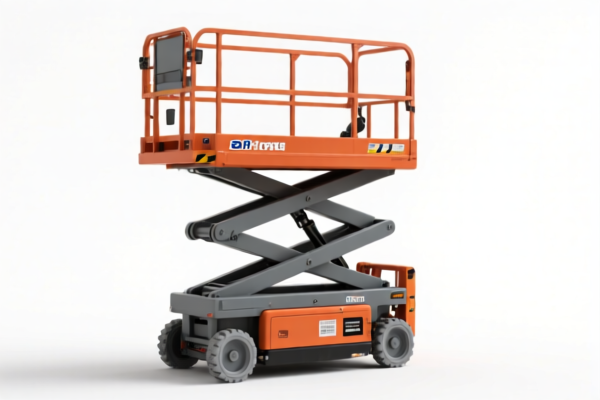
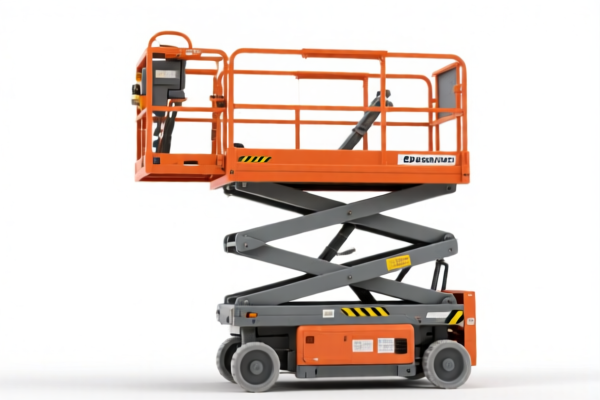
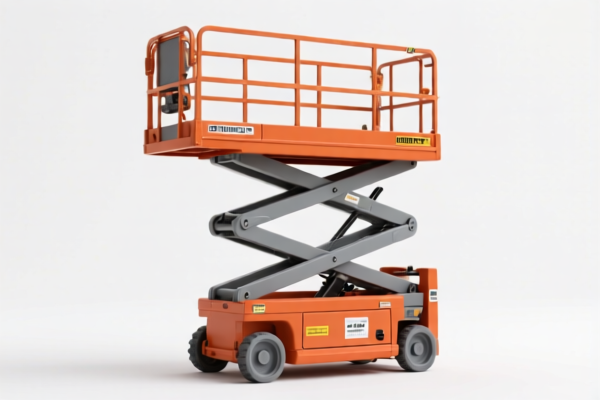
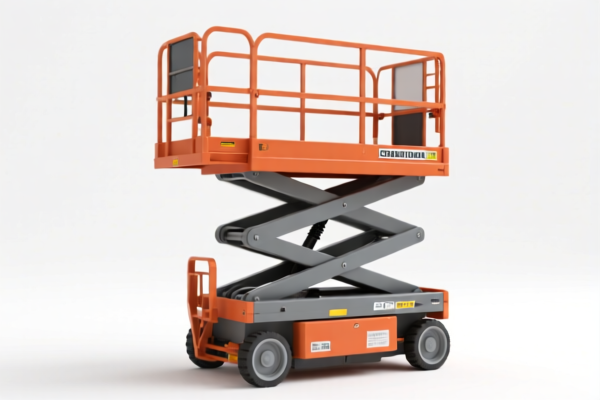
AI Analysis
✂️ Scissor Lifts (Platform Lifting Machinery)
🌐 HS Code Reference & Customs Clearance Guide | 2026 Latest Tariff Analysis | Professional Compliance Strategy
📌 I. Product Definition & Classification: Do You Really Know "Scissor Lifts"?
Scissor lifts are mechanical devices that use crisscrossing supporting braces (in the shape of an X) to lift platforms. They are widely used in construction, maintenance, warehousing, and logistics.
In international trade, classification depends heavily on the specific function and mechanism: 1. Passenger/Freight Elevators: Vertical lifting platforms that move within a fixed guide way (shafts), often requiring mechanical, hydraulic, or electric power. 2. Other Lifting Machinery: Includes skip hoists (for bulk materials in mines/quarries) and other general handling equipment not specified elsewhere.
⚠️ Key Distinction:
- If the device is a fixed vertical lift for passengers or specific freight within a building structure (even if mobile base, if it functions as an elevator substitute in a shaft-like manner) → 8428.10
- If the device is a general handling machine (e.g., skip hoist for ore, or generic lifting tables not defined as elevators) → 8428.90
📦 II. HS Code Classification Details (2026 Latest Tariff Authority Mapping)
Based on the provided <DATA>, here are the two applicable HS Codes for Scissor Lifts depending on their specific operational nature:
| HS Code | Product Description | Applicable Scenario | Key Feature |
|---|---|---|---|
8428.10.00.00 |
Passenger or freight elevators other than continuous action; Skip hoists | Vertical lifts moving in a fixed guide way; Elevators for buildings; Skip hoists for mining/quarrying | Fixed Guide Way or Skip Hoist mechanism |
8428.90.03.90 |
Other lifting, handling, loading or unloading machinery | General industrial scissor lifts, mobile elevating work platforms (MEWPs) not classified as elevators, lifting tables, pallet jacks with lift function | General Handling or Non-Specific Lifting |
🔍 Critical Note:
- Many mobile scissor lifts (used for window cleaning, warehouse picking) are NOT considered "elevators" under 8428.10 because they do not operate in a fixed shaft/guide way permanently installed in a building. They are often classified under 8428.90.
- However, if the scissor lift is a fixed installation serving as a freight elevator in a factory or warehouse, it may fall under 8428.10.
- Skip Hoists (used for lifting ore/grain in vertical shafts) are explicitly listed under 8428.10.
💰 III. 2026 Latest Tariff Rate Details (Including Surcharges & Policy Add-ons)
✅ Applicable Country: United States (US)
✅ Country of Origin: China (CN)
✅ Effective Date: Current tariffs apply as per the provided data
🎯 1. 8428.10.00.00 – Passenger/Freight Elevators or Skip Hoists
| Item | Content |
|---|---|
| Base Tariff | 0.0% (ad valorem) |
| Additional Tariff | +7.5% |
| Total Tax Rate | 7.5% |
| Tax Calculation | CIF Value × 7.5% |
| De Minimis Exemption | ❌ Not Applicable (Generally, machinery items are not eligible for de minimis below $800 unless specifically exempted, but the 7.5% is high enough to warrant formal entry) |
| Legal Basis Path | HTSUS:8428.10.00.00 → USITC Footnote: 7.5% surcharge on Chinese goods |
📌 Explanation:
- The 7.5% additional tariff is applied to specific lifting machinery from China.
- This code applies to fixed elevators and skip hoists.
- Risk: If you misclassify a mobile scissor lift as this, you may underpay duties if the correct code (8428.90) has a higher rate.
🎯 2. 8428.90.03.90 – Other Lifting, Handling Machinery
| Item | Content |
|---|---|
| Base Tariff | 0.0% (ad valorem) |
| Additional Tariff | +25.0% |
| Total Tax Rate | 25.0% |
| Tax Calculation | CIF Value × 25.0% |
| De Minimis Exemption | ❌ Not Applicable (High tariff item, subject to formal entry) |
| Legal Basis Path | HTSUS:8428.90.03.90 → USITC Footnote: 25% surcharge on Chinese goods (Section 301) |
📌 Explanation:
- The 25% additional tariff is a significant cost driver.
- This code covers most general scissor lifts (mobile, platform lifts, lifting tables) that are not fixed elevators or skip hoists.
- Warning: Misclassifying a standard mobile scissor lift as8428.10(7.5%) to save taxes is a high-risk audit trigger if the Customs officer determines it functions as a "lifting machine" rather than an "elevator."
🛠️ IV. Customs Clearance Practical Advice (Real-World Pitfall Prevention)
✅ 1. Documentation Checklist (Mandatory)
| Document | Required | Notes |
|---|---|---|
| ✅ Product Specification Sheet | ✔️ | Must detail: Lifting capacity, max height, power source (electric/diesel), mobility type (fixed/mobile). |
| ✅ Operational Manual | ✔️ | Helps Customs understand if it’s an "elevator" (fixed guide) or "lift" (mobile/scissor action). |
| ✅ Photos (Clear & Detailed) | ✔️ | Show the scissor mechanism, wheels/tracks, control panel, and base structure. |
| ✅ Commercial Invoice | ✔️ | Must accurately describe the item. Use terms like "Mobile Scissor Lift" or "Freight Elevator" precisely. |
| ✅ Packing List | ✔️ | Include dimensions and weight for freight calculation. |
| ✅ Certifications | ✔️ | CE, ANSI/SAIA A92.6 (for US safety standards), UL (if applicable). |
✅ 2. Classification Strategy & Declaration Tips
🔥 “Fixed Shaft = Elevator (7.5%), Mobile Platform = Other (25%)!”
| Scenario | Correct HS Code | Risk of Misclassification |
|---|---|---|
| Fixed Scissor Lift installed in a warehouse shaft for permanent freight use | 8428.10.00.00 |
Low if documented as fixed installation. |
| Mobile Scissor Lift on wheels/tracks for general maintenance | 8428.90.03.90 |
High Risk: If declared as 8428.10, Customs may reassess and charge back 17.5% difference + penalties. |
| Skip Hoist (for mining/conveying bulk materials in vertical shaft) | 8428.10.00.00 |
Low if clearly defined as skip hoist. |
| Electric Pallet Jack with Lift Function | 8428.90.03.90 |
Often misclassified; ensure it’s not declared as a "forklift" (different code) if it doesn’t have forks. |
📌 Key Declaration Tip:
- For Mobile Scissor Lifts, explicitly state: "Mobile Scissor Lift, Self-Propelled, Electric, 4m Max Height, For General Industrial Use."
- Avoid vague terms like "Lifting Machine" alone. Use "Mobile Elevating Work Platform (MEWP)" or "Scissor Lift" to align with 8428.90.
✅ 3. Special Considerations
| Situation | Handling Advice |
|---|---|
| Hydraulic vs. Electric | Both can fall under either code. The mobility and installation type matter more than the power source. |
| Used Scissor Lifts | Must declare condition ("Used"). Ensure it meets US safety standards (ANSI/SAIA) for import. |
| OEM Customization | If built to spec for a specific client, provide the purchase order and design specs to prove intended use. |
| Parts & Accessories | Separate shipping of hydraulic pumps or control boxes may be classified differently (e.g., 8483 for pumps). Do not combine unless they are part of the complete machine. |
🌍 V. Global Market Comparison (2026 Latest)
| Country/Region | Recommended HS Code | Tariff (China Origin) | Certification | Notes |
|---|---|---|---|---|
| 🇺🇸 USA | 8428.90.03.90 (Mobile) |
25.0% | ANSI/SAIA A92.6, UL | High Risk Code: Ensure correct classification to avoid 7.5% vs 25% dispute. |
| 🇺🇸 USA | 8428.10.00.00 (Fixed/Skip) |
7.5% | UL, CSA | Only for fixed installations or skip hoists. |
| 🇪🇺 EU | 8428.30 (Other lifting) |
0-4% | CE Marking, EN 280 | Lower tariffs, stricter safety certs. |
| 🇨🇳 China | 8428.30 or 8428.90 |
0-5% | CCC (if applicable) | No major surcharges. |
| 🇬🇧 UK | 8428.30 |
0% | UKCA | Post-Brexit standards apply. |
📌 Conclusion:
- USA Tariff Differential is Critical: 7.5% vs 25% is a massive cost difference.
- Mobile Scissor Lifts are typically 25%. Do not attempt to classify them as elevators (7.5%) unless they are fixed installations.
- Documentation must prove the "mobile" nature (wheels, detachable base) to justify the 25% code, or "fixed" nature to justify 7.5%.
📌 VI. Common Errors & Pitfalls (Lessons Learned)
❌ Error 1: Classifying Mobile Scissor Lifts as 8428.10 (Elevators) to pay only 7.5%.
👉 Consequence: Customs audit, back payment of 17.5% difference, plus interest and potential penalties.
❌ Error 2: Not providing Safety Certifications (ANSI/SAIA) for mobile lifts.
👉 Consequence: Shipment held at port until compliance is verified, causing delays and storage fees.
❌ Error 3: Using vague description "Lifting Machine" without specifying mobility.
👉 Consequence: Customs may select the code they deem most appropriate, which could be either, leading to uncertainty.
❌ Error 4: Combining Control Boxes with the lift in a way that obscures the main machine.
👉 Consequence: Misdeclaration of value or component value, triggering additional scrutiny.
✅ Correct Approach:
"Electric Mobile Scissor Lift, 1500kg Capacity, Self-Propelled, ANSI Certified, Model XYZ"
→ Declared under 8428.90.03.90 with 25% tariff.
🎯 VII. Conclusion: Precision Classification Saves Money!
🎯 Remember:
🔹 "Mobile = 25%, Fixed/Skip = 7.5%"
🔹 "Do not misclassify mobile lifts as elevators – the 17.5% gap is real!"
🔹 "Documentation is your defense – prove mobility!"
📌 Pro Tip:
- If you are importing high-volume mobile scissor lifts, consider Supply Chain Restructuring (e.g., final assembly in a third country if eligible) or Advance Ruling from US Customs (CBP) to lock in the classification.
- For fixed installations, ensure all installation docs are ready to prove "non-mobile" status to benefit from the 7.5% rate.
📣 Immediate Action:
📞 Consult a licensed Customs Broker to verify if your scissor lift is "Fixed" or "Mobile."
🚀 Accurate classification = Predictable costs + Smooth clearance!
✨ Professional Customs Clearance Starts with Accurate Classification!
💼 Every percentage point counts in your profit margin!
Customer Reviews
About HS Code Classification
The Harmonized System (HS) is an internationally standardized nomenclature developed by the World Customs Organization (WCO) to classify traded products. Over 200 countries use the HS system as the basis for customs tariffs, trade statistics, and import/export regulations.
Each HS code follows a hierarchical structure:
- Chapter (2 digits) — Broad category of goods (e.g., Chapter 84: Machinery and Mechanical Appliances)
- Heading (4 digits) — More specific grouping within the chapter
- Subheading (6 digits) — Internationally standardized breakdown, used by all WCO member countries
- National subdivisions (8-10 digits) — Country-specific extensions for further classification, such as US HTSUS 10-digit codes
Correct HS code classification is essential for smooth customs clearance, accurate duty payment, and compliance with trade regulations. Misclassification can lead to customs delays, overpayment of duties, or penalties.
When importing from CN to US, the applicable tariff rates may include:
- Most-Favored-Nation (MFN) rate — The standard duty rate applied to WTO members
- General rate — Applied to countries without trade agreements
- Trade remedy duties — Additional tariffs such as Section 301 (anti-dumping), Section 232 (national security), or countervailing duties
The information provided on this page is for reference purposes only. For official classification, please consult with your local customs authority or a licensed customs broker.