Scrap Steel
CN → US| HS Code | Tariff Rate | Origin | Destination | Doc |
|---|---|---|---|---|
| 7204410080 | 35.0% | CN | US | Official Doc |
| 7204490080 | 35.0% | CN | US | Official Doc |
Product Images
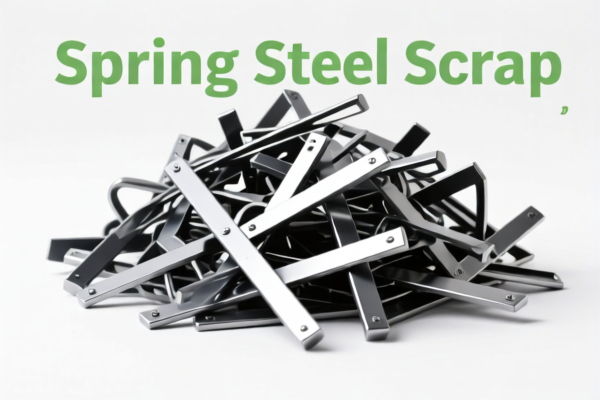
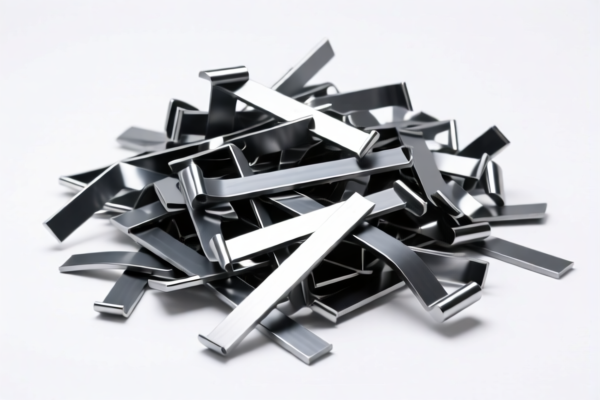

AI Analysis
🏗️ Scrap Steel: High-Tariff Classification & Strategic Customs Guide
🌐 HS Code Reference & Customs Strategy | 2026 Latest Tariff Analysis | Professional Clearance Protocol
📌 I. Product Definition & Classification: What Exactly is "Ferrous Waste"?
"Scrap Steel" in international trade is not a single uniform commodity. Under the Harmonized System (HS), it is strictly categorized based on its physical form, purity, and origin. For U.S. customs purposes, specifically under Chapter 72 (Iron and Steel), waste and scrap are divided into specific sub-headings based on their morphology.
The two most common classifications for general ferrous waste are:
- Turnings, Shavings, Chips, Milling Waste, Sawdust, Filings, Trimmings, and Stampings (whether or not in bundles): These are lightweight, processed byproducts from machining or stamping operations.
- Other Waste and Scrap: This is a residual category for ferrous waste that does not fit into the specific "light" categories above (e.g., heavy structural beams, cut plates, or mixed scrap that isn't turnings/chips).
⚠️ Critical Distinction:
- If your steel waste is in the form of shavings, chips, or sawdust, it falls under 7204.41.
- If your steel waste is heavy scrap, beams, or mixed forms not listed specifically above, it falls under 7204.49.
- Do not misclassify heavy scrap as light turnings to avoid higher scrutiny or incorrect duty calculations.
📦 II. HS Code Classification Details (2026 Latest Tariff Authority)
| HS Code | Product Description | Applicable Scenario | Physical Form |
|---|---|---|---|
7204.41.00.80 |
Ferrous waste and scrap: Other waste and scrap: Turnings, shavings, chips, milling waste, sawdust, filings, trimmings and stampings, whether or not in bundles: Other | Machining byproducts, metal stamping waste, lightweight shredded steel, bundled chips | ✅ Lightweight, particulate, or bundled chips |
7204.49.00.80 |
Ferrous waste and scrap: Other waste and scrap: Other: Other: Other | Heavy structural scrap, cut beams, mixed ferrous waste not classifiable as turnings/chips | ✅ Heavy, solid, structural, or non-specific scrap |
🔍 Key Reminder:
- Both codes fall under the broad category of "Other waste and scrap" within Chapter 72. - The distinction is purely morphological (shape/form). - If you are exporting heavy scrap (e.g., dismantled machinery frames) but label it as "shavings," customs may reclassify it, leading to penalties.
💰 III. 2026 Latest Tariff Rate Breakdown (Including Additional Duties & Policy Surcharges)
✅ Applicable Country: United States (US)
✅ Country of Origin: China (CN)
✅ Effective Date: Current regulations (Subject to 301 Tariff and IEEPA provisions)
🎯 1. 7204.41.00.80 —— Ferrous Waste: Turnings, Shavings, Chips, etc.
| Item | Content |
|---|---|
| Base Duty Rate | 0.0% (Ad valorem) |
| Additional Duty (Section 301 / 25%) | +25.0% |
| Total Tax Rate | 25.0% |
| Tax Calculation | CIF Value × 25% |
| De Minimis Exemption | ❌ Not Applicable (Duty applies to all commercial shipments regardless of value) |
| Legal Basis Path | HTSUS:7204.41.00.80 → USITC Footnote → Section 301 Tariff List |
📌 Explanation:
- The Base Tariff for ferrous scrap is generally 0%, reflecting the US policy to encourage import of raw materials for remelting. - However, due to Section 301 Trade Actions, a 25% additional tariff is applied to specific Chinese-origin steel products and waste. - Total Effective Rate: 25%. This is a high cost for low-value bulk commodities. - No De Minimis: Even small shipments are subject to this 25% duty. There is no $800 threshold exemption for this HS code.
🎯 2. 7204.49.00.80 —— Ferrous Waste: Other (General Scrap)
| Item | Content |
|---|---|
| Base Duty Rate | 0.0% (Ad valorem) |
| Additional Duty (Section 301 / 25%) | +25.0% |
| Total Tax Rate | 25.0% |
| Tax Calculation | CIF Value × 25% |
| De Minimis Exemption | ❌ Not Applicable |
| Legal Basis Path | HTSUS:7204.49.00.80 → USITC Footnote → Section 301 Tariff List |
📌 Note:
- Identical tax treatment to7204.41.00.80. - Both codes are subject to the same 25% additional tariff. - The distinction matters for customs inspection risk and regulatory compliance, not just duty rate.
🛠️ IV. Customs Clearance Practical Advice (Operational Pitfall Guide)
✅ 1. Documentation Checklist (Non-Negotiable)
| Document | Must Provide | Description |
|---|---|---|
| ✅ Commercial Invoice | ✔️ | Must clearly state "Ferrous Scrap" or "Steel Turnings," value, and HS Code. |
| ✅ Packing List | ✔️ | Detail weight, volume, and packaging type (bales, loose, containers). |
| ✅ Certificate of Origin (CO) | ✔️ | Proves Chinese origin to assess correct additional duties. |
| ✅ Product Photos | ✔️ | Clear images showing physical form (chips vs. beams) to support HS classification. |
| ✅ Material Safety Data Sheet (MSDS) | ✔️ | If scrap contains oils, coolants, or hazardous residues, this is critical for environmental compliance. |
| ✅ Bill of Lading | ✔️ | Ensure description matches invoice and packing list exactly. |
✅ 2. Declaration Tips (Key Mnemonics)
🔥 "Form Dictates Code, Origin Dictates Duty!"
| Scenario | Correct Declaration | Wrong Practice |
|---|---|---|
| Steel shavings from CNC machining | 7204.41.00.80 + "Turnings/Shavings" |
Mislabeling as "General Scrap" → May trigger higher scrutiny or misclassification |
| Heavy steel beams from demolition | 7204.49.00.80 + "Other Waste and Scrap" |
Mislabeling as "Turnings" → False Declaration, risk of penalty |
| Mixed scrap with non-ferrous parts | Exclude Non-Ferrous | Including aluminum/copper in steel scrap → HS Code error + duty evasion risk |
| Wet/Oily scrap | Declare Residue Content | Failing to disclose oil → Environmental violation + detention |
✅ 3. Special Case Handling
| Scenario | Handling Advice |
|---|---|
| Baled vs. Loose | Ensure packaging description matches HS definition. "Bundles" are explicitly mentioned in 7204.41. |
| Contaminated Scrap | If scrap contains significant non-steel materials, it may be classified as "Waste" under Chapter 72 or even Chapter 73. Seek pre-ruling. |
| Remelting Scrap Ingots | If already processed into ingots, it may fall under 7204.30, not 7204.4x. Do not confuse scrap with ingots. |
| Value Declaration | Scrap prices fluctuate wildly. Use current market price (e.g., LME or domestic index) to avoid low-value declaration flags. |
🌍 V. Global Market Comparison (2026 Update)
| Country/Region | Recommended HS Code | Duty Rate (China Origin) | Certification/Remarks |
|---|---|---|---|
| 🇺🇸 USA | 7204.41.00.80 / 7204.49.00.80 |
25.0% | High scrutiny for environmental hazards; no de minimis. |
| 🇨🇳 China | 7204.41 / 7204.49 |
0% - 5% | Import restrictions apply; check "Prohibited Import List." |
| 🇪🇺 EU | 7204.41 / 7204.49 |
0% (Standard) | Strict WEEE/EWaste directives; need proof of recycling. |
| 🇮🇳 India | 7204.41 / 7204.49 |
Varies (7.5% - 10%) | BIS certification may be required; anti-dumping checks. |
| 🇻🇳 Vietnam | 7204.41 / 7204.49 |
0% (if ASEAN origin) | Verify origin rules if re-exporting from China. |
📌 Conclusion:
- USA imposes a flat 25% additional tariff on these goods from China. - Environmental compliance is the biggest hidden cost in the US and EU. - Accurate physical description is vital to avoid misclassification penalties.
📌 VI. Common Errors & Pitfall Guide (Lessons Learned)
❌ Error 1: Labeling "Mixed Scrap" as "Turnings" to avoid inspection
👉 Consequence: Customs inspection reveals heavy beams → Penalty + Rejection.
❌ Error 2: Ignoring oil/coating contamination
👉 Consequence: Environmental violation → Seizure of cargo + fines.
❌ Error 3: Assuming "De Minimis" applies
👉 Consequence: Small shipments still incur 25% duty → Unexpected cost.
❌ Error 4: Incorrectly declaring as "Ingots" (7204.30)
👉 Consequence: HS Code mismatch → Delay + Correction fees.
✅ Correct Practice:
"Ferrous Steel Turnings, Clean, Bundled, Origin: China, HS: 7204.41.00.80, Value: $X, Tariff: 25%."
🎯 VII. Conclusion: Precision in Classification Saves Costs!
🎯 Remember:
🔹 "Form Defines Code, Origin Defines Duty!"
🔹 "25% Duty is Real – Plan Your Margin!"
🔹 "Clean Scrap Only – Contamination is a Nightmare!"
📌 Pro Tip:
- If your scrap is not from China, the 25% additional duty may not apply (check FTAs).
- Always photograph the scrap before shipment for dispute resolution.
- Consider pre-clearance services for large volumes to avoid port delays.
📣 Immediate Action:
📞 Consult a Customs Broker + Provide Photos + Verify Origin
🚀 Optimize Logistics, Ensure Compliance, Maximize Profit!
✨ Professional Clearance Starts with Accurate Classification!
💼 Every Percentage Point Counts in Scrap Trading!
Customer Reviews
About HS Code Classification
The Harmonized System (HS) is an internationally standardized nomenclature developed by the World Customs Organization (WCO) to classify traded products. Over 200 countries use the HS system as the basis for customs tariffs, trade statistics, and import/export regulations.
Each HS code follows a hierarchical structure:
- Chapter (2 digits) — Broad category of goods (e.g., Chapter 84: Machinery and Mechanical Appliances)
- Heading (4 digits) — More specific grouping within the chapter
- Subheading (6 digits) — Internationally standardized breakdown, used by all WCO member countries
- National subdivisions (8-10 digits) — Country-specific extensions for further classification, such as US HTSUS 10-digit codes
Correct HS code classification is essential for smooth customs clearance, accurate duty payment, and compliance with trade regulations. Misclassification can lead to customs delays, overpayment of duties, or penalties.
When importing from CN to US, the applicable tariff rates may include:
- Most-Favored-Nation (MFN) rate — The standard duty rate applied to WTO members
- General rate — Applied to countries without trade agreements
- Trade remedy duties — Additional tariffs such as Section 301 (anti-dumping), Section 232 (national security), or countervailing duties
The information provided on this page is for reference purposes only. For official classification, please consult with your local customs authority or a licensed customs broker.