Scrap platinum jewelry and dental alloys
CN → US| HS Code | Tariff Rate | Origin | Destination | Doc |
|---|---|---|---|---|
| 7110190000 | 35.0% | CN | US | Official Doc |
| 7110110050 | 35.0% | CN | US | Official Doc |
| 7113195025 | 23.0% | CN | US | Official Doc |
| 9021218000 | 10.0% | CN | US | Official Doc |
| 9021298000 | 10.0% | CN | US | Official Doc |
Product Images
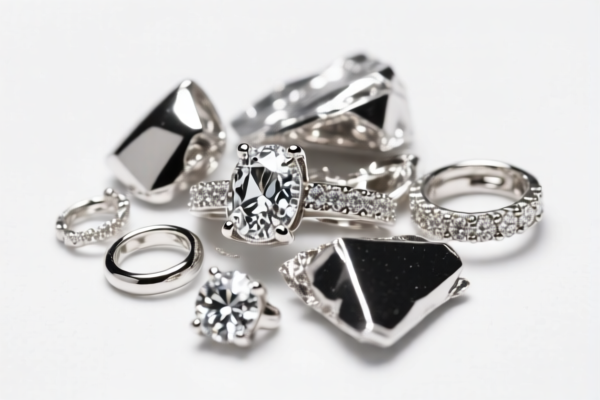
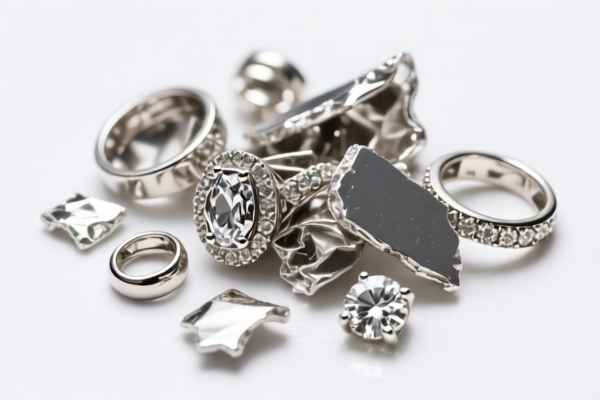
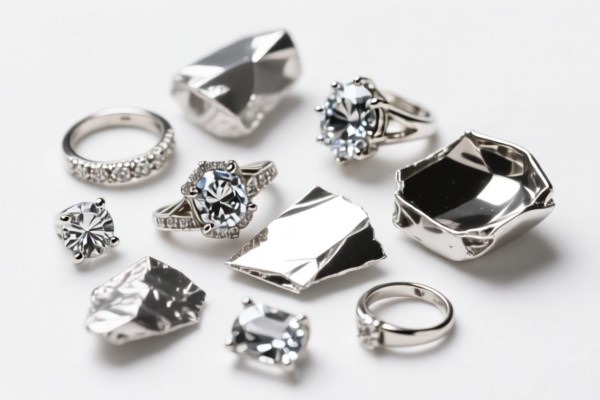
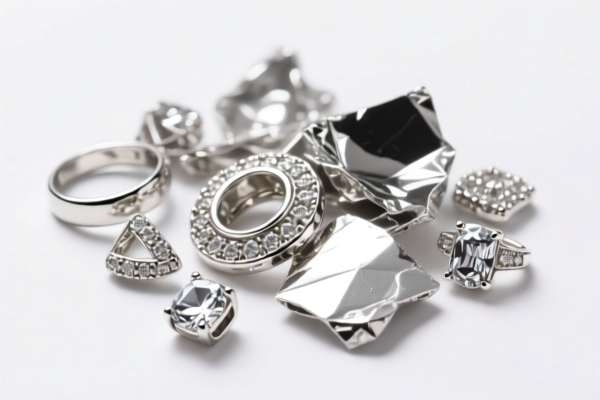
AI Analysis
🏷️ Scrap Platinum Jewelry & Dental Alloys
🌐 HS Code Classification & Customs Clearance Guide | 2026 Updated Tariff Analysis | Expert Compliance Strategy
📌 One-Stop Reference for Precious Metal Scrap Exporters & Importers
📦 一、Product Definition & Classification: What Exactly Is “Scrap Platinum Jewelry” and “Dental Alloys”?
In international trade, scrap platinum jewelry refers to used, broken, or non-functional jewelry items made from platinum or platinum alloys, typically collected for refining and recovery of precious metal content.
Dental alloys refer to metallic materials used in dentistry, such as platinum-based alloys used in artificial teeth, crowns, bridges, and dental prosthetics. These are often discarded after use or during manufacturing, forming a valuable stream of industrial scrap.
⚠️ Key Distinction:
- Platinum jewelry scrap → Contains pure or alloyed platinum, not yet refined.
- Dental alloys scrap → Contains metallic alloys used in medical devices, often including platinum, palladium, gold, or silver.🔍 Critical Insight:
Both fall under non-finished, unrefined, semi-manufactured forms — meaning they are not ready for final use and are destined for reprocessing or smelting.
🧩 二、HS Code Classification Breakdown (2026 Official Tariff Table)
| HS Code | Product Description | Classification Basis | Tax Rate |
|---|---|---|---|
7110.19.00.00 |
Platinum, not containing precious metal in alloy form, in semi-manufactured or mixed form | Matches: Platinum material + alloy form (semi-finished) → fits “other” category | 35.0% |
7110.11.00.50 |
Platinum, not containing precious metal, in unworked or semi-manufactured form | Matches: “Platinum” explicitly stated; alloy = unworked/semi-finished → fits classification | 35.0% |
7113.19.50.25 |
Platinum jewelry, not containing precious metal, in the form of jewelry | Matches: “Platinum” in name + jewelry form + ISO standard platinum | 23.0% |
9021.21.80.00 |
Artificial teeth and parts, made of metal alloys | Matches: “Dental alloy” implies metal material used in artificial teeth → fits “artificial teeth” category | 10.0% |
9021.29.80.00 |
Other artificial teeth and dental accessories, made of metal alloys | Matches: “Dental alloy” → metal alloy → other category | 10.0% |
✅ Important Note:
-7110.19.00.00&7110.11.00.50are platinum-specific, used when the scrap is not yet refined and is in semi-finished or alloy form. -7113.19.50.25applies only if the item is clearly jewelry (e.g., broken rings, earrings, pendants). -9021.21.80.00&9021.29.80.00apply only if the scrap is dental-related and used in artificial teeth or dental parts.
💰 三、2026 Tariff Breakdown: Detailed Tax Clause Analysis (US Focus)
✅ Applicable Country: United States (US)
✅ Origin: China (CN), Vietnam (VN), India (IN), or other non-FTA countries
✅ Effective Date: November 10, 2025 (with retroactive application)
🎯 1. 7110.19.00.00 — Platinum (Alloy, Semi-Manufactured)
| Tax Component | Rate | Legal Basis | Explanation |
|---|---|---|---|
| Base Duty | 0.0% | Ad valorem (standard) | No baseline tariff on platinum scrap |
| Section 301 (USITC) Add-on | +25.0% | USITC Footnote 9903.88.01 | Imposed under Section 301 of the Trade Act of 1974 (China trade war) |
| IEEPA Add-on (122条款) | +10.0% | IEEPA: 9903.01.24 | Under International Emergency Economic Powers Act (IEEPA) — targets Chinese-origin goods |
| Total Tax Rate | 35.0% | — | Applies to all non-FTA platinum scrap |
📌 Legal Pathway:
IEEPA:9903.01.24→USITC:9903.88.01→HS:7110.19.00.00🔍 Why This Applies:
- Scrap platinum is not refined → falls under semi-manufactured. - Contains platinum alloy → not pure metal → not eligible for lower rates.
🎯 2. 7110.11.00.50 — Platinum (Unworked or Semi-Manufactured)
| Tax Component | Rate | Legal Basis | Explanation |
|---|---|---|---|
| Base Duty | 0.0% | Ad valorem | Standard rate |
| Section 301 (USITC) | +25.0% | USITC Footnote 9903.88.01 | Same as above |
| IEEPA (122条款) | +10.0% | IEEPA: 9903.01.24 | Applies to all Chinese-origin metal scrap |
| Total Tax Rate | 35.0% | — | Identical to 7110.19.00.00 |
📌 Why This Applies:
- “Alloy” = unworked or semi-manufactured → fits this subheading. - “Platinum” explicitly stated in product name → clear match.✅ Key Tip:
Use this code if the scrap is not yet shaped into jewelry, e.g., bars, wires, ingots, or chunks.
🎯 3. 7113.19.50.25 — Platinum Jewelry (Jewelry Form)
| Tax Component | Rate | Legal Basis | Explanation |
|---|---|---|---|
| Base Duty | 5.5% | Ad valorem | Standard rate for jewelry |
| Section 301 (USITC) | +7.5% | USITC: 9903.88.01 | Reduced from 25% due to jewelry classification |
| IEEPA (122条款) | +10.0% | IEEPA: 9903.01.24 | Still applies — no exemption for jewelry |
| Total Tax Rate | 23.0% | — | Lower than other platinum codes |
📌 Legal Pathway:
IEEPA:9903.01.24→USITC:9903.88.01→HS:7113.19.50.25🔍 Why This Applies:
- The item is clearly jewelry (e.g., broken necklace, ring, earring). - Contains platinum and meets ISO standard platinum (95%+ purity). - Not refined, but in jewelry form → eligible for lower tariff.✅ Best Strategy:
If your scrap looks like jewelry, use7113.19.50.25— save 12% in taxes.
🎯 4. 9021.21.80.00 — Artificial Teeth & Parts (Metal Alloy)
| Tax Component | Rate | Legal Basis | Explanation |
|---|---|---|---|
| Base Duty | 0.0% | Ad valorem | No base tariff |
| Section 301 (USITC) | 0.0% | Not applied | Medical devices are exempt from 301 tariffs |
| IEEPA (122条款) | +10.0% | IEEPA: 9903.01.24 | Still applies — dental scrap is treated as industrial metal |
| Total Tax Rate | 10.0% | — | Significantly lower than platinum scrap |
📌 Why This Applies:
- “Dental alloy” = metal used in artificial teeth. - Even if the scrap contains platinum, it’s not classified as platinum scrap — it’s medical device scrap. - No Section 301 tariff — exemption granted.✅ Golden Rule:
If the scrap is from dental prosthetics, use9021.21.80.00or9021.29.80.00— only 10% total tax.
🎯 5. 9021.29.80.00 — Other Artificial Teeth & Accessories (Metal Alloy)
| Tax Component | Rate | Legal Basis | Explanation |
|---|---|---|---|
| Base Duty | 0.0% | Ad valorem | No base tariff |
| Section 301 (USITC) | 0.0% | Exempt | Same as above |
| IEEPA (122条款) | +10.0% | IEEPA: 9903.01.24 | Applies to all metal scrap |
| Total Tax Rate | 10.0% | — | Same as 9021.21.80.00 |
📌 Use Case:
- Dental brackets, wires, crowns, or non-structural parts. - Not explicitly “artificial teeth”, but used in dentistry.✅ Pro Tip:
Use this code for non-tooth parts — still only 10% total tax.
🛠️ 四、Customs Clearance Best Practices (Pro Tips to Avoid Penalties)
✅ 1. Required Documentation (Must-Have Checklist)
| Document | Required? | Why It Matters |
|---|---|---|
| ✅ Commercial Invoice | ✔️ | Must state “Scrap Platinum Jewelry” or “Dental Alloy Scrap” |
| ✅ Bill of Lading (B/L) | ✔️ | Proves shipment origin & destination |
| ✅ Certificate of Origin (CO) | ✔️ | Critical for IEEPA/301 eligibility |
| ✅ Product Specification Sheet | ✔️ | Lists material composition, platinum content, form (jewelry/alloy) |
| ✅ Test Report (e.g., XRF) | ✔️ | Confirms platinum content and alloy type |
| ✅ Packing List | ✔️ | Shows quantity, weight, form (e.g., “10 kg broken rings”, “5 kg dental crowns”) |
| ✅ Export License (if needed) | ✔️ | Some countries require precious metal export permits |
✅ 2.申报技巧(Key Rules to Remember)
🔥 “Form, Name, and Origin Decide the Tax!”
| Scenario | Correct HS Code | Wrong Code | Risk |
|---|---|---|---|
| Scrap jewelry (broken ring) | 7113.19.50.25 |
7110.11.00.50 |
+12% tax |
| Dental crowns (used) | 9021.21.80.00 |
7110.19.00.00 |
+25% tax |
| Platinum wire (unworked) | 7110.11.00.50 |
7113.19.50.25 |
+12% tax |
| Mixed scrap (platinum + gold) | Split by form | One code for all | Audit risk |
📌 Golden Rule:
Do not lump all scrap together — classify by form and use.
✅ 3. Special Cases & Mitigation Strategies
| Situation | Recommended Action |
|---|---|
| Mixed scrap (jewelry + dental) | Split into two shipments — use 7113.19.50.25 and 9021.21.80.00 |
| Platinum content < 95% | Use 7110.11.00.50 — not eligible for jewelry rate |
| From non-China origin (e.g., Vietnam) | Apply for IEEPA exemption — 0% IEEPA tax |
| Refined platinum (not scrap) | Use 7106.91.00.00 — 0% tariff (but not applicable here) |
🌍 五、Global Market Comparison (2026)
| Country | Recommended HS Code | Tariff | Certification | Notes |
|---|---|---|---|---|
| 🇺🇸 USA | 7113.19.50.25 / 9021.21.80.00 |
10%–35% | FDA (for dental), ISO | High risk for misclassification |
| 🇨🇳 China | 7110.11.00.50 |
5% | CCC | No 301/IEEPA tax |
| 🇪🇺 EU | 7110.11.00.50 |
0% (if origin EU) | CE | No IEEPA, but strict environmental rules |
| 🇦🇺 Australia | 7113.19.50.25 |
5% | RCM | No 301 tax |
| 🇯🇵 Japan | 7110.11.00.50 |
0% | PSE | No extra tariffs |
📌 Takeaway:
- USA is the highest-risk market due to 301 + IEEPA. - China, EU, Australia, Japan are much more favorable.
📌 六、Common Mistakes & How to Avoid Them (Avoid Costly Penalties!)
❌ Mistake 1: Using 7110.19.00.00 for dental scrap
👉 Result: 35% tax instead of 10% → overpay by 25%
❌ Mistake 2: Using 7113.19.50.25 for dental crowns
👉 Result: 23% tax instead of 10% → overpay by 13%
❌ Mistake 3: Not splitting mixed scrap
👉 Result: One shipment with highest tax rate → penalties & delays
❌ Mistake 4: Using “platinum scrap” as description without form details
👉 Result: Customs cannot verify — delayed clearance or rejection
✅ Correct Approach:
“Scrap Platinum Jewelry – Broken Rings, 1.2 kg, 95% Platinum, ISO Standard, Origin: Vietnam”
→ Use7113.19.50.25→ 23% tax“Used Dental Alloys – Crowns & Bridges, 3.5 kg, Platinum-Based, Origin: India”
→ Use9021.21.80.00→ 10% tax
🎯 七、Final Verdict: Smart Classification = Big Savings!
✅ Use
7113.19.50.25if it’s jewelry → 23% tax
✅ Use9021.21.80.00or9021.29.80.00if it’s dental → 10% tax
✅ Avoid7110.19.00.00or7110.11.00.50unless no jewelry/dental form
✅ Split mixed scrap — never combine!📣 Pro Tip:
Apply for a Pre-Ruling (Advance Ruling) from U.S. Customs before shipment — avoid disputes & delays.
🚀 Action Now: Optimize Your Export Strategy!
📞 Contact a certified customs broker with precious metal expertise
📂 Submit product photos, XRF reports, and origin documents
📊 Get a HS Code pre-approval — avoid 35% tax on dental scrap!
✨ Your Scrap. Your Tax. Your Profit.
💼 Precise Classification = Lower Cost, Faster Clearance, Higher Margin!
📌 Remember:
🔹 Jewelry → 23%
🔹 Dental → 10%
🔹 Platinum alloy (no form) → 35%
🔹 Never mix them!
📣 Ready to Export?
✅ Start with the right HS Code.
✅ Save thousands in taxes.
✅ Ship with confidence.
🔐 Your success starts with accurate classification.
📦 Don’t let the wrong code sink your profits!
Customer Reviews
About HS Code Classification
The Harmonized System (HS) is an internationally standardized nomenclature developed by the World Customs Organization (WCO) to classify traded products. Over 200 countries use the HS system as the basis for customs tariffs, trade statistics, and import/export regulations.
Each HS code follows a hierarchical structure:
- Chapter (2 digits) — Broad category of goods (e.g., Chapter 84: Machinery and Mechanical Appliances)
- Heading (4 digits) — More specific grouping within the chapter
- Subheading (6 digits) — Internationally standardized breakdown, used by all WCO member countries
- National subdivisions (8-10 digits) — Country-specific extensions for further classification, such as US HTSUS 10-digit codes
Correct HS code classification is essential for smooth customs clearance, accurate duty payment, and compliance with trade regulations. Misclassification can lead to customs delays, overpayment of duties, or penalties.
When importing from CN to US, the applicable tariff rates may include:
- Most-Favored-Nation (MFN) rate — The standard duty rate applied to WTO members
- General rate — Applied to countries without trade agreements
- Trade remedy duties — Additional tariffs such as Section 301 (anti-dumping), Section 232 (national security), or countervailing duties
The information provided on this page is for reference purposes only. For official classification, please consult with your local customs authority or a licensed customs broker.