Scrapbook Paper Storage Bag
CN → US| HS Code | Tariff Rate | Origin | Destination | Doc |
|---|---|---|---|---|
| 3923210080 | 38.0% | CN | US | Official Doc |
| 3923290000 | 38.0% | CN | US | Official Doc |
| 4820300040 | 35.0% | CN | US | Official Doc |
| 4820500000 | 35.0% | CN | US | Official Doc |
| 4202999000 | 55.0% | CN | US | Official Doc |
| 4202995000 | 42.8% | CN | US | Official Doc |
Product Images

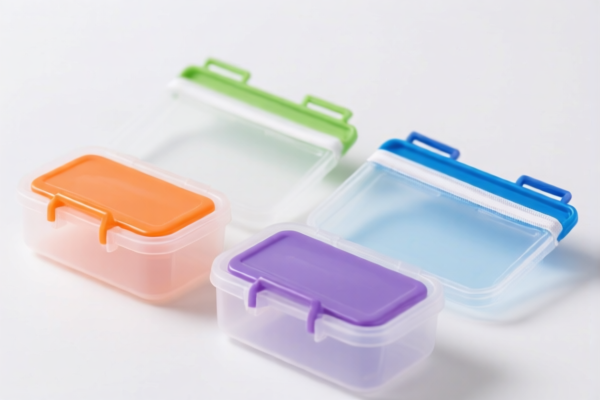

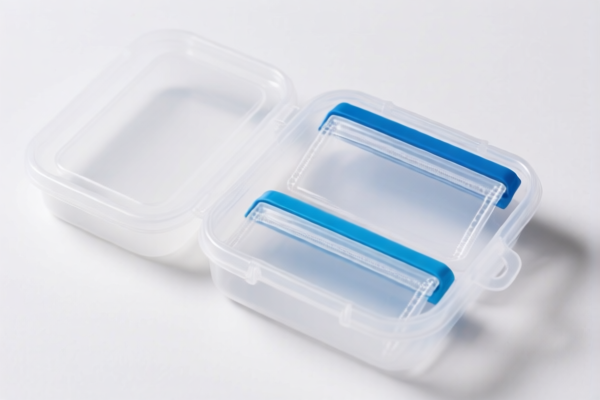
AI Analysis
📔 Scrapbook Paper Storage Bag (Paper Stationery & Plastic Packaging)
🌐 HS Code Reference & Clearance Guide | 2026 Latest Tariff Analysis | Professional Clearance Strategy
📌 I. Product Definition & Classification: What Exactly Is It?
"Scrapbook Paper Storage Bag" is a broad term that can refer to two distinct types of products in international trade, leading to significantly different HS Code classifications and tax implications. It is crucial to distinguish between Paper-based Stationery Storage and Plastic Packaging.
Type A: Paper/Cardboard Storage Bags
Soft or semi-rigid bags made entirely of paper or paperboard, designed to hold scrapbook papers, photos, or documents. These are considered "articles of stationery."
Type B: Plastic Sacks/Bags
Bags made of plastics (PE, PP, etc.) used to store or convey scrapbook papers. These are considered "articles for the conveyance or packing of goods."
⚠️ Key Distinction Point:
- If the material is paper/paperboard → It falls under Chapter 48 (Stationery).
- If the material is plastic → It falls under Chapter 39 (Plastics/Packaging).
- Do not mix materials in the description. If a bag has a paper front and a plastic back, classification becomes complex; assume primary material or contact customs broker for pre-ruling.
📦 II. HS Code Classification Details (2026 Latest Tariff Authority Match)
Based on the provided <DATA>, here are the relevant HS Codes for "Scrapbook Paper Storage Bags":
| HS Code | Product Description | Material Type | Key Features |
|---|---|---|---|
4820.30.00.40 |
Binders, folders, and file covers (other than book covers) | Paper/Paperboard | Includes paper storage bags/folders for stationery. |
4820.50.00.00 |
Albums for samples or for collections | Paper/Paperboard | Specifically for "albums" or collection storage (e.g., scrapbooks/paper albums). |
3923.21.00.80 |
Sacks and bags of polymers of ethylene | Plastic (Polyethylene) | Size constraint: No single side exceeding 75 mm in length (small bags). |
3923.29.00.00 |
Sacks and bags of other plastics | Plastic (Other) | General plastic bags for packing/conveyance. |
🔍 Important Note:
- The term "Scrapbook Paper Storage Bag" is ambiguous.
- If it’s a paper folder/bag for organizing papers: Use 4820.30.00.40 or 4820.50.00.00.
- If it’s a plastic ziplock or sack to hold paper: Use 3923.21.00.80 or 3923.29.00.00.
- You must identify the primary material to select the correct HS Code.
💰 III. 2026 Latest Tariff Rate Breakdown (Including Surtaxes & Policy Add-ons)
✅ Applicable Country: United States (US)
✅ Origin: China (CN)
✅ Effective Time: 2025/2026 (Current Trade Environment)
🎯 1. Paper-Based Storage (HS 4820.xx.xx.xx)
| Project | Content |
|---|---|
| HS Code | 4820.30.00.40 (Binders/Folders) or 4820.50.00.00 (Albums) |
| Base Tariff | 0.0% |
| USITC Surtax (Section 301) | +25.0% |
| IEEPA Surtax | +10.0% (Note: Some paper products may be exempt from IEEPA, but Section 301 is mandatory for CN origin). Based on provided data: Total is 25.0%. |
| Total Tax Rate | 25.0% |
| Calculation | CIF Value × 25% |
| De Minimis Eligibility | ❌ No (Subject to full duty calculation for imports > $800 if not de minimis, but Section 301 applies regardless if entry is formal). |
📌 Explanation:
- Paper stationery items like binders, folders, and albums are subject to the 25% Section 301 tariff.
- Even though the base duty is 0%, the additional 25% surtax makes the total cost 25%.
- Key Takeaway: Paper storage bags are NOT tax-free.
🎯 2. Plastic Packaging Bags (HS 3923.xx.xx.xx)
| Project | Content |
|---|---|
| HS Code | 3923.21.00.80 (Small PE Bags) or 3923.29.00.00 (Other Plastic Bags) |
| Base Tariff | 3.0% (for 3923.21.00.80) or 0.0% (for 3923.29.00.00) |
| USITC Surtax (Section 301) | +25.0% (for 3923.21.00.80) or 0.0% (for 3923.29.00.00) |
| Total Tax Rate | 28.0% (for Small PE Bags) or 0.0% (for Other Plastic Bags) |
| Calculation | CIF Value × Rate |
| De Minimis Eligibility | ⚠️ Varies (Check latest CBP rulings on plastic articles). |
📌 Explanation:
-3923.21.00.80: Small plastic sacks (≤75mm side). Base 3% + 25% Surtax = 28%.
-3923.29.00.00: Other plastic sacks. Base 0% + 0% Surtax = 0%.
- Critical: If your plastic bag is larger than 75mm in any dimension, it likely falls under3923.29.00.00, which is 0% tax! This is a major cost-saving opportunity.
🛠️ IV. Clearance Practical Advice (Real-World Pitfall Guide)
✅ 1. Preparation Checklist (Must-Haves)
| Document | Required? | Notes |
|---|---|---|
| ✅ Product Photos | ✔️ | Show the bag clearly. Is it paper or plastic? Are there zippers? |
| ✅ Material Composition | ✔️ | Explicitly state "100% Paper" or "100% Polyethylene". |
| ✅ Dimensions | ✔️ | Critical for plastic bags: Is any side > 75mm? This determines if you pay 28% or 0%. |
| ✅ Commercial Invoice | ✔️ | Description must match HS Code exactly (e.g., "Paper Folder" vs. "Plastic Bag"). |
| ✅ Packing List | ✔️ | Ensure quantity matches invoice. |
✅ 2. Declaration Tips (Key Mnemonic)
🔥 “Paper 25%, Plastic Size Matters!”
| Scenario | Correct HS Code | Tax Rate | Why? |
|---|---|---|---|
| Paper Bag (for scrapbook) | 4820.30.00.40 |
25% | Stationery item, subject to Section 301. |
| Plastic Bag (>75mm side) | 3923.29.00.00 |
0% | "Other plastics" bag, exempt from surtax. |
| Plastic Bag (≤75mm side) | 3923.21.00.80 |
28% | Small PE sack, subject to 3% base + 25% surtax. |
📌 Strategy:
- If your product is a plastic bag, ensure it is larger than 75mm in length or width to qualify for 0% tax.
- If it is paper, you must pay 25%. No way around it for CN origin.
✅ 3. Special Cases
| Situation | Handling Advice |
|---|---|
| Mixed Material (Paper front, Plastic back) | Declare as Plastic if plastic is primary function (packing). Consult broker for "principal character" rule. |
| Set with Scrapbook + Bags | Declare separately if possible. Bags may be 0%, Scrapbook 0-5%. Don’t bundle into one HS Code unless identical material. |
| Gift Sets | If the bag is part of a gift set, the entire set may be classified under the principal article. |
🌍 V. Global Market Comparison (2026 Latest)
| Country/Region | Recommended HS Code | Tariff Rate | Certification | Notes |
|---|---|---|---|---|
| 🇺🇸 USA | 4820.30.00.40 (Paper) / 3923.29.00.00 (Plastic >75mm) |
25% (Paper) / 0% (Plastic) | None | Section 301 applies to paper. |
| 🇨🇳 China | 4820.10.00.00 / 3923.21.00.00 |
0-5% | None | Low import duty, but watch domestic tax. |
| 🇪🇺 EU | 4820.30.00 / 3923.21.00 |
0-4% | CE (if plastic meets REACH) | No Section 301 equivalent. |
| 🇬🇧 UK | 4820.30.00 / 3923.21.00 |
0-5% | UKCA | Post-Brexit rules apply. |
📌 Conclusion:
- USA is the only market with high tariffs on Chinese stationery/plastics.
- Plastic bags >75mm are tax-free in the USA (0% tariff). This is a critical design choice for exporters.
📌 VI. Common Errors & Pitfalls (Blood & Tears Lessons)
❌ Error 1: Declaring a paper folder as a "plastic bag" to avoid 25% tax.
👉 Consequence: Customs audit → Back taxes + 25% penalty + Potential fraud charge.
❌ Error 2: Declaring a small plastic bag (≤75mm) under 3923.29.00.00 (0% tax).
👉 Consequence: Rejected by CBP → Delay, re-classification to 28%, storage fees.
❌ Error 3: Using vague description "Storage Bag" without material.
👉 Consequence: Customs assigns default code (often highest tax) → Unexpected costs.
❌ Error 4: Ignoring dimensions for plastic bags.
👉 Consequence: Missing the 75mm threshold means paying 28% instead of 0%.
✅ Correct Approach:
"Plastic Storage Bag, Polyethylene, Size 30cm x 20cm, for Scrapbook Papers, Model XYZ"
(Ensure size >75mm to qualify for 0% under3923.29.00.00)
🎯 VII. Conclusion: Precise Classification Saves Money!
🎯 Remember the Mnemonic:
🔹 "Paper is 25%, Plastic Size Matters: >75mm is Free, <75mm is 28%!"
🔹 "HS Code defines the cost, description defines the risk."
📌 Pro Tip:
If you are exporting plastic storage bags from China to the US:
1. Design them larger than 75mm in any dimension.
2. Declare as "Plastic Sacks/Bags of Other Plastics" (3923.29.00.00).
3. Result: 0% Tariff!
If you are exporting paper storage:
1. Accept the 25% tariff.
2. Factor it into your pricing.
3. Consider 3923.29.00.00 if you can switch to plastic packaging.
📣 Immediate Action:
📞 Contact your customs broker with photos and dimensions.
🚀 Optimize your product design (size) to minimize duty!
✨ Professional Clearance, Started with Precise Classification!
💼 Every Percent of Duty Saved is Profit Earned!
Customer Reviews
About HS Code Classification
The Harmonized System (HS) is an internationally standardized nomenclature developed by the World Customs Organization (WCO) to classify traded products. Over 200 countries use the HS system as the basis for customs tariffs, trade statistics, and import/export regulations.
Each HS code follows a hierarchical structure:
- Chapter (2 digits) — Broad category of goods (e.g., Chapter 84: Machinery and Mechanical Appliances)
- Heading (4 digits) — More specific grouping within the chapter
- Subheading (6 digits) — Internationally standardized breakdown, used by all WCO member countries
- National subdivisions (8-10 digits) — Country-specific extensions for further classification, such as US HTSUS 10-digit codes
Correct HS code classification is essential for smooth customs clearance, accurate duty payment, and compliance with trade regulations. Misclassification can lead to customs delays, overpayment of duties, or penalties.
When importing from CN to US, the applicable tariff rates may include:
- Most-Favored-Nation (MFN) rate — The standard duty rate applied to WTO members
- General rate — Applied to countries without trade agreements
- Trade remedy duties — Additional tariffs such as Section 301 (anti-dumping), Section 232 (national security), or countervailing duties
The information provided on this page is for reference purposes only. For official classification, please consult with your local customs authority or a licensed customs broker.