Sea Salt Tablets
CN → US| HS Code | Tariff Rate | Origin | Destination | Doc |
|---|---|---|---|---|
| 2501000000 | 35.0% | CN | US | Official Doc |
Product Images
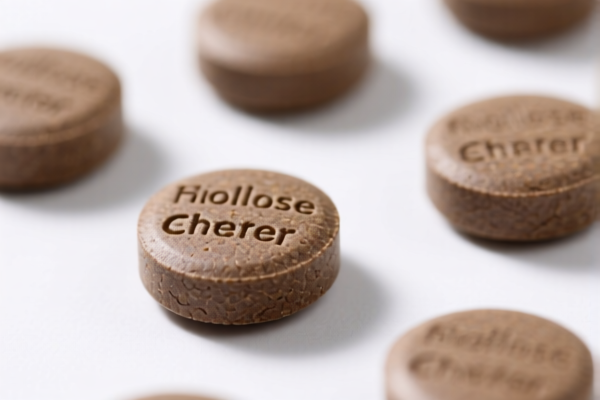
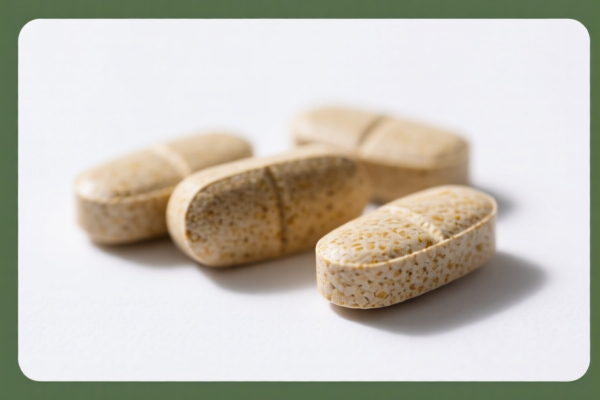


AI Analysis
🧂 Salt (Including Table Salt, Sea Water, and Denatured Salt)
🌐 HS Code Reference & Customs Clearance Guide | 2026 Latest Tariff Analysis | Professional Entry Strategy
📌 I. Product Definition & Classification: Do You Really Understand "Sea Salt Tablets"?
In international trade, "Salt" is not just a simple condiment. It is strictly defined under Chapter 25 of the Harmonized System (HS). When you import Sea Salt Tablets, they fall squarely into the category of natural or processed mineral salts, regardless of whether they are compressed, dissolved, or contain anti-caking agents.
Key Distinction: * Simple Salt: Pure sodium chloride (NaCl) or mixtures with anti-caking agents. * Sea Water: Whether or not purified or containing added substances. * Excluded: Iodized salt intended for medical use or highly refined salt for chemical synthesis might fall under different chapters (e.g., Chapter 29 or 30), but standard table salt, sea salt, and denatured salt are strictly classified here.
⚠️ Critical Note for "Tablets":
The form (tablet, granule, powder) does not change the HS code classification for basic salt. A compressed "sea salt tablet" is still Salt. Do not confuse it with dietary supplements (Chapter 21) unless it contains significant medicinal ingredients beyond simple mineral salts.
📦 II. HS Code Classification Details (2026 Latest Tariff Authority)
| HS Code | Product Description | Applicable Scenario | Tax Detail |
|---|---|---|---|
2501.00.00.00 |
Salt (including table salt and denatured salt) and pure sodium chloride, whether or not in aqueous solution or containing added anti-caking or free-flowing agents; sea water | Sea Salt Tablets, Table Salt, Industrial Salt, Sea Water | Total Tax: 25.0% |
🔍 Why this HS Code?
- The description2501.00.00.00explicitly covers "Salt... whether or not in aqueous solution or containing added anti-caking or free-flowing agents."
- Even if your Sea Salt Tablets are compressed with a tiny amount of binder or anti-caking agent (like silicon dioxide), they remain under this code.
- Pure Sodium Chloride is also included here.
- Sea Water is explicitly mentioned in the description, confirming the "Sea Salt" origin doesn't move it to a different code.
💰 III. 2026 Latest Tariff Rate Breakdown (Including Surtaxes)
✅ Applicable Country: United States (US)
✅ Origin: China (CN)
✅ Effective Date: 2025-11-10 onwards
🎯 1. 2501.00.00.00 —— Salt (Sea Salt Tablets, Table Salt, etc.)
| Item | Content |
|---|---|
| Base Tariff | 0.0% (ad valorem) |
| Surtax (Section 301) | +25.0% |
| Total Tariff | 25.0% |
| Tax Calculation | CIF Value × 25% |
| De Minimis Eligibility | ❌ Not Eligible (deny_de_minimis) |
| Legal Basis Path | USITC:2501.00.00.00 → FOOTNOTE:301 |
📌 Interpretation:
- Although the Base Tariff is 0% (making it a "duty-free" item in normal trade), the 25% Surtax applies due to trade measures against Chinese-origin goods.
- Total Tax Liability: 25.0%.
- This is a high-cost item for importers. There are no additional IEEPA taxes for this specific category in the provided data, but the 25% Section 301 duty is significant.
- Note: Unlike electronics (which can face 45%+), salt faces a flat 25% surcharge on top of the 0% base.
🛠️ IV. Customs Clearance Practical Advice (Battle-Tested Pitfall Guide)
✅ 1. Documentation Checklist (Non-negotiable)
| Document | Required | Explanation |
|---|---|---|
| ✅ Commercial Invoice | ✔️ | Must clearly state: "Sea Salt Tablets, NaCl content >97%, Anti-caking agent: [Type]" |
| ✅ Product Specification Sheet | ✔️ | Detail the composition: Pure NaCl vs. mixture. If >10% other minerals, still 2501.00.00.00 unless chemically distinct. |
| ✅ Certificate of Origin (CO) | ✔️ | To prove origin (China). If from other countries, duty might differ. |
| ✅ FDA Prior Notice | ✔️ | Crucial for Food/Salt. Salt is a food product. Prior Notice to FDA is mandatory before arrival. |
| ✅ Safety Data Sheet (SDS) | ✔️ | Even for food salt, customs may require SDS for chemical identification. |
| ✅ Labeling Compliance | ✔️ | Must meet FDA labeling requirements (Net weight, ingredient list, nutrition facts if packaged for retail). |
✅ 2. Declaration Tips (Key Mantra)
🔥 "Declare Salt, Not Spice; FDA First, Customs Second!"
| Scenario | Correct Declaration | Wrong Practice |
|---|---|---|
| Sea Salt Tablets | 2501.00.00.00 - "Sea Salt Tablets" |
Misdeclare as "Spices" (Chapter 09) or "Food Prep" (Chapter 21) → Seizure Risk! |
| Iodized Salt | 2501.00.00.00 |
Declare as "Medicinal Salt" (Chapter 30) → Wrong Classification |
| Bulk Salt for Industrial Use | 2501.00.00.00 |
Declare as "Raw Material for Chemicals" → Unnecessary Complexity |
| Salt with Anti-Caking Agent | 2501.00.00.00 |
Declare as "Other Chemical Products" → Delay & Inspection |
📌 Important:
- Do not call it "Seasoning" or "Condiment" in the HS Code field. Use "Salt".
- If the tablets are marketed as "Dietary Supplements", they might fall under Chapter 21, but if they are primarily NaCl, Customs will likely reclassify them to2501.00.00.00and apply the 25% tax. Be honest about the primary composition.
✅ 3. Special Circumstances Handling
| Situation | Handling Advice |
|---|---|
| Small Sample Shipments | ❌ No De Minimis: Even small packages face 25% duty. No $800 exemption. |
| FDA Compliance | ✅ Ensure your facility is registered with the FDA. Salt is subject to FSMA (Food Safety Modernization Act). |
| Packaging | ✅ Ensure packaging is food-grade and clearly labeled. Non-compliant labeling = FDA Hold. |
| Origin Labeling | ✅ Must clearly state "Product of China" (if applicable). |
🌍 V. Global Market Comparison (2026 Latest)
| Country/Region | Recommended HS Code | Tariff (China Origin) | Certification Requirements | Notes |
|---|---|---|---|---|
| 🇺🇸 USA | 2501.00.00.00 |
25.0% | FDA Prior Notice + Registration | Base 0% + 25% Surtax |
| 🇨🇳 China | 2501.00.00.00 |
0% | GB Standard Compliance | Domestic trade duty-free |
| 🇪🇺 EU | 2501.00.00 |
0% - 6.5% | EFSA Compliance | Varies by member state |
| 🇬🇧 UK | 2501.00.00 |
0% - 6.5% | FSA Compliance | Post-Brexit tariffs may apply |
| 🇯🇵 Japan | 2501.00.00 |
0% - 3.5% | JAS Compliance | Food safety standards strict |
📌 Conclusion:
- USA is the most expensive market for Chinese salt imports due to the 25% surtax.
- EU/UK/Japan generally have lower or zero tariffs on salt, but food safety compliance is stricter and more complex.
- Strategy: If exporting to the US, factor in the 25% cost immediately. Consider sourcing from non-China origins if possible, or absorb the cost in pricing.
📌 VI. Common Mistakes & Pitfalls (Blood Lessons)
❌ Mistake 1: Declaring "Sea Salt Tablets" as "Spices" (HS 0910)
👉 Consequence: Wrong classification → Seizure + Fine. Salt is Chapter 25, not 09.
❌ Mistake 2: Assuming "De Minimis" ($800 exemption) applies
👉 Consequence: Even small shipments are taxed at 25%. No exemption for salt from China.
❌ Mistake 3: Ignoring FDA Prior Notice
👉 Consequence: Cargo Hold. FDA will not release the shipment without Prior Notice. Result: Storage fees + potential destruction.
❌ Mistake 4: Calling it "Dietary Supplement" to avoid tax
👉 Consequence: If analysis shows >90% NaCl, Customs will reclassify to 2501.00.00.00 and apply 25% tax + penalties for misdeclaration.
✅ Correct Approach:
"Sea Salt Tablets, Pure Sodium Chloride, With Anti-Caking Agent, Packaged in Food-Grade Bags, FDA Registered Facility, Country of Origin: China"
🎯 VII. Conclusion: Professional Declaration, Save Time & Money!
🎯 Remember the Mantra:
🔹 "Salt is 2501, 25% Tax, No De Minimis, FDA is Key!"
🔹 "Don't call it Spice, Don't call it Supplement, Call it Salt and Pay the Duty!"
📌 Pro Tip:
- If your sea salt tablets are not for human consumption (e.g., for bath salts, industrial use), declare as "Non-Food Salt". This may avoid FDA but still incurs the 25% tariff.
- For food-grade sea salt, FDA compliance is non-negotiable. Ensure your supplier has a FSVP (Foreign Supplier Verification Program) agent in the US.
📣 Immediate Action:
📞 Contact FDA Compliance Specialist + Prepare FDA Prior Notice
🚀 Calculate 25% Duty into Your Cost Model
✅ Ensure Labels are 100% FDA Compliant
✨ Professional Clearance Starts with Accurate Classification!
💼 Every Dollar of Tax Must Be Predicted and Planned!
Customer Reviews
About HS Code Classification
The Harmonized System (HS) is an internationally standardized nomenclature developed by the World Customs Organization (WCO) to classify traded products. Over 200 countries use the HS system as the basis for customs tariffs, trade statistics, and import/export regulations.
Each HS code follows a hierarchical structure:
- Chapter (2 digits) — Broad category of goods (e.g., Chapter 84: Machinery and Mechanical Appliances)
- Heading (4 digits) — More specific grouping within the chapter
- Subheading (6 digits) — Internationally standardized breakdown, used by all WCO member countries
- National subdivisions (8-10 digits) — Country-specific extensions for further classification, such as US HTSUS 10-digit codes
Correct HS code classification is essential for smooth customs clearance, accurate duty payment, and compliance with trade regulations. Misclassification can lead to customs delays, overpayment of duties, or penalties.
When importing from CN to US, the applicable tariff rates may include:
- Most-Favored-Nation (MFN) rate — The standard duty rate applied to WTO members
- General rate — Applied to countries without trade agreements
- Trade remedy duties — Additional tariffs such as Section 301 (anti-dumping), Section 232 (national security), or countervailing duties
The information provided on this page is for reference purposes only. For official classification, please consult with your local customs authority or a licensed customs broker.