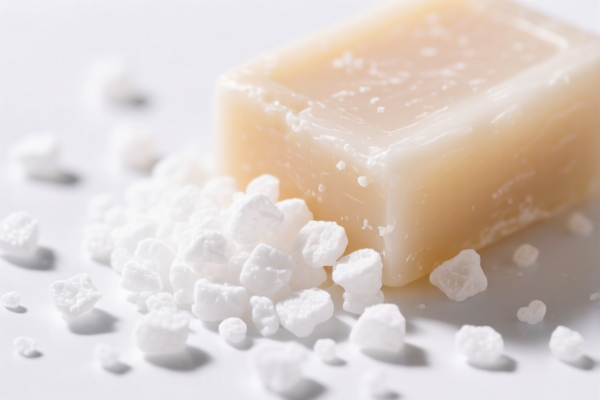
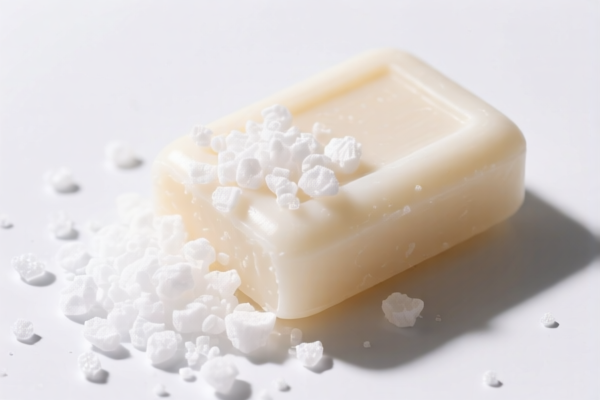
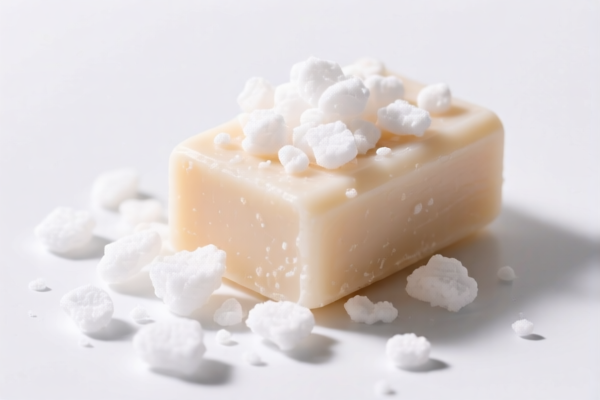
Sea salt flakes
CN → US| HS Code | Tariff Rate | Origin | Destination | Doc |
|---|---|---|---|---|
| 2501000000 | 35.0% | CN | US | Official Doc |
| 2501000000 | 35.0% | CN | US | Official Doc |
Product Images

AI Analysis
🌊 Sea Salt Flakes
🌐 HS Code Reference & Customs Clearance Guide | 2026 Latest Tariff Breakdown | Professional Import Strategy
📌 One, Product Definition & Classification: What Exactly Are "Sea Salt Flakes"?
Sea salt flakes are natural, minimally processed crystalline salt derived from evaporated seawater. They are prized for their delicate texture, subtle mineral flavor, and visual appeal—commonly used in gourmet cooking, finishing dishes, and high-end food products.
⚠️ Key Distinction:
- Sea salt flakes = crystalline, flaky structure, not ground or refined
- Table salt = finely ground, often iodized, may contain anti-caking agents
- Denatured salt = chemically treated, not for human consumption✅ Crucial Point:
If the product is pure sodium chloride (NaCl), whether from seawater or other sources, and not chemically altered, it falls under the same classification—regardless of form (flakes, crystals, or powder).
📦 Two, HS Code Classification Details (2026 Official Tariff Authority Match)
| HS Code | Product Description | Applicable Use Case | Contains Anti-Caking Agents? |
|---|---|---|---|
2501.00.00.00 |
Salt (including table salt and denatured salt) and pure sodium chloride, whether or not in aqueous solution or containing added anti-caking or free-flowing agents; sea water | Sea salt flakes, natural crystal salt, unrefined salt, evaporated seawater salt | ❌ Not required — applies even if no additives |
2501.00.00.00 |
Salt (including table salt and denatured salt) and pure sodium chloride, whether or not in aqueous solution or containing added anti-caking or free-flowing agents; sea water | Same as above — identical description | ❌ Same |
🔍 Important Note:
- The same HS Code applies to all forms of pure sodium chloride, including sea salt flakes, rock salt, flakes, crystals, and even sea water (as raw material). - No distinction is made between flaked and crystalline forms — only chemical composition matters. - No separate subheading exists for “flakes” or “gourmet salt” in the 2026 tariff schedule.
💰 Three, 2026 Latest Tariff Rate Breakdown (With Additional Duties & Policy Clauses)
✅ Applicable Country: United States (US)
✅ Origin: China (CN)
✅ Effective Date: November 10, 2025 (and ongoing)
🎯 1. 2501.00.00.00 — Salt (including sea salt flakes, pure sodium chloride)
| Item | Details |
|---|---|
| Base Duty Rate | 0.0% (ad valorem) |
| Additional Tariff (USITC) | +25.0% (under Section 301 of U.S. Trade Act) |
| IEEPA Additional Duty | +10.0% (International Emergency Economic Powers Act – applies to Chinese-origin goods) |
| Total Effective Duty | 45.0% |
| Tax Calculation Basis | CIF Value × 45.0% |
| De Minimis Threshold | ❌ Not applicable (denied under U.S. customs policy) |
| Legal Authority Path | IEEPA:9903.01.25 → IEEPA:9903.01.24 → USITC:2501.00.00.00 → FOOTNOTE:9903.88.01 |
📌 Explanation:
- 25% USITC Tariff: Imposed under Section 301 due to China’s unfair trade practices (e.g., intellectual property theft, forced tech transfer). - 10% IEEPA Tariff: Enforced under International Emergency Economic Powers Act, targeting goods from China and Hong Kong. - Total = 45% — one of the highest tariff burdens on any food-grade commodity. - No exceptions for “natural” or “gourmet” products — all sea salt flakes from China are subject to this rate.
🛠️ Four, Customs Clearance Practical Tips (Real-World Pro Tips)
✅ 1. Required Documentation (Must-Have Checklist)
| Document | Required? | Notes |
|---|---|---|
| ✅ Product Specification Sheet | ✔️ | Include origin, processing method (evaporated vs. mined), crystal size, moisture content |
| ✅ Certificate of Analysis (COA) | ✔️ | Prove purity (NaCl content), absence of heavy metals, microbial safety |
| ✅ Commercial Invoice | ✔️ | Clearly state: "Sea Salt Flakes, Natural, Non-Iodized, Evaporated from Seawater" |
| ✅ Certificate of Origin (CO) | ✔️ | Critical: If from Vietnam, Mexico, India, or Thailand, IEEPA exemption applies |
| ✅ Packing List | ✔️ | Show net weight, packaging type (glass jar, vacuum pouch, etc.) |
| ✅ FDA Compliance Certificate (if food-grade) | ✔️ | Required for human consumption products |
| ✅ Lab Test Report (e.g., ISO 17025) | ✔️ | Especially for export to EU/UK/Canada |
✅ 2.申报技巧 (Key Phrases for Accurate Declaration)
🔥 “Flake Salt, Evaporated from Seawater, Natural, No Additives, Pure Sodium Chloride”
| Scenario | Correct HS Code | Incorrect Practice |
|---|---|---|
| Sea salt flakes from China | 2501.00.00.00 |
Misclassified as “food seasoning” → higher tariff |
| Sea salt flakes from Vietnam | 2501.00.00.00 |
But 0% duty (IEEPA exemption) |
| Salt with anti-caking agent | 2501.00.00.00 |
Still valid — the code covers additives |
| Sea water (raw material) | 2501.00.00.00 |
Yes — even unprocessed seawater is classified here |
✅ Pro Tip:
Never say “gourmet salt” or “artisanal salt” in the customs declaration — this triggers scrutiny. Use technical terms: evaporated sea salt, flaked sodium chloride, natural crystalline salt.
✅ 3. Special Cases & Risk Mitigation
| Situation | Recommended Action |
|---|---|
| Sea salt flakes from China | Expect 45% total duty — budget accordingly |
| Sea salt flakes from Vietnam/Mexico/India | Apply for IEEPA exemption — 0% duty |
| Salt with calcium silicate (anti-caking) | Still 2501.00.00.00 — no change in classification |
| Salt in bulk (e.g., 1-ton bags) | Same HS Code — no special treatment |
| Salt used in industrial processes | Still 2501.00.00.00 — not eligible for lower rates |
⚠️ Warning:
If you declare "sea salt" but it contains iodine or anti-caking agents, you are still within the scope of2501.00.00.00— but must declare additives to avoid penalties.
🌍 Five, Global Customs Comparison (2026 Updated)
| Country/Region | Recommended HS Code | Tariff Rate | Certification Required | Notes |
|---|---|---|---|---|
| 🇺🇸 United States | 2501.00.00.00 |
45% (China origin) | FDA, COA | High duty — avoid China origin |
| 🇨🇳 China | 2501.00.00.00 |
0% | GB Standards | No extra tariffs |
| 🇪🇺 European Union | 2501.00.00.00 |
0% (if CE/ISO) | CE, ISO 22000 | No additional duties |
| 🇦🇺 Australia | 2501.00.00.00 |
0% | RCM | No extra fees |
| 🇯🇵 Japan | 2501.00.00.00 |
0% | PSE | No extra charges |
📌 Key Insight:
- The U.S. is the only major market imposing 45% duty on sea salt flakes from China. - Vietnam, Mexico, India, and Thailand are preferred sourcing countries for U.S. importers to avoid tariffs.
📌 Six, Common Mistakes & How to Avoid Them (Learn from Others' Errors)
❌ Mistake 1: Declaring “gourmet sea salt” without technical description
👉 Result: Customs delays, request for additional info, possible seizure
❌ Mistake 2: Not declaring additives (e.g., calcium silicate)
👉 Result: Penalty, audit, or refund claim denial
❌ Mistake 3: Shipping from China without verifying IEEPA exemption
👉 Result: 45% duty paid, no refund possible
❌ Mistake 4: Using “salt” as a generic term in invoice
👉 Result: Misclassification risk — must specify “sea salt flakes” or “evaporated seawater salt”
✅ Correct Way to Declare:
"Sea Salt Flakes, Natural, Evaporated from Seawater, No Additives, Pure Sodium Chloride, 2501.00.00.00, Origin: Vietnam"
🎯 Seven, Conclusion: Precision in Classification = Profit Protection
🎯 Remember the Rule of Thumb:
🔹 “Flakes, crystals, or powder — if it’s pure salt, it’s
2501.00.00.00”
🔹 “China origin? 45% duty. Vietnam/Mexico? 0%.”
🔹 “No additives? Still the same code. Additives? Still the same code.”
📌 Pro Tip:
📞 Apply for an Advance Ruling (Pre-Clearance) from U.S. Customs before shipping large volumes.
🚀 Avoid surprises, reduce risk, and lock in favorable tariff treatment.
📣 Take Action Now:
📞 Contact a licensed customs broker + provide product specs + request HS Code pre-ruling
🚀 Turn your sea salt flakes into a smooth, low-risk, high-margin export!
✨ Smart Importing Starts with Accurate Classification!
💼 One wrong code can cost you 45% — but the right one saves you thousands.
Customer Reviews
About HS Code Classification
The Harmonized System (HS) is an internationally standardized nomenclature developed by the World Customs Organization (WCO) to classify traded products. Over 200 countries use the HS system as the basis for customs tariffs, trade statistics, and import/export regulations.
Each HS code follows a hierarchical structure:
- Chapter (2 digits) — Broad category of goods (e.g., Chapter 84: Machinery and Mechanical Appliances)
- Heading (4 digits) — More specific grouping within the chapter
- Subheading (6 digits) — Internationally standardized breakdown, used by all WCO member countries
- National subdivisions (8-10 digits) — Country-specific extensions for further classification, such as US HTSUS 10-digit codes
Correct HS code classification is essential for smooth customs clearance, accurate duty payment, and compliance with trade regulations. Misclassification can lead to customs delays, overpayment of duties, or penalties.
When importing from CN to US, the applicable tariff rates may include:
- Most-Favored-Nation (MFN) rate — The standard duty rate applied to WTO members
- General rate — Applied to countries without trade agreements
- Trade remedy duties — Additional tariffs such as Section 301 (anti-dumping), Section 232 (national security), or countervailing duties
The information provided on this page is for reference purposes only. For official classification, please consult with your local customs authority or a licensed customs broker.