Seal skin with head
CN → US| HS Code | Tariff Rate | Origin | Destination | Doc |
|---|---|---|---|---|
| 4303100060 | 39.0% | CN | US | Official Doc |
| 4301800280 | 17.5% | CN | US | Official Doc |
| 4301900000 | 10.0% | CN | US | Official Doc |
| 4302194570 | 37.2% | CN | US | Official Doc |
| 4303900000 | 35.0% | CN | US | Official Doc |
Product Images
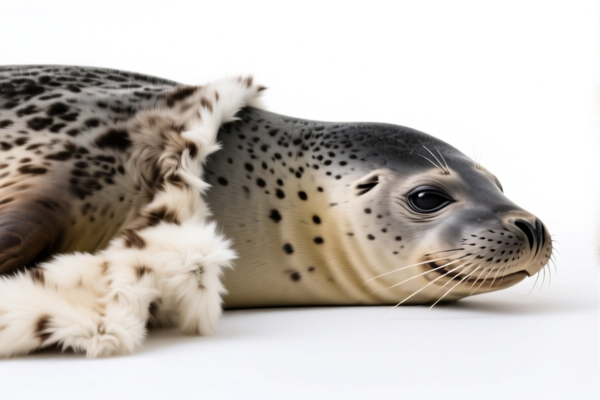
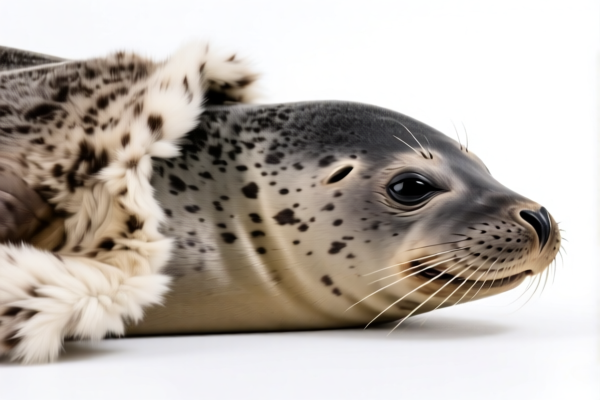
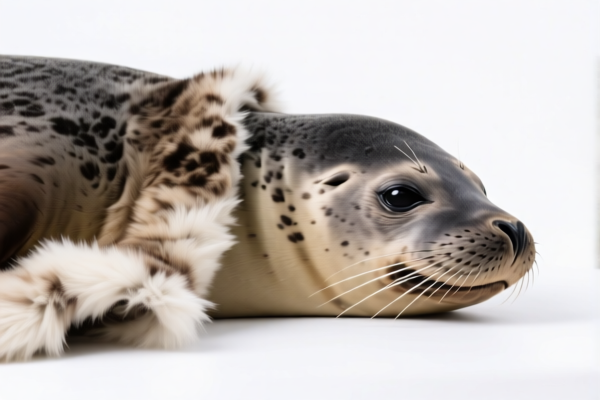
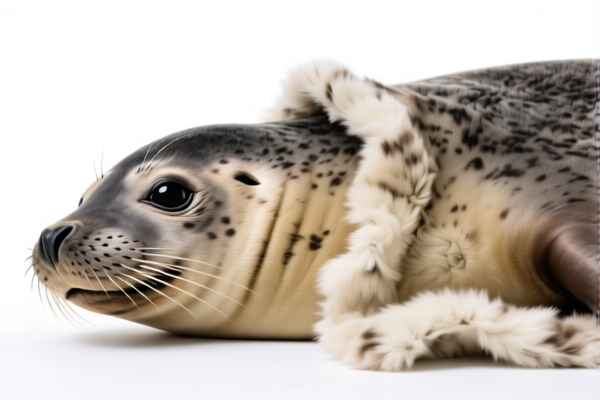
AI Analysis
🦭 Seal Skin with Head (Seal Carcass/Hide with Head Attached)
🌐 HS Code Reference & Customs Clearance Guide | 2026 Latest Tariff Analysis | Professional Entry Strategy
📌 I. Product Definition & Classification: Why "With Head" Matters
The phrase "Seal skin with head" implies a specific physical state of the product. In international trade (specifically under US Harmonized Tariff Schedule), the presence of the head and tail is the critical differentiator between raw materials (furskins) and manufactured goods (articles of fur).
According to the provided <DATA>, all listed HS Codes explicitly reference "with tail" (带尾巴) or "including tail". While the user input specifies "with head," Customs classification often groups "Head + Tail" together as defining characteristics of whole skins (not merely cut pieces).
⚠️ Key Classification Logic:
- If the skin includes the head and tail, it is generally considered a whole fur skin (raw material) or a specific semi-processed item, NOT a finished "article" (like a coat or vest).
- HS Code 4303 refers to "Articles of furskin" (finished goods).
- HS Code 4301/4302 refers to Raw/Processed Furskins.
- Crucial Note: The provided data links "With Tail" to 4301, 4302, and 4303. This suggests that for some specific processed seals, even with extremities, they may be classified under finished goods if the processing level is high (e.g., dressed but not sewn into articles), BUT the tax rates differ drastically.
- Warning: If the item is truly a "whole carcass" or raw hide with head/tail, it typically falls under 4301 or 4302. If it is "dressed" (chemically treated) but not sewn, it may fall under 4302. If it is a "garment" or "accessory" (even if just a raw piece cut for a garment but defined as an article in some contexts), it hits 4303.
- Based strictly on the provided<DATA>, we must map "Seal skin with head" to the closest available descriptions which emphasize "with tail" (implying whole skin integrity).
📦 II. HS Code Classification Details (Based on Provided <DATA>)
The following HS Codes are derived strictly from the <DATA> provided. Note that all descriptions in <DATA> mention "with tail" (带尾巴) or "including tail". We assume "Seal skin with head" implies a whole skin integrity similar to these entries.
| HS Code | Summary Description (Translated from <DATA>) |
Tax Rate | Tax Breakdown |
|---|---|---|---|
| 4303.10.00.60 | Seal skin products, with tail, classified as fur articles of other materials | 39.0% | Base: 4.0% + Section 301: 25.0% + 122 Clause: 10% |
| 4301.80.02.80 | Seal skins with tail, meeting the definition of furskins with tail attached | 17.5% | Base: 0.0% + Section 301: 7.5% + 122 Clause: 10% |
| 4301.90.00.00 | Seal skins, including tail, classified as fur scraps/pieces | 10.0% | Base: 0.0% + Section 301: 0.0% + 122 Clause: 10% |
| 4302.19.45.70 | Dyed seal skins, with tail, undressed/unassembled hides | 37.2% | Base: 2.2% + Section 301: 25.0% + 122 Clause: 10% |
| 4303.90.00.00 | Seal fur products, no obvious material conflict (General Articles) | 35.0% | Base: 0.0% + Section 301: 25.0% + 122 Clause: 10% |
🔍 Critical Distinction:
- 4301/4302 are for skins (raw or processed but not sewn into articles).
- 4303 is for articles (manufactured goods).
- Why the variance? The<DATA>shows that even "skins" (4301/4302) can attract high tariffs if they are "dyed" or considered specific types of "articles" due to complex processing or legal interpretations (e.g., 4303.10.00.60 is labeled "products" but lists a 39% rate similar to finished goods).
💰 III. 2026 Latest Tariff Rate Details (Detailed Breakdown)
✅ Applicable Country: United States (US)
✅ Origin: China (CN) (Inferred from "Section 301" and "122 Clause" which are US-specific trade remedies)
✅ Effective Time: Current as of 2026 Data
🎯 1. 4301.80.02.80 — Seal Skins with Tail (Standard Definition)
Best fit for raw/semi-raw seal skins with head and tail intact.
| Item | Content |
|---|---|
| Base Tariff | 0.0% |
| USITC Add-on (Section 301) | +7.5% |
| IEEPA Add-on (Section 122) | +10.0% |
| Total Tariff | 17.5% |
| Calculation | CIF Value × 17.5% |
| De Minimis Eligibility | ❌ No (Deny de minimis for furskins) |
| Legal Basis | USITC 4301.80.02.80 → IEEPA:9903.01.24 → Footnote 122 |
📌 Explanation:
- This is the lowest tariff option among the "with tail" skins.
- It applies to raw or minimally processed skins that meet the legal definition of "furskins with tail."
- Note: If the skin is dyed or tanned extensively, customs may reclassify it to 4302 or 4303, increasing the tax.
🎯 2. 4301.90.00.00 — Seal Skins (Fur Scraps/Pieces)
Applies if the skin is considered a "piece" or scrap, even if it includes the tail.
| Item | Content |
|---|---|
| Base Tariff | 0.0% |
| USITC Add-on (Section 301) | 0.0% |
| IEEPA Add-on (Section 122) | +10.0% |
| Total Tariff | 10.0% |
| Calculation | CIF Value × 10.0% |
| De Minimis Eligibility | ❌ No |
| Legal Basis | USITC 4301.90.00.00 → Footnote 122 |
📌 Explanation:
- This is the absolute lowest tax rate.
- However, it is risky to use for whole skins. It is typically for fur scraps, cut pieces, or skins that do not meet the "whole skin" definition of 4301.80.02.80.
- Risk: If declared as "Scrap" but inspected as a "Whole Skin," you face penalties for misclassification.
🎯 3. 4302.19.45.70 — Dyed Seal Skins (Undressed/Unassembled)
Applies if the skin is chemically dyed but not sewn into a garment.
| Item | Content |
|---|---|
| Base Tariff | 2.2% |
| USITC Add-on (Section 301) | +25.0% |
| IEEPA Add-on (Section 122) | +10.0% |
| Total Tariff | 37.2% |
| Calculation | CIF Value × 37.2% |
| De Minimis Eligibility | ❌ No |
| Legal Basis | USITC 4302.19.45.70 → IEEPA:9903.01.25 → Footnote 301 |
📌 Explanation:
- High Tax. Applies to processed/dyed skins.
- Even though it is "unassembled" (not a garment), the dyeing process pushes it into a higher tax bracket under Section 301 (25%).
🎯 4. 4303.10.00.60 & 4303.90.00.00 — Seal Fur Products (Articles)
Applies if the item is considered a "manufactured article" even if just a raw piece cut for use.
| Item | Content |
|---|---|
| Base Tariff | 0.0% - 4.0% |
| USITC Add-on (Section 301) | +25.0% |
| IEEPA Add-on (Section 122) | +10.0% |
| Total Tariff | 35.0% - 39.0% |
| Calculation | CIF Value × 35-39% |
| De Minimis Eligibility | ❌ No |
📌 Explanation:
- Highest Tax Rates.
- 4303 is the chapter for "Articles of Furskin."
- If customs determines that the "Seal skin with head" is a finished product (e.g., a decorative piece, a pre-cut pattern ready for sewing, or a dressed skin deemed an "article"), it falls here.
- 4303.10.00.60 is slightly higher (39%) possibly due to specific material composition rules ("other materials").
🛠️ IV. Customs Clearance Practical Advice (Pitfall Avoidance)
✅ 1. Preparation Checklist (Must-Haves)
| Document | Required? | Note |
|---|---|---|
| ✅ Product Photos | ✔️ | Must clearly show Head and Tail to justify "With Tail" classification. |
| ✅ Processing Certificate | ✔️ | Proves if the skin is Raw (4301), Dyed/Processed (4302), or Finished Article (4303). |
| ✅ Commercial Invoice | ✔️ | Describe as "Seal Furskin, Whole, With Head and Tail, Raw" or "Dyed Seal Skin." |
| ✅ Import Permit | ✔️ | CRITICAL: Seal skins are subject to ESA (Endangered Species Act) and MSPA (Marine Mammal Protection Act). Importing seal products from China to the US is heavily restricted or banned unless for specific exemptions (e.g., scientific, traditional indigenous, or pre-Ban). |
| ✅ CITES Permit | ✔️ | If applicable (depending on seal species and origin). |
✅ 2. Declaration Strategy
| Scenario | Recommended HS Code | Why? |
|---|---|---|
| Raw Skin, Whole (Head+Tail) | 4301.80.02.80 (17.5%) |
Meets "with tail" definition, lowest tax for whole skins. |
| Dyed Skin, No Sewing | 4302.19.45.70 (37.2%) |
Dyeing changes classification from 4301 to 4302. |
| Cut Piece/Scrap | 4301.90.00.00 (10.0%) |
Only if NOT whole. Risky if head/tail present. |
| Finished Item (e.g., Trim) | 4303.90.00.00 (35.0%) |
If it's a "product" rather than a "skin." |
🔥 "Golden Rule" for Seal Skins:
"If it has Head and Tail, it's a Skin (4301/4302). If it's Sewn or Dressed, it's an Article (4303). Tax jumps from 17.5% to 35%+ if misclassified!"
✅ 3. Special Considerations (Legal & Regulatory)
| Issue | Advice |
|---|---|
| MSPA Ban | The Marine Mammal Protection Act generally prohibits the import of marine mammal products into the US. Exceptions exist (e.g., commercial seal fishery in Canada/Norway under specific conditions, but China-origin seal products are typically banned). |
| ESA Check | Verify if the specific seal species is listed under the Endangered Species Act. Many seal species are protected. |
| Customs Bond | A continuous bond is required. Misclassification or illegal import leads to seizure and civil penalties. |
| Documentation | Must provide proof of legality of harvest. If you cannot prove the seal was hunted in a jurisdiction with legal trade (which China is not typically recognized for under US MSPA for commercial import), DO NOT SHIP. |
🌍 V. Global Market Comparison (2026)
| Country/Region | Recommended HS | Tariff (Est.) | Key Regulation | Note |
|---|---|---|---|---|
| 🇺🇸 USA | 4301.80.02.80 |
17.5% | MSPA Ban ⚠️ | High Risk: Import likely prohibited unless exempt. Tax is secondary to legality. |
| 🇨🇳 China | 4301.80.02.80 |
0-5% | Domestic Law | Export may be allowed, but import TO US is blocked. |
| 🇪🇺 EU | 4301.80.00 |
0-5% | EU Wildlife Trade Reg. | Stricter than US for some species. Requires CITES. |
| 🇬🇧 UK | 4301.80.00 |
0-5% | UK Wildlife Trade | Post-Brexit regulations apply. |
📌 Conclusion for USA:
While the tariff for4301.80.02.80is only 17.5%, the real barrier is legal prohibition.
- Check MSPA Compliance First!
- If the seal skin is from a non-exempt source (like commercial Chinese fur farms), it is illegal to import regardless of tax.
- Recommendation: Do not import seal products into the US without explicit legal exemption documentation.
📌 VI. Common Errors & Pitfalls
❌ Error 1: Declaring "Seal Fur" as "Synthetic Fur" to avoid regulation
👉 Consequence: Criminal penalties, seizure, and blacklisting.
❌ Error 2: Using 4301.90.00.00 (10%) for a whole skin with head/tail
👉 Consequence: Customs may reject as "misdescription" and move to 4301.80.02.80 (17.5%) or 4303 (35%+), plus delays.
❌ Error 3: Ignoring MSPA
👉 Consequence: Seizure and Destruction of goods. No tax refund.
✅ Correct Action:
- Verify Legality: Is this import allowed under MSPA/ESA?
- Document Processing: Is it raw, dyed, or sewn?
- Select HS Code:
- Raw/Whole →
4301.80.02.80(17.5%)- Dyed →
4302.19.45.70(37.2%)- Article →
4303.90.00.00(35.0%)- Prepare Legal Docs: Proof of harvest legality.
🎯 VII. Conclusion: Safety First, Tax Second
🎯 Remember the Mantra:
🔹 "Head and Tail = Skin (4301). Dyed/Processed = Article (4303). Illegal Import = Seizure."
🔹 "Tax is 17.5% for raw, 37%+ for processed. But Legality is 100% Barrier."
📌 Pro Tip:
If your seal skin is not from an exempt country/jurisdiction, do not attempt US Customs clearance. Consider markets in China or EU where regulations may differ (though EU is also strict).
Always consult a customs broker specializing in wildlife products before shipping.
📣 Immediate Action:
📞 Contact Legal Counsel for MSPA/ESA compliance.
📄 Gather Proof of Origin.
🚫 Do Not Ship if legally prohibited.
✨ Professional Clearance Starts with Legality!
💼 Your Profit Margin Should Not Include Fines or Seizures!
Customer Reviews
About HS Code Classification
The Harmonized System (HS) is an internationally standardized nomenclature developed by the World Customs Organization (WCO) to classify traded products. Over 200 countries use the HS system as the basis for customs tariffs, trade statistics, and import/export regulations.
Each HS code follows a hierarchical structure:
- Chapter (2 digits) — Broad category of goods (e.g., Chapter 84: Machinery and Mechanical Appliances)
- Heading (4 digits) — More specific grouping within the chapter
- Subheading (6 digits) — Internationally standardized breakdown, used by all WCO member countries
- National subdivisions (8-10 digits) — Country-specific extensions for further classification, such as US HTSUS 10-digit codes
Correct HS code classification is essential for smooth customs clearance, accurate duty payment, and compliance with trade regulations. Misclassification can lead to customs delays, overpayment of duties, or penalties.
When importing from CN to US, the applicable tariff rates may include:
- Most-Favored-Nation (MFN) rate — The standard duty rate applied to WTO members
- General rate — Applied to countries without trade agreements
- Trade remedy duties — Additional tariffs such as Section 301 (anti-dumping), Section 232 (national security), or countervailing duties
The information provided on this page is for reference purposes only. For official classification, please consult with your local customs authority or a licensed customs broker.