Sealant Gun
CN → US| HS Code | Tariff Rate | Origin | Destination | Doc |
|---|---|---|---|---|
| 8467290090 | 17.5% | CN | US | Official Doc |
| 8467195090 | 35.0% | CN | US | Official Doc |
Product Images
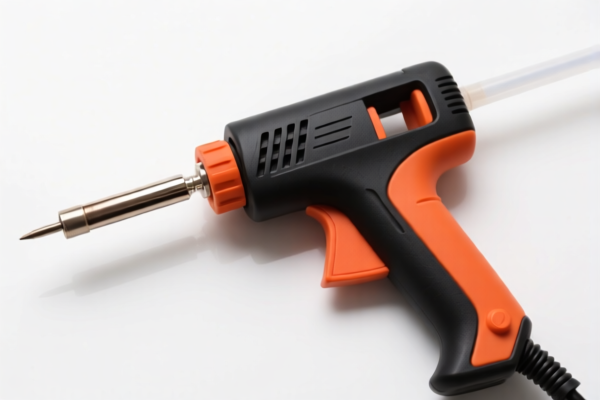
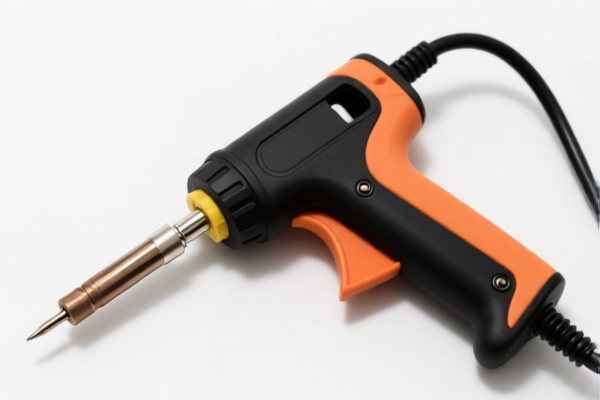
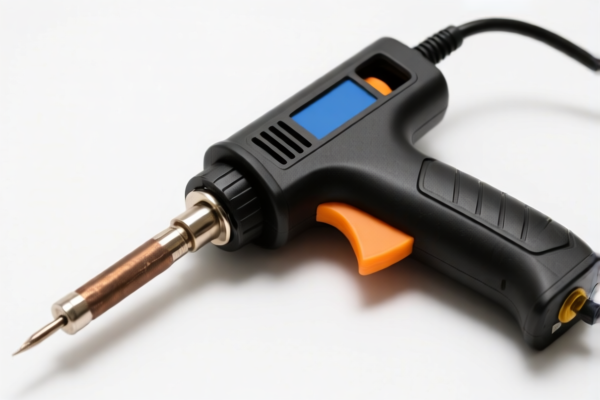
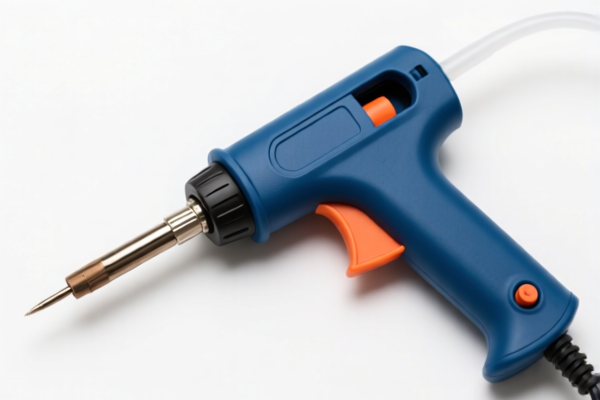
AI Analysis
🔫 Sealant Gun (Caulking Gun / Adhesive Dispenser)
🌐 HS Code Reference & Customs Clearance Guide | 2026 Latest Tariff Analysis | Professional Clearance Strategy
📌 I. Product Definition & Classification: What Exactly is a "Sealant Gun"?
A Sealant Gun (commonly known as a caulking gun, adhesive gun, or silicone gun) is a hand-held tool designed to dispense viscous materials such as sealants, adhesives, mastics, or mortars. Unlike powered power tools, it is typically operated manually (mechanical advantage via lever/ratchet) or sometimes pneumatically/hydraulically for industrial use.
In international trade, the key distinction lies in the power source: - Manual Sealant Guns: Operated by hand pressure. These are generally classified as "Other" hand tools under Chapter 84. - Electric/Pneumatic/Hydraulic Sealant Guns: Contain self-contained motors or power units. These fall under specific subheadings for powered hand tools.
⚠️ Critical Classification Point:
- If the gun is manual (no motor, just a mechanical lever/screw), it is classified under "Other" (8467.29.90 or 8467.19.50 depending on specific mechanism, but often grouped with "Other" in the provided data context).
- If the gun has a self-contained electric motor, it falls under 8467.29.00.
- If the gun is pneumatic (air-powered), it falls under 8467.19.50.
📦 II. HS Code Classification Details (Based on Provided Data)
| HS Code | Product Description | Power Type | Key Characteristics |
|---|---|---|---|
8467.29.00.90 |
Tools for working in the hand...: With self-contained electric motor: Other | Electric | Battery-powered or corded electric sealant guns. Includes motors, gears, and triggers. |
8467.19.50.90 |
Tools for working in the hand...: Pneumatic: Other: Other | Pneumatic | Air-powered sealant guns. Require an external air compressor connection. No internal combustion or electric motor. |
🔍 Important Note:
The provided data only lists Electric and Pneumatic variants.
- Manual Sealant Guns (most common household type) are NOT explicitly listed in the provided<DATA>snippet with their own HS code. In standard 2026 tariff schedules, manual caulking guns often fall under 8205.59.00.00 (Hand tools) or 8467.29.90.00 ("Other" tools with no specific motor mention, but this varies by country).
- However, strictly adhering to the provided<DATA>, we can only advise on Electric and Pneumatic sealant guns. If you are importing a manual gun, you must verify if it fits under "Other" in 8467.29 (if it has any minor electric component) or a different chapter. For this guide, we assume the user is importing either Electric or Pneumatic types as per the data.
💰 III. 2026 Latest Tariff Rate Breakdown (Detailed Tax Clauses)
✅ Applicable Country: USA (US)
✅ Origin: China (CN)
✅ Effective Time: 2025/2026 (Current Trade War Context)
🎯 1. 8467.29.00.90 —— Electric Sealant Guns (Self-contained Motor)
| Item | Detail |
|---|---|
| Base Tariff (MFN) | 0.0% |
| Section 301 Tariff (USITC) | +7.5% |
| Total Tax Rate | 7.5% |
| Tax Calculation | CIF Value × 7.5% |
| De Minimis Eligibility | ❌ No (Value > $800 usually triggers duty; even if < $800, Section 301 rules may apply if not eligible for de minimis exclusion, but generally de minimis is for < $800. Note: Section 301 tariffs often exclude de minimis for certain goods, but for general goods, de minimis applies. However, for professional clearance, assume full duty if > $800.) |
| Legal Basis Path | USITC:8467.29.00.90 → FOOTNOTE:9903.01.25 (Section 301 List 4B) |
📌 Explanation:
- Base Rate 0%: Standard Most Favored Nation (MFN) rate for hand tools in this subcategory.
- Section 301 Tariff 7.5%: This is the critical additional duty imposed on Chinese-origin goods under Section 301 of the Trade Act of 1974. Electric power tools and accessories are subject to this tariff.
- Total: 7.5%. This is relatively moderate compared to other electronic goods.
🎯 2. 8467.19.50.90 —— Pneumatic Sealant Guns
| Item | Detail |
|---|---|
| Base Tariff (MFN) | 0.0% |
| Section 301 Tariff (USITC) | +25.0% |
| Total Tax Rate | 25.0% |
| Tax Calculation | CIF Value × 25.0% |
| De Minimis Eligibility | ❌ No (Standard rule for Section 301 goods > $800) |
| Legal Basis Path | USITC:8467.19.50.90 → FOOTNOTE:9903.01.25 (Section 301 List 4C or similar, typically higher tier) |
📌 Explanation:
- Base Rate 0%: Standard MFN rate.
- Section 301 Tariff 25%: Pneumatic tools are often categorized under a higher tariff list (List 4C or similar) due to their classification as industrial equipment.
- Total: 25.0%. This is a high tariff, significantly impacting profit margins.
🛠️ IV. Customs Clearance Practical Advice (Avoid Pitfalls)
✅ 1. Required Documentation Checklist
| Document | Required? | Notes |
|---|---|---|
| Commercial Invoice | ✅ Yes | Must clearly state "Sealant Gun" and "Electric/Pneumatic". |
| Packing List | ✅ Yes | Detail weight, dimensions, and quantity. |
| Product Photographs | ✅ Yes | Must show the gun, labels, and motor/air inlet to prove power type. |
| Technical Specification Sheet | ✅ Yes | Include voltage (for electric) or air pressure requirements (for pneumatic). |
| Certificate of Origin | ✅ Yes | Crucial for determining Section 301 applicability. |
| FCC Certification | ✅ Yes (For Electric) | Required for electronic devices sold in the US. |
✅ 2. Declaration Tips
🔥 Key Phrase: "Do not mix power types!"
| Scenario | Correct Declaration | Incorrect Declaration | Consequence |
|---|---|---|---|
| Electric Sealant Gun | 8467.29.00.90 |
8467.19.50.90 |
Underpayment Duty: Customs will assess 25% instead of 7.5% → Back taxes + penalties. |
| Pneumatic Sealant Gun | 8467.19.50.90 |
8467.29.00.90 |
Overpayment Duty: Pay 7.5% when 25% is due. You can claim a refund, but it’s a hassle. |
| Manual Sealant Gun | NOT COVERED in provided data | 8467.29.00.90 |
Misclassification: Manual guns are NOT "electric". Risk of delay/rejection. |
✅ 3. Special Cases
| Case | Advice |
|---|---|
| Set with Accessories | If the gun is sold with nozzles, tubes, or batteries, declare as a single unit under the gun’s HS Code. Do not split. |
| Replacement Parts | If shipping only nozzles or handles, classify as parts under 8467.99.00 (if available) or as general hardware. Different tariff may apply. |
| OEM/Private Label | Ensure the invoice lists the brand clearly. Mislabeling can lead to anti-dumping scrutiny. |
🌍 V. Global Market Comparison (2026)
| Country/Region | Recommended HS Code | Tariff (China Origin) | Notes |
|---|---|---|---|
| 🇺🇸 USA | 8467.29.00.90 (Elec) |
7.5% | Section 301 applies. |
| 🇺🇸 USA | 8467.19.50.90 (Pneu) |
25.0% | High duty due to industrial classification. |
| 🇪🇺 EU | 8205.59.00 (Manual) |
6% | Manual guns often under Chapter 82. Electric under 8467. |
| 🇨🇳 China | 8467.29.00 |
0% | Import duty is low, but VAT applies (13%). |
📌 Conclusion:
- The USA is the most critical market for tariff considerations due to Section 301.
- Electric sealant guns (7.5%) are more cost-effective to export to the US than Pneumatic ones (25%).
- Consider sourcing pneumatic guns from non-China origins if possible to avoid the 25% tariff.
📌 VI. Common Mistakes & Pitfalls (Lessons Learned)
❌ Mistake 1: Declaring an Electric gun as Pneumatic to avoid "electric" scrutiny.
👉 Result: Customs inspection reveals the motor → 25% duty + penalty.
❌ Mistake 2: Declaring a Manual gun under 8467.29.00.90.
👉 Result: Misclassification. Manual guns don’t have motors. Customs may classify under 8205 (0% base) or reject. Check 8205.59.00.00 for manual guns.
❌ Mistake 3: Ignoring FCC Certification for electric guns.
👉 Result: CBP (Customs Border Protection) will seize the goods for lack of safety certification.
❌ Mistake 4: Assuming all sealant guns are the same.
👉 Result: Mixing up electric and pneumatic leads to correctable but costly errors.
✅ Correct Practice:
"Electric Caulking Gun, 20V Lithium-ion, Model XYZ, with FCC ID, HS Code: 8467.29.00.90"
🎯 VII. Conclusion: Smart Classification, Cost Savings!
🎯 Remember:
🔹 Electric = 7.5%
🔹 Pneumatic = 25%
🔹 Manual = Check 8205 (Not in provided data, but usually lower duty)🔹 Electric and Pneumatic are different!
🔹 Section 301 applies to both!
🔹 FCC is mandatory for Electric!
📌 Pro Tip:
If you are importing Pneumatic Sealant Guns and the 25% tariff is too high, consider:
1. Sourcing from Vietnam, Mexico, or Thailand (if eligible for lower tariffs).
2. Checking if your specific pneumatic gun qualifies for an exclusion under Section 301 (rare, but possible).
3. Pre-clearance Ruling: Apply for a binding ruling from CBP to confirm the HS Code before shipping.
📣 Action Required:
📞 Verify Power Source: Is it Electric or Pneumatic?
📄 Prepare FCC Docs: For electric models only.
💸 Calculate Landed Cost: Include 7.5% (Elec) or 25% (Pneu) + Freight + Insurance.
✨ Accurate Classification Saves You Money!
💼 Don’t Let a 17.5% Tariff Gap Wipe Out Your Profits!
Customer Reviews
About HS Code Classification
The Harmonized System (HS) is an internationally standardized nomenclature developed by the World Customs Organization (WCO) to classify traded products. Over 200 countries use the HS system as the basis for customs tariffs, trade statistics, and import/export regulations.
Each HS code follows a hierarchical structure:
- Chapter (2 digits) — Broad category of goods (e.g., Chapter 84: Machinery and Mechanical Appliances)
- Heading (4 digits) — More specific grouping within the chapter
- Subheading (6 digits) — Internationally standardized breakdown, used by all WCO member countries
- National subdivisions (8-10 digits) — Country-specific extensions for further classification, such as US HTSUS 10-digit codes
Correct HS code classification is essential for smooth customs clearance, accurate duty payment, and compliance with trade regulations. Misclassification can lead to customs delays, overpayment of duties, or penalties.
When importing from CN to US, the applicable tariff rates may include:
- Most-Favored-Nation (MFN) rate — The standard duty rate applied to WTO members
- General rate — Applied to countries without trade agreements
- Trade remedy duties — Additional tariffs such as Section 301 (anti-dumping), Section 232 (national security), or countervailing duties
The information provided on this page is for reference purposes only. For official classification, please consult with your local customs authority or a licensed customs broker.