Sealant Mixture
CN → US| HS Code | Tariff Rate | Origin | Destination | Doc |
|---|---|---|---|---|
| 3214100010 | 38.7% | CN | US | Official Doc |
| 3214100020 | 38.7% | CN | US | Official Doc |
| 3506915000 | 37.1% | CN | US | Official Doc |
| 3506990000 | 37.1% | CN | US | Official Doc |
| 3824992900 | 41.5% | CN | US | Official Doc |
| 3824994900 | 41.5% | CN | US | Official Doc |
Product Images
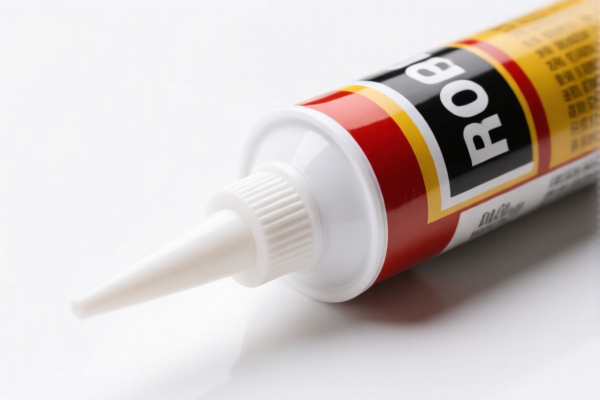


AI Analysis
🧪 Sealant Mixture: The Ultimate HS Code & Duty Guide (2026)
🌐 Decoding "Sealant Mixture" | HS Code Classification, Tariff Wars & Clearance Strategy
📌 I. Product Definition: What exactly is a "Sealant Mixture"?
In international trade, the term "Sealant Mixture" is a broad descriptor that can lead to massive tax discrepancies depending on its chemical composition and packaging. It generally falls into two primary categories under the Harmonized System:
- Adhesives & Glues (Chapter 35):
- Description: Prepared glues, adhesives, putties, or mastics used for bonding, sealing, or filling.
- Key Distinction: If the primary function is bonding or if it falls under "retail sale ≤ 1kg," it often belongs here.
- Other Chemical Preparations (Chapter 32 & 38):
- Description: Caulking compounds, mastics, surfacing preparations, or binders for molds.
- Key Distinction: If it's a caulking compound, grouting, or a specific chemical mixture (e.g., based on hydrocarbons or aromatics) not primarily defined as a glue, it belongs here.
⚠️ Critical Warning: - Retail Packaging Trap: Adhesives sold in small retail packs (≤1kg) are often taxed differently than bulk industrial sealants. - Chemical Composition: The presence of specific hydrocarbons or aromatic substances can push a product into a 31.5% tariff bracket rather than a 0% or 27.1% bracket. - Misclassification Risk: Calling a "Caulking Compound" a "Glue" to get 0% tax is a red flag for customs audits!
📦 II. HS Code Classification Matrix (Based on Provided Data)
Based on the specific data provided, here is the precise classification for "Sealant Mixture" variants:
| HS Code | Product Description (Exact Match) | Key Characteristics |
|---|---|---|
3506.91.50.00 |
Adhesives based on polymers (3901-3913) or rubber | • Polymers/Rubber base • Often retail ≤1kg (if applicable) • NOT a generic mastic/caulk |
3506.99.00.00 |
Other Prepared Adhesives / Glues | • Not elsewhere specified • Generic adhesive mixture • NOT polymer/rubber based |
3214.10.00.10 |
Caulking Compounds (Mastics) | • Specifically Caulking • Used for sealing joints/water • Part of "Mastics" category |
3214.10.00.20 |
Other Mastics & Glaziers' Putty | • Grouting, resin cements, painters' fillings • General purpose mastics |
3824.99.29.00 |
Chemical Mixtures (Aromatic >5%) | • Contains 5%+ aromatic substances • Specialized chemical binders |
3824.99.49.00 |
Chemical Mixtures (Petroleum Derived) | • Hydrocarbons from petroleum/shale oil • Foundry binders or specialized seals |
🔍 Key Differentiator: - Is it a Caulking Compound? → Go to 3214.10. - Is it a Polymer/Rubber Glue? → Go to 3506.91. - Is it a Petroleum-based Chemical Mixture? → Go to 3824.99.
💰 III. Tariff Rate Analysis: The 0% vs. 31.5% Trap
✅ Applicable Market: China (CN) Import/Export Context (Based on Data) ✅ Structure: Base Duty + Additional (Retaliatory) Duty ✅ Total Tax Calculation:
Base Duty + Additional Duty
🎯 Scenario A: The "Zero-Risk" Route (0% Total Duty)
- Target HS Codes:
3506.91.50.00,3214.10.00.10,3214.10.00.20 - Tax Detail:
- Base Duty: 0.0%
- Additional Duty: 0.0%
- Total Tax: 0.0%
- 💡 Why? These products are classified as specific glues or mastics that are either low-risk or exempted under current trade agreements/protocols for these specific sub-categories.
🎯 Scenario B: The "High-Risk" Route (27.1% - 31.5% Total Duty)
- Target HS Codes:
3506.99.00.00,3824.99.29.00,3824.99.49.00 - Tax Detail:
- Base Duty: 2.1% to 6.5%
- Additional Duty (Surtax): 25.0% (Heavy punitive tariff)
- Total Tax: 27.1% to 31.5%
- 💡 Why?
3506.99is a "catch-all" for unspecified adhesives, triggering the additional surtax.3824series involves complex chemical mixtures (Aromatic/Petroleum) which are often subject to strict chemical controls and high surtaxes (25%).
📌 Mathematical Breakdown for High-Tax Items: - Item:
3824.99.49.00(Petroleum Mixture) - Base: 6.5% - Additional: 25.0% - Total: 31.5% - Impact: A $10,000 shipment incurs $3,150 in taxes immediately.
🛠️ IV. Customs Clearance Strategy: How to Avoid the 31.5% Tax
✅ 1. Technical Specification is King
You must provide a detailed Material Safety Data Sheet (MSDS) or Technical Data Sheet (TDS) to customs brokers. * Do NOT simply write "Sealant Mixture." * DO specify: * Base Chemistry: Is it Polymer-based (3901-3913)? * Active Ingredient: Is it >5% Aromatic? * Source: Is it derived from Petroleum/Shale Oil? * Function: Is it primarily a "Caulking Compound" (3214) or a "Glue" (3506)?
✅ 2. The "Packaging" Rule for Glues
- If your product is an adhesive put up for retail sale with a net weight ≤ 1 kg, check if it fits 3506.91 or 3506.99.
- Warning: If it falls under
3506.99.00.00, you will face the 27.1% tax (2.1% base + 25% surcharge). - Strategy: If possible, classify bulk industrial sealants under 3214 (Mastics) where the tax is 0% (if it is a caulking compound).
✅ 3. Avoid "Chemical Mixture" Traps
- If your sealant contains aromatic substances or is a hydrocarbon mixture (derived from petroleum), it likely lands in Chapter 38.
- Result: These are almost always hit with the 25% Additional Duty, bringing the total to 31.5%.
- Mitigation: Can you reformulate to remove aromatics? Can you prove it is a "pure" sealant under Chapter 32 instead?
📋 V. Declaration Checklist (Must-Have Documents)
| Document | Why it's needed | Red Flag to Avoid |
|---|---|---|
| MSDS / TDS | Proves chemical composition (Aromatic vs. Hydrocarbon) | "General Purpose Sealant" (Too vague) |
| Formula Sheet | Confirms % of polymer/rubber vs. petroleum base | Hiding aromatic content |
| Product Photos | Shows packaging (Retail ≤1kg vs. Bulk) | Bulk item labeled "Retail" |
| Function Description | Defines if it's a "Caulk" (3214) or "Glue" (3506) | Calling a Caulk a "Glue" to save tax |
| Commercial Invoice | Must match HS Code exactly | Discrepancy between Invoice Name and HS Code |
🚀 VI. Actionable Advice: The "Sealant Mixture" Clearance Plan
🎯 Step 1: Verify the "Caulk" Status
- If your product is used for sealing joints, windows, or gaps (caulking), fight to get it classified under
3214.10. - Benefit: 0% Tax (Both Base and Additional).
- Action: Provide photos of the product being used as a caulk; highlight "Caulking Compound" in the description.
🎯 Step 2: Identify the Base Polymer
- If it is a glue based on polymers (3901-3913) or rubber, target
3506.91.50.00. - Benefit: 0% Tax.
- Action: Provide a certificate stating "Polymer Base: PE/PP/PVC" or "Rubber Base".
🎯 Step 3: Avoid the "Catch-All" 3824
- If your product is a complex mixture containing petroleum hydrocarbons or aromatics, you will face 31.5%.
- Action:
- Reformulate: Remove aromatic solvents if possible.
- Split Classification: If a mixture has multiple components, try to separate them or classify under a specific adhesive heading (
3506) if applicable. - Pre-Ruling: Apply for a Binding Tariff Information (BTI) ruling to lock in the
3214or3506code before shipping.
📌 VII. Summary: The Golden Rule for Sealant Mixture
💡 The Golden Rule: "Don't call it 'Mixture' if you can call it 'Caulk' or 'Polymer Glue'!"
- Caulking Compound (3214) = 0% Tax 🟢
- Polymer/Rubber Glue (3506.91) = 0% Tax 🟢
- Generic Glue / Chemical Mix (3506.99 / 3824) = 27.1% - 31.5% Tax 🔴
Final Warning: Do not underestimate the 25% Additional Duty. It turns a low-margin product into a loss-making venture instantly. Always verify the chemical composition and primary function before shipping.
✨ Professional Clearance, Zero Surprises! 💼 Your Sealant Mixture is worth the extra effort to classify correctly!
Customer Reviews
About HS Code Classification
The Harmonized System (HS) is an internationally standardized nomenclature developed by the World Customs Organization (WCO) to classify traded products. Over 200 countries use the HS system as the basis for customs tariffs, trade statistics, and import/export regulations.
Each HS code follows a hierarchical structure:
- Chapter (2 digits) — Broad category of goods (e.g., Chapter 84: Machinery and Mechanical Appliances)
- Heading (4 digits) — More specific grouping within the chapter
- Subheading (6 digits) — Internationally standardized breakdown, used by all WCO member countries
- National subdivisions (8-10 digits) — Country-specific extensions for further classification, such as US HTSUS 10-digit codes
Correct HS code classification is essential for smooth customs clearance, accurate duty payment, and compliance with trade regulations. Misclassification can lead to customs delays, overpayment of duties, or penalties.
When importing from CN to US, the applicable tariff rates may include:
- Most-Favored-Nation (MFN) rate — The standard duty rate applied to WTO members
- General rate — Applied to countries without trade agreements
- Trade remedy duties — Additional tariffs such as Section 301 (anti-dumping), Section 232 (national security), or countervailing duties
The information provided on this page is for reference purposes only. For official classification, please consult with your local customs authority or a licensed customs broker.