Sealed Box
CN → US| HS Code | Tariff Rate | Origin | Destination | Doc |
|---|---|---|---|---|
| 3923102000 | 35.0% | CN | US | Official Doc |
| 3923109000 | 38.0% | CN | US | Official Doc |
| 7310100015 | 85.0% | CN | US | Official Doc |
| 7310100090 | 85.0% | CN | US | Official Doc |
| 4819100020 | 35.0% | CN | US | Official Doc |
| 4819200020 | 35.0% | CN | US | Official Doc |
Product Images

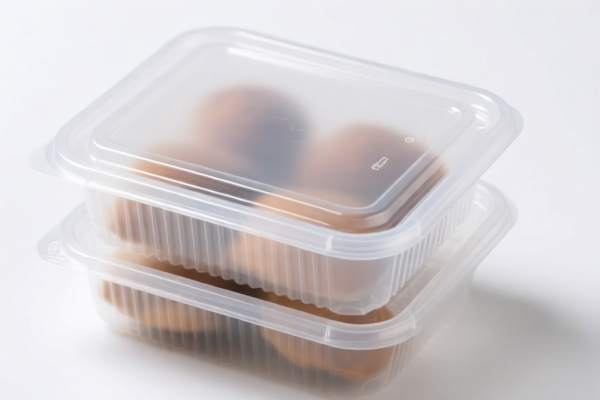

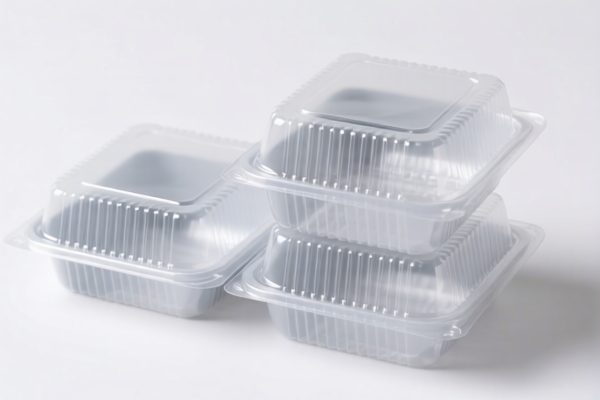
AI Analysis
📦 Sealed Boxes (Cardboard, Plastic & Steel Containers)
🌐 HS Code Reference & Customs Clearance Guide | 2026 Latest Tariff Analysis | Professional Compliance Strategy
📌 I. Product Definition: What is a "Sealed Box"?
In international trade, "Sealed Box" is a generic term that rarely exists as a standalone HS Code. It refers to various types of packaging containers made from different materials. The customs classification depends entirely on the material, capacity, and specific design.
Based on the provided data, these products fall into three main material categories: 1. Paper/Cardboard: Folding cartons, boxes, and cases (Sanitary food/beverage containers). 2. Plastics: Boxes, cases, crates, and specially shaped packing articles. 3. Iron/Steel: Drums, casks, cans, and tanks (Capacity ≤ 300L).
⚠️ Key Distinction Point:
- Material is King: Steel vs. Plastic vs. Paper determines the HS Chapter (73, 39, or 48).
- Capacity Matters: For steel containers, the 50-liter threshold is critical.
- Special Use: Plastic boxes for semiconductors have a unique subheading.
📦 II. HS Code Classification Details (2026 Latest Tariff Authority Reference)
| HS Code | Product Description | Material | Key Characteristics |
|---|---|---|---|
7310.10.00.15 |
Empty steel drums and barrels | Iron/Steel | Capacity ≥ 50L, ≤ 300L. Empty, no thermal equipment. |
7310.10.00.90 |
Other steel drums/casks | Iron/Steel | Capacity ≥ 50L, ≤ 300L. Not empty or other variations. |
3923.10.20.00 |
Specially shaped plastic boxes | Plastic | Fitted for semiconductor wafers, masks, or reticles. |
3923.10.90.00 |
Other plastic boxes/crates | Plastic | General-purpose plastic packing boxes. |
4819.10.00.20 |
Corrugated paper boxes | Paper/Cardboard | Sanitary food and beverage containers. |
4819.20.00.20 |
Folding cartons (non-corrugated) | Paper/Cardboard | Sanitary food and beverage containers. |
🔍 Important Note:
- Steel Containers: If the steel container is < 50 Liters, it does not fall under HS 7310.10. It may fall under HS 7310.29 or other headings.
- Plastic Packaging: If the plastic box is not for semiconductors, it must be declared under the "Other" category (3923.10.90.00).
- Paper Packaging: "Sealed" usually implies glued or taped. Corrugated (4819.10) vs. Non-corrugated (4819.20) is the primary divider.
💰 III. 2026 Latest Tariff Rate Details (Including Surtaxes & Policy Add-ons)
✅ Applicable Country: United States (US)
✅ Country of Origin: China (CN)
✅ Effective Date: Current US Trade Act 301 Rates + IEEPA Add-ons (Where Applicable)
🎯 1. 7310.10.00.15 & 7310.10.00.90 —— Empty Steel Drums and Casks (Capacity ≥ 50L)
| Item | Content |
|---|---|
| Base Tariff | 0.0% (Ad Valorem) |
| Section 301 Surtax | +25.0% (Steel/Aluminum/Copper Products) |
| IEEPA Surtax | +50.0% (Specific "Steel, Aluminum, Copper" Category Surtax) |
| Total Tax Rate | 75.0% |
| Tax Calculation | CIF Value × 75% |
| De Minimis Eligibility | ❌ Not Eligible (Deny de minimis for Section 301 goods) |
| Legal Path | HTSUS:7310.10.00 → USITC Footnote: Steel/Al/Cu 50% → Total 75% |
📌 Explanation:
- These steel containers are classified under Heading 7310.
- The data explicitly states: "Steel, Aluminum, Copper Products Surtax: 50%".
- Combined with the standard 25% Section 301 tariff, the total landed duty cost is 75%.
- Risk: This is an extremely high duty rate. Importers must verify if the steel content qualifies for the "Steel/Al/Cu" surtax category. If not, the rate might be lower (only 25%), but the provided data mandates 75%.
🎯 2. 3923.10.20.00 —— Plastic Boxes for Semiconductors
| Item | Content |
|---|---|
| Base Tariff | 0.0% |
| Section 301 Surtax | +25.0% |
| IEEPA Surtax | 0% (Not listed in the specific Steel/Al/Cu surtax list for this subheading in the provided data) |
| Total Tax Rate | 25.0% |
| Tax Calculation | CIF Value × 25% |
| De Minimis Eligibility | ❌ Not Eligible (Section 301 goods) |
| Legal Path | HTSUS:3923.10.20 → USITC Footnote: 301 List 4 → 25% |
📌 Explanation:
- These are specialized industrial packaging for semiconductor wafers/masks.
- The data shows a base tariff of 0% and a standard 25% Section 301 surtax.
- No additional 50% steel surtax applies here as it is plastic.
- Advantage: Significantly lower than steel containers (25% vs. 75%).
🎯 3. 3923.10.90.00 —— Other Plastic Boxes/Crates
| Item | Content |
|---|---|
| Base Tariff | 3.0% |
| Section 301 Surtax | +25.0% |
| Total Tax Rate | 28.0% |
| Tax Calculation | CIF Value × 28% |
| De Minimis Eligibility | ❌ Not Eligible (Section 301 goods) |
| Legal Path | HTSUS:3923.10.90 → Base 3% + 301 25% |
📌 Explanation:
- General-purpose plastic packaging (e.g., food crates, retail display boxes).
- Bears a 3% base duty plus the 25% surtax.
- Common for consumer goods packaging.
🎯 4. 4819.10.00.20 & 4819.20.00.20 —— Paper/Cardboard Boxes (Sanitary Food/Beverage)
| Item | Content |
|---|---|
| Base Tariff | 0.0% |
| Section 301 Surtax | +25.0% |
| Total Tax Rate | 25.0% |
| Tax Calculation | CIF Value × 25% |
| De Minimis Eligibility | ❌ Not Eligible (Section 301 goods) |
| Legal Path | HTSUS:4819.10/20 → USITC Footnote: 301 List → 25% |
📌 Explanation:
- Includes both corrugated (4819.10) and folding cartons (4819.20).
- Specific designation: "Sanitary food and beverage containers".
- Standard 25% Section 301 surtax applies.
- Note: If these are not for sanitary food/beverage use, they may fall under different subheadings with potentially different rates, but the provided data restricts us to this description.
🛠️ IV. Customs Clearance Practical Advice (Pitfall Avoidance Guide)
✅ 1. Documentation Checklist (Missing Items = Delays)
| Document | Mandatory? | Purpose |
|---|---|---|
| ✅ Product Specification Sheet | ✔️ | Define material, capacity (for steel), and usage (e.g., "for semiconductors"). |
| ✅ Commercial Invoice | ✔️ | Must clearly state "Empty Steel Drums" or "Plastic Boxes for..." – vague terms like "Container" risk rejection. |
| ✅ Packing List | ✔️ | List quantities and net/gross weights. Crucial for verifying capacity counts. |
| ✅ Material Declaration | ✔️ | For steel: Confirm it is empty and ≤ 300L. For plastic: Confirm it is not for dangerous goods unless declared. |
| ✅ Proof of Origin (CO) | ✔️ | If not China-origin, may avoid 301 surtaxes (check FTAs). |
✅ 2. Classification Strategy (Critical for Cost Saving)
🔥 "Material First, Capacity Second, Use Third!"
| Scenario | Correct HS Code | Risk of Misclassification |
|---|---|---|
| Steel Drum, 60L, Empty | 7310.10.00.15 |
Misclassifying as <50L could lead to wrong duty (though data doesn't show <50L, it's a common trap). |
| Plastic Crate for Electronics | 3923.10.20.00 |
If not for semiconductors, must use 3923.10.90.00 (28%). Wrong description = Audit risk. |
| Cardboard Box for Shoes | 4819.10.00.20? |
Warning: The provided data specifies "Sanitary food and beverage containers". If your box is for shoes, it might not fit this specific subheading. Check if it falls under general 4819.10.00.00 (rate may differ). Strict adherence to provided data is risky if product doesn't match description. |
| Steel Can, 40L | Not Covered | Data only covers ≥50L. Must find separate HS Code for <50L steel cans (likely 7310.29). |
✅ 3. Special Considerations for "Sealed" Items
- "Sealed" vs. "Empty": For steel drums (
7310.10.00.15), the description explicitly says "Empty steel drums". If the box is sealed with residue, glue, or labels, ensure it is clearly declared as clean/empty to avoid hazardous material classifications. - Plastic Surtax: Ensure plastic boxes are not made of recycled materials if there are specific anti-dumping duties (check USITC for additional flags).
- Paper Sanitary Claim: If claiming
4819.10.00.20, you must prove it is for sanitary food/beverage use. Using this code for general packaging may trigger fraud investigations.
🌍 V. Global Market Comparison (2026 Outlook)
| Region | Recommended HS Code | Estimated Duty (China Origin) | Key Certification |
|---|---|---|---|
| 🇺🇸 USA | 7310.10.00.15 / 3923.10.20.00 / 4819.10.00.20 |
25% - 75% (See above) | None generally, but content must match description. |
| 🇨🇳 China | 7310.10 / 3923.10 / 4819.10 |
0% - 5% (Import Duty) | N/A (Export from CN) |
| 🇪🇺 EU | Similar codes | 0% - 5% (Most free under GSP/FTA) | CE Mark (if applicable), REACH (for plastics). |
| 🇯🇵 Japan | Similar codes | 0% - 5% | JIS Standards (for steel/plastics). |
📌 Conclusion:
- The US Market is the most expensive due to Section 301 and Steel Surtax.
- Steel containers are the most expensive (75%) due to the 50% IEEPA surtax.
- Plastic and Paper containers remain at 25-28%.
- Strategy: If possible, consider sourcing packaging from Vietnam, Mexico, or India to avoid US surtaxes.
📌 VI. Common Mistakes & Pitfalls (Lessons Learned)
❌ Mistake 1: Declaring "Steel Drums" but they are ≥ 300 Liters.
👉 Result: Wrong HS Code. Should be 7310.29. Duty may be different. Penalty for misdeclaration.
❌ Mistake 2: Using HS 3923.10.20.00 for general plastic boxes.
👉 Result: This code is only for semiconductor wafers/masks. General boxes must be 3923.10.90.00. Over-classifying can lead to customs audits if the specific use isn't proven.
❌ Mistake 3: Claiming "Sanitary Food Container" for a non-food cardboard box.
👉 Result: Fraud risk. Customs may demand proof of sanitary certification. If not, reclassify to general paper boxes.
❌ Mistake 4: Ignoring the 50-Liter Threshold for Steel.
👉 Result: Steel drums < 50L have different codes. If you ship 45L drums and declare under 7310.10, you will be corrected and fined.
✅ Correct Practice:
"Empty Steel Drum, Capacity: 200L, Material: Steel, No Thermal Equipment, Model: SD-200"
"Plastic Crate, For Semiconductor Wafer Handling, Material: PP, Model: PC-SEM-01"
🎯 VII. Conclusion: Precision in Packaging Classification
🎯 Remember:
🔹 "Steel is Heavy & Taxed": 75% duty for large steel containers.
🔹 "Plastic is Specific"`: Semiconductor boxes (25%) vs. General boxes (28%).
🔹 "Paper is Descriptive": Must be "Sanitary Food/Beverage" for the specific codes listed.
🔹 "Capacity is Key"**: 50L is the magic number for steel.
📌 Pro Tip:
If your "Sealed Box" is not empty, not for semiconductors, not sanitary food, or > 300L steel, these HS Codes do not apply. You must find the correct classification for your specific product to avoid penalties.
📣 Immediate Action:
📞 Verify Product Material & Capacity.
📸 Provide Clear Photos to Customs Broker.
📝 Declare Specific Use (e.g., "For Semiconductor Wafers").
🚀 Accurate Classification Saves 50%+ in Costs!
✨ Professional Customs Clearance Starts with the Right HS Code!
💼 Don't Let "Sealed Box" Cost You 75% in Duties!
Customer Reviews
About HS Code Classification
The Harmonized System (HS) is an internationally standardized nomenclature developed by the World Customs Organization (WCO) to classify traded products. Over 200 countries use the HS system as the basis for customs tariffs, trade statistics, and import/export regulations.
Each HS code follows a hierarchical structure:
- Chapter (2 digits) — Broad category of goods (e.g., Chapter 84: Machinery and Mechanical Appliances)
- Heading (4 digits) — More specific grouping within the chapter
- Subheading (6 digits) — Internationally standardized breakdown, used by all WCO member countries
- National subdivisions (8-10 digits) — Country-specific extensions for further classification, such as US HTSUS 10-digit codes
Correct HS code classification is essential for smooth customs clearance, accurate duty payment, and compliance with trade regulations. Misclassification can lead to customs delays, overpayment of duties, or penalties.
When importing from CN to US, the applicable tariff rates may include:
- Most-Favored-Nation (MFN) rate — The standard duty rate applied to WTO members
- General rate — Applied to countries without trade agreements
- Trade remedy duties — Additional tariffs such as Section 301 (anti-dumping), Section 232 (national security), or countervailing duties
The information provided on this page is for reference purposes only. For official classification, please consult with your local customs authority or a licensed customs broker.