Sealed Gas Mixture
CN → US| HS Code | Tariff Rate | Origin | Destination | Doc |
|---|---|---|---|---|
| 3824999397 | 40.0% | CN | US | Official Doc |
| 3506915000 | 37.1% | CN | US | Official Doc |
| 3506990000 | 37.1% | CN | US | Official Doc |
| 3824999397 | 40.0% | CN | US | Official Doc |
| 3824992900 | 41.5% | CN | US | Official Doc |
Product Images
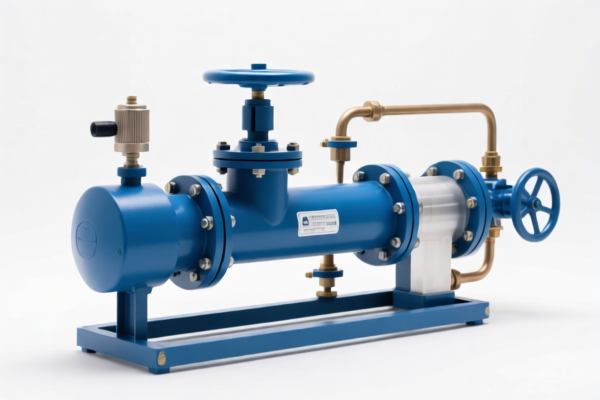
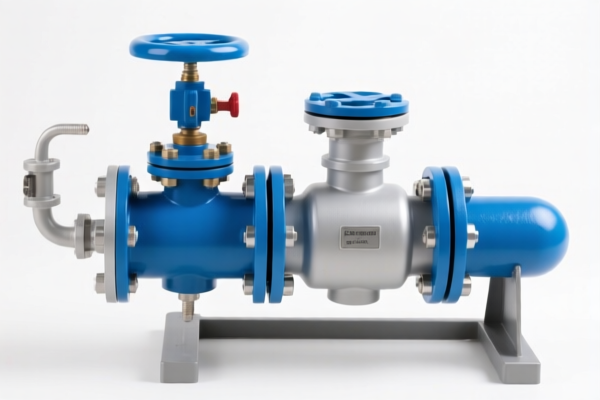
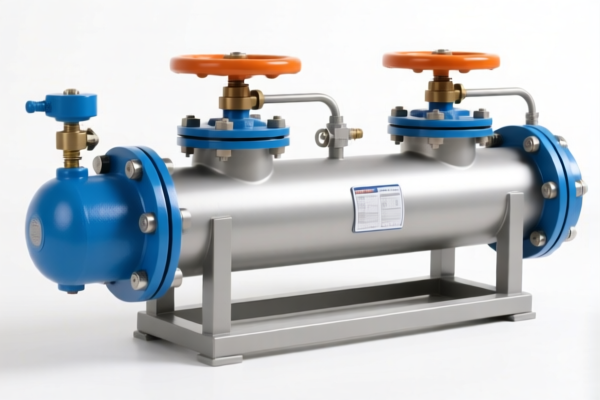
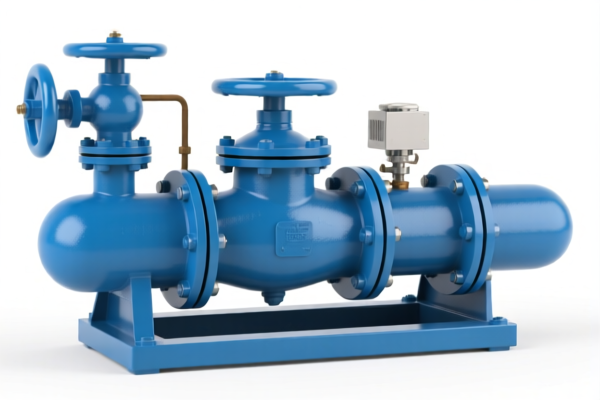
AI Analysis
🧪 Sealed Gas Mixture (Chemical Compounds & Preparations)
🌐 HS Code Reference & Customs Clearance Guide | 2026 Latest Tariff Analysis | Professional Compliance Strategy
📌 I. Product Definition & Classification: Understanding "Sealed Gas Mixtures"
A Sealed Gas Mixture typically refers to a pre-mixed combination of gases enclosed in a container (cylinder, canister, or sealed package) for specific industrial, laboratory, or medical applications. In international trade, these fall under the broad category of Chemical Products and Preparations.
Because "Gas Mixture" is a functional description rather than a specific chemical identity, customs authorities often look for the nature of the mixture: 1. General Chemical Mixtures: If the mixture doesn't fit a specific chemical compound definition, it may fall under "Other chemical products and preparations" (Chapter 38). 2. Adhesive/Sealant Mixtures: If the gas mixture is part of a sealant or adhesive system (e.g., used for sealing joints in construction or manufacturing), it may be classified under Glues, Adhesives, or Prepared Binders (Chapter 35).
⚠️ Key Distinction Point:
- If the product is purely a blended gas for calibration, welding, or analysis → Likely Chapter 38 ("Other chemical products").
- If the product is a sealing agent (liquid/gel form) containing gases or cured to form a seal → Likely Chapter 35 ("Glues/Adhesives").
- Critical Note: The term "Sealed" in the user input likely refers to the packaging (e.g., "Sealed Container"), but if the product itself is a Sealant/Adhesive (as suggested by the HS codes 3506.xx), it must be classified as a binding agent, not just a gas.
📦 II. HS Code Classification Details (2026 Latest Tariff Authority Cross-Reference)
| HS Code | Product Description | Application Scenario | Tax Rate (China Origin to US) | Legal Basis |
|---|---|---|---|---|
3824.99.93.97 |
Gas Mixture: Fits the "Other chemical products and preparations" catch-all definition. | Calibration gases, inert gas blends, specialized industrial gas mixes. | 40.0% | Ch 38 (Miscellaneous Chemical Products) |
3506.91.50.00 |
Sealant Mixture: Fits the category of "Prepared Adhesives" with specific adhesive characteristics. | Construction sealants, industrial glues, bonding agents. | 37.1% | Ch 35 (Glues, Adhesives) |
3506.99.00.00 |
Sealant Mixture: Prepared adhesives not elsewhere specified. | General-purpose sealants, putties, modeling pastes. | 37.1% | Ch 35 (Glues, Adhesives) |
3824.99.29.00 |
Chemical Mixture: Chemical products/preparations, no specific component identified. | Generic chemical blends, industrial preparations. | 41.5% | Ch 38 (Miscellaneous Chemical Products) |
3824.99.93.97 |
Sealant Mixture: Chemical product nature, classified as "Other" chemicals. | Sealants classified as chemical preparations rather than glues. | 40.0% | Ch 38 (Miscellaneous Chemical Products) |
🔍 Important Reminder:
- Chapter 35 vs. Chapter 38: If the product is explicitly a sealant (used for bonding or sealing joints), Chapter 35 (3506.xx) is often more accurate than Chapter 38, potentially lowering the duty rate (37.1% vs 40.0%+).
- "Sealed" Ambiguity: If "Sealed" refers to the container (e.g., "Sealed Cylinder of Gas"), use 3824.99.93.97 or 3824.99.29.00. If "Sealed" refers to the function (Sealant), use 3506.xx.
💰 III. 2026 Latest Tariff Rate Breakdown (Including Additional Taxes & Policy Surcharges)
✅ Applicable Country: United States (US)
✅ Country of Origin: China (CN)
✅ Effective Date: From November 10, 2025 (Including subsequent imports)
🎯 1. 3824.99.93.97 & 3824.99.29.00 —— Chemical Mixtures & Gas Mixtures
| Item | Content |
|---|---|
| Base Tariff | 5.0% (for 3824.99.93.97) / 6.5% (for 3824.99.29.00) |
| Section 301 Tariff | +25.0% (From USITC Footnote 9903.88.01) |
| Section 122 Tariff | +10.0% (Specific additional tariff for certain chemical/china-origin goods) |
| Total Tariff | 40.0% (for 3824.99.93.97) / 41.5% (for 3824.99.29.00) |
| Tax Calculation | CIF Value × 40.0% / 41.5% |
| De Minimis Exemption | ❌ Not Applicable (deny_de_minimis) |
| Legal Path | Section 301:9903.88.01 → Section 122 → USITC:3824.99.93.97 |
📌 Explanation:
- The 25% Section 301 tariff applies to most Chinese-origin chemical products under Chapter 38.
- The 10% Section 122 tariff is a specific additional duty often applied to goods from China under specific trade provisions.
- Total Effective Rate: Up to 41.5%, making these high-cost imports.
🎯 2. 3506.91.50.00 & 3506.99.00.00 —— Sealant/Adhesive Mixtures
| Item | Content |
|---|---|
| Base Tariff | 2.1% |
| Section 301 Tariff | +25.0% |
| Section 122 Tariff | +10.0% |
| Total Tariff | 37.1% |
| Tax Calculation | CIF Value × 37.1% |
| De Minimis Exemption | ❌ Not Applicable (deny_de_minimis) |
| Legal Path | Section 301:9903.88.01 → Section 122 → USITC:3506.91.50.00 |
📌 Advantage:
- Sealants under Chapter 35 have a lower base rate (2.1% vs 5.0-6.5%), resulting in a lower total duty (37.1%) compared to general chemical mixtures (40.0%+).
- Strategy: If your product can be legally defined as a sealant/adhesive (e.g., polysiloxane sealants, polyurethane adhesives), classify under 3506.xx to save 2.9–4.4% in duties.
🛠️ IV. Customs Clearance Practical Advice (Battle-Tested Pitfall Avoidance Guide)
✅ 1. Documentation Checklist (Non-negotiable)
| Document | Required | Purpose |
|---|---|---|
| ✅ Safety Data Sheet (SDS) | ✔️ | Critical for chemical/gas mixtures. Must list all ingredients >1%. |
| ✅ Product Specifications | ✔️ | Define if it's a "Gas Mixture" (Ch 38) or "Sealant" (Ch 35). |
| ✅ Commercial Invoice | ✔️ | Must clearly state "Sealed Gas Mixture" or "Prepared Sealant". |
| ✅ Certificate of Origin | ✔️ | Required for Section 301 and 122 tariff application. |
| ✅ Packaging Declaration | ✔️ | Specify if gases are under pressure, flammable, or toxic. |
| ✅ Third-Party Lab Report | ✔️ | To confirm chemical composition and HS code accuracy. |
✅ 2. Declaration Tips (Key Mantras)
🔥 “Clarify the Function: Gas vs. Sealant! Accurate Name, Lower Duty!”
| Scenario | Correct Declaration | Wrong Practice |
|---|---|---|
| Pure Gas Blend (e.g., Argon/CO2 mix for welding) | "Gas Mixture, Non-Flammable, for Welding, HS 3824.99.93.97" |
Calling it "Adhesive" → Risk of fraud penalty |
| Sealant Paste (e.g., Silicone sealant) | "Prepared Adhesive/Sealant, Silicone-based, HS 3506.91.50.00" |
Calling it "Chemical Mixture" → Higher duty (40%+) |
| Gas in Sealed Cylinder | "Sealed Container of Gas Mixture, HS 3824.99.29.00" |
Not declaring pressure status → Safety inspection delay |
| Adhesive Sealant | "Sealant Mixture, for Construction, HS 3506.99.00.00" |
Misclassifying as "Gas" → Incorrect tax rate |
✅ 3. Special Handling
| Situation | Recommendation |
|---|---|
| Flammable Gases | Must declare UN Number (e.g., UN1045). Requires special packaging and carrier approval. |
| Toxic/Corrosive Mixtures | SDS must explicitly state hazard classes. Additional security checks may apply. |
| OEM Custom Mixes | Provide formula sheet (if available) to justify Ch 38 "Other" classification. |
| Sealants with Solvents | If solvent content >%, it may shift classification to Ch 38 (Preparations) instead of Ch 35. Check local regulations. |
🌍 V. Global Market Clearance Comparison (2026 Latest)
| Country/Region | Recommended HS Code | Duty Rate | Certification | Note |
|---|---|---|---|---|
| 🇺🇸 USA | 3824.99.93.97 / 3506.91.50.00 |
40.0% / 37.1% | SDS, COO | High tariffs due to 301/122 |
| 🇨🇳 China | 3824.99.93.97 / 3506.91.50.00 |
5-10% | CCC (if applicable) | Lower import duties |
| 🇪🇺 EU | 3824.99.99 / 3506.91 |
0-6.5% | REACH Registration | REACH compliance is critical for chemicals |
| 🇯🇵 Japan | 3824.99.90 / 3506.91 |
0-5% | JIS Standards | No major surcharges |
| 🇬🇧 UK | 3824.99.90 / 3506.91 |
0-5% | UKCA Mark | Post-Brexit rules apply |
📌 Conclusion:
- USA imposes the highest effective duty due to Section 301 (25%) and Section 122 (10%).
- EU requires REACH registration for chemicals/gases, which is a major barrier to entry.
- Optimization: If your product is a sealant, use 3506.xx in the US to save 2.9–4.4% compared to general chemical mixtures.
📌 VI. Common Errors & Pitfall Guide (Lessons Learned)
❌ Error 1: Calling a "Sealant" a "Gas Mixture" to avoid higher duties
👉 Consequence: Customs may reclassify, apply 40%+ duty, and impose penalties for misdeclaration.
❌ Error 2: Not declaring the exact composition in SDS
👉 Consequence: Customs may assign the highest "catch-all" rate (3824.99.99.00) if components are unknown.
❌ Error 3: Ignoring Section 122 Tariff
👉 Consequence: Underpayment of 10% additional duty. Audits will require back payment + interest.
❌ Error 4: Confusing "Sealed Container" with "Sealant Product"
👉 Consequence: Wrong HS code leads to 45-day clearance delays for re-inspection.
✅ Correct Approach:
"For Gas Mixtures: Use 3824.99.93.97 (40.0%).
For Sealant/Adhesive Products: Use 3506.91.50.00 (37.1%).
Always provide SDS and Certificate of Origin."
🎯 VII. Conclusion: Precise Classification Saves Money!
🎯 Remember the Mantra:
🔹 "Gas Mixture = 40% Duty (Ch 38). Sealant = 37.1% Duty (Ch 35). Choose Wisely!"
🔹 "301 Tariff is 25%, 122 is 10%. Total Cost = Base + 35%!"
📌 Pro Tip:
If your gas mixture is used for medical or laboratory calibration, check if any exemptions apply for scientific equipment. However, most general chemical mixtures do not qualify for de minimis exemptions.
📣 Immediate Action:
📞 Consult a licensed customs broker.
📄 Provide SDS and Product Function Description.
🚀 Apply for Pre-Ruling if the classification is ambiguous (Gas vs. Sealant).
✨ Professional Clearance Starts with Accurate Classification!
💼 Every 1% of Duty Saved is Pure Profit!
Customer Reviews
About HS Code Classification
The Harmonized System (HS) is an internationally standardized nomenclature developed by the World Customs Organization (WCO) to classify traded products. Over 200 countries use the HS system as the basis for customs tariffs, trade statistics, and import/export regulations.
Each HS code follows a hierarchical structure:
- Chapter (2 digits) — Broad category of goods (e.g., Chapter 84: Machinery and Mechanical Appliances)
- Heading (4 digits) — More specific grouping within the chapter
- Subheading (6 digits) — Internationally standardized breakdown, used by all WCO member countries
- National subdivisions (8-10 digits) — Country-specific extensions for further classification, such as US HTSUS 10-digit codes
Correct HS code classification is essential for smooth customs clearance, accurate duty payment, and compliance with trade regulations. Misclassification can lead to customs delays, overpayment of duties, or penalties.
When importing from CN to US, the applicable tariff rates may include:
- Most-Favored-Nation (MFN) rate — The standard duty rate applied to WTO members
- General rate — Applied to countries without trade agreements
- Trade remedy duties — Additional tariffs such as Section 301 (anti-dumping), Section 232 (national security), or countervailing duties
The information provided on this page is for reference purposes only. For official classification, please consult with your local customs authority or a licensed customs broker.