Sealing Clip
CN → US| HS Code | Tariff Rate | Origin | Destination | Doc |
|---|---|---|---|---|
| 4016931010 | 37.5% | CN | US | Official Doc |
| 4016935010 | 37.5% | CN | US | Official Doc |
| 3926904590 | 38.5% | CN | US | Official Doc |
| 3926904510 | 38.5% | CN | US | Official Doc |
| 3926904590 | 38.5% | CN | US | Official Doc |
Product Images

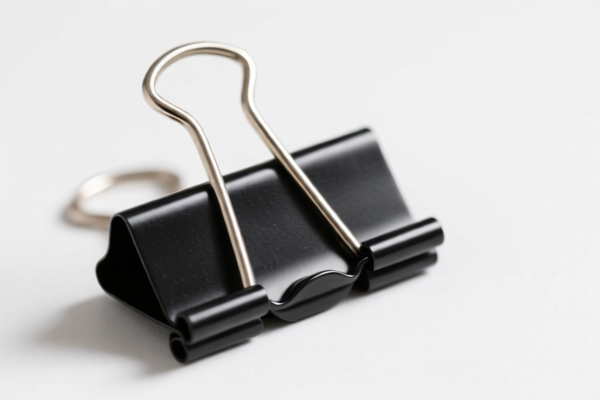


AI Analysis
🔒 Sealing Clip (Sealing Strip / Gasket)
🌐 HS Code Reference & Customs Clearance Guide | 2024/2025 Latest Tariff Analysis | Professional Compliance Strategy
📌 1. Product Definition & Classification: Do You Truly Understand "Sealing Clips"?
Sealing clips (also referred to as sealing strips, gaskets, or seals) are critical components used to prevent the leakage of fluids, gases, or dust, and to provide cushioning between surfaces. In international trade, they are broadly categorized under Gaskets, Washers, and Similar Articles (HS Chapter 40 or 39), depending on their material composition.
Since the input "Sealing Clip" does not explicitly specify the material, customs classification relies on functional inference and material presumption:
- Rubber/Synthetic Rubber Seals: If the clip is flexible, elastic, and used for dynamic/static sealing, it is likely rubber-based.
- Plastic/Polymer Seals: If the clip is rigid, semi-rigid, or made of thermoplastics, it falls under plastic articles.
⚠️ Key Distinction:
- If material is unknown/unspecified: Customs tends to infer based on common usage. For general-purpose sealing strips, Rubber (Chapter 40) or Plastic (Chapter 39) are the two primary competing categories.
- Misclassification Risk: Declaring a rubber seal as plastic (or vice versa) can lead to incorrect duty assessments and potential penalties.
📦 2. HS Code Classification Details (Latest Tariff Reference)
Based on the provided data, the following HS Codes are applicable for Sealing Clips, inferred from their usage (sealing components) and presumed material.
| HS Code | Product Description | Inferred Material | Functional Category |
|---|---|---|---|
4016.93.10.10 |
Sealing clips classified as seals, not specified by material but tending toward the scope of seals under this category. | Rubber (Implied by Ch. 40) | Gaskets, Washers, & Seals |
4016.93.50.10 |
Sealing clips belong to the seal category; inferred as rubber due to lack of specific material description. | Rubber | Gaskets, Washers, & Seals |
3926.90.45.90 |
Sealing clips fall under gaskets, washers, and seals; inferred as plastic material, no conflict with other plastic seal categories. | Plastic | Gaskets, Washers, & Seals |
3926.90.45.10 |
Sealing clips shape belongs to seal category; material inferred as plastic or rubber, no conflict with Chapter 39. | Plastic/Rubber | Gaskets, Washers, & Seals |
3926.90.45.90 |
Sealing kits/components belong to gaskets, washers, and seals; inferred as plastic, rubber, or synthetic materials. | Mixed/Synthetic | Gaskets, Washers, & Seals |
🔍 Critical Note:
- HS Code4016.93applies if the product is rubber-based.
- HS Code3926.90applies if the product is plastic-based.
- Total Duty Rate varies slightly based on whether the base rate is 2.5% (Rubber) or 3.5% (Plastic), but the additional tariffs remain consistent.
💰 3. 2024/2025 Latest Tariff Rate Breakdown (Including Additional Duties)
✅ Applicable Country: United States (US)
✅ Origin: China (CN)
✅ Effective Time: Current Trade War Tariffs (Section 301 & IEEPA)
🎯 1. Rubber-Based Sealing Clips (4016.93.10.10 / 4016.93.50.10)
| Item | Content |
|---|---|
| Base Duty Rate | 2.5% (ad valorem) |
| Section 301 Additional Duty | +25.0% |
| 122 Clause Duty (IEEPA) | +10.0% |
| Total Tariff Rate | 37.5% |
| Tax Calculation | CIF Value × 37.5% |
| De Minimis Exemption | ❌ Not Eligible |
| Legal Basis Path | USITC:4016.93 → SECTION301:Footnote 9903.88.01 → IEEPA:122Clause |
📌 Explanation:
- Rubber sealing products are subject to the standard 2.5% MFN duty.
- They face a 25% Section 301 tariff (trade war penalty).
- An additional 10% tariff is applied under 122 Clause (often related to specific import restrictions or emergency measures).
- Total: 37.5%. This is a high-cost category for Chinese-origin rubber seals.
🎯 2. Plastic-Based Sealing Clips (3926.90.45.10 / 3926.90.45.90)
| Item | Content |
|---|---|
| Base Duty Rate | 3.5% (ad valorem) |
| Section 301 Additional Duty | +25.0% |
| 122 Clause Duty (IEEPA) | +10.0% |
| Total Tariff Rate | 38.5% |
| Tax Calculation | CIF Value × 38.5% |
| De Minimis Exemption | ❌ Not Eligible |
| Legal Basis Path | USITC:3926.90 → SECTION301:Footnote 9903.88.01 → IEEPA:122Clause |
📌 Explanation:
- Plastic sealing products have a slightly higher base duty of 3.5%.
- They also face the 25% Section 301 tariff and 10% 122 Clause duty.
- Total: 38.5%. Slightly higher than rubber due to the base rate difference.
🛠️ 4. Customs Clearance Practical Advice (Pitfall Avoidance Guide)
✅ 1. Required Documentation Checklist (Mandatory)
| Document | Must Provide | Description |
|---|---|---|
| ✅ Product Specification Sheet | ✔️ | Must clearly state Material (Rubber, Plastic, Silicone, EPDM, etc.) and Hardness (Shore A). |
| ✅ Material Declaration | ✔️ | Explicitly state: "Made of Nitrile Rubber" or "Polyvinyl Chloride (PVC)". Ambiguity leads to misclassification. |
| ✅ Product Photos (Labeled) | ✔️ | Show cross-section, dimensions, and any branding. |
| ✅ Commercial Invoice | ✔️ | HS Code must be listed with full description matching the invoice. |
| ✅ Bill of Lading | ✔️ | Ensure weight and volume match the invoice. |
| ✅ Origin Certificate | ❌ (Not for US) | Note: China-origin goods do not qualify for US free trade agreements. |
✅ 2. Declaration Tips (Key Mantra)
🔥 "Material First, Function Second, Name Precise, Tax Clear!"
| Scenario | Correct Declaration | Incorrect Practice |
|---|---|---|
| Rubber Seal | "Rubber Sealing Clip, EPDM, for Automotive Use" | "Sealing Clip" (Too vague → Risk of audit) |
| Plastic Seal | "Plastic Sealing Strip, PVC, for Window Frame" | "Plastic Part" (Misclassification risk) |
| Mixed Material | Specify dominant material or declare as "Mixed" | Guessing material → High penalty risk |
| Kit/Set | Declare components separately or as a set if value is minor | Over-valuing seals → Duty evasion suspicion |
✅ 3. Special Case Handling
| Situation | Handling Advice |
|---|---|
| Unknown Material | Provide lab test results or supplier certification. If unavailable, customs may assign the highest applicable duty or detain for inspection. |
| OEM Custom Seals | Include customer PO and design drawings to prove specific use, but HS code remains based on material. |
| High-Value Silicone Seals | Verify if they fall under Ch. 40 (Rubber) or Ch. 39 (Plastic). Silicone is often classified under Ch. 40 if vulcanized. |
| Sealing Kits | If a kit contains multiple items, the essential character rule applies. If seals are the main value, classify as seals. |
🌍 5. Global Market Clearance Comparison (2024/2025)
| Country/Region | Recommended HS Code | Base Duty | Additional Tariffs (China Origin) | Total Est. Rate | Notes |
|---|---|---|---|---|---|
| 🇺🇸 USA | 4016.93 (Rubber) / 3926.90 (Plastic) |
2.5% / 3.5% | +25% (Sec 301) +10% (122) | 37.5% / 38.5% | Very High. Plan cost accordingly. |
| 🇨🇳 China | 4016.93 / 3926.90 |
2.0% - 5% | None | ~2-5% | Low cost for domestic sale. |
| 🇪🇺 EU | 4016.93 / 3926.90 |
0% - 4% | None (General Preference) | 0-4% | No trade war tariffs. Competitive. |
| 🇬🇧 UK | 4016.93 / 3926.90 |
0% - 4% | None | 0-4% | Post-Brexit, no additional China tariffs. |
| 🇨🇦 Canada | 4016.93 / 3926.90 |
0% - 5% | None | 0-5% | FTA benefits if origin qualifies. |
📌 Conclusion:
- The USA is the most challenging market due to 37.5%-38.5% total tariffs.
- EU/UK/Asia markets offer significantly lower duty burdens (0-5%).
- Strategy: If exporting to the US, consider supply chain diversification (e.g., sourcing from Vietnam or Mexico if possible) to avoid Section 301 tariffs, provided origin rules are met.
📌 6. Common Mistakes & Pitfall Guide (Lessons Learned)
❌ Mistake 1: Using generic terms like "Plastic Part" or "Rubber Piece"
👉 Consequence: Customs may classify under a higher-tariff generic category or request reclassification, causing delays.
✅ Fix: Use precise terms: "Nitrile Rubber Sealing Clip" or "PVC Plastic Gasket".
❌ Mistake 2: Ignoring Material Composition
👉 Consequence: If material is not specified, customs may assign the higher duty rate or detain goods for lab testing.
✅ Fix: Always declare material explicitly.
❌ Mistake 3: Misclassifying Silicone as Plastic
👉 Consequence: Silicone is often classified under Chapter 40 (Rubber). Misclassification leads to underpayment and penalties.
✅ Fix: Verify if the silicone is vulcanized (Rubber) or thermoplastic (Plastic).
❌ Mistake 4: Overlooking the "122 Clause"
👉 Consequence: Assuming only Section 301 (25%) applies, leading to a 10% underpayment.
✅ Fix: Always check for 122 Clause or other emergency tariffs. Total is 35-38.5%.
🎯 7. Conclusion: Precision in Classification Saves Money!
🎯 Remember the Mantra:
🔹 "Material Defines HS, Tariff Defines Cost."
🔹 "Rubber: 37.5%, Plastic: 38.5% in the US."
🔹 "Vague Description = High Risk, High Cost."
📌 Pro Tip:
- If your sealing clips are not primarily from China, verify if they qualify for Section 301 exclusions (if applicable) or lower tariff rates.
- Pre-Import Consultation: For high-volume shipments, consider applying for a Binding Tariff Information (BTI) or US CBP Ruling to lock in the correct HS code and duty rate.
📣 Immediate Action:
📞 Contact your customs broker with product specs (Material, Shape, Use).
🚀 Calculate landed cost with 37.5%-38.5% duty included.
💡 Optimize packaging to reduce CIF value where possible (legally).
✨ Professional Clearance Starts with Accurate Classification!
💼 Every Percentage Point of Duty Matters!
Customer Reviews
About HS Code Classification
The Harmonized System (HS) is an internationally standardized nomenclature developed by the World Customs Organization (WCO) to classify traded products. Over 200 countries use the HS system as the basis for customs tariffs, trade statistics, and import/export regulations.
Each HS code follows a hierarchical structure:
- Chapter (2 digits) — Broad category of goods (e.g., Chapter 84: Machinery and Mechanical Appliances)
- Heading (4 digits) — More specific grouping within the chapter
- Subheading (6 digits) — Internationally standardized breakdown, used by all WCO member countries
- National subdivisions (8-10 digits) — Country-specific extensions for further classification, such as US HTSUS 10-digit codes
Correct HS code classification is essential for smooth customs clearance, accurate duty payment, and compliance with trade regulations. Misclassification can lead to customs delays, overpayment of duties, or penalties.
When importing from CN to US, the applicable tariff rates may include:
- Most-Favored-Nation (MFN) rate — The standard duty rate applied to WTO members
- General rate — Applied to countries without trade agreements
- Trade remedy duties — Additional tariffs such as Section 301 (anti-dumping), Section 232 (national security), or countervailing duties
The information provided on this page is for reference purposes only. For official classification, please consult with your local customs authority or a licensed customs broker.