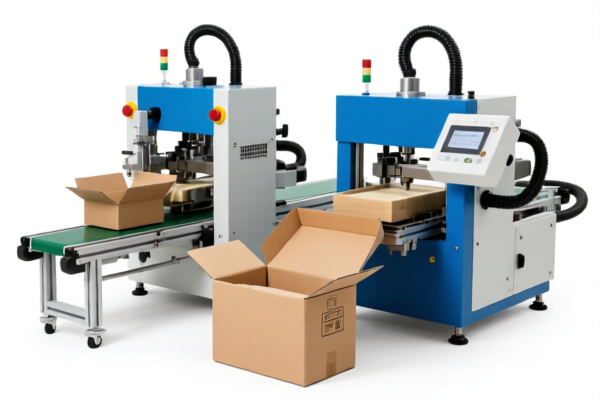
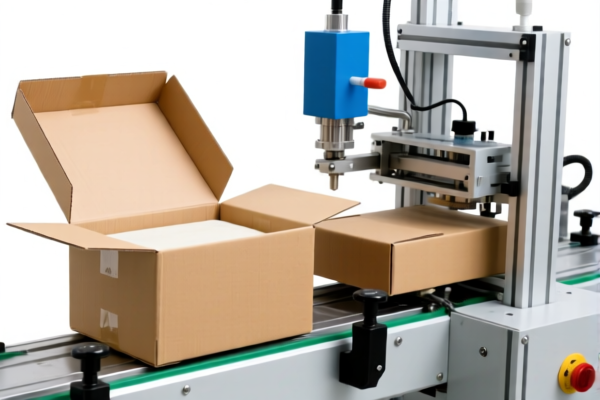
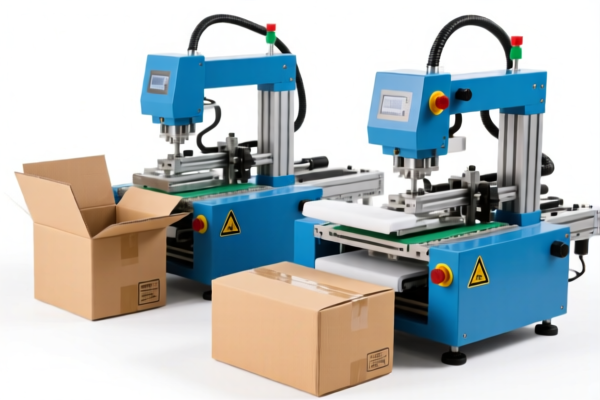
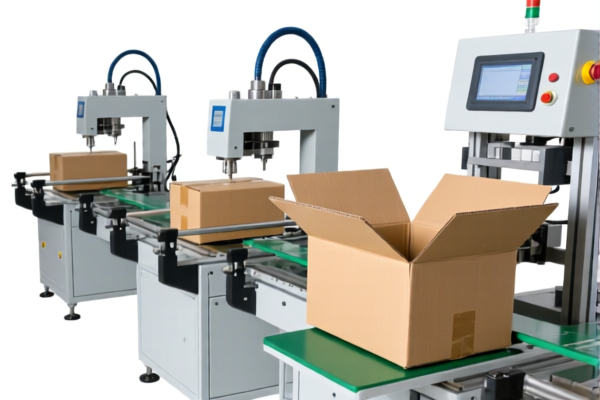
Sealing Machine Small
CN → US| HS Code | Tariff Rate | Origin | Destination | Doc |
|---|---|---|---|---|
| 8422309160 | 35.0% | CN | US | Official Doc |
| 8422309186 | 35.0% | CN | US | Official Doc |
| 8422309150 | 35.0% | CN | US | Official Doc |
Product Images
AI Analysis
📦 Sealing Machine Small (Industrial Packaging Equipment)
🌐 HS Code Reference & Customs Clearance Guide | 2026 Latest Tariff Analysis | Professional Strategy for High-Tariff Items
📌 I. Product Definition & Classification: What is a "Small Sealing Machine"?
In international trade, "Sealing Machine Small" refers to mechanical devices used to execute sealing or closing operations on containers. These machines are critical for filling, closing, and sealing operations in packaging lines.
Key Classification Criteria: - Function: Strictly performs sealing, closing, or filling operations. - Form Factor: Mechanical equipment (not purely pneumatic or manual tools without mechanical drive). - Material: No specific material conflicts apply; classification is function-based.
⚠️ Critical Distinction:
- If the machine is used for opening boxes, it may fall under different headings.
- However, if its primary purpose is closing/sealing, it fits squarely into Chapter 84 (Nuclear reactors, boilers, machinery...), specifically heading 8422.
📋 II. HS Code Classification Details (2026 Latest Tariff Authority对照)
Based on the provided data, the "Sealing Machine Small" falls under three closely related sub-headings within 8422.30.91, all sharing identical tariff structures. The choice depends on specific functional nuances:
| HS Code | Product Description | Functional Match | Material/Shape Conflict? |
|---|---|---|---|
8422.30.91.60 |
Sealing/Closing Machinery | High Match: Executing sealing/closing operations on containers. | ❌ None |
8422.30.91.86 |
Closing/Sealing Machinery | High Match: Closing/sealing functions for boxes/containers. | ❌ None |
8422.30.91.50 |
Sealing/Closing Machinery | High Match: Filling, closing, and sealing operations. | ❌ None |
🔍 Key Insight:
- All three codes (...60,...86,...50) describe mechanical sealing/closing equipment.
- The distinction between them is subtle and often based on specific machine type (e.g., bottle capping vs. bag sealing vs. box crimping).
- All carry the same total tax rate of 35.0%.
- No material conflicts exist for any of these codes; classification is purely functional.
💰 III. 2026 Latest Tariff Rate Breakdown (Including Surcharges & Policy Add-ons)
✅ Applicable Country: United States (US)
✅ Origin: China (CN) (Implied by the specific "122 Clause" and tariff structure)
✅ Effective Time: Current as of 2026 Import Regulations
🎯 1. General Tariff Structure for 8422.30.91.60 / .86 / .50
| Item | Content |
|---|---|
| Base Duty Rate | 0.0% (Ad Valorem) |
| Section 301 Surcharge | +25.0% (USITC Additional Duty) |
| Section 122 Duty | +10.0% (Specific US Trade Policy Surcharge) |
| Total Effective Rate | 35.0% |
| Tax Calculation | CIF Value × 35% |
| De Minimis Exemption? | ❌ Not Applicable (High duty rates typically exclude de minimis benefits for commercial shipments from China) |
| Legal Basis Path | USITC:8422.30.91.XX → Section 301: Footnote 9903.88.01 → Section 122: Specific Statute |
📌 Explanation:
- "Base Duty: 0.0%": Sealing machines generally have low base MFN (Most Favored Nation) rates.
- "Section 301: +25%": This is the standard retaliatory tariff on many Chinese mechanical goods under Trade Act Section 301.
- "Section 122: +10%": A specific additional duty applied under US trade laws targeting certain categories of Chinese imports (often related to national security or specific industry protections).
- Total 35%: This is a significant cost factor that must be factored into landed cost calculations.
🛠️ IV. Customs Clearance Practical Advice (Pitfall Avoidance Guide)
✅ 1. Required Documentation Checklist
| Document | Mandatory? | Purpose |
|---|---|---|
| ✅ Product Specifications | ✔️ | Detail sealing method (heat, ultrasonic, pressure), container type, speed. |
| ✅ Function Description | ✔️ | Explicitly state: "Used for sealing/closing operations on [type] containers." |
| ✅ Commercial Invoice | ✔️ | Must clearly identify as "Sealing Machine" or "Closing Machinery." Avoid vague terms like "Packaging Tool." |
| ✅ Packing List | ✔️ | List all accessories (jigs, dies, power cords) to avoid "missing parts" queries. |
| ✅ Certifications | ✔️ | CE, UL, or ISO certificates if required by US customs or end-users. |
| ✅ Origin Certificate | ✔️ | Confirm Country of Origin as China to apply correct tariffs. |
✅ 2. Declaration Tips (Critical Keywords)
🔥 "Be Precise: Use 'Sealing Machine', Not 'Packaging Machine'!"
| Scenario | Correct Declaration | Risk of Error |
|---|---|---|
| General Sealing | "Industrial Sealing Machine, Model XYZ" | Low |
| Vague Term | "Packaging Equipment" | ⚠️ High Risk: May be misclassified or audited. |
| Manual Tool | "Manual Sealer" | ⚠️ Risk: May be classified as a hand tool (Chapter 82) with different rates. |
| Component Only | "Sealing Head Part" | ⚠️ Risk: May be classified as a spare part (Chapter 84.31) with different duty. |
📌 Note: Ensure the HS code matches the function. If the machine also fills containers, it still falls under 8422 (Filling/Capping/Sealing machinery).
✅ 3. Special Cases & Mitigation
| Situation | Strategy |
|---|---|
| OEM Custom Machines | Provide OEM agreements and design specs to prove function and origin. |
| Multi-Function Machines | If it seals AND fills, declare as "Sealing/Filling Machine" → Still likely 8422.30. |
| High-Value Items | Consider Section 301 Exclusions if available (check USITC exclusion lists for 2026). |
| Re-export | If transshipped, ensure no substantial transformation occurs; keep origin documentation intact. |
🌍 V. Global Market Comparison (2026 Perspective)
| Region | Recommended HS Code | Tariff (China Origin) | Key Certification | Notes |
|---|---|---|---|---|
| 🇺🇸 USA | 8422.30.91.XX |
35.0% | UL, FCC | High due to Sec 301 + Sec 122 |
| 🇨🇳 China | 8422.30.91.XX |
~10-14% | CCC | Domestic duty applies |
| 🇪🇺 EU | 8422.30.90 |
0-2.7% | CE, RoHS | No major US-style surcharges |
| 🇯🇵 Japan | 8422.30.00 |
0-3.0% | PSE, JIS | Low duty environment |
| 🇻🇳 Vietnam | 8422.30.90 |
0-5.0% | QC Mark | Potential tariff advantage if assembled there |
📌 Conclusion:
- The US market is the most costly due to the叠加 (stacking) of Section 301 (25%) and Section 122 (10%) on top of base rates.
- EU and Japan offer more favorable duty rates for similar machinery.
📌 VI. Common Errors & Pitfalls (Blood & Tears Lessons)
❌ Error 1: Declaring as "Household Appliance" (e.g., 8509)
👉 Consequence: Misclassification → Penalty + Back Duties. Industrial sealers are not household appliances.
❌ Error 2: Omitting "Sealing" Function in Description
👉 Consequence: Customs may reject declaration or assign a higher, uncertain duty rate.
❌ Error 3: Ignoring Section 122 and 301 Surcharges
👉 Consequence: Unexpected 35% duty at port → Cash Flow Crisis for importer.
❌ Error 4: Using Generic "Packaging Machine"
👉 Consequence: Audit flag. Customs may require additional technical documents to verify function.
✅ Correct Approach:
"Industrial Sealing Machine, Model ABC, 220V, for Plastic Bags, CE Certified, Made in China"
🎯 VII. Conclusion: Precision Declaration Saves Money!
🎯 Remember the Mantra:
🔹 "Function is King: Sealing = 8422"
🔹 "US Tariff = Base (0%) + Sec 301 (25%) + Sec 122 (10%) = 35%"
🔹 "Declare Precisely: Avoid 'Packaging' Ambiguity"
🔹 "Document Everything: Specs, Invoices, Certs"
📌 Pro Tip:
- Check the USITC Exclusion List for 2026. If your specific sealing machine model is excluded from Section 301 or 122 duties, you could save up to 35%.
- Consider Pre-Ruling from US Customs and Border Protection (CBP) to lock in the HS code and duty rate before shipping.
📣 Immediate Action:
📞 Contact your freight forwarder with the exact model number and function.
🚀 Apply for Pre-Ruling if shipping high-volume orders to the US.
💼 Your profit margin depends on accurate classification!
✨ Professional Customs Clearance Starts with Accurate Classification!
💼 Every percentage point matters in global trade!
Customer Reviews
About HS Code Classification
The Harmonized System (HS) is an internationally standardized nomenclature developed by the World Customs Organization (WCO) to classify traded products. Over 200 countries use the HS system as the basis for customs tariffs, trade statistics, and import/export regulations.
Each HS code follows a hierarchical structure:
- Chapter (2 digits) — Broad category of goods (e.g., Chapter 84: Machinery and Mechanical Appliances)
- Heading (4 digits) — More specific grouping within the chapter
- Subheading (6 digits) — Internationally standardized breakdown, used by all WCO member countries
- National subdivisions (8-10 digits) — Country-specific extensions for further classification, such as US HTSUS 10-digit codes
Correct HS code classification is essential for smooth customs clearance, accurate duty payment, and compliance with trade regulations. Misclassification can lead to customs delays, overpayment of duties, or penalties.
When importing from CN to US, the applicable tariff rates may include:
- Most-Favored-Nation (MFN) rate — The standard duty rate applied to WTO members
- General rate — Applied to countries without trade agreements
- Trade remedy duties — Additional tariffs such as Section 301 (anti-dumping), Section 232 (national security), or countervailing duties
The information provided on this page is for reference purposes only. For official classification, please consult with your local customs authority or a licensed customs broker.