Sealing Tape
CN → US| HS Code | Tariff Rate | Origin | Destination | Doc |
|---|---|---|---|---|
| 4016931010 | 37.5% | CN | US | Official Doc |
| 4016935010 | 37.5% | CN | US | Official Doc |
| 3926904590 | 13.5% | CN | US | Official Doc |
| 3926904510 | 38.5% | CN | US | Official Doc |
Product Images
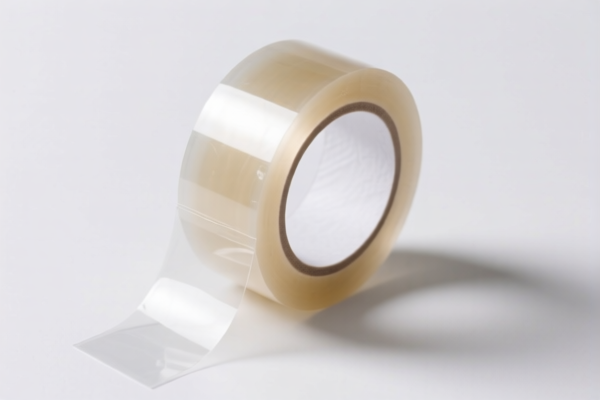



AI Analysis
🛡️ Sealing Tape (Sealing Strips / Gaskets)
🌐 HS Code Classification & Customs Clearance Guide | 2026 Latest Tariff Breakdown | Expert Compliance Strategy
📌 One, Product Definition & Classification: What Exactly Is "Sealing Tape"?
Sealing tape — also known as sealing strips, gaskets, or rubber seals — is a critical component used to create airtight, watertight, or dustproof barriers in vehicles, appliances, construction, industrial machinery, and electronics. In international trade, its classification hinges on material composition, form, and intended use.
⚠️ Key Classification Insight:
- If the product is not explicitly described as plastic or rubber, and is used for sealing purposes, it is presumed to fall under rubber-based sealing components unless proven otherwise.
- O-ring or circular seals are classified separately; non-circular, linear sealing strips belong to broader "other seals" categories.
📦 Two, HS Code Classification Details (2026 Official Tariff Matrix)
| HS Code | Product Description | Material Assumption | Use Case | Classification Logic |
|---|---|---|---|---|
4016.93.10.10 |
Sealing strips, not specified by material | Rubber (default assumption) | Automotive doors/windows, HVAC systems, industrial enclosures | Classified under rubber seals, no material specified → default to rubber |
4016.93.50.10 |
Sealing strips, used for sealing purposes | Rubber (inferred) | Doors, windows, cabinets, machinery | Purpose-driven: "used for sealing" → fits rubber sealing category |
3926.90.45.90 |
Seals, gaskets, washers, and similar parts made of plastic | Plastic (assumed) | Electrical enclosures, household appliances, non-automotive use | Non-rubber, non-O-ring → falls under plastic sealing components |
3926.90.45.10 |
Sealing strips, not O-rings, made of plastic or rubber | Plastic or rubber | General-purpose sealing, industrial packaging, electronics | Flexible form + sealing function → fits "other sealing parts" |
🔍 Critical Note:
- No material specification? → Default to rubber (4016.93.xxxx)
- Plastic-like appearance or application? → Consider3926.90.45.90or3926.90.45.10
- Do not confuse with tape-like adhesive strips — if it's not adhesive, it’s a seal, not tape.
💰 Three, 2026 Latest Tariff Breakdown (With Full Legal & Policy Explanation)
✅ Target Country: United States (US)
✅ Origin: China (CN)
✅ Effective Date: November 10, 2025 (and onward)
🎯 1. 4016.93.10.10 — Rubber Sealing Strips (Unspecified Material)
| Item | Detail |
|---|---|
| Base Duty | 2.5% (ad valorem) |
| Section 301 (USITC) Additional Duty | +25.0% |
| Section 122 (IEEPA) Additional Duty | +10.0% |
| Total Effective Duty | 37.5% |
| Tax Calculation | CIF Value × 37.5% |
| De Minimis Exemption | ❌ Not available (deny_de_minimis) |
| Legal Basis Path | IEEPA:9903.01.25 → IEEPA:9903.01.24 → USITC:4016.93.10.10 → FOOTNOTE:9903.88.01 |
📌 Explanation:
- 2.5% base: Standard tariff for rubber products under Chapter 40.
- 25% Section 301: Imposed under U.S. Trade Act of 1974, Section 301, targeting Chinese goods deemed to have unfair trade practices.
- 10% Section 122 (IEEPA): From International Emergency Economic Powers Act, applies to goods from China/Hong Kong due to national security concerns.
- Total: 37.5% — one of the highest tariff burdens on non-metallic sealing components.
🎯 2. 4016.93.50.10 — Sealing Strips for Sealing Applications (Rubber Inferred)
| Item | Detail |
|---|---|
| Base Duty | 2.5% |
| Section 301 (USITC) Additional Duty | +25.0% |
| Section 122 (IEEPA) Additional Duty | +10.0% |
| Total Effective Duty | 37.5% |
| Tax Calculation | CIF × 37.5% |
| De Minimis Exemption | ❌ Not available |
| Legal Basis Path | IEEPA:9903.01.25 → IEEPA:9903.01.24 → USITC:4016.93.50.10 → FOOTNOTE:9903.88.01 |
📌 Why This Applies:
- The purpose is sealing → triggers Chapter 40 (rubber) classification.
- No material stated → assumed rubber → falls under 4016.93.50.10.
- Same tax treatment as4016.93.10.10— no difference in tariff.
🎯 3. 3926.90.45.90 — Plastic Seals, Gaskets & Sealing Components
| Item | Detail |
|---|---|
| Base Duty | 3.5% |
| Section 301 (USITC) Additional Duty | +0.0% (No 301 tariff on this subheading) |
| Section 122 (IEEPA) Additional Duty | +10.0% |
| Total Effective Duty | 13.5% |
| Tax Calculation | CIF × 13.5% |
| De Minimis Exemption | ✅ Available (under 8% threshold) |
| Legal Basis Path | IEEPA:9903.01.24 → 3926.90.45.90 → FOOTNOTE:9903.88.01 |
📌 Key Insight:
- Plastic material? → This code applies.
- No 301 tariff (unlike rubber products) → major cost advantage.
- IEEPA 10% still applies → due to China origin.
- De Minimis (8%) applies → if value ≤ 8% of CIF, no duty paid.
🎯 4. 3926.90.45.10 — Other Sealing Strips (Plastic or Rubber)
| Item | Detail |
|---|---|
| Base Duty | 3.5% |
| Section 301 (USITC) Additional Duty | +25.0% |
| Section 122 (IEEPA) Additional Duty | +10.0% |
| Total Effective Duty | 38.5% |
| Tax Calculation | CIF × 38.5% |
| De Minimis Exemption | ❌ Not available |
| Legal Basis Path | IEEPA:9903.01.25 → IEEPA:9903.01.24 → USITC:3926.90.45.10 → FOOTNOTE:9903.88.01 |
📌 Why It’s Higher:
- Includes Section 301 (25%) — applies because this subheading is listed under Section 301.
- IEEPA 10% applies due to China origin.
- No de minimis — even small shipments face full 38.5% duty.
- Best avoided unless material is clearly plastic-only.
🛠️ Four, Customs Clearance Best Practices (Pro Tips to Avoid Penalties)
✅ 1. Must-Have Documentation (Never Skip!)
| Document | Required? | Why It Matters |
|---|---|---|
| ✅ Product Specifications | ✔️ | Includes dimensions, shape, material, use case |
| ✅ Material Test Report | ✔️ | Prove plastic vs rubber to avoid 37.5% tax |
| ✅ Product Photos (with label) | ✔️ | Show material, form, and application |
| ✅ Commercial Invoice | ✔️ | Must state: "Sealing Strip, Non-O-Ring, [Plastic/Rubber]" |
| ✅ Certificate of Origin (CO) | ✔️ | Required for tariff claims; can be used to claim exemptions |
| ✅ Packing List | ✔️ | Shows quantity, weight, and packaging type |
| ✅ Third-Party Lab Report (RoHS, REACH, UL) | ✔️ | If applicable for electronics or automotive use |
✅ 2.申报技巧(申报口诀)
🔥 “Material matters, form defines, rubber = 37.5%, plastic = 13.5% — declare right, save thousands!”
| Scenario | Correct HS Code | Wrong Code | Risk |
|---|---|---|---|
| Rubber seal, no material stated | 4016.93.10.10 or 4016.93.50.10 |
3926.90.45.10 |
Pay 37.5% instead of 13.5% |
| Plastic seal, no material stated | 3926.90.45.90 |
4016.93.50.10 |
Pay 37.5% instead of 13.5% |
| Sealing strip, plastic-like, non-adhesive | 3926.90.45.90 |
3926.90.45.10 |
Pay 38.5% vs 13.5% |
| Sealing strip, rubber, used in car | 4016.93.50.10 |
3926.90.45.90 |
Higher duty + potential penalty |
✅ 3. Special Cases & Solutions
| Situation | Recommended Action |
|---|---|
| Unclear material? | Provide lab test report to prove plastic → use 3926.90.45.90 |
| Small shipment (<8% of CIF) | Use 3926.90.45.90 → de minimis applies → 0 duty |
| OEM or custom design? | Submit engineering drawings + usage context for pre-ruling |
| Used in medical or aerospace? | Apply for special use exemption — requires documentation |
| Shipping to multiple countries? | Check local tariffs: China: 5%, EU: 0%, Japan: 0%, Australia: 5% |
🌍 Five, Global Market Tariff Comparison (2026 Update)
| Country | Recommended HS Code | Tariff | Certification | Notes |
|---|---|---|---|---|
| 🇺🇸 USA | 4016.93.10.10 / 3926.90.45.90 |
37.5% / 13.5% | FCC, RoHS | 301 + IEEPA apply |
| 🇨🇳 China | 4016.93.10.10 / 3926.90.45.90 |
5% | CCC, RoHS | No extra tariffs |
| 🇪🇺 EU | 4016.93.10.10 / 3926.90.45.90 |
0% | CE, REACH | No 301/IEEPA |
| 🇯🇵 Japan | 4016.93.10.10 / 3926.90.45.90 |
0% | PSE, JIS | No extra duties |
| 🇦🇺 Australia | 3926.90.45.90 |
5% | RCM | No 301/IEEPA |
📌 Insight:
- Only the U.S. applies 301 + IEEPA on sealing strips from China.
- Plastic seals are far cheaper to import into the U.S. — 13.5% vs 37.5%.
📌 Six, Common Mistakes & How to Avoid Them (Real-World Risks)
❌ Mistake 1: Declaring rubber sealing tape as 3926.90.45.10 (plastic)
👉 Result: 38.5% duty instead of 37.5% — minor but costly.
❌ Mistake 2: Using 3926.90.45.90 for rubber seals without proof
👉 Result: Detention, audit, penalty, or refund claims.
❌ Mistake 3: Not providing material proof for plastic seals
👉 Result: Customs assumes rubber → 37.5% tax.
❌ Mistake 4: Using “Sealing Tape” as product name without context
👉 Result: Misclassified as adhesive tape → wrong HS Code, higher risk.
✅ Correct Declaration Example:
"Non-adhesive sealing strip, used for door/window sealing, made of polyurethane (plastic), not rubber, Model XYZ, RoHS Certified"
🎯 Seven, Conclusion: Accurate Classification = Massive Cost Savings!
🎯 Remember the Golden Rule:
🔹 "If no material stated → assume rubber → 37.5% tax"
🔹 "If plastic proven → use3926.90.45.90→ 13.5% or even 0% (de minimis)"
🔹 "Avoid3926.90.45.10unless you’re ready for 38.5%!"
📌 Pro Tip:
If your sealing tape is plastic-based, get a lab report and apply for a pre-ruling (Advance Ruling) with U.S. Customs — lock in 13.5% or 0% duty.
📣 Act Now:
📞 Contact a licensed customs broker + Submit product samples + test reports
🚀 Avoid surprise duties, delays, and penalties — declare right the first time!
✨ Precision in Classification, Power in Savings!
💼 Your next shipment could save 25% in duties — just by choosing the right HS Code.
Customer Reviews
About HS Code Classification
The Harmonized System (HS) is an internationally standardized nomenclature developed by the World Customs Organization (WCO) to classify traded products. Over 200 countries use the HS system as the basis for customs tariffs, trade statistics, and import/export regulations.
Each HS code follows a hierarchical structure:
- Chapter (2 digits) — Broad category of goods (e.g., Chapter 84: Machinery and Mechanical Appliances)
- Heading (4 digits) — More specific grouping within the chapter
- Subheading (6 digits) — Internationally standardized breakdown, used by all WCO member countries
- National subdivisions (8-10 digits) — Country-specific extensions for further classification, such as US HTSUS 10-digit codes
Correct HS code classification is essential for smooth customs clearance, accurate duty payment, and compliance with trade regulations. Misclassification can lead to customs delays, overpayment of duties, or penalties.
When importing from CN to US, the applicable tariff rates may include:
- Most-Favored-Nation (MFN) rate — The standard duty rate applied to WTO members
- General rate — Applied to countries without trade agreements
- Trade remedy duties — Additional tariffs such as Section 301 (anti-dumping), Section 232 (national security), or countervailing duties
The information provided on this page is for reference purposes only. For official classification, please consult with your local customs authority or a licensed customs broker.