Seamless Flame Retardant Gloves (Other Materials)
CN → USProduct Images
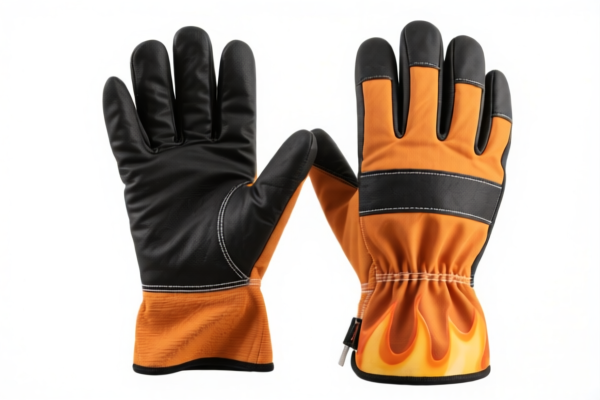
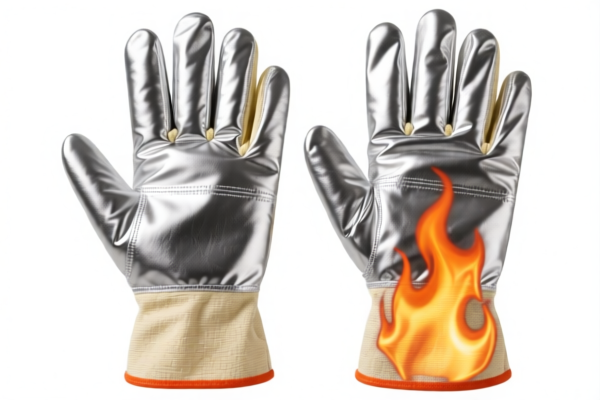
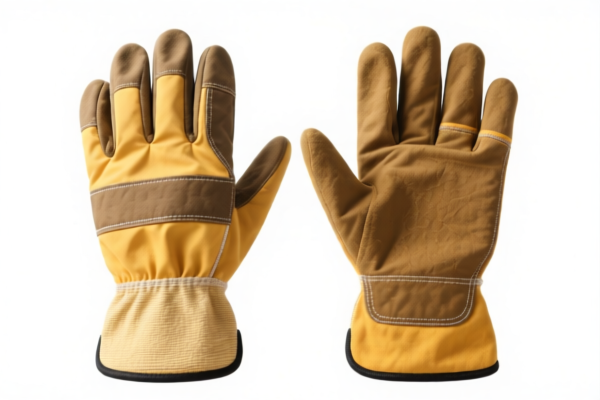
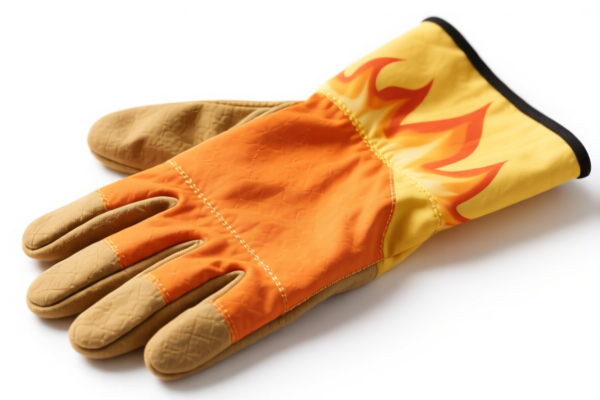
AI Analysis
🧤 Seamless Flame Retardant Gloves (Other Materials)
🌐 HS Code Reference & Customs Clearance Guide | 2026 Latest Tariff Analysis | Professional Customs Strategy
📌 I. Product Definition & Classification: Do You Truly Understand "Flame Retardant Gloves"?
Seamless Flame Retardant Gloves are specialized protective equipment designed to resist ignition, slow down combustion, and self-extinguish after the flame source is removed. They are critical for firefighters, welders, chemical plant workers, and emergency responders.
In international trade, they are primarily categorized under Chapter 39 (Plastics) or Chapter 40 (Rubber) depending on the primary material composition, provided they are "seamless" (knitted or molded) and not coated leather or heavily lined textiles.
⚠️ Key Classification Distinction:
- Rubber/Plastic Coated/Impregnated Gloves: If the glove base is textile but heavily coated with rubber/plastic for flame resistance → Often 4015 or 4016.
- Seamless (Knitted/Molded) from Rubber/Plastic: If the entire glove is molded or knitted from flame-retardant rubber or plastic → 4015.19 or 3926.90.
- Leather Gloves: Even if flame retardant, leather gloves usually fall under 4203.
📦 II. HS Code Classification Details (2026 Latest Tariff Authoritative Comparison)
| HS Code | Product Description | Application Scenario | Material Type |
|---|---|---|---|
4015.11.00.00 |
Surgical Gloves (Rubber) | Medical use, not flame retardant | ❌ Not FR |
4015.19.00.00 |
Other surgical or medical gloves (Rubber) | Specialized medical FR gloves | ✅ Yes (if FR) |
4015.90.00.00 |
Other articles of vulcanized rubber (excluding hard rubber) | Industrial FR gloves (molded/knitted rubber) | ✅ Yes (FR Rubber) |
3926.90.97.00 |
Other articles of plastics | Seamless FR gloves made entirely of plastic (e.g., PVC, nitrile blends) | ✅ Yes (FR Plastic) |
4016.93.00.00 |
Other articles of cellular rubber | FR gloves made from foam rubber | ✅ Yes (FR Cellular Rubber) |
4015.19.00.00 |
Note: Some FR gloves may be classified here if deemed "medical" | High-level healthcare emergency response | ✅ Yes (FR Rubber) |
🔍 Critical Reminder:
- Seamless implies the manufacturing process is knitting or molding, not stitching.
- If the glove is textile-based (knit cotton/polyester) with a rubber/plastic coating for FR properties, it often falls under 4015.90 or 4016.93, depending on the coating weight and composition.
- Do not classify as apparel (6116 or 6216) if the primary function is protective via rubber/plastic composition. Apparel gloves are for general wear, not industrial FR protection.
💰 III. 2026 Latest Tariff Rate Details (Including Additional Duties, Policy Add-ons)
✅ Applicable Country: United States (US)
✅ Country of Origin: China (CN)
✅ Effective Date: November 10, 2025 (including subsequent imports)
🎯 1. 4015.19.00.00 — Other Surgical/Medical Gloves (Vulcanized Rubber)
| Item | Content |
|---|---|
| Base Tariff Rate | 2.9% (ad valorem) |
| USITC Additional Duty | +25% (Under USITC Footnote 9903.88.01 / Section 301) |
| IEEPA Additional Duty | +10% (On products from China/HK, effective Nov 10, 2025) |
| Total Tariff Rate | 37.9% |
| Tax Calculation | CIF Value × 37.9% |
| De Minimis Eligibility | ❌ Not Eligible (deny_de_minimis) |
| Legal Basis Path | IEEPA:9903.01.25 → IEEPA:9903.01.24 → USITC:4015.19.00.00 → FOOTNOTE:9903.88.01 |
📌 Explanation:
- Even if marketed as "flame retardant," if they fall under the medical/rubber glove heading, they are subject to the same high Section 301 and IEEPA tariffs as other Chinese rubber goods.
- 37.9% is a high tariff, requiring careful cost planning.
🎯 2. 4015.90.00.00 — Other Articles of Vulcanized Rubber (Industrial FR Gloves)
| Item | Content |
|---|---|
| Base Tariff Rate | 2.9% (ad valorem) |
| USITC Additional Duty | +25% (Section 301) |
| IEEPA Additional Duty | +10% (China Origin) |
| Total Tariff Rate | 37.9% |
| Tax Calculation | CIF Value × 37.9% |
| De Minimis Eligibility | ❌ Not Eligible |
| Legal Basis Path | IEEPA:9903.01.25 → IEEPA:9903.01.24 → USITC:4015.90.00.00 → FOOTNOTE:9903.88.01 |
📌 Note:
- This is the most common classification for seamless, molded, or knitted rubber flame retardant gloves.
- Whether used by firefighters, welders, or electricians, if the material is vulcanized rubber, this code applies.
- Same 37.9% rate as medical rubber gloves.
🎯 3. 3926.90.97.00 — Other Articles of Plastics (Plastic FR Gloves)
| Item | Content |
|---|---|
| Base Tariff Rate | 3.4% (ad valorem) |
| USITC Additional Duty | +25% (Section 301) |
| IEEPA Additional Duty | +10% (China Origin) |
| Total Tariff Rate | 38.4% |
| Tax Calculation | CIF Value × 38.4% |
| De Minimis Eligibility | ❌ Not Eligible |
| Legal Basis Path | IEEPA:9903.01.25 → IEEPA:9903.01.24 → USITC:3926.90.97.00 → FOOTNOTE:9903.88.01 |
📌 Note:
- If the gloves are made entirely of plastic (e.g., specialized nitrile or PVC blends without textile backing), they fall under Chapter 39.
- Slightly higher base rate (3.4% vs 2.9%), leading to a total of 38.4%.
🛠️ IV. Customs Clearance Practical Advice (Practical Pitfall Avoidance Guide)
✅ 1. Document Checklist (All Required)
| Document | Required | Explanation |
|---|---|---|
| ✅ Product Specification Sheet | ✔️ | Must detail material (rubber/plastic), FR standard (NFPA, EN), thickness |
| ✅ FR Test Report | ✔️ | UL, NFPA 1971 (for fire), EN 388/407, ASTM F2675 |
| ✅ Product Photos | ✔️ | Clear images showing seamless construction, no stitching |
| ✅ Commercial Invoice | ✔️ | Must state "Seamless Flame Retardant Gloves," HS Code, Material |
| ✅ Packing List | ✔️ | Detail pairs per box, gross/net weight |
| ✅ Certificate of Origin (CO) | ✔️ | If non-China origin, may qualify for duty-free |
✅ 2. Declaration Tips (Key Mnemonic)
🔥 "Seamless means molded/knitted, not stitched leather. FR adds scrutiny, not extra tax exemption."
| Scenario | Correct Declaration | Wrong Practice |
|---|---|---|
| Seamless Rubber FR Gloves | 4015.90.00.00 |
Misclassified as apparel (6116) → 25% penalty |
| Seamless Plastic FR Gloves | 3926.90.97.00 |
Misclassified as leather (4203) → 10% penalty |
| Textile Gloves with Rubber Coating | 4015.90.00.00 or 4016.93.00.00 |
Misclassified as plain textile gloves (6116) → High risk |
| Leather FR Gloves | 4203.40.00.00 |
Misclassified as rubber (4015) → Classification error |
✅ 3. Special Case Handling
| Scenario | Handling Advice |
|---|---|
| OEM Custom FR Gloves | Provide design specs and FR certification to prove material composition |
| Gloves with Textile Lining | If lining is >50% by weight, may be classified as textile (6116) → Check carefully |
| Firefighter Helmets/Gloves Kits | If sold as a kit, primary function determines HS Code. Gloves usually dominate if separate |
| Non-China Origin | If from Vietnam, Thailand, or India, may avoid IEEPA 10% tax. Verify Country of Origin |
🌍 V. Global Market Customs Comparison (2026 Latest)
| Country/Region | Recommended HS Code | Tariff | Certification | Notes |
|---|---|---|---|---|
| 🇺🇸 US | 4015.90.00.00 |
37.9% (China) | NFPA, ASTM, UL | High Section 301 duty |
| 🇨🇳 China | 4015.90.00.00 |
5.0% | CCC (if applicable) | No additional duties |
| 🇪🇺 EU | 4015.90.00.00 |
0% - 3.5% | CE, EN 388/407 | Generally low duty |
| 🇬🇧 UK | 4015.90.00.00 |
0% - 3.5% | UKCA, EN Standards | Post-Brexit rules |
| 🇯🇵 Japan | 4015.90.00.00 |
0% - 3.0% | PSE, JIS | Low duty |
📌 Conclusion:
- US is the highest-cost market for Chinese-made FR gloves due to Section 301 + IEEPA.
- EU and Asia offer significantly lower tariffs. Consider supply chain diversification if targeting the US.
📌 VI. Common Errors & Pitfall Guide (Lessons Learned)
❌ Mistake 1: Classifying seamless rubber gloves as Apparel (6116)
👉 Consequence: Penalty for misclassification, potential retroactive duty of 10-15% + fines.
❌ Mistake 2: Ignoring FR Certification
👉 Consequence: Customs may detain goods for safety verification. Delay of 2-4 weeks.
❌ Mistake 3: Declaring "Gloves" without material specification
👉 Consequence: High risk of audit. Provide detailed material composition (e.g., "95% Vulcanized Rubber, 5% Flame Retardant Additives").
❌ Mistake 4: Assuming "Textile" classification for coated gloves
👉 Consequence: If rubber content dominates, textile classification is incorrect. Risk of 25% Section 301 on apparel if wrongly applied.
✅ Correct Practice:
"Seamless Flame Retardant Gloves, Made of Vulcanized Rubber, NFPA 1971 Certified, No Stitching, Model XYZ"
🎯 VII. Conclusion: Precise Classification, Cost Efficiency
🎯 Remember the Mantra:
🔹 "Seamless = Rubber/Plastic (
4015/3926), Not Apparel (6116).
🔹 "FR Adds Safety, Not Tax Breaks.
🔹 "China Origin = 37.9% Duty. Diversify to Save."
📌 Pro Tip:
If your gloves are originally manufactured in Vietnam, Malaysia, or Thailand, you may avoid the IEEPA 10% tax, reducing the total rate to ~28-31%.
Recommend applying for a Pre-Ruling from CBP if the material composition is complex (e.g., composite gloves).
📣 Call to Action:
📞 Consult a licensed customs broker + Provide FR Test Reports + Verify Country of Origin
🚀 Ensure smooth clearance, avoid penalties, and maximize profit margins.
✨ Professional Customs Clearance Starts with Accurate Classification!
💼 Every dollar saved on tariffs is pure profit!
Customer Reviews
About HS Code Classification
The Harmonized System (HS) is an internationally standardized nomenclature developed by the World Customs Organization (WCO) to classify traded products. Over 200 countries use the HS system as the basis for customs tariffs, trade statistics, and import/export regulations.
Each HS code follows a hierarchical structure:
- Chapter (2 digits) — Broad category of goods (e.g., Chapter 84: Machinery and Mechanical Appliances)
- Heading (4 digits) — More specific grouping within the chapter
- Subheading (6 digits) — Internationally standardized breakdown, used by all WCO member countries
- National subdivisions (8-10 digits) — Country-specific extensions for further classification, such as US HTSUS 10-digit codes
Correct HS code classification is essential for smooth customs clearance, accurate duty payment, and compliance with trade regulations. Misclassification can lead to customs delays, overpayment of duties, or penalties.
When importing from CN to US, the applicable tariff rates may include:
- Most-Favored-Nation (MFN) rate — The standard duty rate applied to WTO members
- General rate — Applied to countries without trade agreements
- Trade remedy duties — Additional tariffs such as Section 301 (anti-dumping), Section 232 (national security), or countervailing duties
The information provided on this page is for reference purposes only. For official classification, please consult with your local customs authority or a licensed customs broker.