Seamless Protective Gloves
CN → US| HS Code | Tariff Rate | Origin | Destination | Doc |
|---|---|---|---|---|
| 3926201010 | 10.0% | CN | US | Official Doc |
| 3926201020 | 10.0% | CN | US | Official Doc |
| 6116105510 | 30.7% | CN | US | Official Doc |
| 6116104810 | 36.1% | CN | US | Official Doc |
| 4014905000 | 14.2% | CN | US | Official Doc |
Product Images


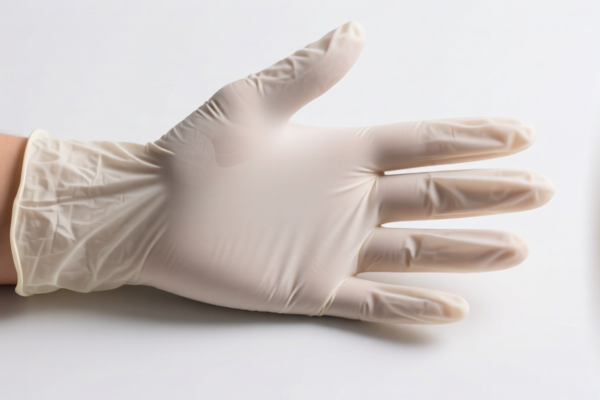

AI Analysis
🧤 Seamless Protective Gloves (Surgical & Examination)
🌐 HS Code Reference & Customs Clearance Guide | 2026 Latest Tariff Analysis | Professional Level Customs Strategy
📌 I. Product Definition & Classification: Do You Truly Understand "Seamless Gloves"?
Seamless Protective Gloves are critical Personal Protective Equipment (PPE) and medical consumables used in surgical, examination, and laboratory settings. In international trade, they are primarily classified based on their material composition (Rubber/Latex vs. Plastic/Polymer) and manufacturing method ("Seamless" implies a lack of stitched fingers, often achieved through dipping or molding processes).
⚠️ Key Classification Distinction:
- Rubber/Latex/Synthetic Rubber: Usually classified under Chapter 40 (Rubber and articles thereof).
- Plastic/Polymer: Usually classified under Chapter 39 (Plastics and articles thereof).
- "Seamless" Feature: This confirms the molding/dipping process, distinguishing them from knitted or stitched gloves (which might fall under Chapter 61).
📦 II. HS Code Classification Details (2026 Latest Tariff Authority Comparison)
Based on the provided data for "Seamless Protective Gloves," here are the potential HS Codes, sorted by material logic and tax implications:
| HS Code | Product Description | Logic/Material Basis | Total Tax Rate |
|---|---|---|---|
3926.20.10.10 |
Other articles of plastics: Surgical/Medical use | Plastic/Polymer Base. "Seamless" + "Surgical/Examination" implies plastic-based disposables. No material conflict. | 10.0% |
3926.20.10.20 |
Other articles of plastics: Surgical/Medical use | Plastic/Polymer Base. "Seamless" + "Surgical" + "Glove" form. Reasonable inference for single-use medical plastic goods. | 10.0% |
4014.90.50.00 |
Rubber Gloves, Other (Surgical/Medical) | Rubber/Latex/Dinitrile Base. "Seamless" dipping process common for latex/nitrile. Fits "Hygienic/Medical" and "Sulfur-Cured Rubber" logic. | 14.2% |
6116.10.48.10 |
Gloves, Coated/Covered with Plastic/Rubber | Textile/Coated Base. "Seamless" may refer to the dipped coating on a fabric base. "Surgical/Examination" use inferred. | 36.1% |
6116.10.55.10 |
Gloves, Coated/Covered (Other Textile Types) | Textile Base. Logic: No finger seams + Glove shape. Material inferred as textile with rubber/plastic coating. | 30.7% |
🔍 Key Insight:
- The lowest tax burden (10%) comes from Classifying them as Plastic Articles (Ch 39).
- The highest tax burden (36.1%) comes from Classifying them as Coated Textiles (Ch 61).
- Rubber (Ch 40) sits in the middle at 14.2%, which is typical for standard nitrile/latex surgical gloves.
💰 III. 2026 Latest Tariff Rate Breakdown (Including Surtaxes & Policy Add-ons)
✅ Applicable Country: USA (US)
✅ Origin: China (CN)
✅ Effective Date: Post-November 10, 2025 (Includes subsequent imports)
🎯 1. 3926.20.10.10 & 3926.20.10.20 —— Plastic Surgical/Medical Articles
| Item | Detail |
|---|---|
| Base Tariff | 0.0% (ad valorem) |
| USITC Surtax | 0.0% |
| Section 301 / IEEPA Surtax | +10% (122 Clause Tariff for China Origin) |
| Total Tax Rate | 10.0% |
| Tax Calculation | CIF Value × 10% |
| De Minimis Exemption | ❌ Not Available (Deny de_minimis) |
| Legal Basis Path | IEEPA:9903.01.25 → USITC:3926.20.10.10/20 → FOOTNOTE:122 |
📌 Explanation:
- Plastic medical disposables enjoy 0% base tariff due to low base rates for plastics.
- However, they are subject to the 10% additional tariff (Section 301/IEEPA) specifically targeting Chinese-made goods.
- Cost Advantage: This is the most tax-efficient classification among the options provided.
🎯 2. 4014.90.50.00 —— Rubber/Medical Gloves (Latex/Nitrile)
| Item | Detail |
|---|---|
| Base Tariff | 4.2% |
| USITC Surtax | 0.0% |
| Section 301 / IEEPA Surtax | +10% (122 Clause Tariff for China Origin) |
| Total Tax Rate | 14.2% |
| Tax Calculation | CIF Value × 14.2% |
| De Minimis Exemption | ❌ Not Available (Deny de_minimis) |
| Legal Basis Path | IEEPA:9903.01.24 → USITC:4014.90.50.00 → FOOTNOTE:122 |
📌 Explanation:
- Standard rubber gloves have a modest base tariff (4.2%).
- They are not subject to the 25% USITC surtax seen in electronics, but are subject to the 10% China-specific add-on.
- Risk: Often scrutinized for "Latex Allergy" issues; if labeled "Latex," additional FDA/medical device registrations may be required.
🎯 3. 6116.10.55.10 & 6116.10.48.10 —— Coated Textile Gloves
| Item | Detail |
|---|---|
| Base Tariff | 13.2% (55.10) or 18.6% (48.10) |
| USITC Surtax | +7.5% (Specific textile surtax) |
| Section 301 / IEEPA Surtax | +10% (122 Clause Tariff for China Origin) |
| Total Tax Rate | 30.7% (55.10) or 36.1% (48.10) |
| Tax Calculation | CIF Value × 30.7% / 36.1% |
| De Minimis Exemption | ❌ Not Available (Deny de_minimis) |
| Legal Basis Path | IEEPA:9903.01.24 → USITC:6116.10... → FOOTNOTE:122 |
📌 Explanation:
- High Risk Category: Textiles already face high base tariffs.
- Double Penalty: Subject to USITC textile surtaxes (7.5%) PLUS the 10% China tariff.
- Conclusion: Only classify here if the product is explicitly a fabric glove with plastic/rubber coating (e.g., work gloves), NOT for pure surgical/examination gloves which are typically rubber or plastic.
🛠️ IV. Customs Clearance Practical Advice (Real-World Pitfall Avoidance Guide)
✅ 1. Preparation Checklist (Non-Negotiable)
| Document | Required | Explanation |
|---|---|---|
| ✅ Product Composition Spec | ✔️ | Must specify 100% Nitrile, 100% Latex, or Plastic (PE/Nitrile). Customs will verify material against HS Code. |
| ✅ Manufacturing Process Diagram | ✔️ | "Seamless" must be explained as Dipping/Molding. If stitched, it may be misclassified. |
| ✅ Product Photos (Labeling) | ✔️ | Clear view of "Surgical Grade," "Sterile/Non-Sterile," and Material warnings (e.g., "Latex Free"). |
| ✅ FDA Registration/Listing | ✔️ | If claimed as "Surgical," FDA Class I or Class II device registration may be required for US import. |
| ✅ Commercial Invoice | ✔️ | Describe as: "Seamless Nitrile Examination Gloves, Medical Grade, No Latex" |
| ✅ Certificate of Origin (CO) | ✔️ | To prove China origin (for calculating the 10% IEEPA surtax accurately). |
✅ 2. Declaration Strategy (Key Mnemonics)
🔥 “Material First, Function Second, Seamless Means Molded!”
| Scenario | Correct HS Code Declaration | Common Mistake | Consequence |
|---|---|---|---|
| Pure Nitrile/Latex Disposable Gloves | 4014.90.50.00 (Rubber) or 3926.20.10.x (Plastic) |
Misdeclaring as "Textile Gloves" (6116) |
30-36% Tax instead of 10-14%. Huge Cost Increase! |
| Plastic PE Disposable Gloves | 3926.20.10.10 / 3926.20.10.20 |
Misdeclaring as "Rubber" | No tax advantage, but potential material mismatch fine. |
| Work Gloves with Rubber Coating | 6116.10.55.10 |
Misdeclaring as "Surgical" | Rejection/Seizure because "Surgical" requires strict medical compliance. |
| Latex Gloves | 4014.90.50.00 |
Failure to label "Latex Content" | FDA Detention due to undeclared allergen. |
✅ 3. Special Situations & Handling
| Situation | Handling Advice |
|---|---|
| "Latex-Free" vs. "Nitrile" | If Nitrile, consider 3926 (Plastic) for lower tax if compatible. If Latex, must use 4014. Nitrile is often cheaper to classify. |
| Sterile vs. Non-Sterile | Sterile surgical gloves require stricter FDA documentation. Non-sterile examination gloves are easier to clear but still need accurate material declaration. |
| Packaging with Multiple Pairs | Declare as a set. Do not split the box into individual glove claims. |
| Origin Substitution | If shipped from Vietnam/Malaysia (common for glove manufacturing), apply for Non-China Origin CO to avoid the 10% IEEPA surtax. This can save 10% on ALL codes! |
🌍 V. Global Market Comparison (2026 Latest)
| Country/Region | Recommended HS Code | Base Tariff | China Surtax | Total Effective Rate | Remarks |
|---|---|---|---|---|---|
| 🇺🇸 USA | 4014.90.50.00 |
4.2% | +10% | 14.2% | High scrutiny on Latex. |
| 🇺🇸 USA | 3926.20.10.x |
0.0% | +10% | 10.0% | Best for Plastic/Nitrile. |
| 🇨🇳 China | 4014.90.50.00 |
10-15% | N/A | ~10-15% | High import tax for China. |
| 🇪🇺 EU | 4014.90.50.00 |
4.2% | N/A | 4.2% | No IEEPA surtax in EU. CE Mark required. |
| 🇦🇺 Australia | 4014.90.50.00 |
5% | N/A | 5% | No China surtax. TGA registration for surgical. |
📌 Strategic Conclusion:
- For US Imports: If your product is Nitrile/Plastic, classify under 3926.20.10.x to secure the 10% total rate. If it is Latex, it will be 14.2%.
- For Textile Gloves: Avoid6116for medical use unless absolutely necessary, as the 30-36% tax is prohibitive.
- Supply Chain Tip: Many glove manufacturers are now in Malaysia/Vietnam. Using a non-China CO can eliminate the 10% IEEPA surtax entirely, dropping the rate to 4.2% (Rubber) or 0% (Plastic).
📌 VI. Common Errors & Pitfalls (Blood & Tears Lessons)
❌ Mistake 1: Declaring Nitrile Gloves as "Textile Gloves" (6116) to try a different code
👉 Result: 36.1% Tax instead of 10%. Customs will verify material via lab test. Penalty Risk!
❌ Mistake 2: Failing to declare "Latex" on the invoice for Latex Gloves
👉 Result: FDA Detention. US Customs and FDA require allergen disclosure for medical goods.
❌ Mistake 3: Using "Surgical Gloves" for Non-Sterile Examination Gloves
👉 Result: Documentation Request. "Surgical" implies sterility and higher regulatory burden (Class II device). Use "Examination Gloves" for non-sterile items.
❌ Mistake 4: Ignoring the "Seamless" descriptor
👉 Result: If the product is stitched, it may be classified under 6116 (Knitted/Gloves) or 6216 (Non-knitted), which have different tax rates and restrictions. "Seamless" validates the dipping process for Ch 40/39.
✅ Correct Declaration Template:
"Medical Grade Nitrile Seamless Examination Gloves, Non-Sterile, Powder-Free, Latex-Free, Pack of 100, Model XZ-100"
🎯 VII. Conclusion: Precision Classification Saves Profit!
🎯 Remember the Mantra:
🔹 "Nitrile/Plastic? Go to 3926 (10%). Latex? Go to 4014 (14.2%). Textile? Avoid 6116 (36.1%)!"
🔹 "Seamless means Dipped/Molded, not Knitted. Get the Code Right, Keep the Tax Low!"
📌 Pro Tip:
If you are sourcing from China, consider switching suppliers in Malaysia or Vietnam for Nitrile/Latex gloves to avoid the 10% IEEPA surtax. The difference between 10% and 4.2% is significant on large volumes.
📣 Immediate Action:
📞 Confirm Material: Is it Nitrile (Plastic-like) or Latex (Rubber)?
📄 Check Origin: Is it 100% China-made?
🚀 Apply for Pre-Ruling: If importing large volumes, apply for an CBP Advance Ruling to lock in the 10.0% rate for3926or 14.2% for4014.
✨ Professional Customs Clearance Starts with Accurate Classification!
💼 Your Every Cent of Duty Costs Deserves Precise Calculation!
Customer Reviews
About HS Code Classification
The Harmonized System (HS) is an internationally standardized nomenclature developed by the World Customs Organization (WCO) to classify traded products. Over 200 countries use the HS system as the basis for customs tariffs, trade statistics, and import/export regulations.
Each HS code follows a hierarchical structure:
- Chapter (2 digits) — Broad category of goods (e.g., Chapter 84: Machinery and Mechanical Appliances)
- Heading (4 digits) — More specific grouping within the chapter
- Subheading (6 digits) — Internationally standardized breakdown, used by all WCO member countries
- National subdivisions (8-10 digits) — Country-specific extensions for further classification, such as US HTSUS 10-digit codes
Correct HS code classification is essential for smooth customs clearance, accurate duty payment, and compliance with trade regulations. Misclassification can lead to customs delays, overpayment of duties, or penalties.
When importing from CN to US, the applicable tariff rates may include:
- Most-Favored-Nation (MFN) rate — The standard duty rate applied to WTO members
- General rate — Applied to countries without trade agreements
- Trade remedy duties — Additional tariffs such as Section 301 (anti-dumping), Section 232 (national security), or countervailing duties
The information provided on this page is for reference purposes only. For official classification, please consult with your local customs authority or a licensed customs broker.