Searchlight
CN → US| HS Code | Tariff Rate | Origin | Destination | Doc |
|---|---|---|---|---|
| 8539214080 | 12.6% | CN | US | Official Doc |
| 8543709860 | 37.6% | CN | US | Official Doc |
| 9405428410 | 38.9% | CN | US | Official Doc |
| 8539410000 | 37.6% | CN | US | Official Doc |
| 8539520091 | 12.0% | CN | US | Official Doc |
| 8539214040 | 37.6% | CN | US | Official Doc |
Product Images
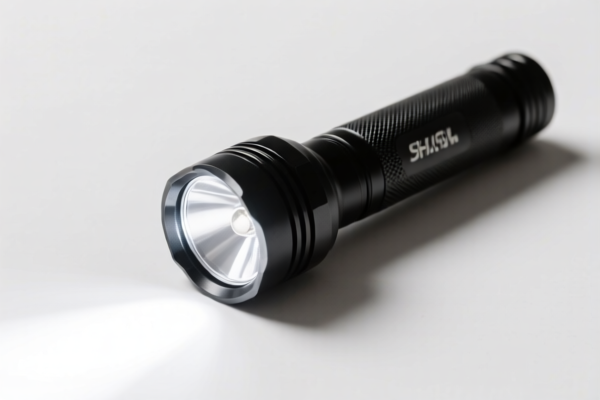
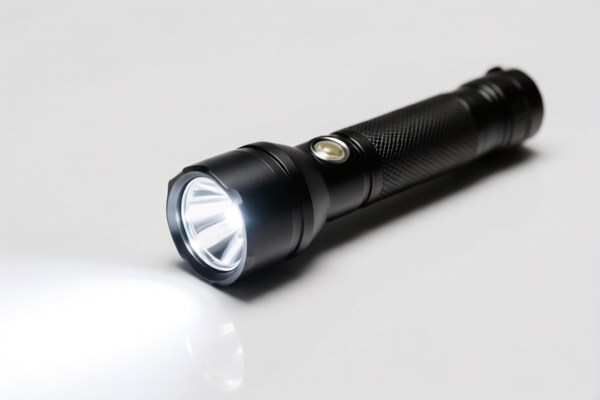
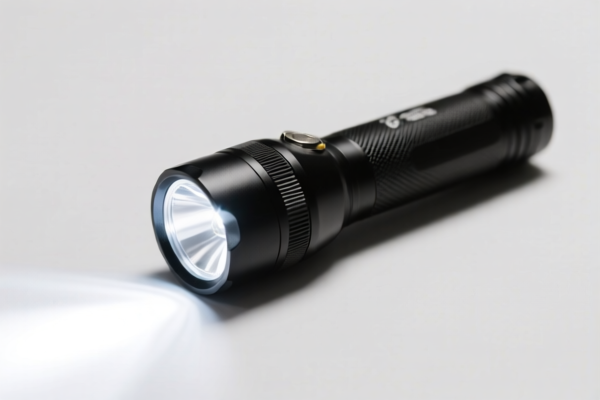
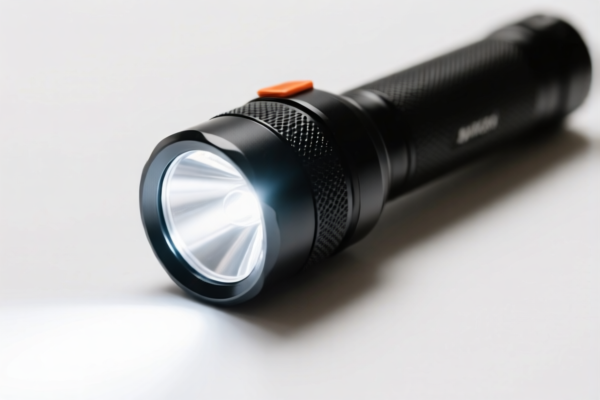
AI Analysis
🔦 Searchlight (Spotlights & Search Beacons)
🌐 HS Code Reference & Customs Clearance Guide | 2026 Latest Tariff Analysis | Professional Strategy for U.S. Imports
📌 I. Product Definition & Classification: What Exactly Is a "Searchlight"?
A searchlight is a powerful, adjustable beam lamp used to illuminate distant objects or signals. In international trade, it is often debated whether it belongs to the lighting appliance category (Chapter 94) or the electrical lamp/generic device category (Chapter 85).
Core Distinction: * Lighting Appliance (9405): If the device is primarily for general illumination or architectural lighting and fits the description of "electric lamps and lighting fittings." * Electric Lamp/Light Source (8539): If the focus is on the bulb/lamp unit itself or if it is considered a component of larger electrical systems with specific power constraints (<500W). * Independent Electrical Device (8543): If the device has special functions beyond simple lighting (e.g., signal transmission, specialized industrial scanning) or operates as a self-contained motor/electrical apparatus.
⚠️ Key Classification Logic:
- If it is a standard floodlight/spotlight for buildings/stadiums → Likely 9405.
- If it is a lamp unit or part of a larger machine → Likely 8539.
- If it has unique independent functions (non-standard lighting) → Likely 8543.
📦 II. HS Code Classification Details (2026 Latest Tariff Matrix)
Based on the provided data, here are the four potential HS Code classifications with their tax implications.
| HS Code | Summary Rationale | Total Tax Rate | Tax Detail Breakdown |
|---|---|---|---|
| 8539.21.40.40 | Categorized under Electric Lamps/Light Sources. Inferred as a lamp with power < 500W. | 37.6% | Base: 2.6% + Section 301: 25.0% + IEEPA: 10% |
| 8543.70.71.00 | Categorized as an Electric Apparatus with Independent Function. Functions align with "other electrical machines." | 37.0% | Base: 2.0% + Section 301: 25.0% + IEEPA: 10% |
| 9405.49.00.00 | Categorized under Lamps & Lighting Fittings (Ch 94). Explicitly includes "searchlights and spotlights" in use descriptions. | 38.9% | Base: 3.9% + Section 301: 25.0% + IEEPA: 10% |
| 8539.21.40.80 | Categorized under Electric Lamps. Inferred to contain tungsten-halogen technology. Note: No Section 301 tariff. | 12.6% | Base: 2.6% + Section 301: 0.0% + IEEPA: 10% |
| 8543.70.98.60 | Categorized as Other Electrical Devices/Parts. Fits "other machines and apparatus" logic. | 37.6% | Base: 2.6% + Section 301: 25.0% + IEEPA: 10% |
🔍 Critical Observation:
The classification varies significantly based on whether Customs views the item as a final lighting product (9405), a light source/lamp (8539), or a specialized electrical device (8543). The tax burden ranges from 12.6% to 38.9%.
💰 III. 2026 Tariff Rate Detail Analysis
✅ Applicable Country: United States (US)
✅ Origin: China (CN)
✅ Applicable Rules: Section 301 Tariffs & IEEPA (International Emergency Economic Powers Act)
🎯 1. 8539.21.40.80 —— The "Lowest Tax" Option (12.6%)
- Rationale: Classified as a Tungsten-Halogen Lamp/Light Source.
- Why so low? This classification exempts the 25% Section 301 tariff.
- Tax Breakdown:
- Base Duty: 2.6%
- Section 301: 0.0% (Exception applied)
- IEEPA (China-specific): 10.0%
- Total: 12.6%
- ⚠️ Risk: You must prove the product is a lamp/bulb component or uses tungsten-halogen technology, not a full assembly searchlight unit. If Customs deems it a "complete searchlight," this code may be rejected.
🎯 2. 8543.70.71.00 —— The "Independent Function" Option (37.0%)
- Rationale: Classified as an electrical apparatus with independent function, distinct from simple lighting.
- Tax Breakdown:
- Base Duty: 2.0%
- Section 301: 25.0%
- IEEPA: 10.0%
- Total: 37.0%
- ⚠️ Strategy: Use this if the searchlight has specialized industrial/scanning functions beyond standard illumination. The base duty is the lowest among the high-tax codes.
🎯 3. 8539.21.40.40 & 8543.70.98.60 —— The Standard High-Tax Options (37.6%)
- Rationale:
- 8539.21.40.40: Viewed as a standard <500W electric lamp.
- 8543.70.98.60: Viewed as other electrical devices.
- Tax Breakdown:
- Base Duty: 2.6%
- Section 301: 25.0%
- IEEPA: 10.0%
- Total: 37.6%
- ⚠️ Note: These are standard classifications for most electrical imports from China. High risk of audit if the product description is vague.
🎯 4. 9405.49.00.00 —— The "Lighting Fixture" Option (38.9%)
- Rationale: Classified as a Lamp or Lighting Fitting. Chapter 94 explicitly mentions "searchlights and spotlights" in certain legal notes.
- Tax Breakdown:
- Base Duty: 3.9% (Highest base duty)
- Section 301: 25.0%
- IEEPA: 10.0%
- Total: 38.9%
- ⚠️ Risk: This has the highest total tax rate. However, it is the most "natural" fit for a finished searchlight product. Use only if you cannot justify the 8539/8543 exemptions.
🛠️ IV. Customs Clearance Practical Advice (Pitfall Avoidance Guide)
✅ 1. Preparation Checklist (Crucial for Avoiding Delays)
| Document | Required? | Why? |
|---|---|---|
| Product Specifications | ✅ Yes | Must clearly state Wattage (<500W vs >500W), Lamp Type (Halogen/LED/Laser), and Function (Illumination vs. Signal). |
| Technical Diagrams | ✅ Yes | To prove if it is a complete unit (Ch 94) or a lamp component (Ch 85). |
| Photos (Label & Interior) | ✅ Yes | To verify brand, model, and internal components (e.g., presence of a separate lamp bulb). |
| Commercial Invoice | ✅ Yes | Description must match the HS Code rationale (e.g., "LED Searchlight Lamp" vs. "Spotlight Fixture"). |
| Origin Certificate | ✅ Yes | Required for IEEPA and Section 301 determination. |
✅ 2. Strategic Declaration Tips
🔥 Golden Rule: "Prove the Lamp, Not the Light; Prove the Function, Not the Form!"
| Scenario | Recommended HS Code | Why? |
|---|---|---|
| Selling just the bulb/lamp unit | 8539.21.40.80 |
Lowest tax (12.6%). Avoids Section 301. |
| Industrial Searchlight with special scanning | 8543.70.71.00 |
"Independent function" lowers base duty to 2%. |
| Standard Architectural Spotlight | 9405.49.00.00 |
Safe but expensive (38.9%). Use if technical arguments for 85xx fail. |
| General Electric Device/Searchlight | 8539.21.40.40 / 8543.70.98.60 |
Standard fallback (37.6%). |
✅ 3. Special Handling for "Searchlights"
- Avoid Vague Descriptions: Do NOT just write "Searchlight." Use precise terms like "LED Lamp Module, <500W" or "Electric Spotlight, Halogen Type."
- Wattage Matters: Many 8539 codes apply to lights <500W. If your searchlight is >500W, these codes may be invalid, leading to higher duties or rejection.
- Section 301 Exemption Hunt: If your product can be technically justified as a "Light Source" (8539) rather than a "Lighting Fitting" (9405), try to argue for 8539.21.40.80 to save 25% in tariffs. However, this requires strong technical documentation.
🌍 V. Global Market Comparison (2026 Context)
| Region | Typical HS Code | Est. Total Tax (China Origin) | Notes |
|---|---|---|---|
| 🇺🇸 USA | 8539, 8543, or 9405 |
12.6% – 38.9% | Heavily influenced by Section 301 & IEEPA. |
| 🇨🇳 China | 9405.49.00 |
Low (~3-5%) | No punitive tariffs. Imports into China are cheap. |
| 🇪🇺 EU | 9405.49 |
0% - 6% | No Section 301 equivalent. Standard MFN rates apply. |
| 🇯🇵 Japan | 9405.49 |
0% - 8% | Generally favorable for lighting fixtures. |
📌 Conclusion:
The USA is the only major market with punitive tariffs on Chinese searchlights. The key to cost optimization is HS Code selection.
📌 VI. Common Mistakes & Blood Lessons
❌ Mistake 1: Declaring a full searchlight unit as a "Bulb/Lamp" (8539) to get 12.6% tax.
👉 Consequence: Customs rejects it as "complete apparatus," imposes 37-38% tax + fines.
❌ Mistake 2: Using 9405 for a specialized industrial searchlight with signal functions.
👉 Consequence: Missed opportunity for 8543 (37.0%) which has a lower base duty.
❌ Mistake 3: Ignoring the Wattage.
👉 Consequence: If >500W, 8539.21 codes may be invalid, leading to reclassification.
❌ Mistake 4: Not disclosing IEEPA (10%) impact.
👉 Consequence: Budget failure. The 10% is mandatory for China-origin goods under current emergency powers.
✅ Correct Approach:
"LED Searchlight Lamp, 300W, Tungsten-Halogen Type, Independent Function, Model XYZ, FCC Certified."
Attempt to argue for8539.21.40.80(12.6%) first. If rejected, fall back to8543.70.71.00(37.0%). Avoid9405unless necessary.
🎯 VII. Final Verdict: How to Save Money?
🎯 Strategy Summary:
1. Can you reclassify as a Lamp/Bulb? → Aim for 8539.21.40.80 (12.6%). Requires strong tech specs proving it's a "light source" or "halogen lamp."
2. Is it a specialized device? → Aim for 8543.70.71.00 (37.0%). Lowest base duty among high-tax codes.
3. Is it a standard fixture? → Accept 9405.49.00.00 (38.9%) or 8539.21.40.40 (37.6%).
4. Never assume 0% tax. The 35-45% total burden (including 301 & IEEPA) is real.
📌 Pro Tip:
If possible, separate the lamp head from the housing during export/import if feasible, or declare the lamp unit separately. This is the only legal way to access the 12.6% bracket. Consult a customs broker for a Pre-Ruling to secure the lower code before shipment.
✨ Professional clearance starts with precise classification!
💼 Every percentage point counts. Don't let "Searchlight" cost you 25% extra!
Customer Reviews
About HS Code Classification
The Harmonized System (HS) is an internationally standardized nomenclature developed by the World Customs Organization (WCO) to classify traded products. Over 200 countries use the HS system as the basis for customs tariffs, trade statistics, and import/export regulations.
Each HS code follows a hierarchical structure:
- Chapter (2 digits) — Broad category of goods (e.g., Chapter 84: Machinery and Mechanical Appliances)
- Heading (4 digits) — More specific grouping within the chapter
- Subheading (6 digits) — Internationally standardized breakdown, used by all WCO member countries
- National subdivisions (8-10 digits) — Country-specific extensions for further classification, such as US HTSUS 10-digit codes
Correct HS code classification is essential for smooth customs clearance, accurate duty payment, and compliance with trade regulations. Misclassification can lead to customs delays, overpayment of duties, or penalties.
When importing from CN to US, the applicable tariff rates may include:
- Most-Favored-Nation (MFN) rate — The standard duty rate applied to WTO members
- General rate — Applied to countries without trade agreements
- Trade remedy duties — Additional tariffs such as Section 301 (anti-dumping), Section 232 (national security), or countervailing duties
The information provided on this page is for reference purposes only. For official classification, please consult with your local customs authority or a licensed customs broker.