Seasoning Bottle Set
CN → US| HS Code | Tariff Rate | Origin | Destination | Doc |
|---|---|---|---|---|
| 6911104100 | 16.3% | CN | US | Official Doc |
| 6911108010 | 38.3% | CN | US | Official Doc |
| 7310290065 | 85.0% | CN | US | Official Doc |
| 7310210075 | 85.0% | CN | US | Official Doc |
Product Images
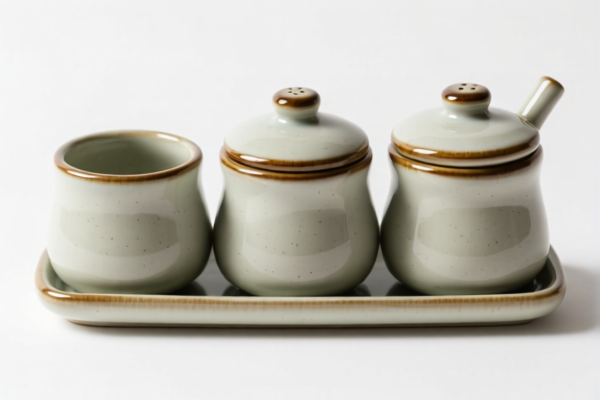
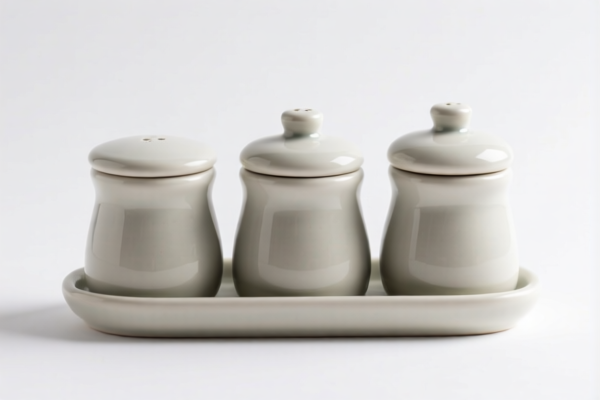
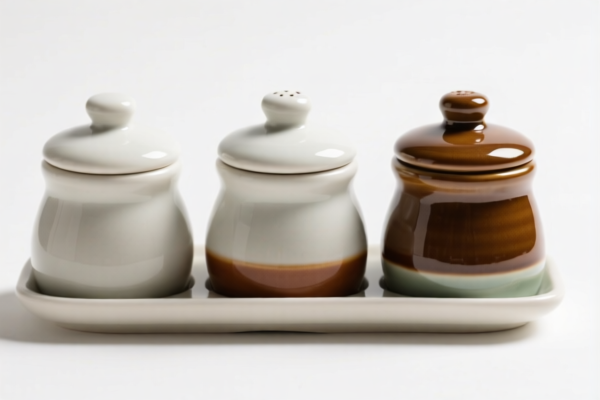
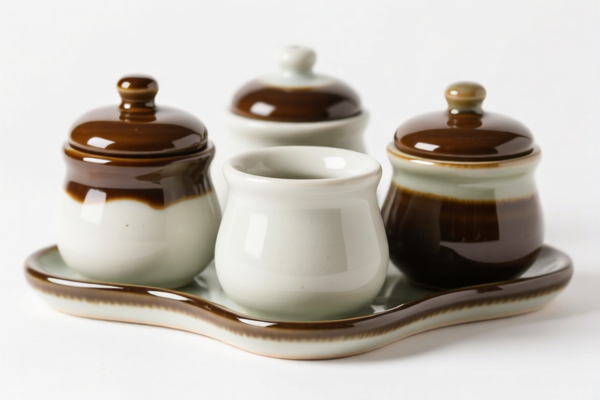
AI Analysis
🏺 Seasoning Bottle Set (Tableware & Kitchenware)
🌐 HS Code Reference & Customs Clearance Guide | 2026 Latest Tariff Analysis | Professional Entry Strategy
📌 I. Product Definition & Classification: Do You Really Understand "Seasoning Bottles"?
A Seasoning Bottle Set typically includes items such as oil and vinegar sets, salt and pepper shakers, and specialized serving dishes (like tiered servers or pretzel dishes). In international trade, these are strictly categorized under Porcelain or China Tableware and Kitchenware.
However, the classification hinges on material and specific design: * Porcelain/China Items: The most common classification for standard ceramic seasoning bottles. Specific sub-categories apply to "specialty" items like steins with pewter lids, tiered servers, or specific sets like oil/vinegar combos. * Metal Containers: If the "seasoning bottles" are actually small metal tanks/drums (less common for home use, but possible for industrial or specialized storage), they fall under Iron/Steel containers.
⚠️ Key Distinction Point:
- If the item is Porcelain/China used for food/drink contact (including oil/vinegar/salt/pepper): It falls under Chapter 6911.
- If the item is Iron/Steel (e.g., metal condiment dispensers or small tanks): It falls under Chapter 7310.
- Critical Note: The provided data explicitly lists "oil and vinegar sets" and "salt and pepper shaker sets" under Porcelain (6911), while metal containers are listed separately as "Tanks/Drums."
📦 II. HS Code Classification Details (2026 Latest Tariff Authority Comparison)
Based on the provided <DATA>, here are the relevant HS Codes for Seasoning Bottle Sets:
| HS Code | Product Description | Applicable Scenario | Material |
|---|---|---|---|
6911.10.41.00 |
Steins with permanently attached pewter lids, candy boxes, decanters, punch bowls, pretzel dishes, tidbit dishes, tiered servers, bonbon dishes, egg cups, spoons, spoon rests, oil and vinegar sets, tumblers, salt and pepper shaker sets | Specialty porcelain seasoning sets, tiered servers, pewter-lidded steins | 🥣 Porcelain/China |
6911.10.80.10 |
Other tableware and kitchenware of porcelain or china, Suitable for food or drink contact | General porcelain salt/pepper shakers, generic oil bottles not fitting the specific list above | 🥣 Porcelain/China |
7310.29.00.65 |
Tanks, casks, drums, cans... of iron or steel, capacity < 50 liters, Other | Metal seasoning containers, industrial-style steel condiment tanks | ⛓️ Iron/Steel |
7310.21.00.75 |
Tanks, casks, drums, cans... of iron or steel, capacity < 50 liters, Cans closed by soldering or crimping | Metal tins/cans for spices or dry seasonings | ⛓️ Iron/Steel |
🔍 Key Reminder:
- For standard home kitchen seasoning bottles (ceramic, glass, or plastic with ceramic coating),6911.10.80.10or6911.10.41.00is the primary category.
- If the set includes specialty items like tiered servers or oil/vinegar sets explicitly mentioned,6911.10.41.00is the precise code.
- Metal containers are a separate category. If your "seasoning bottle" is actually a steel canister, use7310.
💰 III. 2026 Latest Tariff Rate Details (Including Surtaxes & Policy Add-ons)
✅ Applicable Country: United States (US)
✅ Origin: China (CN)
✅ Effective Date: Current tariffs apply (including Section 301 and IEEPA measures)
🎯 1. 6911.10.41.00 —— Porcelain/Oil & Vinegar Sets/Salt & Pepper Shakers
| Item | Content |
|---|---|
| Base Tariff Rate | 6.3% (Ad Valorem) |
| Additional Surcharge (Section 301) | 0.0% (Specifically listed as 0.0% in the data) |
| Total Tariff Rate | 6.3% |
| Tax Calculation | CIF Value × 6.3% |
| De Minimis Eligibility | ❌ No (Usually excluded for high-value or specific industrial goods, but for small sets, check CBP rules. Note: Data does not explicitly deny de minimis, but high tariffs usually imply strict entry.) |
| Legal Basis Path | Chapter 69 → Heading 6911 → Subheading 6911.10 → 41.00 |
📌 Explanation:
- This code covers specific specialty porcelain items including oil/vinegar sets and salt/pepper shakers.
- The total tax is low at 6.3% compared to other porcelain goods.
- No additional Section 301 tariff is listed for this specific sub-heading in the provided data, making it a favorable classification for exporters.
🎯 2. 6911.10.80.10 —— Other Porcelain Tableware (Food/Drink Contact)
| Item | Content |
|---|---|
| Base Tariff Rate | 20.8% |
| Additional Surcharge (Section 301) | 7.5% |
| Total Tariff Rate | 28.3% |
| Tax Calculation | CIF Value × 28.3% |
| De Minimis Eligibility | ❌ No |
| Legal Basis Path | Chapter 69 → Heading 6911 → Subheading 6911.10 → 80.10 |
📌 Explanation:
- This is the "catch-all" for other porcelain tableware suitable for food/drink.
- If your seasoning bottles are generic and don’t fit the specific list in6911.10.41.00(e.g., simple generic shakers), they fall here.
- Total tax is 28.3%, which is significantly higher than the specialty sets.
- Strategy: If your product fits the description in6911.10.41.00(e.g., it's an "oil and vinegar set"), classify it there to save ~22% in tariffs.
🎯 3. 7310.29.00.65 & 7310.21.00.75 —— Iron/Steel Containers
| Item | Content |
|---|---|
| Base Tariff Rate | 0.0% |
| Additional Surcharge (Section 301) | 25.0% |
| Additional Surtax (Steel/Aluminum/Copper) | 50% |
| Total Tariff Rate | 75.0% |
| Tax Calculation | CIF Value × 75.0% |
| De Minimis Eligibility | ❌ No |
| Legal Basis Path | Chapter 73 → Heading 7310 → 29.00 / 21.00 → Footnotes for Steel Surtax |
📌 Explanation:
- If you are importing metal seasoning containers (e.g., stainless steel spice jars), they are classified as iron/steel containers.
- Total tax is extremely high at 75.0% due to the combination of Section 301 (25%) and the specific steel surcharge (50%).
- Avoid this classification if possible; prefer porcelain/ceramic alternatives if tariff savings are critical.
🛠️ IV. Customs Clearance Practical Advice (Battle-Tested Pitfall Avoidance)
✅ 1. Preparation Checklist (Non-Negotiable)
| Material | Required? | Description |
|---|---|---|
| ✅ Product Specifications | ✔️ | Material (Porcelain/Steel), Capacity, Set Composition |
| ✅ High-Resolution Photos | ✔️ | Must show all items in the set (e.g., both oil and vinegar bottles together) |
| ✅ Bill of Lading/Packing List | ✔️ | Clearly state "Seasoning Bottle Set" or "Oil and Vinegar Set" |
| ✅ Commercial Invoice | ✔️ | Value must reflect the entire set, not individual items |
| ✅ Material Declaration | ✔️ | Explicitly state "Porcelain" or "Iron/Steel" to avoid misclassification |
✅ 2. Declaration Tips (Key Mantra)
🔥 "Classify by Material, Specify by Set, Avoid Metal Surcharge!"
| Scenario | Correct Declaration | Wrong Declaration | Consequence |
|---|---|---|---|
| Porcelain Oil & Vinegar Set | 6911.10.41.00 |
6911.10.80.10 |
Overpay 22% in tariffs (6.3% vs 28.3%) |
| Generic Porcelain Shakers | 6911.10.80.10 |
6911.10.41.00 |
Underpayment risk if not truly specialty |
| Metal Spice Containers | 7310.29.00.65 |
6911.10.80.10 |
75% tariff vs 28.3% → Severe penalty |
| Mixed Material Set | Split Declaration | Single Code | Customs may reject or reclassify all items |
✅ 3. Special Cases Handling
| Case | Handling Advice |
|---|---|
| Set with Mixed Materials | Declare each item separately. Porcelain items go to 6911, Metal items go to 7310. Do not mix in one line item. |
| "Pewter-Lidded" Steins/Bottles | If the stein has a permanently attached pewter lid, it falls under 6911.10.41.00 (low tax). Ensure the lid is not removable if possible, or document as "permanently attached." |
| Industrial Metal Canisters | Even if used for seasoning, if it's a steel can < 50L, it incurs 75% tax. Consider rebranding as "ceramic-lined" if possible, or accept the cost. |
| Sample Shipments | Even for samples, if over $2,500, de minimis may not apply. For high-tariff items (75%), even small values are costly. |
🌍 V. Global Market Clearance Comparison (2026 Latest)
| Country/Region | Recommended HS Code | Tariff Rate (China Origin) | Certification Required | Notes |
|---|---|---|---|---|
| 🇺🇸 USA | 6911.10.41.00 |
6.3% (Porcelain Specialty) | FDA Contact (if applicable) | Lowest US Tariff for porcelain sets |
| 🇺🇸 USA | 6911.10.80.10 |
28.3% (General Porcelain) | FDA Contact | High tariff for generic items |
| 🇺🇸 USA | 7310.29.00.65 |
75.0% (Steel Containers) | None | Avoid due to high steel surcharge |
| 🇨🇳 China | 6911.10.41.00 |
6.3% (Import) | CCC (if applicable) | Standard classification |
| 🇪🇺 EU | 6911.10 |
0-6.5% | Food Contact Compliance | Low tariffs in EU |
| 🇯🇵 Japan | 6911.10 |
0-14% | Food Sanitation Act | Varies by specific item |
📌 Conclusion:
- USA is the most critical market due to the huge tariff differential between6911.10.41.00(6.3%) and6911.10.80.10(28.3%).
- Metal containers are prohibitively expensive to import into the US (75%).
- Porcelain specialty sets (oil/vinegar, tiered servers) offer the best tariff advantage.
📌 VI. Common Errors & Pitfall Guide (Lessons Learned)
❌ Mistake 1: Classifying all porcelain under the general code 6911.10.80.10
👉 Result: Pay 28.3% instead of 6.3%. Loss: 22% per shipment!
❌ Mistake 2: Declaring metal seasoning cans as "Porcelain"
👉 Result: Customs inspection reveals steel. 75% tariff + Penalties + Return Shipment.
❌ Mistake 3: Not specifying "Oil and Vinegar Set" in the description
👉 Result: Customs may not recognize the specificity of 6911.10.41.00 and assign the higher general rate.
❌ Mistake 4: Ignoring the Steel Surtax for metal items
👉 Result: Budgeting for 25% tax, but facing 75% due to the 50% steel surcharge.
✅ Correct Practice:
"Porcelain Oil and Vinegar Set, 2-piece, with Pewter Lids, Food-Safe Glaze, HS Code: 6911.10.41.00"
🎯 VII. Conclusion: Professional Declaration, Save Costs, Ensure Smooth Clearance!
🎯 Remember the Mantra:
🔹 "Porcelain Specialty: 6.3% (Win!) | Generic Porcelain: 28.3% (Ouch!) | Steel Containers: 75% (Avoid!)"
🔹 "HS Code Defines Your Cost, 22% Difference Matters, Declare Precisely!"
📌 Pro Tip:
If your seasoning set includes tiered servers or pewter-lidded items, always use 6911.10.41.00.
If you are exporting to the US, audibly verify whether your product fits the "Oil and Vinegar Set" or "Salt and Pepper Shaker Set" description to claim the 6.3% rate.
For metal items, consider switching to porcelain if possible to avoid the 75% steel surcharge.
📣 Immediate Action:
📞 Consult with a Customs Broker + Provide Product Photos + Confirm Material Composition
🚀 Clear Customs Smoothly, Maximize Profit, Minimize Risk!
✨ Professional Clearance Starts with Precise Classification!
💼 Every Cent of Tariff Savings is Directly Added to Your Bottom Line!
Customer Reviews
About HS Code Classification
The Harmonized System (HS) is an internationally standardized nomenclature developed by the World Customs Organization (WCO) to classify traded products. Over 200 countries use the HS system as the basis for customs tariffs, trade statistics, and import/export regulations.
Each HS code follows a hierarchical structure:
- Chapter (2 digits) — Broad category of goods (e.g., Chapter 84: Machinery and Mechanical Appliances)
- Heading (4 digits) — More specific grouping within the chapter
- Subheading (6 digits) — Internationally standardized breakdown, used by all WCO member countries
- National subdivisions (8-10 digits) — Country-specific extensions for further classification, such as US HTSUS 10-digit codes
Correct HS code classification is essential for smooth customs clearance, accurate duty payment, and compliance with trade regulations. Misclassification can lead to customs delays, overpayment of duties, or penalties.
When importing from CN to US, the applicable tariff rates may include:
- Most-Favored-Nation (MFN) rate — The standard duty rate applied to WTO members
- General rate — Applied to countries without trade agreements
- Trade remedy duties — Additional tariffs such as Section 301 (anti-dumping), Section 232 (national security), or countervailing duties
The information provided on this page is for reference purposes only. For official classification, please consult with your local customs authority or a licensed customs broker.