Seasoning Preparations
CN → USProduct Images
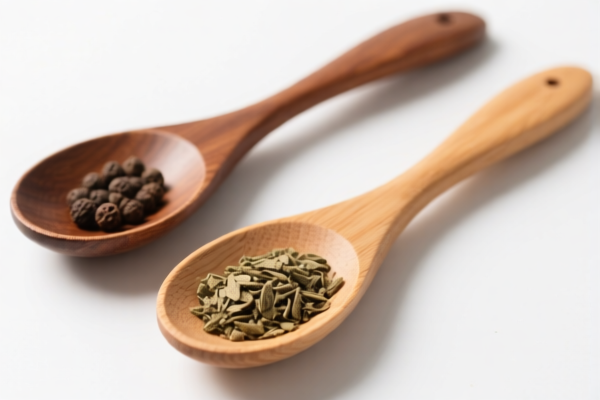
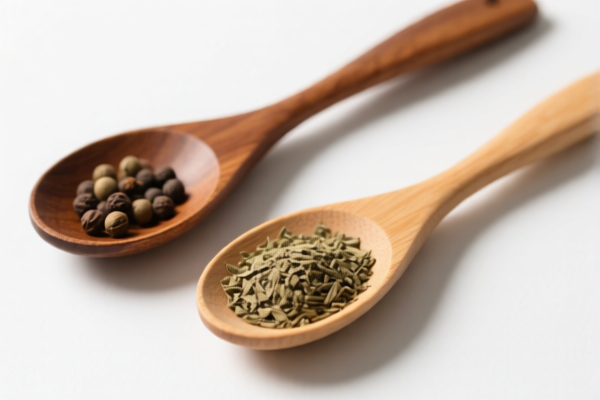
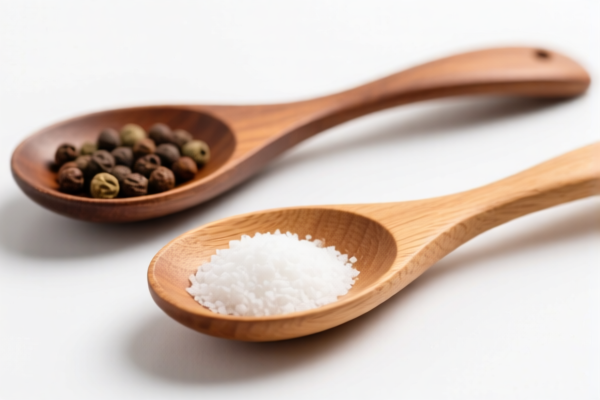
AI Analysis
🧂 Seasoning Preparations (Condiments & Spice Blends)
🌐 HS Code Reference & Customs Clearance Guide | 2026 Latest Tariff Analysis | Professional Import Strategy
📌 Part 1: Product Definition & Classification: Do You Really Understand "Seasonings"?
Seasoning preparations are a broad category in international trade, encompassing everything from pure spices and salt to complex mixed sauces and marinades. In customs classification, the distinction lies primarily in base ingredients and processing methods.
They are generally divided into two main categories:
1. Spice Mixes & Saline Seasonings (Chapters 09, 09, 25):
Pure ground spices (e.g., pepper, cumin), salt mixes, or simple blends without significant added value from other food groups.
2. Sauces & Condiments (Chapters 21):
Preparations that include added ingredients like soy sauce, vinegar, sugar, MSG, or thickeners, often having a higher moisture content or complex chemical structure.
⚠️ Key Distinction Point:
- If the product is primarily salt + spices (no significant sauce base) → Likely falls under Chapter 09 or 25.
- If the product includes soy sauce, vinegar, fermented bases, or thickeners (e.g., Ketchup, BBQ sauce, Marinades) → Likely falls under 2103.
- MSG (Monosodium Glutamate) is classified separately under 2922.
📦 Part 2: HS Code Classification Details (2026 Latest Tariff Authority)
| HS Code | Product Description | Application Scenario | Key Feature |
|---|---|---|---|
0909.60.00.00 |
Mixed spices | Curry powder, Taco seasoning, Garam Masala | Dry, ground mixtures of spices |
0910.99.90.00 |
Other spices (mixed) | Ginger powder mix, Turmeric blends | Not specifically listed elsewhere |
2103.90.90.80 |
Other sauces and preparations for sauces | BBQ Sauce, Teriyaki Sauce, Salad Dressings | Contains soy/vinegar/thickeners |
2103.90.90.40 |
Prepared mustard | Mustard sauces (yellow, dijon) | Specific to mustard-based condiments |
2501.00.00.00 |
Salt (including table salt & desiccant salt) | Plain salt, Sea salt, Salt blends without spices | Pure sodium chloride |
2922.42.00.00 |
Glutamic acid and its salts (MSG) | MSG powder, Sodium glutamate | Chemical amino acid salt |
🔍 Critical Reminder:
- Mixed Spices (0909) are dry and contain no significant sauce base. If you add oil or vinegar to curry powder, it may shift to 2103. - Soy Sauce & Fermented Pastes always fall under 2103, regardless of brand or origin. - Plain Salt is 2501. If salt is mixed with anti-caking agents only, it remains 2501. If mixed with spices, it becomes a "spice mix" (0909) or "seasoning preparation" (2103) depending on composition.
💰 Part 3: 2026 Latest Tariff Rate Breakdown (Including Surtaxes)
✅ Applicable Country: United States (US)
✅ Origin: China (CN)
✅ Effective Date: Post-November 10, 2025
🎯 1. 0909.60.00.00 — Mixed Spices (e.g., Curry Powder)
| Item | Details |
|---|---|
| Base Rate | 5.3% (ad valorem) |
| Section 301 Surcharge | +25% |
| IEEPA Surtax | +10% (China/HK products, effective Nov 10, 2025) |
| Total Rate | 40.3% |
| Calculation | CIF Value × 40.3% |
| De Minimis Exemption | ❌ Not Eligible (deny_de_minimis) |
| Legal Path | IEEPA:9903.01.24 → USITC:0909.60.00.00 → Footnote:9903.88.01 |
📌 Explanation:
- Mixed spices are subject to both Section 301 (25%) and IEEPA (10%) tariffs due to their origin in China. - Total duty is high. Consider sourcing from ASEAN countries (Vietnam, Thailand) for potential tariff advantages if supply chain allows.
🎯 2. 2103.90.90.80 — Other Sauces & Preparations (e.g., BBQ Sauce, Marinades)
| Item | Details |
|---|---|
| Base Rate | 6.5% (ad valorem) |
| Section 301 Surcharge | +25% |
| IEEPA Surtax | +10% (China/HK products, effective Nov 10, 2025) |
| Total Rate | 41.5% |
| Calculation | CIF Value × 41.5% |
| De Minimis Exemption | ❌ Not Eligible (deny_de_minimis) |
| Legal Path | IEEPA:9903.01.24 → USITC:2103.90.90.80 → Footnote:9903.88.01 |
📌 Note:
- Sauces are generally more expensive than dry spices due to higher base duties. - If the sauce contains soy sauce, it is strictly 2103.02 (if soy-based) or 2103.90. Ensure correct subheading.
🎯 3. 2501.00.00.00 — Salt (Including Table Salt)
| Item | Details |
|---|---|
| Base Rate | 0% |
| Section 301 Surcharge | +25% |
| IEEPA Surtax | +10% (China/HK products, effective Nov 10, 2025) |
| Total Rate | 35% |
| Calculation | CIF Value × 35% |
| De Minimis Exemption | ❌ Not Eligible (deny_de_minimis) |
| Legal Path | IEEPA:9903.01.24 → USITC:2501.00.00.00 → Footnote:9903.88.01 |
📌 Note:
- Even though the base rate is 0%, the surcharges make it expensive. - If salt is mixed with spices, do not declare as salt. Declare as 0909.60 (Mixed Spices) to avoid misclassification penalties, though tax rate may be similar.
🎯 4. 2922.42.00.00 — Glutamic Acid & Salts (MSG)
| Item | Details |
|---|---|
| Base Rate | 5.5% |
| Section 301 Surcharge | +25% |
| IEEPA Surtax | +10% (China/HK products, effective Nov 10, 2025) |
| Total Rate | 40.5% |
| Calculation | CIF Value × 40.5% |
| De Minimis Exemption | ❌ Not Eligible (deny_de_minimis) |
| Legal Path | IEEPA:9903.01.24 → USITC:2922.42.00.00 → Footnote:9903.88.01 |
🛠️ Part 4: Practical Customs Clearance Advice (Battle-Tested Pitfall Avoidance)
✅ 1. Required Documentation Checklist
| Document | Mandatory? | Notes |
|---|---|---|
| ✅ Ingredient List | ✔️ | Must detail % of each ingredient. Critical for distinguishing "spice mix" vs. "sauce". |
| ✅ Product Formula | ✔️ | Shows if thickeners, preservatives, or acidic bases (vinegar/soy) are present. |
| ✅ Photos (Front/Back Label) | ✔️ | Must show nutrition facts, ingredients, and bilingual labels (if US market). |
| ✅ Certificate of Analysis (COA) | ✔️ | For microbiological safety (especially for sauces/spices prone to contamination). |
| ✅ Commercial Invoice | ✔️ | Must use precise HS Code description. Avoid vague terms like "Flavoring". |
| ✅ FDA Registration | ✔️ | All food/seasoning imports to US must be FDA registered. |
✅ 2. Declaration Tips (Key Mantras)
🔥 "Check the Base: Dry = 09, Wet = 21, Salt = 25!"
| Scenario | Correct Declaration | Wrong Practice |
|---|---|---|
| Curry Powder (Dry, no oil) | 0909.60.00.00 |
Misdeclared as 2103 (Sauce) → Unnecessary inspection |
| BBQ Sauce (Wet, soy base) | 2103.90.90.80 |
Misdeclared as 0909 (Spice) → High Penalty for Misclassification |
| Salt with Anti-Caking Agent | 2501.00.00.00 |
Misdeclared as 2103 → Delayed Clearance |
| MSG Powder | 2922.42.00.00 |
Misdeclared as 0909 → Chemical Regulation Issues |
✅ 3. Special Cases
| Case | Handling Advice |
|---|---|
| Halal/Kosher Certified | Provide certificates to avoid religious compliance queries, though not always mandatory for US import. |
| Organic Certification | If claiming "USDA Organic", provide NOP certificate. Otherwise, declare as conventional. |
| Allergen Information | Must declare if containing gluten, soy, nuts, etc., per US labeling laws. Failure can lead to refusal. |
| Low-Volume Samples | Even samples are subject to duties if value > $800 (de minimis threshold removed for China). |
🌍 Part 5: Global Market Comparison (2026 Latest)
| Country/Region | Recommended HS Code | Tariff (China Origin) | Certification | Notes |
|---|---|---|---|---|
| 🇺🇸 USA | 0909.60 / 2103.90 |
35%–41.5% | FDA + Nutrition Label | Strict on misclassification |
| 🇨🇳 China | 0909.60 / 2103.90 |
5%–10% | HACCP / ISO22000 | No anti-dumping duties on seasonings |
| 🇪🇺 EU | 0909.60 / 2103.90 |
5%–6% | EFSA Compliance | Strict on additives and preservatives |
| 🇬🇧 UK | 0909.60 / 2103.90 |
5%–6% | FSA Guidelines | Post-Brexit rules apply |
| 🇯🇵 Japan | 0909.60 / 2103.90 |
0%–3.5% | JAS / FSC | Low tariffs, high standards |
📌 Conclusion:
- USA has the highest effective tariff rates due to surcharges.
- EU/Japan/UK are more tariff-friendly but have stricter food safety and additive regulations.
- Consider supply chain diversification (e.g., produce seasonings in Vietnam/Thailand) to mitigate US tariffs.
📌 Part 6: Common Mistakes & Pitfalls (Lessons Learned)
❌ Mistake 1: Declaring "Soy Sauce" as "Spice Mix" (0909)
👉 Consequence: Severe penalty for misclassification. Soy sauce is a fermented product (2103), not a dry spice.
❌ Mistake 2: Ignoring FDA Pre-Registration
👉 Consequence: Goods held at port, eventual return or destruction.
❌ Mistake 3: Vague Description "Seasoning Flavor"
👉 Consequence: Customs requests clarification, causing delays. Use specific names: "Chili Powder Blend", "Soy-Based Marinade".
❌ Mistake 4: Failing to Declare Allergens
👉 Consequence: Product recall risk, brand damage, and potential legal action.
✅ Correct Approach:
"Soy Sauce, Fermented, 500ml Bottle, Contains Wheat & Soy, FDA Reg. No. XXXXX, Made in China"
🎯 Part 7: Conclusion: Precision in Classification Saves Money!
🎯 Remember Mantras:
🔹 "Dry Spice = 09, Wet Sauce = 21, Salt = 25!"
🔹 "US Tariffs are High (35-41%), Check Origin!"
"HS Code is Life, Misclassification is Death!"
📌 Pro Tip:
If your seasonings are originating from Vietnam, Thailand, or Indonesia, you may benefit from lower or zero US tariffs under current trade policies (subject to change).
Consider Advanced Ruling from US Customs and Border Protection (CBP) for large shipments to ensure HS Code correctness.
📣 Immediate Action:
📞 Contact a professional customs broker + Provide full ingredient list + Apply for FDA Registration
🚀 Ensure your seasonings clear customs smoothly, stay compliant, and maximize profit!
✨ Professional Customs Clearance Starts with Accurate Classification!
💼 Every Percent of Duty Saved is Pure Profit!
Customer Reviews
About HS Code Classification
The Harmonized System (HS) is an internationally standardized nomenclature developed by the World Customs Organization (WCO) to classify traded products. Over 200 countries use the HS system as the basis for customs tariffs, trade statistics, and import/export regulations.
Each HS code follows a hierarchical structure:
- Chapter (2 digits) — Broad category of goods (e.g., Chapter 84: Machinery and Mechanical Appliances)
- Heading (4 digits) — More specific grouping within the chapter
- Subheading (6 digits) — Internationally standardized breakdown, used by all WCO member countries
- National subdivisions (8-10 digits) — Country-specific extensions for further classification, such as US HTSUS 10-digit codes
Correct HS code classification is essential for smooth customs clearance, accurate duty payment, and compliance with trade regulations. Misclassification can lead to customs delays, overpayment of duties, or penalties.
When importing from CN to US, the applicable tariff rates may include:
- Most-Favored-Nation (MFN) rate — The standard duty rate applied to WTO members
- General rate — Applied to countries without trade agreements
- Trade remedy duties — Additional tariffs such as Section 301 (anti-dumping), Section 232 (national security), or countervailing duties
The information provided on this page is for reference purposes only. For official classification, please consult with your local customs authority or a licensed customs broker.