Seaweed Basket
CN → US| HS Code | Tariff Rate | Origin | Destination | Doc |
|---|---|---|---|---|
| 4602198000 | 37.3% | CN | US | Official Doc |
| 4602191200 | 40.8% | CN | US | Official Doc |
Product Images
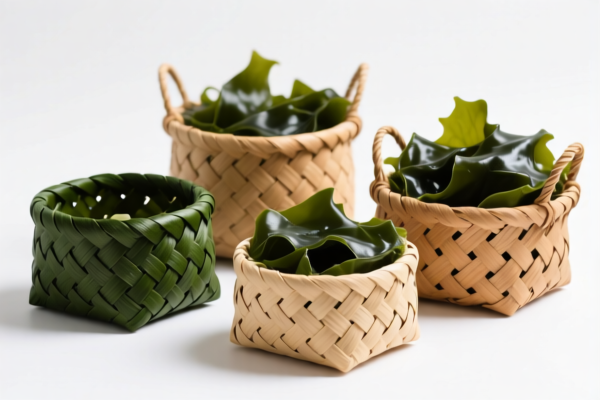
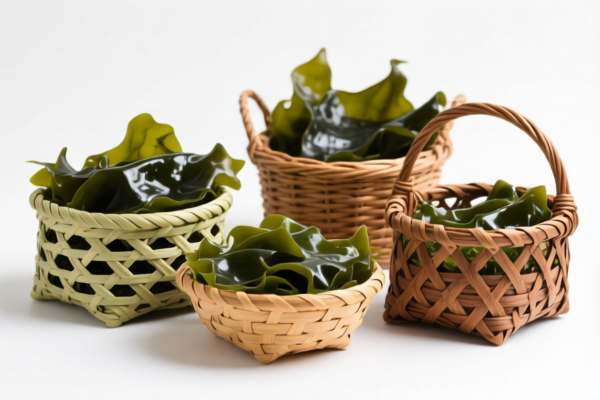
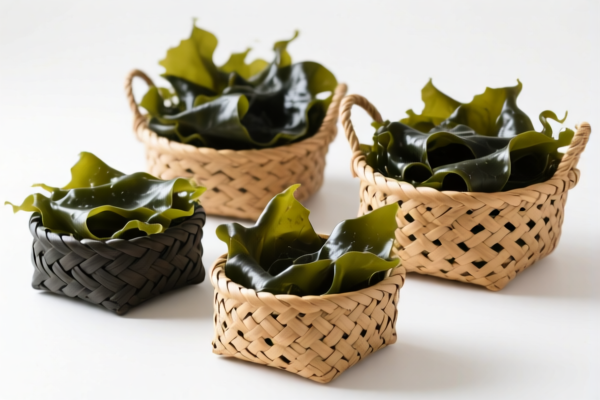
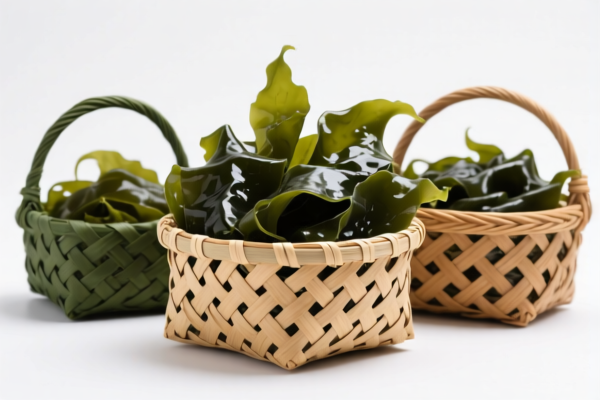
AI Analysis
🌿 Seaweed Basket (编结海草篮)
🌐 HS Code Reference & Customs Clearance Guide | 2026 Latest Tariff Analysis | Professional Classification Strategy
📌 I. Product Definition & Classification: Do You Know "Seaweed Basket"?
Seaweed baskets are artisanal or industrial woven containers made primarily from marine vegetation (seaweed/kelp) or vegetable materials treated to resemble such. In international trade, these fall under Chapter 46: Vegetables Plaiting Materials; Basketwork, Wickerwork and Other Articles. The classification depends heavily on the material composition and the specific type of basket.
Key Distinction:
- Specific Material (Willow, etc.): If the basket is made from specific plaiting materials like willow, it has a dedicated subheading.
- Other Vegetable Materials: If made from seaweed or other unspecified vegetable fibers, it falls under "Other".
- Other Goods: If it doesn't fit the specific material descriptions, it falls under the residual "Other" category.
⚠️ Critical Identification Point:
- Seaweed/Kelp: Generally classified under "Other: Other: Other: Other" (4602.19.80.00) because seaweed is not specifically listed as "willow" or "reeds" in the most common detailed breakdowns for general baskets, unless local interpretation classifies it broadly under vegetable materials.
- Willow: If the product is actually made of willow (often confused due to similar appearance), it falls under "Of willow" (4602.19.12.00).
- Shape: Articles made directly to shape from plaiting materials are covered under Heading 46.02.
📦 II. HS Code Classification Details (2026 Latest Tariff Authority Match)
Based on the provided data, here are the two potential classifications for "Seaweed Basket" or similar woven vegetable articles. Note that "Seaweed" typically falls under the generic "Other" category unless specified otherwise by local customs rulings, but we include the Willow code as a comparative reference for "vegetable material baskets."
| HS Code | Product Description | Application Scenario | Material Specificity |
|---|---|---|---|
4602.19.80.00 |
Basketwork, wickerwork... Other: Other: Other: Other | Generic seaweed baskets, loofah articles, or unlisted vegetable fiber baskets | ✅ Seaweed/Other Veg |
4602.19.12.00 |
Basketwork... Of vegetable materials... Of willow | Traditional willow baskets, wickerware made from willow shoots | ✅ Willow Only |
🔍 Key Reminder:
- Seaweed baskets are most likely to be classified under4602.19.80.00("Other") because seaweed is not willow.
-4602.19.12.00is strictly for Willow. Do not misclassify a seaweed basket as willow to avoid errors.
- Both codes belong to Heading 46.02: Basketwork, wickerwork, and other articles made directly to shape from plaiting materials.
💰 III. 2026 Latest Tariff Rate Details (Including Additional Taxes)
✅ Applicable Country: United States (US)
✅ Origin: China (CN)
✅ Validity: Rates apply to imports under the specified codes.
🎯 1. 4602.19.80.00 —— Seaweed Basket / Other Vegetable Baskets
| Item | Content |
|---|---|
| Base Tariff Rate | 0.0% |
| Additional Tariff | 0.0% |
| Total Tax Rate | 0.0% |
| Tax Detail | Base Tariff: 0.0%, Additional Tariff: 0.0% |
| Calculation | CIF Value × 0% = $0 Duty |
| De Minimis Eligible | ✅ Yes (Typically, low-duty goods may qualify for Section 321 de minimis if value < $800, but subject to current trade war policies) |
| Legal Basis | HTSUS 4602.19.80.00 |
📌 Explanation:
- This code attracts zero tariffs. It is a highly favorable classification for importers.
- No Section 301 tariffs apply to this specific subheading under the provided data.
- Low cost advantage: Ideal for high-volume, low-margin decorative or functional seaweed products.
🎯 2. 4602.19.12.00 —— Willow Basket
| Item | Content |
|---|---|
| Base Tariff Rate | 0.0% |
| Additional Tariff | 0.0% |
| Total Tax Rate | 0.0% |
| Tax Detail | Base Tariff: 0.0%, Additional Tariff: 0.0% |
| Calculation | CIF Value × 0% = $0 Duty |
| De Minimis Eligible | ✅ Yes |
| Legal Basis | HTSUS 4602.19.12.00 |
📌 Explanation:
- Also attracts zero tariffs.
- Warning: Only use this code if the product is 100% Willow. Misdeclaring seaweed as willow is a compliance risk.
- Note: Both codes provided in the data have 0% total tax, making them very competitive for US importers.
🛠️ IV. Customs Clearance Practical Advice (Pitfall Avoidance Guide)
✅ 1. Required Documentation Checklist
| Document | Mandatory? | Description |
|---|---|---|
| ✅ Product Specification Sheet | ✔️ | Must specify material composition: e.g., "100% Dried Seaweed (Sargassum)" or "Willow Branches". |
| ✅ Product Photos | ✔️ | Clear images showing weave pattern, material texture, and final shape. |
| ✅ Commercial Invoice | ✔️ | Must describe item as "Woven Basket" or "Seaweed Basket", NOT "Plastic Basket" or "Metal Rack". |
| ✅ Packing List | ✔️ | Detail gross/net weight. Seaweed baskets are lightweight but can be bulky. |
| ✅ Material Declaration | ✔️ | Confirm no prohibited plant pests or fungi (ISPM 15 standards may apply if wood-like). |
✅ 2. Declaration Tips (Key Mantra)
🔥 “Material Truth, Shape Clear, Code Precise, Duty Free!”
| Scenario | Correct Declaration | Wrong Practice |
|---|---|---|
| Seaweed Basket | HS: 4602.19.80.00 |
Misdeclare as "Plastic Basket" (39.23) → Higher duty & risk |
| Willow Basket | HS: 4602.19.12.00 |
Misdeclare as "Seaweed" → Incorrect classification audit |
| Loofah Sponge/Art | HS: 4602.19.80.00 |
Misdeclare as "Cosmetic" (33.07) → Incorrect regime |
| Partially Plaited | Ensure "Made Directly to Shape" | If assembled from cut pieces, may fall under different heading |
✅ 3. Special Handling for Seaweed
| Situation | Handling Advice |
|---|---|
| Mold/Pest Risk | Seaweed is organic. Ensure it is dried, treated, and certified pest-free to avoid USDA rejection. |
| Fragility | Seaweed baskets are brittle. Use strong packaging to prevent breakage during transit. |
| Moisture | High moisture content can lead to mold. Ensure dew point control in shipping containers. |
🌍 V. Global Market Comparison (2026 Latest)
| Country/Region | Recommended HS Code | Tariff Rate | Certification | Notes |
|---|---|---|---|---|
| 🇺🇸 USA | 4602.19.80.00 |
0% | None specific | Tariff-free advantage |
| 🇨🇳 China | 4602.19.80.00 |
Varies | None | Import duty may apply depending on origin |
| 🇪🇺 EU | 4602.19 |
Varies | FSC/PEFC (if wood) | Organic materials may face stricter phytosanitary checks |
| 🇯🇵 Japan | 4602.19 |
Varies | Phytosanitary Cert. | Strict on plant-based imports |
📌 Conclusion:
- The USA offers 0% duty for these classifications, making it a prime market for seaweed/willow baskets.
- Compliance is key: Organic materials require phytosanitary documentation in most countries, even if duties are low.
📌 VI. Common Mistakes & Pitfalls (Lessons Learned)
❌ Mistake 1: Declaring Seaweed Basket as "Plastic Basket"
👉 Consequence: Incorrect HS Code → Possible penalties for misdeclaration.
❌ Mistake 2: Confusing "Seaweed" with "Willow"
👉 Consequence: If audited, customs may reclassify and demand back taxes or fines if the material doesn't match.
❌ Mistake 3: Ignoring Phytosanitary Requirements
👉 Consequence: Seaweed is organic. Without proper drying/certification, goods may be destroyed or returned by USDA/Plant Quarantine.
❌ Mistake 4: Using Generic "Basket" Description
👉 Consequence: Ambiguity leads to delays. Be specific: "Hand-woven Seaweed Basket, Decorative".
✅ Correct Practice:
"Hand-woven Seaweed Basket, Made from Dried Sargassum, Unlined, Decorative Use, Model SEA-001, Phytosanitary Certificate Attached"
🎯 VII. Conclusion: Professional Declaration, Zero Duty, Smooth Clearance!
🎯 Remember the Mantra:
🔹 "Seaweed is Veg, Willow is Too, Code 46.02, Duty Free You'll Do!"
🔹 "Material Truth Saves You, Phytosanitary Certs Keep You Safe!"
📌 Tips:
- If your seaweed baskets are exported from Vietnam or Thailand, check for FTA benefits, though the US base rate is already 0%.
- For US imports, the 0% rate is a significant cost advantage. Ensure your supplier provides clear material evidence.
📣 Immediate Action:
📞 Contact a Customs Broker + Provide Material Certificates + Apply for Pre-Ruling if Volume is High
🚀 Let Your Seaweed Baskets, Clear Customs Fast, Enter US Duty-Free, Profit Maximize!
✨ Professional Clearance Starts with Accurate Classification!
💼 Every Zero Percent Saved is Pure Profit!
Customer Reviews
About HS Code Classification
The Harmonized System (HS) is an internationally standardized nomenclature developed by the World Customs Organization (WCO) to classify traded products. Over 200 countries use the HS system as the basis for customs tariffs, trade statistics, and import/export regulations.
Each HS code follows a hierarchical structure:
- Chapter (2 digits) — Broad category of goods (e.g., Chapter 84: Machinery and Mechanical Appliances)
- Heading (4 digits) — More specific grouping within the chapter
- Subheading (6 digits) — Internationally standardized breakdown, used by all WCO member countries
- National subdivisions (8-10 digits) — Country-specific extensions for further classification, such as US HTSUS 10-digit codes
Correct HS code classification is essential for smooth customs clearance, accurate duty payment, and compliance with trade regulations. Misclassification can lead to customs delays, overpayment of duties, or penalties.
When importing from CN to US, the applicable tariff rates may include:
- Most-Favored-Nation (MFN) rate — The standard duty rate applied to WTO members
- General rate — Applied to countries without trade agreements
- Trade remedy duties — Additional tariffs such as Section 301 (anti-dumping), Section 232 (national security), or countervailing duties
The information provided on this page is for reference purposes only. For official classification, please consult with your local customs authority or a licensed customs broker.