Security Alarm System
CN → US| HS Code | Tariff Rate | Origin | Destination | Doc |
|---|---|---|---|---|
| 8543706000 | 35.0% | CN | US | Official Doc |
| 8543709860 | 37.6% | CN | US | Official Doc |
| 8531100045 | 36.3% | CN | US | Official Doc |
| 8531100035 | 36.3% | CN | US | Official Doc |
| 8537108000 | 35.0% | CN | US | Official Doc |
Product Images
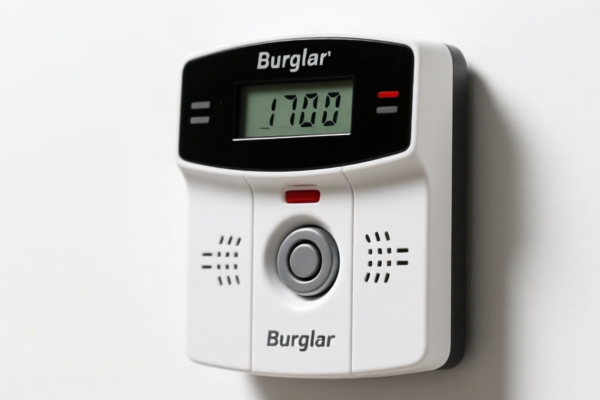
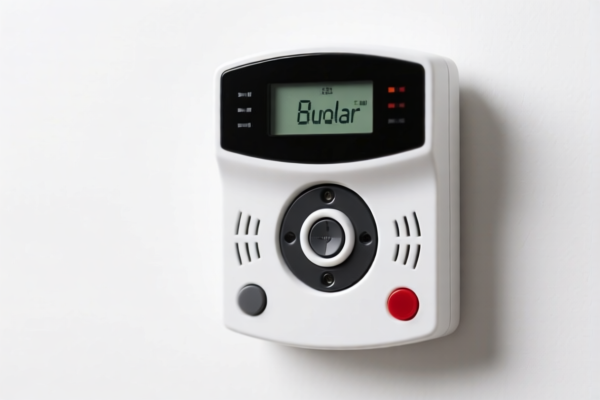
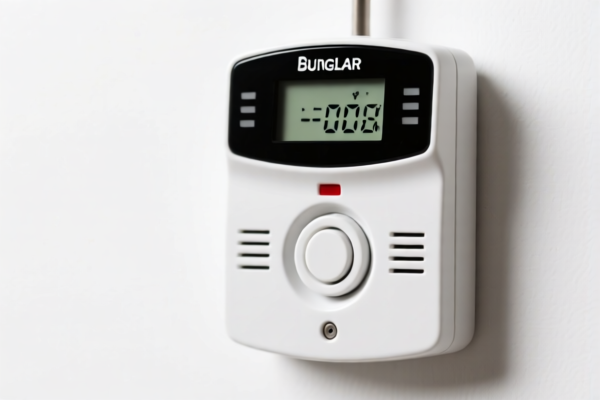
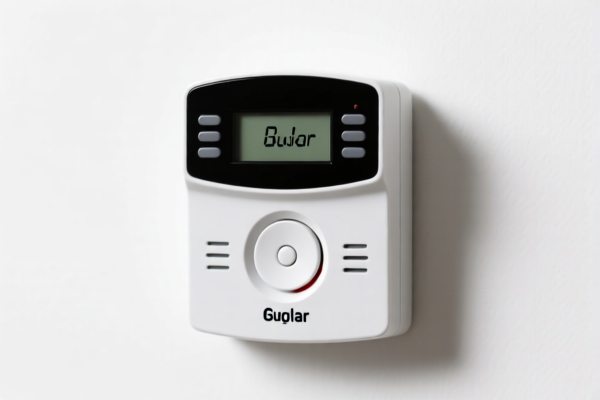
AI Analysis
🚨 Security Alarm System (Security Alarms)
🌐 HS Code Reference & Customs Clearance Guide | 2026 Latest Tariff Analysis | Professional Clearance Strategy
📌 1. Product Definition & Classification: What Exactly is a "Security Alarm System"?
A Security Alarm System is an electronic device or system designed to detect unauthorized entry, fire, or other emergencies and trigger an audible/visual alert. In international trade, its classification depends heavily on its technical function and integration level.
⚠️ Key Distinction Point:
- Is it a standalone signaling device (simply making noise/light) → Likely 8531.10.00.45 / 8531.10.00.35.
- Is it a networked/electronic control unit connected to specific instruments/networks → Likely 8543.70.60.00.
- Is it a general-purpose control panel distributing power/signals → Likely 8537.10.80.00.
- Is it a miscellaneous electronic device not fitting other specific categories → Likely 8543.70.98.60.
📦 2. HS Code Classification Details (2026 Latest Tariff Authority Comparison)
| HS Code | Product Description | Application Scenario | Classification Logic |
|---|---|---|---|
8543.70.60.00 |
Electronic apparatus designed for connection to telephones, instruments, or networks | Smart home alarms, networked security hubs, IoT-connected sensors | ✅ Fits "designed to be connected to specific networks/instruments" |
8543.70.98.60 |
Other machines and apparatus (Residual Category) | Alarms with independent functions not covered elsewhere; not amplifiers or musical effect pedals | ✅ "Other machinery/apparatus" residual clause |
8531.10.00.45 |
Deduction or fire alarms and similar equipment (Other) | Standard burglar/fire alarms, standalone signaling devices | ✅ Direct match with "Alarms for theft or fire" |
8531.10.00.35 |
Electric sound or visual signaling apparatus (Other) | Alarm bells, sirens, flashing lights used for security | ✅ Matches "Electric sound or visual signaling devices" based on common sense |
8537.10.80.00 |
Boards, panels, consoles, desks, cabinets, etc., for electric control or distribution | Central control consoles, main distribution panels for alarm systems | ✅ Core function involves control/distribution components |
🔍 Key Reminder:
- Standalone Sirens/Bells → Usually 8531.10.00.35/45.
- Smart/Networked Hubs → Often 8543.70.60.00 (if connected to networks) or 8543.70.98.60.
- Central Control Panels → 8537.10.80.00.
- Do not split components if they form a complete system; declare as a whole unless clearly distinct parts.
💰 3. 2026 Latest Tariff Rate Details (Including Surcharges & Policy Add-ons)
✅ Applicable Country: United States (US)
✅ Country of Origin: China (CN)
✅ Effective Time: From November 10, 2025 (including subsequent imports)
🎯 1. 8543.70.60.00 —— Electronic Apparatus for Network/Instrument Connection
| Item | Content |
|---|---|
| Base Tariff Rate | 0.0% |
| USITC Additional Tariff | +25.0% (from USITC Footnote 9903.88.01) |
| IEEPA Additional Tariff | +10.0% (against China/HK products, effective Nov 10, 2025) |
| Total Rate | 35.0% |
| Tax Calculation | CIF Value × 35% |
| De Minimis Exemption? | ❌ No (deny_de_minimis) |
| Legal Basis Path | IEEPA:9903.01.25 → IEEPA:9903.01.24 → USITC:8543.70.60.00 → FOOTNOTE:9903.88.01 |
📌 Explanation:
- "USITC Additional Tariff 25%" comes from Section 301 tariffs under the US Trade Act;
- "IEEPA 10%" is the additional tariff under the International Emergency Economic Powers Act (IEEPA);
- Total 35%, which is a high tariff, must be anticipated in advance!
🎯 2. 8543.70.98.60 —— Other Machines and Apparatus (Residual Category)
| Item | Content |
|---|---|
| Base Tariff Rate | 2.6% |
| USITC Additional Tariff | +25.0% |
| IEEPA Additional Tariff | +10.0% |
| Total Rate | 37.6% |
| Tax Calculation | CIF Value × 37.6% |
| De Minimis Exemption? | ❌ No |
| Legal Basis Path | IEEPA:9901.25 → IEEPA:9903.01.24 → USITC:8543.70.98.60 → FOOTNOTE:9903.88.01 |
📌 Note:
- This category has a slightly higher base tariff (2.6%) compared to others;
- Applies to alarms that do not fit into specific signaling or network device categories;
- Total 37.6% is the highest among the listed codes.
🎯 3. 8531.10.00.45 —— Deduction or Fire Alarms (Other)
| Item | Content |
|---|---|
| Base Tariff Rate | 1.3% |
| USITC Additional Tariff | +25.0% |
| IEEPA Additional Tariff | +10.0% |
| Total Rate | 36.3% |
| Tax Calculation | CIF Value × 36.3% |
| De Minimis Exemption? | ❌ No |
| Legal Basis Path | IEEPA:9903.01.25 → IEEPA:9903.01.24 → USITC:8531.10.00.45 → FOOTNOTE:9903.88.01 |
📌 Explanation:
- Directly matches "Alarms for theft or fire";
- Base tariff is low (1.3%), but total remains high due to surcharges;
- Commonly used for standard burglar/fire alarms.
🎯 4. 8531.10.00.35 —— Electric Sound or Visual Signaling Apparatus
| Item | Content |
|---|---|
| Base Tariff Rate | 1.3% |
| USITC Additional Tariff | +25.0% |
| IEEPA Additional Tariff | +10.0% |
| Total Rate | 36.3% |
| Tax Calculation | CIF Value × 36.3% |
| De Minimis Exemption? | ❌ No |
| Legal Basis Path | IEEPA:9903.01.25 → IEEPA:9903.01.24 → USITC:8531.10.00.35 → FOOTNOTE:9903.88.01 |
📌 Note:
- Similar to8531.10.00.45in total rate;
- Focuses on sound/visual signaling function (e.g., sirens, strobes);
- Commonly used for alarm bells and lights.
🎯 5. 8537.10.80.00 —— Control Panels for Electric Control or Distribution
| Item | Content |
|---|---|
| Base Tariff Rate | 0.0% |
| USITC Additional Tariff | +25.0% |
| IEEPA Additional Tariff | +10.0% |
| Total Rate | 35.0% |
| Tax Calculation | CIF Value × 35.0% |
| De Minimis Exemption? | ❌ No |
| Legal Basis Path | IEEPA:9903.01.25 → IEEPA:9903.01.24 → USITC:8537.10.80.00 → FOOTNOTE:9903.88.01 |
📌 Explanation:
- Applies to central control consoles and distribution panels;
- Base tariff is 0%, but total rate is still 35% due to surcharges;
- Use this code if the product is primarily a control/distribution unit.
🛠️ 4. Customs Clearance Practical Advice (Battle-Hardened Pitfall Avoidance Guide)
✅ 1. Documentation Checklist (All Required)
| Document | Mandatory | Description |
|---|---|---|
| ✅ Product Specification Sheet | ✔️ | Includes model, function, connection type, power supply |
| ✅ Circuit Diagram/Structure Diagram | ✔️ | To determine if it contains control boards or is just a signaling device |
| ✅ Product Photos (Including Nameplate) | ✔️ | Clear display of model, brand, input/output parameters |
| ✅ Third-Party Test Reports | ✔️ | FCC, CE, RoHS, UL (if applicable) |
| ✅ Commercial Invoice | ✔️ | Clearly state "Security Alarm System" or specific function |
| ✅ Certificate of Origin (CO) | ✔️ | If not Chinese origin, eligible for preferential rates |
| ✅ Packing List | ✔️ | Explain relationship between main unit and accessories; avoid split declaration |
✅ 2. Declaration Tips (Key Mantras)
🔥 "Whole System, One Code; Control Panel, 8537; Signaling, 8531; Network, 8543!"
| Situation | Correct Declaration | Wrong Practice |
|---|---|---|
| Complete Alarm System (with control panel + sensors + siren) | Declare as Whole System (choose best fit: 8537.10.80.00 or 8543.70.60.00) | Split into parts → Each part taxed separately, total cost skyrockets |
| Central Control Console | 8537.10.80.00 |
Misdeclare as "siren" → 36.3% vs 35.0% (minor difference, but accuracy matters) |
| Standalone Siren/Alarm Bell | 8531.10.00.35 or 8531.10.00.45 |
Misdeclare as "control panel" → Potential classification error |
| Smart/IoT Alarm Hub | 8543.70.60.00 |
Misdeclare as "general apparatus" → 37.6% (higher than necessary) |
✅ 3. Special Case Handling
| Situation | Handling Advice |
|---|---|
| OEM Custom Alarm Systems | Provide customer order + design drawings to avoid "non-standard" classification |
| Alarms with Touchscreens | If primarily for control, consider 8537.10.80.00; if for signaling, 8531.10.00.35 |
| Alarms for Medical Facilities | If specialized, may qualify for "non-commercial use" exemption with proof (rare, check carefully) |
| Alarms for Military/Aerospace | Apply for "special use" declaration; rates may be reduced, consult in advance |
🌍 5. Global Major Market Clearance Comparison (2026 Latest)
| Country/Region | Recommended HS Code | Tariff | Certification Requirements | Remarks |
|---|---|---|---|---|
| 🇺🇸 United States | 8537.10.80.00 / 8543.70.60.00 |
35% (China origin) | FCC + RoHS | Highest surcharge; plan ahead |
| 🇨🇳 China | 8531.10.00.35 |
5-10% (depending on type) | CCC + RoHS | No additional surcharges |
| 🇪🇺 European Union | 8531.10.00.35 |
0-3% (if compliant with CE) | CE + ErP | No additional surcharges |
| 🇬🇧 United Kingdom | 8531.10.00.35 |
0-3% | UKCA + RoHS | Post-Brexit rules apply |
| 🇦🇺 Australia | 8531.10.00.35 |
5% | RCM | No additional surcharges |
| 🇯🇵 Japan | 8531.10.00.35 |
0-3% | PSE | No additional surcharges |
📌 Conclusion:
- The United States is the only market with significant additional tariffs on security alarms from China;
- Chinese-origin security alarms face high clearance costs in the US, suggesting supply chain adjustment or pre-assessment;
- Other markets have lower or no additional tariffs, making them more cost-effective for exports.
📌 6. Common Errors & Pitfall Avoidance Guide (Lessons from Hardship)
❌ Error 1: Splitting a complete alarm system into "control panel + sensors + sirens" for declaration
👉 Consequence: Each part taxed separately → Total cost exceeds 100%+!
❌ Error 2: Declaring a "smart hub" as a "general signaling device"
👉 Consequence: Rate from 35% to 37.6% → Extra cost + delay!
❌ Error 3: Providing no circuit diagram, only stating "alarm system"
👉 Consequence: Customs cannot determine classification → Delay or return!
❌ Error 4: Using "Alarm Bell" as the name when it’s actually a "Control Panel"
👉 Consequence: Classification error → Back taxes + penalties!
✅ Correct Practice:
“Smart Security Alarm System, Model XYZ, FCC & RoHS Certified, Includes Control Panel, Sensors, and Siren”
🎯 7. Conclusion: Precise Classification Saves Time, Money, and Stress!
🎯 Remember the Mantra:
🔹 "Whole system, one code; Control panel 8537; Signaling 8531; Network 8543; Split it, and you lose big!"
🔹 "HS Code defines life, rate difference 2-3%, declaration one step wrong, thousands lost!"
📌 Pro Tip:
If your security alarm system is originally from Vietnam, Mexico, Thailand, or Malaysia, you may apply for IEEPA Exemption, reducing rates to 0%-5%;
Suggest applying for Advance Ruling (Pre-classification) to avoid clearance risks.
📣 Immediate Action:
📞 Contact professional customs brokers + Provide product diagrams + Apply for HS Code Advance Ruling
🚀 Let your security alarms, clear customs smoothly, export efficiently, and double your profits!
✨ Professional Clearance Starts with Precise Classification!
💼 Every cent of your cost deserves precise calculation!
Customer Reviews
About HS Code Classification
The Harmonized System (HS) is an internationally standardized nomenclature developed by the World Customs Organization (WCO) to classify traded products. Over 200 countries use the HS system as the basis for customs tariffs, trade statistics, and import/export regulations.
Each HS code follows a hierarchical structure:
- Chapter (2 digits) — Broad category of goods (e.g., Chapter 84: Machinery and Mechanical Appliances)
- Heading (4 digits) — More specific grouping within the chapter
- Subheading (6 digits) — Internationally standardized breakdown, used by all WCO member countries
- National subdivisions (8-10 digits) — Country-specific extensions for further classification, such as US HTSUS 10-digit codes
Correct HS code classification is essential for smooth customs clearance, accurate duty payment, and compliance with trade regulations. Misclassification can lead to customs delays, overpayment of duties, or penalties.
When importing from CN to US, the applicable tariff rates may include:
- Most-Favored-Nation (MFN) rate — The standard duty rate applied to WTO members
- General rate — Applied to countries without trade agreements
- Trade remedy duties — Additional tariffs such as Section 301 (anti-dumping), Section 232 (national security), or countervailing duties
The information provided on this page is for reference purposes only. For official classification, please consult with your local customs authority or a licensed customs broker.