Security Code
CN → US| HS Code | Tariff Rate | Origin | Destination | Doc |
|---|---|---|---|---|
| 8523520010 | 35.0% | CN | US | Official Doc |
| 8523590000 | 35.0% | CN | US | Official Doc |
| 4907000000 | 17.5% | CN | US | Official Doc |
| 4907000000 | 17.5% | CN | US | Official Doc |
Product Images
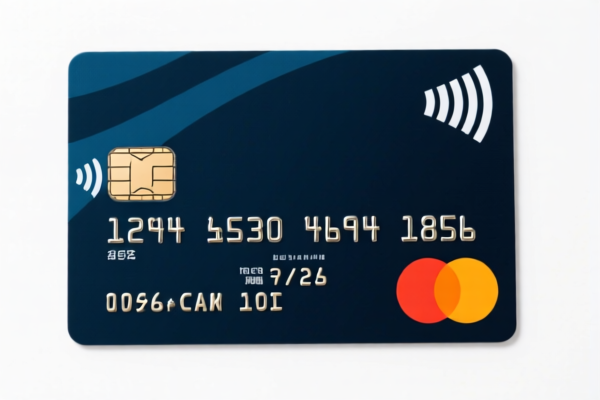
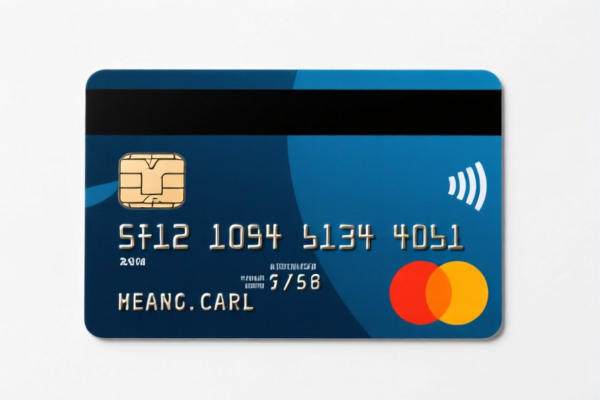
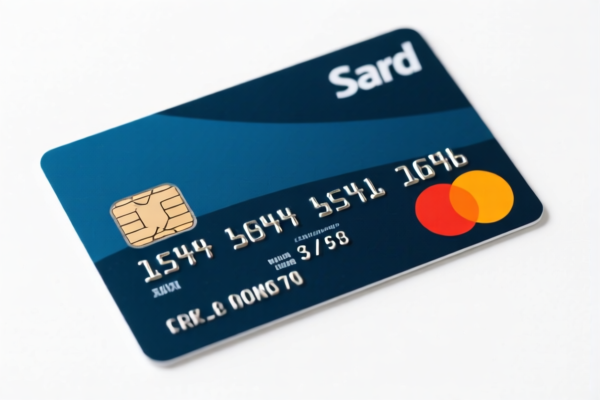
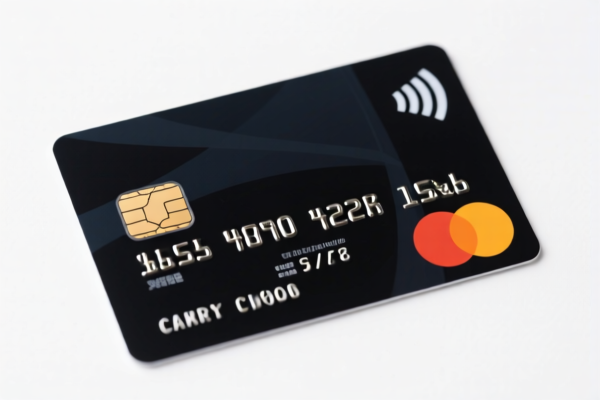
AI Analysis
🔐 Security Code: The Final Line of Defense in Digital & Physical Transactions
🌐 HS Code Reference & Customs Clearance Guide | 2026 Latest Tax Rules Analysis | Professional Clearance Strategy
📌 I. Product Definition & Classification: What Exactly Is a "Security Code"?
In the context of international trade and customs classification, a "Security Code" is rarely a standalone physical commodity. It is a concept applied to various items designed to prevent fraud, unauthorized access, or counterfeiting. To determine the correct HS Code, we must identify the physical nature of the product carrying the security code.
Common products bearing security codes include: 1. Banknotes & Financial Documents: Paper with embedded watermarks, security threads, or printed serial numbers. 2. Smart Cards: Plastic cards with embedded chips (e.g., bank cards, ID cards, SIM cards) containing encrypted security keys. 3. Certified Stock/Bond Certificates: High-value paper documents with holograms, micro-printing, or QR codes to prevent forgery. 4. Digital Security Media: "Smart cards" or semiconductor storage devices used for digital signatures or two-factor authentication (2FA).
⚠️ Key Distinction:
- If the product is paper-based financial instrument (unused) → HS 4907
- If the product is a semiconductor smart card (unrecorded/recorded) → HS 8523
📦 II. HS Code Classification Details (2026 Latest Tariff Authority Comparison)
Based on the provided data, here are the specific HS Codes and their corresponding tax implications. Note that the classification depends entirely on whether the item is a physical paper document or a digital semiconductor device.
| HS Code | Product Description | Application Scenario | Physical Nature |
|---|---|---|---|
4907.00.00.00 |
Unused postage, revenue, or similar stamps of current/new issue; stamp-impressed paper; banknotes; check forms; stock/share/bond certificates and similar documents of title | Unused banknotes, stock certificates, bonds, checks, revenue stamps | ✅ Paper/Document |
8523.52.00.10 |
Discs, tapes, solid-state non-volatile storage devices, "smart cards" and other media for recording sound/phenomena: Semiconductor media: "Smart cards" Unrecorded | Unprogrammed smart cards, blank SIM cards, blank credit cards with chips | ✅ Semiconductor/Hardware |
8523.59.00.00 |
Discs, tapes, solid-state non-volatile storage devices, "smart cards" and other media: Semiconductor media: Other | Recorded smart cards, pre-programmed security tokens, other semiconductor media | ✅ Semiconductor/Hardware |
🔍 Critical Reminder:
- "Security Code" on Paper: If the security feature is part of a certificate, note, or stamp, it falls under 4907.00.00.00.
- "Security Code" on a Chip: If the security code is stored in a smart card or semiconductor, it falls under 8523.52.00.10 or 8523.59.00.00.
- Do not mix categories: A "security token" that is a USB drive might fall under Chapter 85, while a "security voucher" is Chapter 49.
💰 III. 2026 Latest Tariff Rate Details (Including Additional Taxes & Policy Add-ons)
✅ Applicable Country: United States (US)
✅ Origin: China (CN)
✅ Effective Time: Current Rates Applied
🎯 1. 4907.00.00.00 —— Unused Financial/Postage Documents
| Item | Content |
|---|---|
| Base Tariff Rate | 0.0% (ad valorem) |
| Additional Tariff (Section 301) | +7.5% |
| Total Tariff Rate | 7.5% |
| Tax Calculation | CIF Value × 7.5% |
| De Minimis Exemption | ❌ Not Applicable (High-value documents typically exceed thresholds) |
| Legal Basis Path | Section 301: 4907.00.00.00 |
📌 Explanation:
- These items are classified as "documents of title" or "unissued stamps/banknotes."
- The 7.5% additional tariff is a standard Section 301 duty on certain Chinese-origin goods.
- Risk: If these are counterfeit or used banknotes, they may be prohibited under customs seizure laws, not just taxed.
🎯 2. 8523.52.00.10 —— Unrecorded Smart Cards (Semiconductor Media)
| Item | Content |
|---|---|
| Base Tariff Rate | 0.0% (ad valorem) |
| Additional Tariff (Section 301) | +25.0% |
| Total Tariff Rate | 25.0% |
| Tax Calculation | CIF Value × 25.0% |
| De Minimis Exemption | ❌ Not Applicable |
| Legal Basis Path | Section 301: 8523.52.00.10 |
📌 Explanation:
- "Unrecorded" means the smart card is blank and does not contain user-specific data (e.g., a blank SIM card or blank credit card chip).
- The 25% rate reflects the high scrutiny on semiconductor manufacturing inputs from China.
🎯 3. 8523.59.00.00 —— Other Semiconductor Media (Recorded/Other)
| Item | Content |
|---|---|
| Base Tariff Rate | 0.0% (ad valorem) |
| Additional Tariff (Section 301) | +25.0% |
| Total Tariff Rate | 25.0% |
| Tax Calculation | CIF Value × 25.0% |
| De Minimis Exemption | ❌ Not Applicable |
| Legal Basis Path | Section 301: 8523.59.00.00 |
📌 Explanation:
- This category captures recorded smart cards (e.g., pre-loaded with bank data, government IDs) or other semiconductor media.
- If the "security code" is digitally stored on a chip, this is likely your classification.
- Note: The rate is identical to unrecorded smart cards, but the description must be precise to avoid misclassification audits.
🛠️ IV. Customs Clearance Practical Advice (Battle-Proven Pitfall Avoidance Guide)
✅ 1. Required Documentation Checklist (Non-negotiable)
| Document | Must Provide | Explanation |
|---|---|---|
| ✅ Product Specification Sheet | ✔️ | Clearly state if the item is "Blank/Unrecorded" or "Pre-loaded/Recorded." |
| ✅ Technical Diagram | ✔️ | Show the chip type, interface, and storage capacity. |
| ✅ Product Photos (Including Chip) | ✔️ | Close-up of the semiconductor component, not just the plastic card. |
| ✅ Commercial Invoice | ✔️ | Must specify "Smart Card" or "Certificate of Title," not vague "Security Device." |
| ✅ Customs Bond | ✔️ | Required for formal entry of high-value financial/tech goods. |
| ✅ Anti-Counterfeit Declaration | ✔️ | For 4907 items, declare that items are unused and legally issued. |
✅ 2. Declaration Tips (Critical Mantra)
🔥 “Paper vs. Chip, Record vs. Blank, Name Precise, Rate Halved!”
| Scenario | Correct HS Code | Wrong Practice |
|---|---|---|
| Blank smart cards (no data) | 8523.52.00.10 |
Declare as "USB Drive" → Wrong chapter |
| Pre-loaded bank cards (with data) | 8523.59.00.00 |
Declare as "Blank Card" → Misdeclaration penalty |
| Unused stock certificates | 4907.00.00.00 |
Declare as "Paper" → Under-tariffed |
| Used/Counterfeit banknotes | Prohibited | Attempting to import → Seizure & Fine |
✅ 3. Special Case Handling
| Situation | Handling Advice |
|---|---|
| OEM Smart Cards | Provide client order + encryption standards (e.g., EMV, ISO 7816) to prove legal use. |
| Security Tokens (USB) | If it’s a physical USB key with a chip, check if it fits 8523 or 8471. Usually 8523 if it’s a "smart card" form factor. |
| High-Value Certificates | Ensure 4907 description explicitly says "Unused." Used certificates may be considered second-hand goods or restricted. |
| Digital Security Keys (2FA) | If it’s a small hardware token, verify if it’s a "smart card" (8523) or "other electrical apparatus" (8517/8543). |
🌍 V. Global Market Clearance Comparison (2026 Latest)
| Country/Region | Recommended HS Code | Tariff Rate | Certification Requirement | Notes |
|---|---|---|---|---|
| 🇺🇸 USA | 8523.52.00.10 / 8523.59.00.00 |
25% | FCC (if wireless), UL | Smart cards face high tariffs. |
| 🇺🇸 USA | 4907.00.00.00 |
7.5% | None specific | Lower tariff, but strict anti-counterfeit laws. |
| 🇨🇳 China | 8523.52.00.10 |
0% (if FTA) | CCC (if applicable) | Low entry barrier. |
| 🇪🇺 EU | 8523.52.00.10 |
0% (if compliant) | CE, GDPR (for data) | Strict data privacy laws for recorded cards. |
| 🇬🇧 UK | 8523.52.00.10 |
0% | UKCA | Post-Brexit rules apply. |
📌 Conclusion:
- USA is the toughest market for smart cards due to the 25% additional tariff.
- Paper-based security documents (4907) have a lower tariff (7.5%) but are subject to stricter anti-counterfeiting scrutiny.
📌 VI. Common Mistakes & Pitfall Guide (Lessons Learned)
❌ Mistake 1: Declaring a recorded smart card as unrecorded
👉 Consequence: Audit reveals data presence → Penalty for false declaration + Back taxes!
❌ Mistake 2: Calling a smart card a "USB Flash Drive"
👉 Consequence: Wrong HS Code (8523 vs 8523/8471) → Delay in clearance + Potential seizure.
❌ Mistake 3: Importing used banknotes as "Unused Stamps"
👉 Consequence: Seizure by CBP under counterfeit currency laws. Never import used legal tender.
❌ Mistake 4: Vague description: "Security Code Device"
👉 Consequence: CBP requests additional info → Clearance delay of 2-4 weeks.
✅ Correct Practice:
“Smart Card, Unrecorded, ISO 7816 Compliant, PVC Material, Model XYZ, FCC Certified”
or
“Stock Certificate, Unused, Pre-printed, Security Hologram Included, Model ABC”
🎯 VII. Conclusion: Precise Classification Saves Money and Time!
🎯 Remember the Mantra:
🔹 “Paper is 4907, Chip is 8523; Record changes the rate, Blank is 52, Recorded is 59!”
🔹 “Tariff is 7.5% for paper, 25% for chips; Declare accurately, or pay the price!”
📌 Pro Tip:
If your smart cards are originating from Vietnam, Mexico, or Thailand, you may qualify for IEEPA exemptions or lower tariffs under USMCA/FTAs.
Recommendation: Apply for an Advance Ruling (CBP Ruling) before shipment to confirm the correct HS Code and tariff.
📣 Immediate Action:
📞 Contact a licensed customs broker + Provide technical datasheets + Apply for HS Code Advance Ruling
🚀 Ensure your security products clear customs smoothly, comply with regulations, and protect your margins!
✨ Professional clearance starts with accurate classification!
💼 Every penny saved through correct HS coding is pure profit!
Customer Reviews
About HS Code Classification
The Harmonized System (HS) is an internationally standardized nomenclature developed by the World Customs Organization (WCO) to classify traded products. Over 200 countries use the HS system as the basis for customs tariffs, trade statistics, and import/export regulations.
Each HS code follows a hierarchical structure:
- Chapter (2 digits) — Broad category of goods (e.g., Chapter 84: Machinery and Mechanical Appliances)
- Heading (4 digits) — More specific grouping within the chapter
- Subheading (6 digits) — Internationally standardized breakdown, used by all WCO member countries
- National subdivisions (8-10 digits) — Country-specific extensions for further classification, such as US HTSUS 10-digit codes
Correct HS code classification is essential for smooth customs clearance, accurate duty payment, and compliance with trade regulations. Misclassification can lead to customs delays, overpayment of duties, or penalties.
When importing from CN to US, the applicable tariff rates may include:
- Most-Favored-Nation (MFN) rate — The standard duty rate applied to WTO members
- General rate — Applied to countries without trade agreements
- Trade remedy duties — Additional tariffs such as Section 301 (anti-dumping), Section 232 (national security), or countervailing duties
The information provided on this page is for reference purposes only. For official classification, please consult with your local customs authority or a licensed customs broker.