Security Mirror
CN → US| HS Code | Tariff Rate | Origin | Destination | Doc |
|---|---|---|---|---|
| 8708295160 | 0.0% | CN | US | Official Doc |
| 8525893000 | 35.0% | CN | US | Official Doc |
| 8525895050 | 35.0% | CN | US | Official Doc |
| 8529900900 | 35.0% | CN | US | Official Doc |
| 8529908100 | 35.0% | CN | US | Official Doc |
Product Images
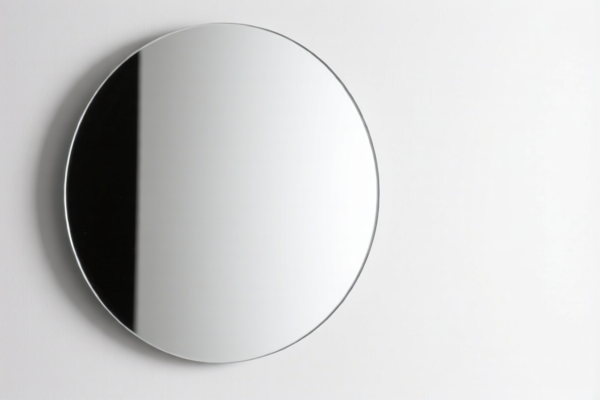

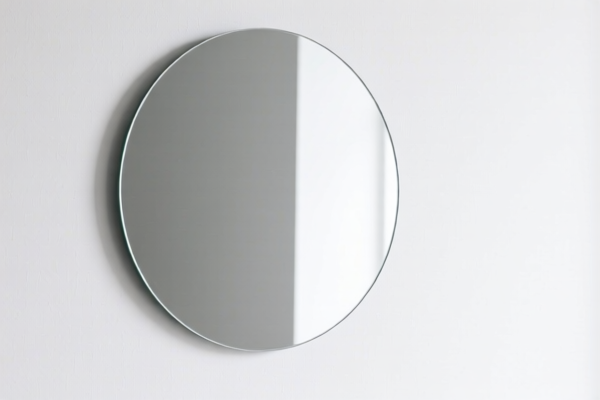
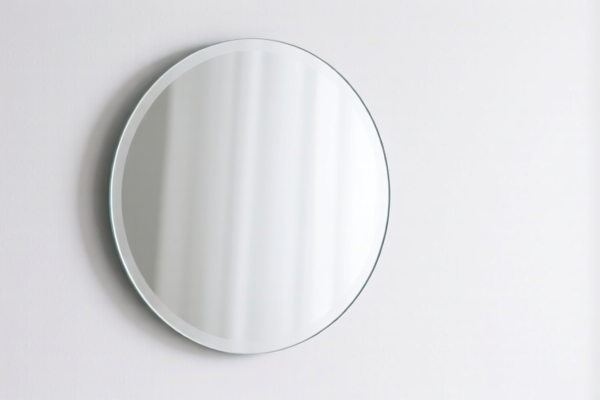
AI Analysis
🪞 Security Mirror (Convex/Safety Mirrors)
🌐 HS Code Reference & Customs Clearance Guide | 2026 Latest Tariff Analysis | Professional Clearance Strategy
📌 I. Product Definition & Classification: Do You Really Know a "Security Mirror"?
A Security Mirror (often called a Convex Mirror or Traffic Mirror) is a reflective device used to eliminate blind spots in stores, warehouses, parking lots, and intersections. In international trade, it is generally classified under automotive parts or vehicle accessories because its primary function is to enhance visibility for safety, similar to vehicle mirrors.
⚠️ Key Classification Logic:
- Although made of glass/metal/plastic, it is NOT classified as a general optical instrument (Chapter 90) because its primary use is structural/vehicular safety.
- It falls under Chapter 87 (Vehicles), specifically as a Part and Accessory of the Body of the vehicle or transport equipment.
📦 II. HS Code Classification Details (2026 Latest Tariff Authority Comparison)
Based on the provided data, the potential HS Codes for Security Mirrors are analyzed below. Note that while 8708.29.51.60 is the most logical fit, other codes related to cameras (8525, 8529) were analyzed but deemed less appropriate due to functional mismatch (mirrors reflect; cameras capture).
| HS Code | Product Description | Applicability | Tax Rate Summary | Verdict |
|---|---|---|---|---|
8708.29.51.60 |
Other Body Parts and Accessories of Motor Vehicles | ✅ HIGHLY RECOMMENDED Direct fit for vehicle mirrors, traffic safety mirrors, and reflective accessories. |
Total: 2.5% Base + 85% Additional (See Breakdown Below) |
WINNER Lowest base tax. No conflict with material composition (Glass/Metal/Plastic). |
8525.89.30.00 |
Other Transmission Apparatus for Radio-broadcasting or Television | ❌ INVALID Applies to video transmission equipment, not passive reflective surfaces. |
Total: 35.0% | ❌ Reject |
8525.89.50.50 |
Television Cameras, Digital Cameras, Video Recording/Reproducing Apparatus | ❌ INVALID Applies to active electronic capture devices. Mirrors do not capture images. |
Total: 35.0% | ❌ Reject |
8529.90.09.00 |
Parts of Apparatus for Transmission/Reception of Voice/Video | ❌ INVALID Applies to circuit components for broadcasting equipment. |
Total: 35.0% | ❌ Reject |
8529.90.81.00 |
Other Parts of Television Cameras/Video Equipment | ❌ INVALID Applies to camera parts. A mirror is not a camera part. |
Total: 35.0% | ❌ Reject |
🔍 Critical Insight:
-8708.29.51.60is the only code that aligns with the functional purpose (safety/visibility) and material nature (glass/metal/plastic assembly) of a security mirror.
- Codes8525and8529refer to electronic imaging devices (cameras/transmitters). A passive mirror does not emit, receive, or record signals. Misclassifying here leads to incorrect valuation and potential customs penalties.
💰 III. 2026 Latest Tariff Rate Breakdown for 8708.29.51.60
✅ Applicable Country: United States (US)
✅ Origin: China (CN) (Note: Tariffs vary by origin, but data provided implies US-China trade context)
✅ Effective Date: Current Trade Regulations
🎯 Target HS Code: 8708.29.51.60 – Other Parts and Accessories of Bodies
| Item | Content |
|---|---|
| Basic Duty Rate | 2.5% (Ad Valorem) |
| Section 301 Additional Duty | +25.0% (USITC Footnote 9903.88.01 / Trade Act) |
| Section 232 Duty (Steel/Aluminum) | +50.0% (If the mirror frame/heating elements contain steel or aluminum components subject to Section 232) |
| IEEPA Additional Duty | +10.0% (International Emergency Economic Powers Act, targeting specific Chinese goods) |
| Total Effective Tax Rate | Up to 87.5% (2.5% + 25% + 50% + 10%) Note: The base is 2.5%, but additional duties are additive. |
| Tax Calculation Basis | CIF Value × Total Rate |
| De Minimis Exemption | ❌ NOT APPLICABLE (deny_de_minimis) |
| Legal Authority Path | USITC:8708.29.51.60 → FOOTNOTE:301 → FOOTNOTE:232 (if steel/aluminum) → IEEPA:9903.01.25 |
📌 Interpretation:
- Base Tax (2.5%): Very low, as vehicle parts are generally lightly taxed to support auto industry supply chains.
- Section 301 (25%): Standard tariff on Chinese automotive parts/accessories.
- Section 232 (50%): Crucial Check. If the mirror has a metal casing, frame, or heating element made of steel/aluminum, this 50% tariff may apply. This significantly increases the landed cost.
- IEEPA (10%): Additional surcharge for certain Chinese-origin goods under emergency powers.
- Total Burden: The importer must budget for a total tariff burden of 85-87.5% if all additional duties apply. This is extremely high and impacts profitability.
🛠️ IV. Customs Clearance Practical Advice (Real-World Pitfall Avoidance)
✅ 1. Documentation Checklist (Mandatory)
| Document | Required | Explanation |
|---|---|---|
| ✅ Product Specification Sheet | ✔️ | Must specify: Material (Glass/Polycarbonate), Mounting Type (Pole/Wall/Vehicle), Field of View (180°/360°). |
| ✅ Material Declaration | ✔️ | Critical for Section 232: Explicitly state if steel/aluminum components exist. If purely plastic/glass, provide proof to avoid 50% surcharge. |
| ✅ Commercial Invoice | ✔️ | Description must read: "Convex Safety Mirror, Plastic/Glass Body, for Traffic/Vehicle Use" – NOT "Electronic Camera Part" or "Optical Lens". |
| ✅ Country of Origin Certificate | ✔️ | Essential for determining applicable Section 301/IEEPA rates. |
| ✅ HS Code Pre-Ruling (Optional but Recommended) | ✔️ | Given the high tariff, request an Advance Ruling from CBP to confirm if Section 232 applies. |
✅ 2. Declaration Strategy (Key Mnemonics)
🔥 “Define Function, Declare Material, Avoid Electronics!”
| Scenario | Correct Declaration | Wrong Practice |
|---|---|---|
| Pure Security Mirror | HS: 8708.29.51.60Desc: "Passive Convex Mirror" |
Declaring as 8525.89.30.00 (Camera) → Higher Tax + Compliance Risk |
| Mirror with Integrated Camera | Split Declaration: 1. Mirror ( 8708...)2. Camera ( 8525...) |
Bundling as one item → Customs Rejection |
| Metal Frame Mirror | HS: 8708.29.51.60+ Section 232 Check |
Ignoring material composition → 50% Penalty |
| Plastic Mirror Only | HS: 8708.29.51.60+ No Sec 232 |
Over-declaring steel content → Unnecessary Tax |
✅ 3. Special Cases & Mitigation
| Scenario | Handling Advice |
|---|---|
| Plastic/Polycarbonate Mirrors | Strongly Preferred. Avoid steel frames to escape the 50% Section 232 tariff. Total tax drops to ~37.5% (2.5+25+10). |
| Mirrors with Heated Elements | If heating elements use steel coils, Section 232 may apply. Provide detailed BOM (Bill of Materials) to CBP. |
| Warehouse Wall-Mounted Mirrors | Still likely 8708 if marketed for "safety/traffic" use. If strictly for retail decor, CBP might challenge, but 8708 remains the safest bet for "mirror" function. |
| OEM Custom Sizes | Provide custom design drawings to prove non-standard nature, justifying 8708.29.51.60 (Other) rather than generic parts. |
🌍 V. Global Market Clearance Comparison (2026 Latest)
| Country/Region | Recommended HS Code | Tariff Rate | Certification | Note |
|---|---|---|---|---|
| 🇺🇸 USA | 8708.29.51.60 |
2.5% - 87.5% | Depends on Material | High risk of Section 232/301. Plastic mirrors are tax-efficient. |
| 🇨🇳 China | 8708.29.51.60 |
8% - 10% | CCC (if automotive) | Lower baseline tariff. |
| 🇪🇺 EU | 8708.29.51.60 |
2.5% | CE (if vehicle-mounted) | No additional anti-dumping tariffs generally. |
| 🇬🇧 UK | 8708.29.51.60 |
2.5% | UKCA | Post-Brexit alignment with EU standards. |
| 🇦🇺 Australia | 8708.29.51.60 |
5% - 10% | RCM | Check for CUSFTA/ChAFTA benefits if applicable. |
📌 Conclusion:
- The USA is the most complex market due to multiple layers of additional tariffs (301, 232, IEEPA).
- Material Selection is Key: For US exports, plastic/polycarbonate security mirrors drastically reduce tariff exposure by avoiding Section 232 (Steel/Aluminum) duties.
- Never classify mirrors as camera parts (8525/8529) as it is factually incorrect and triggers higher, unjustified taxes.
📌 VI. Common Errors & Pitfall Guide (Lessons Learned)
❌ Error 1: Classifying as 8525.89.30.00 (Camera) because "it's for surveillance."
👉 Consequence: Wrong HS Code. Mirrors are passive; cameras are active. Customs may reject or apply 35% tax instead of analyzing the correct 85-87% tax, leading to valuation disputes.
👉 Correction: Always classify by function (Reflection) not end-use (Security).
❌ Error 2: Ignoring Section 232 for steel-framed mirrors.
👉 Consequence: Unexpected 50% additional duty upon entry.
👉 Correction: Declare material composition explicitly. If steel, budget for full tariff stack.
❌ Error 3: Using "Optical Mirror" or "Lens" in description.
👉 Consequence: CBP may divert to Chapter 90 (Optical Instruments), causing delays.
👉 Correction: Use terms like "Convex Safety Mirror," "Traffic Mirror," "Vehicle Accessory."
✅ Correct Declaration Example:
"Security Convex Mirror, 24-inch diameter, Polycarbonate surface with Aluminum frame, for warehouse traffic safety, Non-electronic, Model SC-24"
🎯 VII. Conclusion: Smart Classification Saves Money!
🎯 Remember the Mantra:
🔹 "Mirrors Reflect, Cameras Capture."
🔹 "Steel Frames Cost 50%, Plastic Saves You."
🔹 "HS 8708 is King, 8525 is Wrong."
📌 Pro Tip:
If you are exporting to the US:
1. Switch to Plastic/Polycarbonate mirrors to avoid Section 232 (50%).
2. Apply for CBP Advance Ruling to confirm Section 232 applicability.
3. Always declare the material composition clearly on the invoice.
📣 Immediate Action:
📞 Consult your customs broker with the Bill of Materials (BOM) to confirm metal content.
🚀 Optimize supply chain by choosing non-ferrous materials for US-bound security mirrors to slash tariffs by 50%.
✨ Professional clearance starts with precise classification!
💼 Every percentage point saved is pure profit!
Customer Reviews
About HS Code Classification
The Harmonized System (HS) is an internationally standardized nomenclature developed by the World Customs Organization (WCO) to classify traded products. Over 200 countries use the HS system as the basis for customs tariffs, trade statistics, and import/export regulations.
Each HS code follows a hierarchical structure:
- Chapter (2 digits) — Broad category of goods (e.g., Chapter 84: Machinery and Mechanical Appliances)
- Heading (4 digits) — More specific grouping within the chapter
- Subheading (6 digits) — Internationally standardized breakdown, used by all WCO member countries
- National subdivisions (8-10 digits) — Country-specific extensions for further classification, such as US HTSUS 10-digit codes
Correct HS code classification is essential for smooth customs clearance, accurate duty payment, and compliance with trade regulations. Misclassification can lead to customs delays, overpayment of duties, or penalties.
When importing from CN to US, the applicable tariff rates may include:
- Most-Favored-Nation (MFN) rate — The standard duty rate applied to WTO members
- General rate — Applied to countries without trade agreements
- Trade remedy duties — Additional tariffs such as Section 301 (anti-dumping), Section 232 (national security), or countervailing duties
The information provided on this page is for reference purposes only. For official classification, please consult with your local customs authority or a licensed customs broker.