Seed Bead Combination Set
CN → US| HS Code | Tariff Rate | Origin | Destination | Doc |
|---|---|---|---|---|
| 7117191500 | 25.5% | CN | US | Official Doc |
| 7117190500 | 10.0% | CN | US | Official Doc |
| 3926903500 | 24.0% | CN | US | Official Doc |
| 3926903300 | 16.5% | CN | US | Official Doc |
| 9503000073 | 10.0% | CN | US | Official Doc |
| 9503000071 | 10.0% | CN | US | Official Doc |
| 7117909090 | 0.0% | CN | US | Official Doc |
| 7117909010 | 0.0% | CN | US | Official Doc |
Product Images
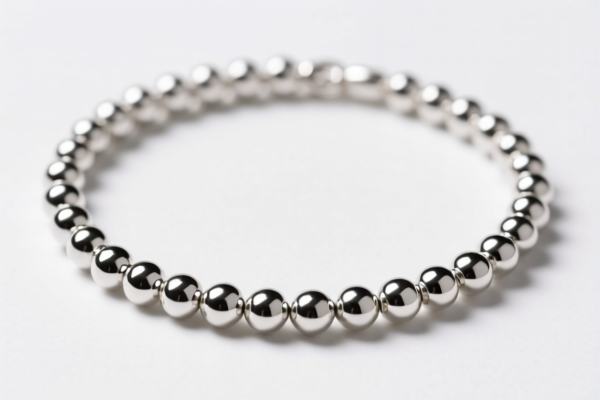
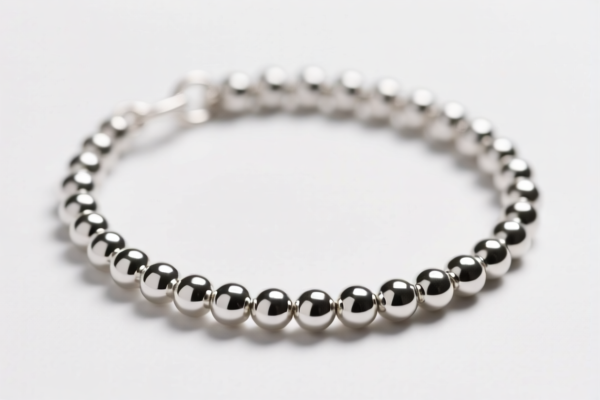
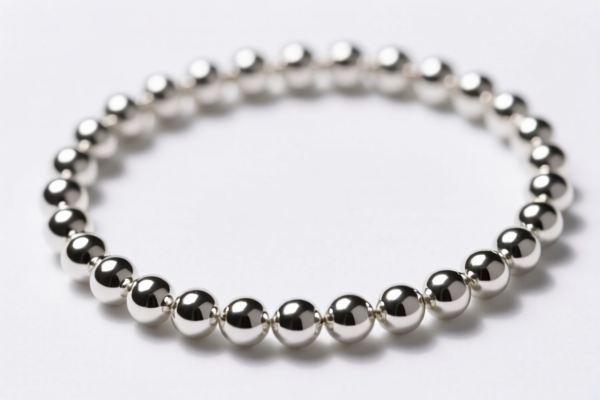
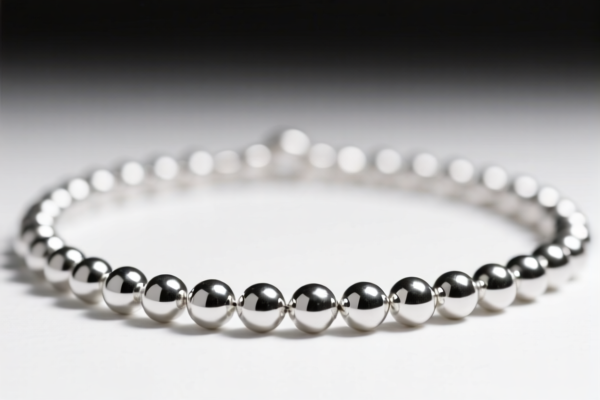
AI Analysis
✨ Seed Bead Combination Sets (Crafting & Costume Accessories)
🌐 HS Code Reference & Customs Clearance Guide | 2026 Latest Tariff Analysis | Professional Clearance Strategy
📌 1. Product Definition & Classification: Are You Clear on "Seed Beads"?
Seed Bead Combination Sets typically refer to collections of small, uniform glass or plastic beads used in jewelry making, costume design, and crafts. However, under US Harmonized Tariff Schedule (HTS), the classification depends heavily on the material, form, and intended use (whether they are "parts of jewelry" or "toys/components").
Key Distinction: * Loose Beads (Unstrung/Unset): If sold as loose components for manufacturing jewelry, they are classified under Chapter 39 (Plastics) or Chapter 71 (Imitation Jewelry/Other Materials). * Strung/Ready-to-Wear: If strung into necklaces/bracelets, they may fall under imitation jewelry headings. * Toy Use: If marketed specifically as "toy jewelry" or part of a children's toy kit (under 3 years), different rules apply (though less common for standard seed bead sets).
⚠️ Critical Classification Point:
- Loose, unstrung, unset beads (the most common form for "combination sets") → 3926.90.35.00 (Plastic beads) or 7117 (Base metal/imitation jewelry components).
- Note: The provided specifically highlights Plastic Beads (3926.90.35.00) and Imitation Jewelry components (7117.19.15.00 / 7117.19.05.00). Glass beads are not explicitly listed in the tax snippets for beads, so we focus on the plastic/base metal aspects provided.
📦 2. HS Code Classification Matrix (2026 Latest Tariff Reference)
Based on the provided , here are the relevant HS Codes for Seed Bead Sets and related components:
| HS Code | Product Description | Material/Form | Applicable Scenario |
|---|---|---|---|
3926.90.35.00 |
Other articles of plastics: Beads, bugles and spangles, not strung (except temporarily) and not set; articles thereof, not elsewhere specified or included: Other | Plastic (Unstrung/Loose) | Standard seed bead craft kits, plastic seed beads, unstrung beads for jewelry making. |
7117.19.15.00 |
Imitation jewelry: Of base metal... Rope, curb, cable, chain and similar articles... valued not over 33 cents per meter: Other | Base Metal (Chain/Link style) | Seed beads that are formed into chains or links (less common for round seed beads, but possible for tubular beads). |
7117.19.05.00 |
Imitation jewelry: Of base metal... Toy jewelry valued not over 8 cents per piece | Base Metal/Plastic (Toy Grade) | If the beads are part of a "toy jewelry" set for children (rare for high-quality seed beads, but possible for cheap kits). |
7117.90.90.90 / 7117.90.90.10 |
Other precious or semi-precious stones, not mounted or set: Other | Stone/Glass/Imitation Gems | ⚠️ Error Risk: The indicates "Failed to retrieve tax information" for these codes. Use only if the beads are strictly "imitation stones" and not plastic/base metal. |
🔍 Key Insight:
- The vast majority of plastic seed bead sets fall under3926.90.35.00.
- If your set includes metal chains or links with beads, check if they fit7117.19.15.00(valued ≤33¢/meter).
- Do not assume glass beads are "precious stones." Unless they are high-end imitation gems, plastic is the safer classification for mass-market craft beads.
💰 3. 2026 Tariff Rate Breakdown (Including Additional Duties)
✅ Jurisdiction: United States (US)
✅ Origin: China (CN) (Assuming standard trade context; rates vary by country of origin)
✅ Effective Date: Current rates apply as of 2026.
🎯 1. 3926.90.35.00 — Plastic Beads (Unstrung, Unset)
| Item | Detail |
|---|---|
| Base Tariff (MFN) | 6.5% |
| Section 301 Additional Tariff | 7.5% (As per tax detail: "加征关税: 7.5%") |
| Total Effective Rate | 14.0% |
| Tax Calculation | CIF Value × 14.0% |
| De Minimis Exemption | ❌ Not Applicable (Goods over $800 may qualify for Section 321, but commercial shipments are taxed). For B2C parcels, check current de minimis rules ($800 threshold). |
| Legal Basis | HTSUS 3926.90.35.00 + Section 301 Footnote for Plastics. |
📌 Explanation:
- Plastic beads are considered "other articles of plastics."
- The 14.0% total rate is a significant cost factor for craft suppliers.
- No extra IEEPA 10% is listed in the for this specific code, only the 7.5% Section 301 rate. Verify with latest USITC data, as some plastic categories have faced additional tariffs.
🎯 2. 7117.19.15.00 — Imitation Jewelry Components (Base Metal Chains/Links)
| Item | Detail |
|---|---|
| Base Tariff | 0.0% |
| Additional Tariff | 0.0% |
| Total Effective Rate | 0.0% |
| Tax Calculation | $0 |
| Legal Basis | HTSUS 7117.19.15.00 |
📌 Explanation:
- If your seed beads are part of a base metal chain and valued under 33 cents per meter, they are duty-free.
- This is a key optimization point: If you can classify your product as "imitation jewelry components" (base metal chain with beads) rather than "plastic beads," you save 14%.
- Risk: Customs may reclassify as plastic beads if the metal content is minimal.
🎯 3. 7117.19.05.00 — Toy Jewelry (Under 8¢/piece)
| Item | Detail |
|---|---|
| Base Tariff | 0.0% |
| Additional Tariff | 0.0% |
| Total Effective Rate | 0.0% |
| Legal Basis | HTSUS 7117.19.05.00 |
📌 Explanation:
- Only applies if explicitly sold as "toy jewelry" for children under 3 years, and valued at ≤8 cents per piece.
- Rare for standard seed bead craft sets. Use only for low-cost children's craft toys.
🛠️ 4. Customs Clearance Practical Advice (Avoiding Pitfalls)
✅ 1. Required Documentation
| Document | Required? | Notes |
|---|---|---|
| Commercial Invoice | ✅ Yes | Clearly state: "Plastic Seed Beads, Unstrung, for Jewelry Making." Avoid vague terms like "Craft Supplies." |
| Product Description | ✅ Yes | Include material (e.g., "Acrylic" or "Polypropylene"), size (e.g., "6/0"), and quantity. |
| Material Declaration | ✅ Yes | Confirm if beads are plastic, glass, or base metal. Plastic = 14%, Base Metal Chain = 0%. |
| Labeling | ✅ Yes | If sold to children, ensure compliance with CPSIA (Child Safety). If labeled "For Children Under 3," HS code may shift to 9503.00.00.71 (Toys), but bead content must still be declared. |
| HS Code Justification | ✅ Optional but Recommended | Provide a brief note explaining why 3926.90.35.00 is chosen (e.g., "Unstrung, unset plastic beads"). |
✅ 2. Declaration Best Practices
🔥 "Material is King: Plastic vs. Metal Changes Everything!"
| Scenario | Recommended HS Code | Tax Rate | Risk |
|---|---|---|---|
| Standard Plastic Seed Beads (Loose) | 3926.90.35.00 |
14.0% | Low (Clear classification) |
| Beads on Base Metal Chain (Valued ≤33¢/m) | 7117.19.15.00 |
0.0% | Medium (Must prove chain value <33¢/m) |
| Children's Toy Jewelry (≤8¢/piece) | 7117.19.05.00 |
0.0% | High (Strict value/use criteria) |
| Glass Beads (Not in ) | Not Listed | Varies | ⚠️ High Risk - Glass beads may fall under 7117 or 3926 depending on treatment. Consult customs broker. |
📌 Critical Tip:
- If your product is 90% plastic beads, do not try to classify it as "imitation jewelry" (0%) unless it is actually a finished necklace or chain. Loose beads are not finished jewelry.
- Misclassification can lead to penalties + back taxes. If you claim 0% for plastic beads, Customs will audit and charge 14% + interest.
✅ 3. Special Cases
| Case | Handling Advice |
|---|---|
| Mixed Material Kits (Plastic + Glass + Metal) | Declare the primary material or split into multiple line items. If plastic is dominant, use 3926.90.35.00. |
| Sample Kits | If value < $800, may qualify for Section 321 (De Minimis). However, Section 301 tariffs may still apply to Chinese goods. Check current $800 exemption rules. |
| "Jewelry Making Kits" | If the kit includes finished jewelry, classify the finished item. If only components, classify the components. |
| Children's Product Labeling | If marketed for ages 3-12, label as 9503.00.00.73 (Toys) for CPSIA compliance, but tax classification remains based on material (plastic beads = 3926.90.35.00). |
🌍 5. Global Market Comparison (2026)
| Country/Region | Recommended HS Code | Tax Rate (China Origin) | Notes |
|---|---|---|---|
| 🇺🇸 USA | 3926.90.35.00 |
14.0% | Section 301 applies. |
| 🇨🇳 China | 3926.90.35.00 |
~10-14% | Import duties vary. |
| 🇪🇺 EU | 3926.90.97 |
6.5% | No Section 301 equivalent. |
| 🇬🇧 UK | 3926.90.97 |
6.5% | Post-Brexit rules apply. |
| 🇨🇦 Canada | 3926.90.97 |
0-6.5% | Check FTA if applicable. |
📌 Conclusion:
- USA has the highest duty rate (14%) for plastic seed beads due to Section 301.
- EU and UK are more favorable (6.5%).
- Consider supply chain diversification if targeting the US market heavily.
📌 6. Common Mistakes & Pitfalls (Lessons Learned)
❌ Mistake 1: Classifying plastic beads as "Imitation Jewelry" (7117) to get 0% tax.
👉 Result: Customs rejects, charges 14% + penalties. Loose beads are NOT jewelry.
❌ Mistake 2: Ignoring "Valued not over 33 cents per meter" for metal chains.
👉 Result: If your chain beads are expensive, they exceed the value threshold → tax applies.
❌ Mistake 3: Using vague descriptions like "Craft Beads."
👉 Result: Customs assigns highest possible rate (often 10%+ base) due to uncertainty.
✅ Correct Approach:
"Plastic Seed Beads, Unstrung, Size 6/0, for Jewelry Manufacturing, HS Code: 3926.90.35.00"
🎯 7. Conclusion: Optimize Costs, Ensure Compliance
🎯 Key Takeaways:
🔹 Plastic Seed Beads = 14% Duty (
3926.90.35.00)
🔹 Base Metal Chain Components = 0% Duty (7117.19.15.00)
🔹 Toy Jewelry (≤8¢/piece) = 0% Duty (7117.19.05.00)
📌 Strategic Advice:
1. Verify Material: If possible, use base metal components for low-value items to access 0% duty.
2. Accurate Description: Clearly state "Unstrung, Unset Plastic Beads" to avoid misclassification.
3. Pre-Ruling: For large volumes, apply for an Advance Ruling from CBP to confirm HS code.
📣 Immediate Action:
📞 Consult a licensed customs broker to confirm if your specific product qualifies for the 0% duty "imitation jewelry" or "toy" categories.
🚀 Accurate classification saves 14% on every dollar!
✨ Professional Clearance, Starting from Precise Classification!
💼 Every cent counts in global trade!
Customer Reviews
About HS Code Classification
The Harmonized System (HS) is an internationally standardized nomenclature developed by the World Customs Organization (WCO) to classify traded products. Over 200 countries use the HS system as the basis for customs tariffs, trade statistics, and import/export regulations.
Each HS code follows a hierarchical structure:
- Chapter (2 digits) — Broad category of goods (e.g., Chapter 84: Machinery and Mechanical Appliances)
- Heading (4 digits) — More specific grouping within the chapter
- Subheading (6 digits) — Internationally standardized breakdown, used by all WCO member countries
- National subdivisions (8-10 digits) — Country-specific extensions for further classification, such as US HTSUS 10-digit codes
Correct HS code classification is essential for smooth customs clearance, accurate duty payment, and compliance with trade regulations. Misclassification can lead to customs delays, overpayment of duties, or penalties.
When importing from CN to US, the applicable tariff rates may include:
- Most-Favored-Nation (MFN) rate — The standard duty rate applied to WTO members
- General rate — Applied to countries without trade agreements
- Trade remedy duties — Additional tariffs such as Section 301 (anti-dumping), Section 232 (national security), or countervailing duties
The information provided on this page is for reference purposes only. For official classification, please consult with your local customs authority or a licensed customs broker.