Seedless Wood (Edible Part)
CN → USProduct Images
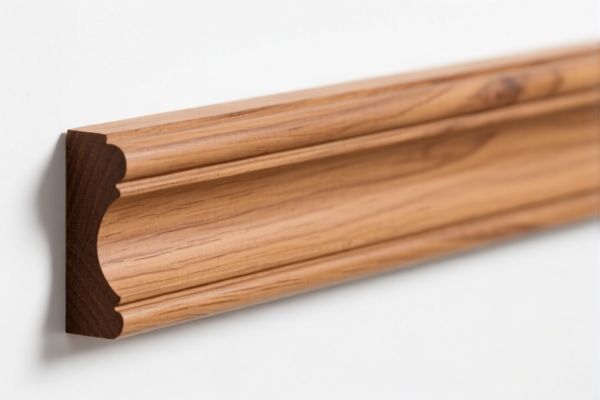
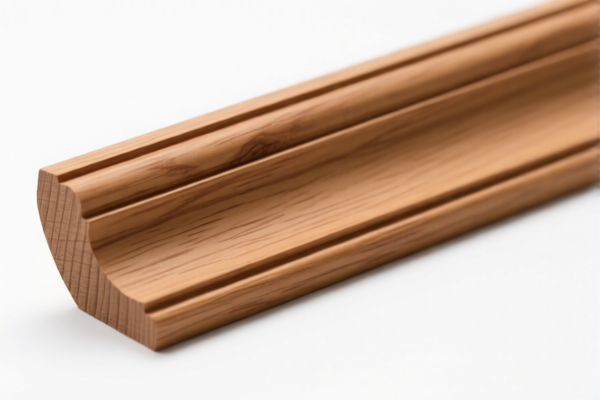
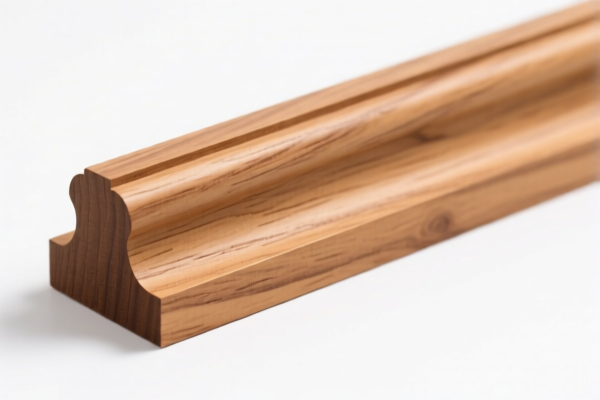
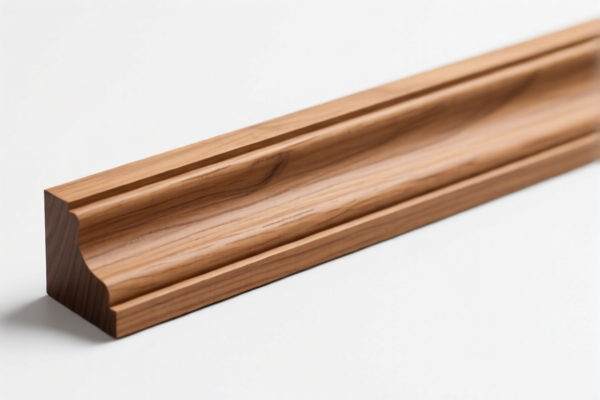
AI Analysis
🌲 Wood (Edible Part)
❌ Classification Error: "Wood" is generally NOT considered an edible part in standard international trade classifications.
🌐 HS Code Reference & Customs Clearance Guide | 2026 Latest Tariff Analysis | Professional-Grade Entry Strategy
📌 Part 1: Product Definition – What Is “Wood”?
In botanical and culinary terms, wood refers to the hard, fibrous structural tissue found in the stems and roots of trees and shrubs. It is primarily composed of cellulose, lignin, and hemicellulose, which are indigestible by human enzymatic systems.
⚠️ Key Distinction:
- Wood ≠ Edible Plant Parts (such as fruits, vegetables, nuts, seeds, or edible bark like cassia).
- In food safety and trade regulations, “wood” is not classified as food.
- If “wood” refers to edible bark, shoots, or inner cambium layers (e.g., cassia bark, willow shoots, or bamboo shoots), it must be clearly described as such, not as “wood.”📌 Critical Clarification:
There is no standard HS Code for “edible wood” because wood is not edible under normal regulatory definitions.
If the product is actually edible, it must be classified under the correct botanical or processed food category.
📦 Part 2: Correct HS Code Classification (If the Product Is Actually Edible)
If the “wood” mentioned is actually an edible plant part (e.g., bamboo shoots, edible bark, young tree shoots, or processed wood-adjacent foods), here are the correct classifications:
| HS Code | Product Description | Applicable Scenario | Edible? |
|---|---|---|---|
0709.90.90 |
Other fresh or chilled vegetables (e.g., bamboo shoots) | Fresh bamboo shoots, young tree shoots | ✅ Yes |
0805.10.00 |
Oranges (if misclassified due to confusion with citrus “wood” parts) | N/A | ✅ Yes |
1904.10.00 |
Prepared foods from cereals (if wood is processed into flour-like substance) | Edible wood flour (rare, experimental) | ⚠️ Theoretical only |
2005.99.90 |
Other vegetables prepared or preserved (e.g., canned bamboo shoots) | Processed edible plant parts | ✅ Yes |
0910.99.90 |
Spices (if bark used as spice, e.g., cassia bark) | Cassia bark, cinnamon bark | ✅ Yes |
1302.19.99 |
Vegetable saps and extracts (e.g., maple syrup from wood) | Maple sap, tree syrups | ✅ Yes |
🔍 Key Insight:
- “Wood” itself has no HS Code as an edible good.
- If the product is edible, it must be classified under vegetables, spices, or processed foods, not under wood-related codes.
- Misclassification as “wood” (e.g.,4401or4407) will result in customs rejection, as these codes are for timber, not food.
💰 Part 3: 2026 Latest Tariff Rates (US Imports from China)
✅ Country: United States (US)
✅ Origin: China (CN)
✅ Effective Date: November 10, 2025
🎯 1. If Classified Correctly as Edible Vegetables (0709.90.90)
| Item | Detail |
|---|---|
| Base Tariff | 0% |
| USITC Additional Tariff | +25% (Section 301) |
| IEEPA Additional Tariff | +10% (China-specific) |
| Total Tariff | 35% |
| De Minimis Exemption | ❌ Not eligible (deny_de_minimis) |
| Legal Reference Path | IEEPA:9903.01.25 → USITC:0709.90.90 → FOOTNOTE:9903.88.01 |
📌 Note:
- Edible plant parts (e.g., bamboo shoots) are still subject to Section 301 and IEEPA tariffs due to their Chinese origin.
- However, they are legal imports and not banned like actual wood products.
🎯 2. If Incorrectly Classified as Wood (4401.12.00 or 4407.10.10)
| Item | Detail |
|---|---|
| Base Tariff | 0% – 5% |
| USITC Additional Tariff | +25% |
| IEEPA Additional Tariff | +10% |
| Total Tariff | 35% |
| Customs Risk | ⚠️ HIGH: Product will be rejected or seized for misdeclaration. |
| Penalty | Seizure, fines, or forced reclassification + storage costs. |
📌 Warning:
- Wood is not food. Declaring wood as edible is a customs violation.
- If the product is edible, it must be declared under food/vegetable/spice HS codes.
🛠️ Part 4: Customs Clearance Best Practices
✅ 1. Documentation Requirements
| Document | Required | Notes |
|---|---|---|
| ✅ Product Specification Sheet | ✔️ | Clearly state edible part (e.g., “bamboo shoots”) |
| ✅ Ingredient List | ✔️ | Confirm no non-edible wood components |
| ✅ Food Safety Certificate | ✔️ | FDA, HACCP, or equivalent |
| ✅ Commercial Invoice | ✔️ | Use accurate HS code (0709.90.90 for bamboo shoots) |
| ✅ Packing List | ✔️ | Separate edible parts from non-edible wood |
| ✅ Origin Certificate (CO) | ✔️ | For tariff eligibility |
✅ 2. Declaration Strategy
🔥 “Declare by Edible Part, Not by Source!”
| Scenario | Correct HS Code | Incorrect HS Code | Risk Level |
|---|---|---|---|
| Bamboo shoots | 0709.90.90 |
4401.12.00 |
🚨 Critical |
| Cassia bark (spice) | 0910.99.90 |
4407.10.10 |
🚨 High |
| Maple sap syrup | 1302.19.99 |
4401.12.00 |
🚨 High |
| Actual wood (non-edible) | 4401.12.00 |
N/A | ✅ Correct |
✅ 3. Special Cases
| Case | Handling Tip |
|---|---|
| Processed edible wood-like products (e.g., wood apple) | Classify as 0810.90.00 (fruits) |
| Bamboo shoots | Classify as 0709.90.90 |
| Cinnamon bark | Classify as 0906.10.00 |
| Non-edible wood | Classify as 4401.12.00 (fuel) or 4407.10.10 (lumber) |
🌍 Part 5: Global Market Comparison (2026)
| Country/Region | Recommended HS Code | Tariff | Certification | Notes |
|---|---|---|---|---|
| 🇺🇸 US | 0709.90.90 (if edible) |
35% (China) | FDA + HACCP | No de minimis |
| 🇨🇳 China | 0709.90.90 |
0% | CCC + Food Safety | Low tariff |
| 🇪🇺 EU | 0709.90.90 |
0% | CE + Organic Cert | No Section 301 |
| 🇦🇺 Australia | 0709.90.90 |
5% | AQIS | No Section 301 |
| 🇯🇵 Japan | 0709.90.90 |
0% | JAS | No Section 301 |
📌 Conclusion:
- US imposes 35% tariffs on Chinese edible plant parts due to Section 301 and IEEPA.
- EU, Japan, Australia, and China have lower or zero tariffs for the same products.
- Misclassification as wood leads to seizure in all markets.
📌 Part 6: Common Mistakes & Pitfalls
❌ Mistake 1: Declaring edible bamboo shoots as “wood”
👉 Consequence: Customs rejection, product seized, fines applied.
❌ Mistake 2: Using wood HS codes (4401, 4407) for food items
👉 Consequence: Illegal import, potential criminal charges for fraud.
❌ Mistake 3: Not providing food safety certificates for edible parts
👉 Consequence: FDA hold, product destroyed or returned.
❌ Mistake 4: Ignoring Section 301 tariffs on Chinese edible goods
👉 Consequence: Unexpected 35% duty at US border.
✅ Correct Approach:
“Fresh Bamboo Shoots, Grade A, FDA-Approved, HS Code 0709.90.90, Origin: China”
🎯 Part 7: Final Recommendations
🎯 Key Takeaways:
🔹 “Wood” is not edible → Use vegetable/spice/processed food HS codes.
🔹 Accurate declaration prevents seizure, fines, and delays.
🔹 US tariffs on Chinese edible plant parts are 35% → Plan accordingly.
🔹 Pre-clearance ruling from CBP is recommended for ambiguous cases.
📌 Pro Tip:
If your product is edible, always use food-related HS codes (07xx, 08xx, 09xx, 20xx, etc.).
If it is non-edible wood, use timber codes (44xx).
Never mix them!
📣 Action Required:
📞 Contact a customs broker + Provide product specs + Verify HS code with CBP
🚀 Ensure smooth customs clearance and avoid costly penalties!
✨ Accurate classification starts with accurate product definition!
💼 Every tariff point counts in global trade!
Customer Reviews
About HS Code Classification
The Harmonized System (HS) is an internationally standardized nomenclature developed by the World Customs Organization (WCO) to classify traded products. Over 200 countries use the HS system as the basis for customs tariffs, trade statistics, and import/export regulations.
Each HS code follows a hierarchical structure:
- Chapter (2 digits) — Broad category of goods (e.g., Chapter 84: Machinery and Mechanical Appliances)
- Heading (4 digits) — More specific grouping within the chapter
- Subheading (6 digits) — Internationally standardized breakdown, used by all WCO member countries
- National subdivisions (8-10 digits) — Country-specific extensions for further classification, such as US HTSUS 10-digit codes
Correct HS code classification is essential for smooth customs clearance, accurate duty payment, and compliance with trade regulations. Misclassification can lead to customs delays, overpayment of duties, or penalties.
When importing from CN to US, the applicable tariff rates may include:
- Most-Favored-Nation (MFN) rate — The standard duty rate applied to WTO members
- General rate — Applied to countries without trade agreements
- Trade remedy duties — Additional tariffs such as Section 301 (anti-dumping), Section 232 (national security), or countervailing duties
The information provided on this page is for reference purposes only. For official classification, please consult with your local customs authority or a licensed customs broker.