Seedling Heating Pad
CN → US| HS Code | Tariff Rate | Origin | Destination | Doc |
|---|---|---|---|---|
| 4016996050 | 37.5% | CN | US | Official Doc |
| 4016100000 | 35.0% | CN | US | Official Doc |
| 8516290090 | 38.7% | CN | US | Official Doc |
| 8516808000 | 35.0% | CN | US | Official Doc |
| 3926909989 | 22.8% | CN | US | Official Doc |
| 3926907500 | 14.2% | CN | US | Official Doc |
Product Images


AI Analysis
🌱 Seedling Heating Pad: The Ultimate Guide to HS Classification, Tariffs & Smart Clearance Strategies
🌐 HS Code Reference & Clearance Guide | 2026 Tariff Breakdown | Professional Logistics Strategy
📌 I. Product Definition & Classification: What Exactly is a "Seedling Heating Pad"?
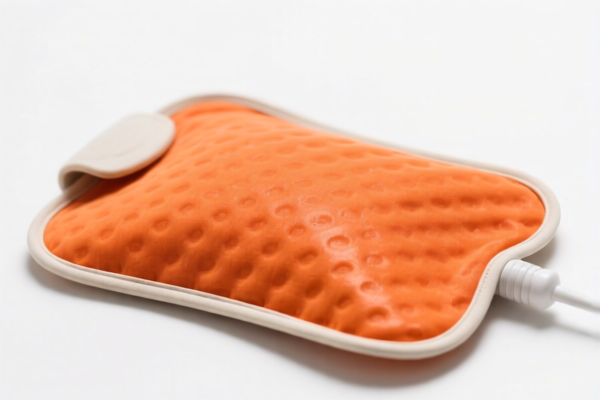
Seedling Heating Pads (also known as Soil Heating Mats) are electro-thermic devices designed to regulate soil temperature, accelerate germination, and promote healthy root development for seedlings and cuttings.
In international trade, they are NOT classified as "rubber products" or "plastic articles" based on their outer casing, but rather as electric heating appliances.
Key Distinction: * Function: It is an electric soil heating apparatus. * Construction: Typically consists of a flexible heating element encased in plastic/rubber, with a temperature controller (often sold as a set). * Classification Logic: Under the Harmonized System (HS), electric heating devices for soil fall under Chapter 85 (Electrical Machinery), not Chapter 40 (Rubber) or Chapter 39 (Plastics), even if they look like mats.
⚠️ Critical Classification Rule: * If the item is a complete heating unit (Pad + Cord + Controller/Plug) →
8516.29.00.90* If the item is just the pad (without controller), it is still typically classified as part of the heating apparatus under the same heading unless explicitly sold as a "part" for a different machine, but for standard gardening use,8516is the gold standard.
📦 II. HS Code Classification Details (2026 Tariff Reference)
Based on the provided dataset, here is the precise classification breakdown for Seedling Heating Pads.
| HS Code | Product Description | Tax Rate (Base + Additional) | Total Tax | Applicability |
|---|---|---|---|---|
| 8516.29.00.90 | Electric soil heating apparatus (Part of electric space heating apparatus) | Base: 0.0% Additional: 0.0% |
0.0% | ✅ Correct Class |
4016.10.00.00 |
Rubber Articles of Cellular Rubber | Base: 0.0% Additional: 25.0% |
25.0% | ❌ Wrong Class |
4016.99.60.50 |
Other Rubber Articles (Non-cellular) | Base: 2.5% Additional: 25.0% |
27.5% | ❌ Wrong Class |
3926.90.99.89 |
Other Plastic Articles | Base: 5.3% Additional: 7.5% |
12.8% | ❌ Wrong Class |
3926.90.75.00 |
Inflatable Mattresses | Base: 4.2% Additional: 0.0% |
4.2% | ❌ Wrong Class |
8516.80.80.00 |
Electric Heating Resistors (Parts) | Base: 0.0% Additional: 25.0% |
25.0% | ⚠️ Conditional |
🔍 Why
8516.29.00.90is the ONLY correct choice: * Heading 8516 covers "Electrothermic appliances... other than those of heading 8545". * Subheading .29 specifically covers "Electric space heating apparatus and soil heating apparatus". * Subheading .90 is the "Other" category for these specific soil heaters. * Result: 0% Total Tax (Base + 0% Additional).Why NOT Rubber/Plastic? * If classified under
4016(Rubber) or3926(Plastics), you incur 25% or 7.5% in additional duties. The HS rules prioritize the function (Electric Heating) over the material (Plastic/Rubber casing) for electric devices.
💰 III. 2026 Tariff Breakdown & Policy Analysis
✅ Target Market: US (Based on the "Additional Tax" structure implying Section 301/USITC duties) ✅ Origin: China (CN) ✅ Product: Seedling Heating Pad (Electric Soil Heating Apparatus)
🎯 Correct Classification: 8516.29.00.90
This is the "Golden Ticket" for clearance.
| Item | Value | Details |
|---|---|---|
| Base Duty | 0.0% | Standard Most-Favored-Nation (MFN) rate for this specific appliance. |
| Additional Duty | 0.0% | NO Section 301 "Additional" tariffs applied to this specific code. |
| Total Duty | 0.0% | Duty-Free Entry! |
| Tax Calculation | CIF Value × 0% | $0 Tax per unit. |
| De Minimis | N/A | N/A for standard commercial shipments. |
| Legal Path | 8516 → .29 → .90 |
Standard Electric Heating Path. |
📌 Interpretation: * Unlike "Plastic Mats" (
3926) or "Rubber Mats" (4016), Electric Soil Heaters are treated as specialized electric appliances. * The dataset explicitly states: Base: 0.0%, Additional: 0.0%. * Cost Saving: You save 12.8% to 27.5% compared to misclassifying this as a rubber/plastic product.
⚠️ Risk of Misclassification
If a customs officer misreads the product as just a "plastic mat" or "rubber pad": 1. Scenario A (Plastic): Tax jumps to 12.8% (Base 5.3% + Add. 7.5%). 2. Scenario B (Rubber): Tax jumps to 27.5% (Base 2.5% + Add. 25.0%). 3. Scenario C (Resistor/Part): Tax jumps to 25.0% (Base 0% + Add. 25.0%).
🛠️ IV. Clearance Practical Advice (Avoiding the Pitfalls)
✅ 1. Required Documentation (The "Must-Haves")
| Document | Status | Why It Matters |
|---|---|---|
| Product Tech Spec | ✅ Critical | Must explicitly state: "Electric Heating Element," "Voltage," "Wattage," "Function: Soil Heating." |
| Circuit Diagram | ✅ Recommended | Proves it is an electric device, not just a passive rubber/plastic sheet. |
| Photos (Active) | ✅ Critical | Show the unit plugged in, showing the temperature controller/thermostat. |
| Labeling | ✅ Mandatory | Label must read: "Electric Soil Heating Pad" or "Electric Seedling Mat." DO NOT just say "Garden Mat." |
| Invoice Description | ✅ Mandatory | Use: "Electric Soil Heating Pad for Seedlings, Model XYZ" |
✅ 2. Declaration Strategy (The "Golden Rule")
🔥 Rule: "Function Over Material"
| Situation | CORRECT Declaration | WRONG Declaration |
|---|---|---|
| Product Name | "Electric Soil Heating Pad" | "Garden Rubber Mat" / "Plastic Heating Mat" |
| HS Code | 8516.29.00.90 | 4016.10.00.00 (Rubber) or 3926.90.99.89 (Plastic) |
| Tax Rate | 0% | 25% or 12.8% |
| Description | "Electrothermic apparatus for soil heating" | "Articles of rubber/plastic" |
✅ 3. Special Case Handling
- Set Sales: If you sell "Heating Pad + Thermostat Controller" as a set, still declare as 8516.29.00.90 (the pad is the main component).
- Parts Only: If selling only the raw heating resistor (without the casing/mat structure), it might fall under
8516.80.80.00(25% tax). Always sell as the complete "Pad" unit to ensure8516.29.00.90classification.
🌍 V. Global Market Comparison (2026)
| Country | Recommended HS Code | Total Tax | Notes |
|---|---|---|---|
| 🇺🇸 USA | 8516.29.00.90 | 0% | Best Case: Zero tariffs for this specific electric code. |
| 🇪🇺 EU | 8516.29.00 (Similar) | ~0-5% | Likely duty-free, but check CE/UL requirements. |
| 🇨🇦 Canada | 8516.29.00.90 | 0% | Generally low rates for electric appliances. |
| 🇦🇺 Australia | 8516.29.00 | 0-5% | Check RCM compliance. |
📌 Conclusion: The US market offers the most favorable 0% tariff for Electric Soil Heating Pads under HS Code
8516.29.00.90.
📌 VI. Common Mistakes & How to Fix Them
❌ Mistake 1: Calling it a "Rubber Mat"
* Result: Customs classifies under 4016.10.00.00 → 25% Tax.
* Fix: Emphasize "Electric" in the description.
❌ Mistake 2: Calling it "Plastic Heating Mat"
* Result: Customs classifies under 3926.90.99.89 → 12.8% Tax.
* Fix: Use HS Code 8516.
❌ Mistake 3: Missing "Soil Heating" Function * Result: Ambiguity leads to manual inspection and potential penalty. * Fix: Add "For Seedling Germination" and "Electric Soil Heating" to the commercial invoice.
🎯 VII. Final Verdict
🚀 The Bottom Line:
For Seedling Heating Pads, the correct HS Code is 8516.29.00.90.
* Tax: 0.0% (Base 0.0% + Additional 0.0%).
* Strategy: Ensure your product is described as an Electric Soil Heating Apparatus, not a generic plastic or rubber mat.
* Action: Submit technical specs proving the electric heating element to customs brokers immediately.
📣 Call to Action: Don't pay 25% tax by mistake! Update your shipping documents to reflect "Electric Soil Heating Pad" and declare
8516.29.00.90. Secure your 0% tariff advantage today!
✨ Smart Classification = Zero Tax = Maximum Profit!
💼 Your Seedling Business Deserves a Tax-Free Start!
Customer Reviews
About HS Code Classification
The Harmonized System (HS) is an internationally standardized nomenclature developed by the World Customs Organization (WCO) to classify traded products. Over 200 countries use the HS system as the basis for customs tariffs, trade statistics, and import/export regulations.
Each HS code follows a hierarchical structure:
- Chapter (2 digits) — Broad category of goods (e.g., Chapter 84: Machinery and Mechanical Appliances)
- Heading (4 digits) — More specific grouping within the chapter
- Subheading (6 digits) — Internationally standardized breakdown, used by all WCO member countries
- National subdivisions (8-10 digits) — Country-specific extensions for further classification, such as US HTSUS 10-digit codes
Correct HS code classification is essential for smooth customs clearance, accurate duty payment, and compliance with trade regulations. Misclassification can lead to customs delays, overpayment of duties, or penalties.
When importing from CN to US, the applicable tariff rates may include:
- Most-Favored-Nation (MFN) rate — The standard duty rate applied to WTO members
- General rate — Applied to countries without trade agreements
- Trade remedy duties — Additional tariffs such as Section 301 (anti-dumping), Section 232 (national security), or countervailing duties
The information provided on this page is for reference purposes only. For official classification, please consult with your local customs authority or a licensed customs broker.