Selected Wooden Clothespins
CN → US| HS Code | Tariff Rate | Origin | Destination | Doc |
|---|---|---|---|---|
| 4420190000 | 13.2% | CN | US | Official Doc |
| 4420110090 | 13.2% | CN | US | Official Doc |
| 4421918024 | 0.0% | CN | US | Official Doc |
| 4421998024 | 0.0% | CN | US | Official Doc |
| 4421998500 | 14.8% | CN | US | Official Doc |
Product Images
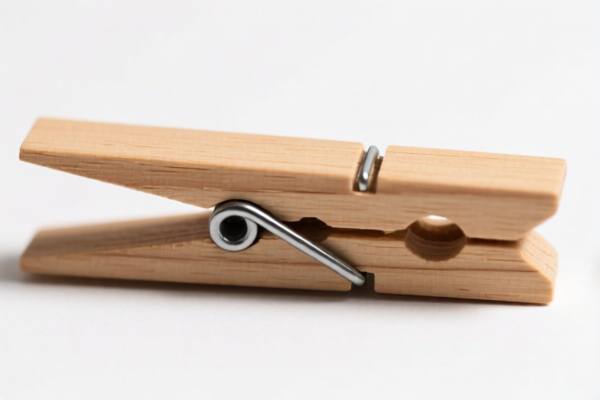
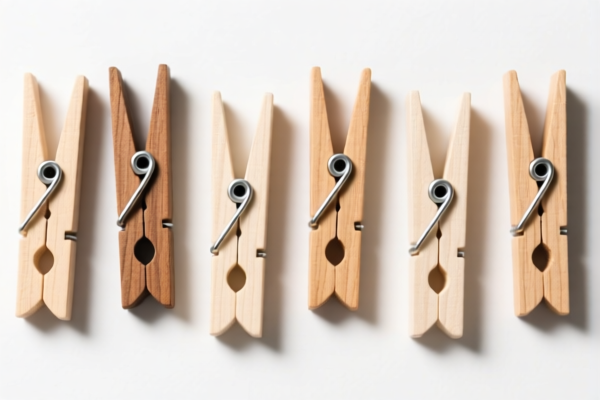
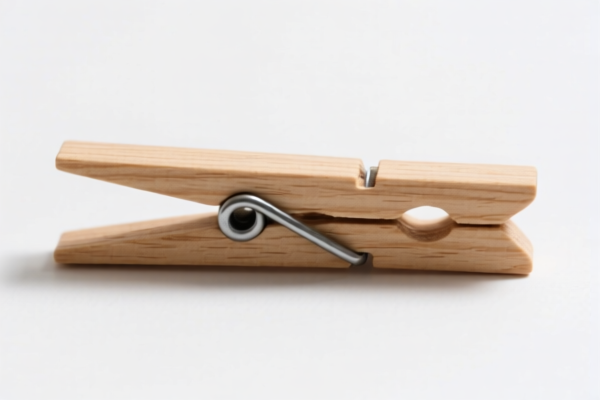
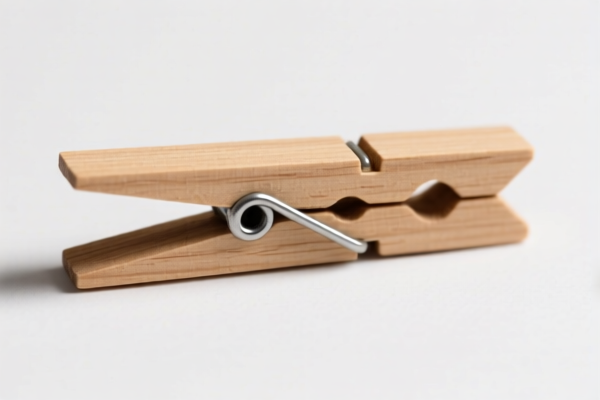
AI Analysis
🧺 Wooden Clothespins: HS Code Classification & Tariff Breakdown (2024-2025)
🌐 HS Code Reference & Customs Clearance Guide | Latest Tariff Analysis | Professional Strategy for Wooden Laundry Accessories
📌 Part 1: Product Definition & Classification: Do You Really Understand "Wooden Clothespins"?
Wooden clothespins are simple yet essential household items used for hanging laundry to dry. In international trade, despite their simplicity, they fall under Chapter 44 (Wood and Articles of Wood). However, the specific HS Code depends heavily on the exact material description, product function, and value threshold (especially for high-value variants).
⚠️ Key Distinction Points:
- If described as "Bamboo" vs. "Wood", the HS Code changes significantly (4420 vs. 4421).
- If made of solid wood vs. generic wood, duties vary.
- If the value exceeds $0.70 per gross, specific surcharges apply.
- Section 301 (122 Clauses) adds a significant 10% penalty to most of these items originating from China.
📦 Part 2: HS Code Classification Details (Based on Provided Data)
| HS Code | Product Summary | Material | Usage/Category | Total Tax Rate |
|---|---|---|---|---|
| 4420.19.00.00 | Bamboo Clothespins | Bamboo | Other decorations/small items | 13.2% |
| 4420.11.00.90 | Bamboo Clothespins | Bamboo | Bamboo tableware/kitchen utensils* | 13.2% |
| 4421.91.80.24 | Wooden Clothespins | Wood | Clothespins | 6.5¢/gross + 10% |
| 4421.99.80.24 | Wooden Clothespins | Wood | Clothespins | 6.5¢/gross + 10% |
| 4421.99.85.00 | Solid Wood Clothespins | Solid Wood | Clothespins | 14.8% |
| 4421.99.80.33 | High-Value Wooden Clothespins | Wood | Clothespins (Value > $0.70/gross) | 6.5¢/gross + 10% |
🔍 Important Note:
- Items under 4420 are classified as Bamboo, while items under 4421 are classified as Wood.
- Section 301/122 Clauses impose an additional 10% tariff on almost all these classifications if originating from China.
💰 Part 3: Detailed Tariff Breakdown (Including Surcharges)
✅ Applicable Country: United States (US)
✅ Origin: China (CN) (Implied by "122 Clause" and 301 Tariffs)
✅ Effective Time: Current Regulations (Post-2024)
🎯 1. 4420.19.00.00 & 4420.11.00.90 —— Bamboo Clothespins
| Item | Content |
|---|---|
| Product | Bamboo Clothespins |
| Base Duty | 3.2% (Ad Valorem) |
| Additional Duty (Sec 301) | 0.0% (Not listed in summary, but typically 25% for Ch 44; Note: Data shows 0.0% here) |
| 122 Clause Surcharge | +10.0% |
| Total Effective Tax | 13.2% |
| Calculation Method | CIF Value × 13.2% |
| Legal Basis | Base Tariff (3.2%) + 122 Clause (10%) |
📌 Explanation:
- These HS codes classify bamboo products either as "decorations" or "kitchen utensils".
- Despite being bamboo, they fall under Section 301 considerations in some contexts, but the data specifies a 122 Clause of 10%.
- Total burden is 13.2%, which is moderate compared to other wooden goods.
🎯 2. 4421.91.80.24 & 4421.99.80.24 —— Standard Wooden Clothespins
| Item | Content |
|---|---|
| Product | Wooden Clothespins (Standard) |
| Base Duty | 6.5¢ per gross (Specific Duty) |
| Additional Duty (Sec 301) | 0.0% |
| 122 Clause Surcharge | +10.0% (Ad Valorem) |
| Total Effective Tax | 6.5¢/gross + 10% |
| Calculation Method | (Qty × $0.065) + (CIF Value × 10%) |
| Legal Basis | Specific Duty + 122 Clause (10%) |
📌 Explanation:
- This is a hybrid duty: You pay a fixed amount per unit (gross) plus a percentage of the value.
- The 10% surcharge applies to the CIF value.
- Warning: For low-value items, the specific duty (6.5¢) may dominate; for high-value items, the 10% ad valorem surcharge is significant.
🎯 3. 4421.99.85.00 —— Solid Wood Clothespins
| Item | Content |
|---|---|
| Product | Solid Wood Clothespins |
| Base Duty | 4.8% |
| Additional Duty (Sec 301) | 0.0% |
| 122 Clause Surcharge | +10.0% |
| Total Effective Tax | 14.8% |
| Calculation Method | CIF Value × 14.8% |
| Legal Basis | Base Tariff (4.8%) + 122 Clause (10%) |
📌 Explanation:
- "Solid Wood" often triggers higher scrutiny or different subheadings.
- 14.8% is the highest ad valorem rate in this dataset.
- Ensure your declaration explicitly states "Solid Wood" to avoid misclassification penalties.
🎯 4. 4421.99.80.33 —— High-Value Wooden Clothespins (> $0.70/gross)
| Item | Content |
|---|---|
| Product | High-Value Wooden Clothespins |
| Threshold | Value > $0.70 per gross |
| Base Duty | 6.5¢ per gross |
| Additional Duty (Sec 301) | 0.0% |
| 122 Clause Surcharge | +10.0% |
| Total Effective Tax | 6.5¢/gross + 10% |
| Calculation Method | (Qty × $0.065) + (CIF Value × 10%) |
| Legal Basis | Same as standard wooden clothespins but flagged for high value |
📌 Explanation:
- Even though the tax structure is similar to standard wooden clothespins, the high-value designation may trigger additional inspections or de minimis review.
- Ensure accurate valuation on the invoice to avoid disputes over the $0.70 threshold.
🛠️ Part 4: Customs Clearance Practical Advice
✅ 1. Documentation Checklist (Critical for Success)
| Document | Must Provide? | Purpose |
|---|---|---|
| ✅ Product Description | ✔️ | Must specify: Material (Bamboo/Wood/Solid Wood), Usage (Clothespins), Quantity per gross. |
| ✅ Commercial Invoice | ✔️ | Must show Unit Price and Total Value. Critical for calculating the 10% surcharge and 6.5¢/gross fee. |
| ✅ Packing List | ✔️ | Must define "Gross" quantity clearly (e.g., 144 pcs = 1 gross). |
| ✅ Material Certificate | ✔️ | Proves material is Wood vs. Bamboo. Misclassification leads to fines. |
| ✅ Country of Origin | ✔️ | China origin triggers the 122 Clause (10%). |
✅ 2. Classification Strategy (Avoid Pitfalls)
| Scenario | Correct HS Code | Risk of Error |
|---|---|---|
| Bamboo Clothespins | 4420.19.00.00 |
❌ Don't use 4421 (Wood codes). Bamboo is Chapter 44, Section 4420. |
| Standard Wooden Clothespins | 4421.91.80.24 |
❌ Don't use 4420. Wood is Chapter 44, Section 4421. |
| Solid Wood Clothespins | 4421.99.85.00 |
❌ Don't use generic wood codes if "Solid" is specified. |
| High-Value Wooden | 4421.99.80.33 |
❌ Ensure value > $0.70/gross is documented. |
🔥 Golden Rule:
"Bamboo goes to 4420, Wood goes to 4421. Solid wood gets a premium code. And remember: 122 Clause adds 10%!"
✅ 3. Cost Calculation Example
Scenario: Importing 1,000 Gross of standard wooden clothespins at $1.00 per gross (CIF).
- Specific Duty:
$1,000 \text{ gross} \times \$0.065/\text{gross} = \$65.00$ - Ad Valorem Base Value:
$1,000 \times \$1.00 = \$1,000.00$ - 122 Clause Surcharge (10%):
$\$1,000.00 \times 10\% = \$100.00$ - Total Tax:
$\$65.00 + \$100.00 = \$165.00$
⚠️ Note: If classified under
4421.99.85.00(Solid Wood, 14.8%), the tax would be:
$\$1,000.00 \times 14.8\% = \$148.00$ (No specific duty).
In this specific example, the standard wooden code is more expensive due to the specific duty + ad valorem mix, but solid wood has a higher ad valorem rate. Always calculate based on actual value.
📌 Part 5: Common Mistakes & Best Practices
❌ Mistake 1: Declaring "Wooden" products as "Bamboo" to avoid higher duties.
👉 Consequence: Customs audit, fines, and retroactive tax payment. Bamboo and Wood are legally distinct in HS classification.
❌ Mistake 2: Ignoring the 122 Clause (10%).
👉 Consequence: Underpayment of duties. This 10% is non-negotiable for Chinese-origin goods in this category.
❌ Mistake 3: Misdefining "Gross" quantity.
👉 Consequence: The 6.5¢/gross fee is volume-dependent. Incorrect packing counts lead to inaccurate duty calculations.
✅ Best Practice:
Use clear product names: "Wooden Clothespins, Unfinished, Solid Wood" or "Bamboo Clothespins, Decorative".
Always include the Material and Use in the declaration to match the HS Code summary exactly.
🎯 Conclusion: Accurate Classification Saves Money!
🎯 Remember:
🔹 Bamboo = 4420 (13.2% total)
🔹 Wood = 4421 (6.5¢/gross + 10% OR 14.8% total)
🔹 122 Clause = +10% (Apply to almost all)
🔹 Value > $0.70/gross = High-Value designation
📌 Pro Tip:
If you are importing Solid Wood clothespins, check if 4421.99.85.00 (14.8%) is cheaper than 4421.91.80.24 (6.5¢/gross + 10%) for your specific price point. At low prices, the specific duty may make the standard wood code more expensive.
📣 Action Required:
📞 Verify material (Bamboo vs. Wood) with your supplier.
📄 Ensure invoice lists "Gross" quantities.
🚀 Prepare for 10% additional surcharge in your cost model.
✨ Professional Clearance Starts with Precision!
💼 Every cent saved in duty is pure profit!
Customer Reviews
About HS Code Classification
The Harmonized System (HS) is an internationally standardized nomenclature developed by the World Customs Organization (WCO) to classify traded products. Over 200 countries use the HS system as the basis for customs tariffs, trade statistics, and import/export regulations.
Each HS code follows a hierarchical structure:
- Chapter (2 digits) — Broad category of goods (e.g., Chapter 84: Machinery and Mechanical Appliances)
- Heading (4 digits) — More specific grouping within the chapter
- Subheading (6 digits) — Internationally standardized breakdown, used by all WCO member countries
- National subdivisions (8-10 digits) — Country-specific extensions for further classification, such as US HTSUS 10-digit codes
Correct HS code classification is essential for smooth customs clearance, accurate duty payment, and compliance with trade regulations. Misclassification can lead to customs delays, overpayment of duties, or penalties.
When importing from CN to US, the applicable tariff rates may include:
- Most-Favored-Nation (MFN) rate — The standard duty rate applied to WTO members
- General rate — Applied to countries without trade agreements
- Trade remedy duties — Additional tariffs such as Section 301 (anti-dumping), Section 232 (national security), or countervailing duties
The information provided on this page is for reference purposes only. For official classification, please consult with your local customs authority or a licensed customs broker.