Self Adhesive PVC Marble Grain Wall Film
CN → US| HS Code | Tariff Rate | Origin | Destination | Doc |
|---|---|---|---|---|
| 3921125000 | 41.5% | CN | US | Official Doc |
| 3921121950 | 40.3% | CN | US | Official Doc |
| 3919905060 | 40.8% | CN | US | Official Doc |
| 3919905040 | 40.8% | CN | US | Official Doc |
| 4814200000 | 17.5% | CN | US | Official Doc |
Product Images


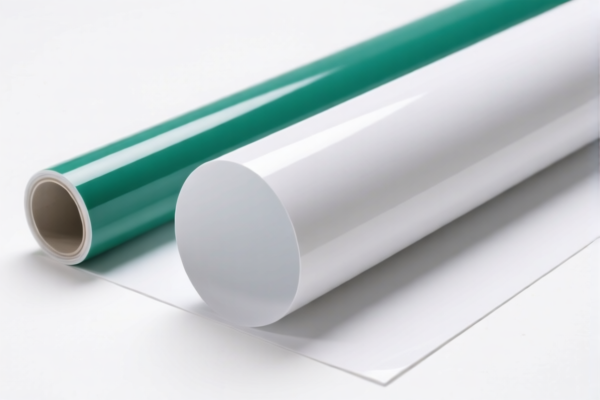
AI Analysis
🏗️ Self-Adhesive PVC Marble Grain Wall Film (Wall Decals)
🌐 HS Code Reference & Clearance Guide | 2026 Latest Tariff Analysis | Professional Logistics Strategy
📌 一、Product Definition & Classification: What Exactly Are We Dealing With?
Self-Adhesive PVC Marble Grain Wall Film is a versatile decorative material used to instantly transform interior surfaces (walls, cabinets, furniture) with a realistic marble texture. In international trade, it is classified based on two critical factors: 1. Material Composition: It is made of PVC (Polyvinyl Chloride), a polymer. 2. Physical Form & Function: It is a thin sheet/film or a strip, and crucially, it is self-adhesive (backing allows sticking without extra glue).
⚠️ Key Distinction:
- If classified as a simple "Plastic Sheet/Film" (3921 series): It is taxed as a raw material product.
- If classified as "Self-Adhesive Plastic Tape/Film" (3919 series): It is taxed as a finished decorative accessory.
- If mistakenly classified as "Paper/Decorative Wallcovering" (4814 series): It faces a significantly lower tax rate due to its "paper" classification, though the plastic content is the defining feature.
📦 二、HS Code Classification Details (2026 Tariff Authority)
Based on the latest customs data, here are the four potential classifications with their logic and tax implications.
| HS Code | Product Description | Logic for Classification | Total Tax Rate* |
|---|---|---|---|
| 3921.12.50.00 | Other plates, sheets, film, foil, strips of PVC | Material & Shape Focus: The product is explicitly identified as a PVC sheet/film. It fits the "Plastic" category perfectly. | 41.5% |
| 3921.12.19.50 | Other PVC sheets/films (Not elsewhere specified) | Inference Focus: Derived from the "PVC" name and "Wall Decal" shape. Fits the description of PVC polymer films. | 40.3% |
| 3919.90.50.60 | Other self-adhesive plastic plates/sheets/films | Function Focus: Highlights the "Self-Adhesive" nature. PVC is a plastic; Wall film is a flat shape. Fits the "Self-adhesive" category. | 40.8% |
| 3919.90.50.40 | Other self-adhesive plastic strips/films | Form Focus: Specifically identifies the product as a "Self-adhesive strip/film" made of plastic (PVC). | 40.8% |
| 4814.20.00.00 | Wallpaper & similar wall coverings, plastic-coated | Usage Focus: Interprets the product as a "Wall Decor" (paper-like function) that happens to be plastic-coated. This is a strategic "lower tax" classification. | 17.5% |
🔍 Critical Insight:
- Codes 3921 & 3919 (Plastic focus) carry a high tax burden (~40%+) due to the "Plastic" tariff lines. - Code 4814 (Wallpaper focus) offers a significantly lower rate (17.5%) by prioritizing the decorative function over the material. - Risk: Customs may reject 4814.20.00.00 if the product is purely plastic without a paper base, leading to penalties for misdeclaration.
💰 三、2026 Tariff Rate Breakdown (Detailed Policy Analysis)
✅ Applicable Country: USA (US)
✅ Origin: China (CN)
✅ Effective Date: Current 2026 Regulations (including Section 301 & Section 232/122 provisions)
🎯 1. High-Tax Plastic Classifications (3921 & 3919 Series)
Codes Covered: 3921.12.50.00, 3921.12.19.50, 3919.90.50.60, 3919.90.50.40
| Tax Component | Rate | Legal Basis / Explanation |
|---|---|---|
| Basic Tariff | 5.3% – 6.5% | Standard Most-Favored-Nation (MFN) duty for PVC products. |
| Section 301 / Additional Duty | +25.0% | USITC Penalty: Imposed on Chinese goods under the Section 301 Trade Act to counter unfair trade practices. |
| Section 122 / 10% Penalty | +10.0% | Trade Policy Adjustment: Specific additional duty often applied to strategic Chinese goods (varies by specific ruling). |
| 🚨 Total Effective Rate | 40.3% – 41.5% | Extremely High. This rate applies if classified as a "Plastic Film" or "Self-Adhesive Tape". |
📌 Interpretation:
- If you declare this as "PVC Sheet" or "Self-Adhesive Plastic Tape", you will pay ~40.8% in taxes. - Calculation:CIF Value × 40.8%. - De Minimis Status: ❌ NO. These items cannot clear via the $800 exemption (Section 321) due to the high additional duties.
🎯 2. Lower-Tax Decorative Classification (4814 Series)
Code Covered: 4814.20.00.00
| Tax Component | Rate | Legal Basis / Explanation |
|---|---|---|
| Basic Tariff | 0.0% | "Wallpaper" or "Similar wall coverings" often attract zero basic duty if qualified. |
| Section 122 / Additional Duty | +7.5% | A reduced Section 301/Trade adjustment duty compared to pure plastics. |
| Section 122 Penalty | +10.0% | Standard 10% penalty applied to the base. |
| ✅ Total Effective Rate | 17.5% | Significant Savings. This is the target rate if the product can be legally argued as a "Wallcovering". |
📌 Interpretation:
- To claim this 17.5% rate, the product must be presented as a "Decorative Wallcovering" rather than a raw plastic film. - Calculation:CIF Value × 17.5%. - Risk: If Customs determines the product has no paper backing and is 100% PVC film, they will reclassify it to the 3921/3919 series and demand the difference (23%+ tax).
🛠️ 四、Clearance Operational Advice (Actionable Strategy)
✅ 1. Documentation Checklist (Must-Have)
| Document | Status | Why It Matters |
|---|---|---|
| Technical Specification Sheet | ✔️ Required | Must clearly state "PVC Material" but also emphasize "Wall Decorative Application". |
| Product Photos (Unrolled & Rolled) | ✔️ Required | Show the texture, thickness, and the self-adhesive backing clearly. |
| Composition Analysis Report | ✔️ Critical | Crucial for 4814 claim: Does it have a paper backing? If No, you must use 39xx. If Yes, you can fight for 4814. |
| Commercial Invoice | ✔️ Required | Description must be: "Self-Adhesive Marble Wall Film" (Avoid "Plastic Sheet" in the name if aiming for 4814). |
| Packaging List | ✔️ Required | Show units per roll/box to prove it's sold as a finished decor item, not raw material. |
✅ 2. Declaration Strategy (The "How-To")
🔥 Golden Rule: "Function vs. Material"
| Scenario | Recommended HS Code | Strategy | Risk Level |
|---|---|---|---|
| Product is 100% PVC (No Paper) | 3919.90.50.40 or 3921.12.50.00 |
Be honest. Declare as "Self-adhesive PVC Film". Pay 40.8%. | 🟢 Safe (No fines) |
| Product has Paper/Non-Woven Backing | 4814.20.00.00 |
Declare as "Wallcovering". Argue the paper base makes it a "Wallpaper". Pay 17.5%. | 🟡 Medium (Risk of re-class) |
| Product is Pure PVC Film | 4814.20.00.00 |
DO NOT DO THIS. High risk of customs audit, seizure, and back-taxes. | 🔴 Dangerous |
💡 Pro Tip: If the product is 100% PVC, do not try to force the 4814 code to save money. The risk of a 23% back-tax penalty + storage fees outweighs the savings. Use the 39xx code and optimize your cost structure.
✅ 3. Special Cases & Loopholes
| Situation | Recommendation |
|---|---|
| OEM / Private Label | Ensure the invoice shows the brand name, not "Generic Plastic Film," to support the "Decorative" intent for 4814 (if applicable). |
| Mixed Packaging | If shipping with other decor items (e.g., trim), ensure they are in separate boxes to avoid "Composite Goods" confusion. |
| Pre-Arrival Ruling | If the volume is high, apply for a Binding Ruling from CBP to confirm if your specific film (with/without backing) qualifies for 4814. |
🌍 五、Global Market Comparison (2026 Context)
| Market | Best HS Code | Effective Rate | Key Requirement |
|---|---|---|---|
| 🇺🇸 USA | 3919.90.50.40 |
40.8% | Section 301 is unavoidable for pure PVC. |
| 🇺🇸 USA (If Paper) | 4814.20.00.00 |
17.5% | Must prove paper backing exists. |
| 🇪🇺 EU | 3919.90 |
~5-10% | No Section 301; lower anti-dumping duties. |
| 🇯🇵 Japan | 3919.90 |
~6-8% | Lower tariff burden for plastic films. |
📌 Conclusion:
The US market is the most expensive for PVC wall films due to the aggressive 301 tariffs. - If your product is pure PVC, accept the 40.8% tax. - If you can add a paper backing, you can legally target the 17.5% rate, saving ~23%.
📌 六、Common Pitfalls & Avoidance (Lessons Learned)
❌ Mistake 1: Declaring 100% PVC film as "Wallpaper" (4814) to save tax.
👉 Consequence: Customs detects the lack of paper backing → Re-classifies to 3921 → Back-taxes (23% difference) + 20% Penalty + Seizure.
❌ Mistake 2: Declaring as "Plastic Raw Material" when sold as "Decor."
👉 Consequence: No impact on tax, but misses the "Finished Good" documentation which can speed up clearance.
❌ Mistake 3: Ignoring Section 122 (10% penalty).
👉 Consequence: Calculating tax as 5.3% + 25% = 30.3% (Wrong). Total is 40.8%.
✅ Correct Action:
"Self-Adhesive Marble Decorative Film (PVC), 0.2mm thickness, Self-adhesive backing, for interior wall decoration."
Check if paper backing exists. If yes →4814.20.00.00. If no →3919.90.50.40.
🎯 七、Conclusion: Smart Classification = Higher Profit
🎯 Key Takeaways:
🔹 "Pure PVC = High Tax (40.8%)": Do not gamble on 4814 for 100% plastic. 🔹 "Paper Backing = Low Tax (17.5%)": A simple design change (adding paper) can save 23%. 🔹 "Section 301 is Real": The 25% additional duty is the main cost driver.
📌 Smart Tip:
If you are a manufacturer, consider changing the substrate to include a non-woven or paper layer. This allows you to legally claim the 4814 tariff and reduce your US clearance cost by nearly half.
📣 Immediate Action Plan:
📞 Contact Customs Broker: Ask "Does my PVC film have a paper backing?" 🚀 Update Product Specs: Add "Decorative Wallcovering" to marketing if possible. 💼 Calculate True Cost:
Price × 1.408(Pure PVC) vsPrice × 1.175(With Paper).
✨ Professional Clearance Starts with Accurate HS Codes!
💼 Every Percent of Tax Saved is Pure Profit!
Customer Reviews
About HS Code Classification
The Harmonized System (HS) is an internationally standardized nomenclature developed by the World Customs Organization (WCO) to classify traded products. Over 200 countries use the HS system as the basis for customs tariffs, trade statistics, and import/export regulations.
Each HS code follows a hierarchical structure:
- Chapter (2 digits) — Broad category of goods (e.g., Chapter 84: Machinery and Mechanical Appliances)
- Heading (4 digits) — More specific grouping within the chapter
- Subheading (6 digits) — Internationally standardized breakdown, used by all WCO member countries
- National subdivisions (8-10 digits) — Country-specific extensions for further classification, such as US HTSUS 10-digit codes
Correct HS code classification is essential for smooth customs clearance, accurate duty payment, and compliance with trade regulations. Misclassification can lead to customs delays, overpayment of duties, or penalties.
When importing from CN to US, the applicable tariff rates may include:
- Most-Favored-Nation (MFN) rate — The standard duty rate applied to WTO members
- General rate — Applied to countries without trade agreements
- Trade remedy duties — Additional tariffs such as Section 301 (anti-dumping), Section 232 (national security), or countervailing duties
The information provided on this page is for reference purposes only. For official classification, please consult with your local customs authority or a licensed customs broker.