Self Adhesive PVC Scratch Resistant Wall Film
CN → US| HS Code | Tariff Rate | Origin | Destination | Doc |
|---|---|---|---|---|
| 4814200000 | 17.5% | CN | US | Official Doc |
| 3919905060 | 40.8% | CN | US | Official Doc |
| 3919102055 | 40.8% | CN | US | Official Doc |
| 4814900200 | 17.5% | CN | US | Official Doc |
| 3926909989 | 22.8% | CN | US | Official Doc |
Product Images
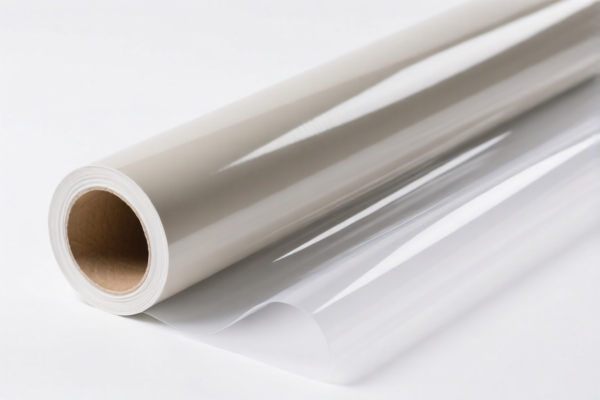


AI Analysis
🏠✨ Self Adhesive PVC Scratch Resistant Wall Film (Wall Sticker)
🌐 HS Code Reference & Customs Clearance Guide | 2026 Updated Tariff Analysis | Strategic Decoding for U.S. Imports
📌 I. Product Definition & Classification: Is it Paper or Plastic?
The "Self Adhesive PVC Scratch Resistant Wall Film" is a decorative interior product used to protect and beautify walls. In international trade, its classification hinges on the primary material and function:
Category A: Decorative Paper Products (4814)
If the product is viewed as a "wall covering" where the PVC acts merely as a coating on a paper base, it falls under Chapter 48 (Paper/Paperboard).
Category B: Plastic Products (3919)
If the product is viewed as a "self-adhesive plate/sheet" made primarily of PVC (polyvinyl chloride), it falls under Chapter 39 (Plastics and Articles Thereof).
⚠️ Key Distinction Point:
- If the core is Paper + PVC coating → Likely 4814 (Lower Tariff: ~17.5%).
- If the core is 100% Plastic Film → Likely 3919/3926 (Higher Tariff: ~22.8% – 40.8%).
Note: U.S. Customs often scrutinizes "PVC Wall Films" as Plastic Products due to the high plastic content.
📦 II. HS Code Classification Details (2026 Latest Tariff Schedule)
Based on the analysis of your product description, here are the 5 potential HS Codes with their specific tax implications.
| HS Code | Product Description | Matching Logic | Total Tax Rate |
|---|---|---|---|
| 4814.20.00.00 | Wallpapers & Similar Wall Coverings (Coated with Plastic) | Match Logic: "PVC" = Plastic coating; "Wall Sticker" = Wall decoration; "Self-adhesive" = Paper/Film type. | 17.5% |
| 4814.90.02.00 | Other Wall Coverings (Plastic/Paper Mix) | Match Logic: PVC/Paper mix; "Wall Sticker" fits "Other" category for wall coverings. | 17.5% |
| 3919.90.50.60 | Other Self-Adhesive Plastic Plates/Sheets | Match Logic: "Self-adhesive" = Self-adhesive; "PVC" = Plastic; "Wall Sticker" = Flat shape. | 40.8% |
| 3919.10.20.55 | Self-Adhesive Plastic Films/Tapes | Match Logic: PVC material + Flat shape + Self-adhesive nature fits "Plastic Self-adhesive Films". | 40.8% |
| 3926.90.99.89 | Other Plastic Articles (Miscellaneous) | Match Logic: PVC (Plastic) + Wall Sticker (Plastic Application). Fits "Other Articles of Plastics". | 22.8% |
🔍 Critical Insight:
- 4814 series is the most favorable (17.5%) but requires proof that the base material is primarily paper or that it is classified as a "wall covering" rather than a plastic sheet.
- 3919 series (40.8%) is the most common risk for "PVC Wall Film" if customs views it as a pure plastic product.
- 3926 (22.8%) is a middle-ground option if the product is seen as a generic plastic accessory.
💰 III. 2026 U.S. Tariff Rate Breakdown (Detailed Policy Analysis)
✅ Applicable Country: United States (US)
✅ Origin: China (CN)
✅ Effective Date: November 10, 2025 (Including Section 301 & IEEPA)
🎯 1. Low-Tariff Scenario: 4814.20.00.00 & 4814.90.02.00
(Applicable if classified as Decorative Paper/Wall Covering)
| Item | Content |
|---|---|
| Base Duty Rate | 0.0% (Free) |
| Section 301 Surcharge | +7.5% (China-specific penalty) |
| IEEPA (Section 122) Surcharge | +10.0% (Additional China tariff) |
| Total Duty Rate | 17.5% |
| De Minimis Exemption | ❌ No (Deny de minimis for China origin under Section 301) |
| Legal Basis | Section 301: Footnote 9903.88.01 + IEEPA: 9903.01.24 |
📌 Explanation:
- Even though the base rate is 0%, the Section 301 and IEEPA tariffs combine to create a 17.5% burden.
- Strategy: This is the lowest possible rate. To qualify, you must prove the product is a "Wall Covering" (Chapter 48) rather than a "Plastic Sheet" (Chapter 39).
🎯 2. High-Tariff Scenario: 3919.90.50.60 & 3919.10.20.55
(Applicable if classified as Self-Adhesive Plastic Sheets)
| Item | Content |
|---|---|
| Base Duty Rate | 5.8% |
| Section 301 Surcharge | +25.0% (High penalty for plastics) |
| IEEPA (Section 122) Surcharge | +10.0% |
| Total Duty Rate | 40.8% |
| De Minimis Exemption | ❌ No |
| Legal Basis | Section 301: Footnote 9903.03.05 + IEEPA: 9903.01.24 |
📌 Explanation:
- This is the worst-case scenario (Double Taxation). The 25% Section 301 surcharge on plastics is extremely high.
- Risk: Most "PVC Wall Stickers" are currently flagged here by U.S. Customs.
🎯 3. Medium-Tariff Scenario: 3926.90.99.89
(Applicable if classified as "Other Plastic Articles")
| Item | Content |
|---|---|
| Base Duty Rate | 5.3% |
| Section 301 Surcharge | +7.5% |
| IEEPA (Section 122) Surcharge | +10.0% |
| Total Duty Rate | 22.8% |
| De Minimis Exemption | ❌ No |
| Legal Basis | Section 301: Footnote 9903.03.05 (or similar) |
📌 Explanation:
- A safer alternative if 3919 is rejected but 4814 is not accepted. It avoids the heavy 25% "Plastic Sheet" surcharge.
🛠️ IV. Customs Clearance Operational Advice (Pitfall Avoidance)
✅ 1. Preparation Checklist (Must Have)
| Document | Status | Why It Matters |
|---|---|---|
| Product Technical Data Sheet | ✅ Mandatory | Must specify if the core layer is paper or plastic. If paper, emphasize the "Wall Covering" nature. |
| Material Composition Analysis | ✅ Mandatory | Proof of PVC content. If >50% PVC, 3919 is likely. If paper-based with PVC coating, 4814 is possible. |
| High-Resolution Photos | ✅ Mandatory | Show the texture. Is it a "Sticker" (Paper-like) or a "Sheet" (Plastic)? |
| Commercial Invoice | ✅ Mandatory | Do NOT use generic terms like "Plastic Wall Film." Use "Decorative Wall Sticker" or "Wall Covering." |
| Packaging Photo | ✅ Mandatory | Show how it is rolled/sold (e.g., "Roll of Wallpaper" vs. "Roll of Plastic"). |
✅ 2. Declaration Strategy (Golden Rules)
🔥 Rule: "Don't call it Plastic if it's a Wall Covering!"
| Scenario | Correct Declaration | Incorrect Declaration (Risk!) |
|---|---|---|
| Product is Paper-based + PVC coating | 4814.20.00.00 - "Self-Adhesive Decorative Wall Sticker" |
3919.90.50.60 - "Self-Adhesive Plastic Sheet" (→ 40.8% Tax) |
| Product is Pure PVC Film | 3919.10.20.55 - "Self-Adhesive Plastic Film" |
4814.20.00.00 - "Wallpaper" (→ Audit/Seizure Risk) |
| Product is a "Sticker" | 3926.90.99.89 - "Plastic Wall Decor" |
4814.90.02.00 - "Wallpaper" (→ Mismatched Material) |
✅ 3. Special Handling Tips
| Situation | Recommendation |
|---|---|
| OEM Custom Wall Stickers | Provide a Material Breakdown showing the percentage of paper vs. plastic. If paper is dominant, argue for 4814. |
| "Scratch Resistant" Claim | This is a functional feature, not a classification driver. Do not highlight "Scratch Resistant" as a reason for plastic classification. |
| Pre-Arrival Ruling | HIGHLY RECOMMENDED. Apply for an Advance Ruling (CBP) specifically for "Self-Adhesive PVC Wall Stickers" to lock in the 17.5% rate before shipping. |
🌍 V. Global Market Comparison (2026)
| Country/Region | Recommended HS Code | Tariff (China Origin) | Notes |
|---|---|---|---|
| 🇺🇸 USA | 4814.20.00.00 (Target) | 17.5% | High risk of re-classification to 3919 (40.8%). |
| 🇪🇺 EU | 4814.20.00 | ~0-6% | Generally favors "Wallpaper" classification. No Section 301. |
| 🇨🇦 Canada | 4814.20.00 | ~0-6% | Similar to EU; "Wall Covering" is preferred. |
| 🇦🇺 Australia | 4814.20.00 | ~5% | No heavy anti-dumping on this item. |
📌 Conclusion:
The USA is the only major market with this specific 40.8% penalty risk.
Strategy: Aggressively argue for 4814 (Wallpaper/Covering) classification to save 23.3% in duties compared to the 3919 classification.
📌 VI. Common Mistakes & Lessons Learned (From the Field)
❌ Mistake 1: Describing the product as "PVC Wall Sheet" in the Invoice.
👉 Consequence: Customs immediately flags it as Chapter 39 → 40.8% Tax.
✅ Fix: Change description to "Self-Adhesive Decorative Wall Sticker" or "Wall Covering".
❌ Mistake 2: Claiming it is "100% PVC" on the datasheet without mentioning a backing layer.
👉 Consequence: Forced into 3919.90.50.60.
✅ Fix: If it has a paper backing, state "Paper-based with PVC coating" clearly.
❌ Mistake 3: Splitting the shipment into "Sticker" and "Glue" to avoid tax.
👉 Consequence: Customs Audit + Seizure of goods.
✅ Fix: Declare as one unit ("Wall Film") with the correct HS Code.
🎯 VII. Final Verdict: Strategic Recommendation
🎯 The Goal: Secure the 17.5% rate (4814) instead of 40.8% (3919).
🔹 Step 1: Verify the material composition. Is there a paper base? 🔹 Step 2: If yes, draft technical specs to emphasize "Wall Covering" function. 🔹 Step 3: Apply for a CBP Advance Ruling immediately. 🔹 Step 4: On the Invoice, use "Self-Adhesive Wall Sticker (Wall Covering)".
📌 Pro Tip:
If you cannot prove a paper base, 3926.90.99.89 (22.8%) is your second-best option to avoid the 40.8% plastic sheet penalty.
📣 Immediate Action Required:
📞 Contact a Customs Broker NOW.
📄 Prepare Material Composition Report.
🚀 Pre-clear your HS Code to avoid 40.8% surprise!
✨ Professional Clearance Starts with Accurate Classification!
💼 Every 1% tax saved is pure profit!
Customer Reviews
About HS Code Classification
The Harmonized System (HS) is an internationally standardized nomenclature developed by the World Customs Organization (WCO) to classify traded products. Over 200 countries use the HS system as the basis for customs tariffs, trade statistics, and import/export regulations.
Each HS code follows a hierarchical structure:
- Chapter (2 digits) — Broad category of goods (e.g., Chapter 84: Machinery and Mechanical Appliances)
- Heading (4 digits) — More specific grouping within the chapter
- Subheading (6 digits) — Internationally standardized breakdown, used by all WCO member countries
- National subdivisions (8-10 digits) — Country-specific extensions for further classification, such as US HTSUS 10-digit codes
Correct HS code classification is essential for smooth customs clearance, accurate duty payment, and compliance with trade regulations. Misclassification can lead to customs delays, overpayment of duties, or penalties.
When importing from CN to US, the applicable tariff rates may include:
- Most-Favored-Nation (MFN) rate — The standard duty rate applied to WTO members
- General rate — Applied to countries without trade agreements
- Trade remedy duties — Additional tariffs such as Section 301 (anti-dumping), Section 232 (national security), or countervailing duties
The information provided on this page is for reference purposes only. For official classification, please consult with your local customs authority or a licensed customs broker.