Self Adhesive Reflectorized Plastic Sheet
CN → US| HS Code | Tariff Rate | Origin | Destination | Doc |
|---|---|---|---|---|
| 7020006000 | 40.0% | CN | US | Official Doc |
| 7020004000 | 41.6% | CN | US | Official Doc |
| 3919901000 | 41.5% | CN | US | Official Doc |
| 9405696000 | 40.3% | CN | US | Official Doc |
| 9405428440 | 38.9% | CN | US | Official Doc |
Product Images
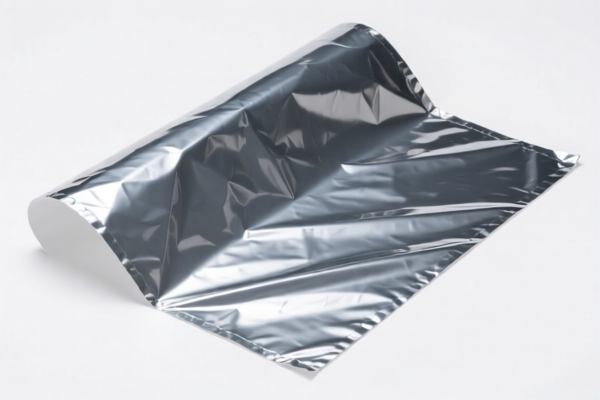
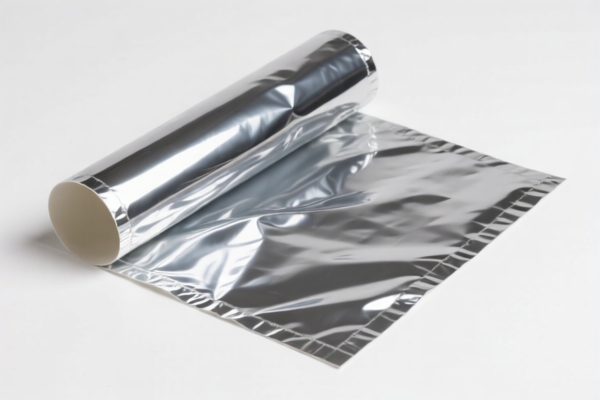
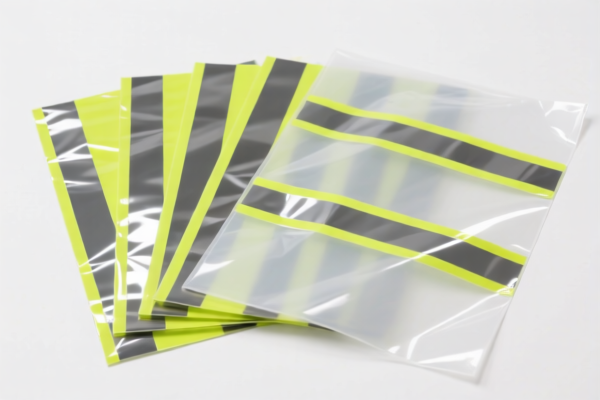
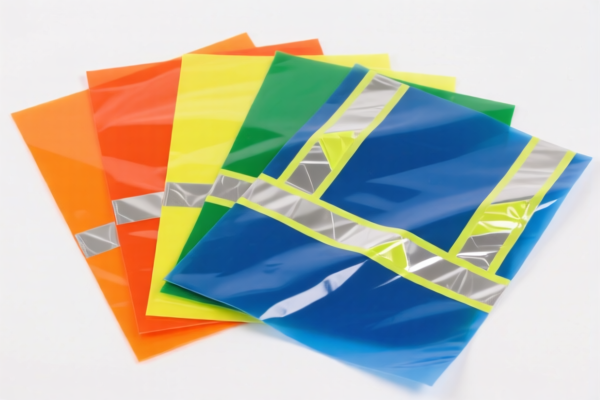
AI Analysis
🛡️ Self-Adhesive Reflectorized Plastic Sheet
🌐 HS Code Reference & Customs Clearance Guide | 2026 Latest Tariff Analysis | Professional Clearance Strategy
📌 I. Product Definition & Classification: Do You Really Understand "Self-Adhesive Reflective Sheets"?
"Self-Adhesive Reflectorized Plastic Sheet" is a composite material widely used in traffic signage, vehicle safety markings, industrial warnings, and consumer crafts. In international trade, its classification depends heavily on material composition (Plastic vs. Glass) and form (Roll/Sheet vs. Specific Device).
The primary distinction lies in whether the product is viewed as: 1. A Raw Material/Accessory: A plastic sheet with adhesive and reflective beads/coating (often classified under Chapter 39 or 70). 2. A Finished Light/Signage Component: A plate with fixed light sources or specific signage functions (often classified under Chapter 94).
⚠️ Key Differentiator:
- If it is a flexible or rigid plastic sheet with adhesive backing and reflective properties → Likely Chapter 39 (Plastics) or Chapter 70 (Glass).
- If it is a rigid plate serving as a light fixture or permanent sign → Likely Chapter 94 (Furniture/Lighting).
- Note: The term "Plastic Sheet" in the input strongly suggests Chapter 39, but "Reflectorized" and "Board/Sheet" ambiguities can lead to Chapter 70 or 94 interpretations depending on the importer’s declaration and physical attributes.
📦 II. HS Code Classification Details (2026 Latest Tariff Authority Comparison)
Based on the provided data, here are the potential HS Codes and their logical matching criteria:
| HS Code | Product Description | Matching Logic / Summary | Material/Shape Attribute |
|---|---|---|---|
7020.00.60.00 |
Other glass articles: Reflectors (Mirrors/Reflecting boards) | Match Basis: The product falls under "other glass articles." The form matches the specific attribute of a "reflector board." No material conflict if assumed to be glass. | Glass (Specific shape: Reflector) |
7020.00.40.00 |
Other glass articles: Other (Generic) | Match Basis: Inferred material is glass or glass-coated. Form is a non-specific shaped article, fitting the "other glass articles" catch-all category based on material inference logic. | Glass (Non-specific shape) |
3919.90.10.00 |
Self-adhesive plates, sheets, film, tape, etc.: Other | Match Basis: The name "Self-Adhesive" corresponds to "self-adhesive plastic plates/sheets." "Reflective" aligns with surfaces created by glass microbeads (common in reflective plastics). Material inferred as plastic base. | Plastic (Self-adhesive, reflective surface) |
9405.69.60.00 |
Lighting accessories: Signs, nameplates, etc., with permanent light source | Match Basis: The form "Self-Adhesive Reflectorized Board" fits the attribute of having "permanent fixed light sources" (if interpreted as illuminated signage). Material inferred as plastic/composite, no conflict with "lighting signs." | Plastic/Composite (Lighting sign/Nameplate) |
9405.42.84.40 |
LED lighting fixtures: Other | Match Basis: This product belongs to lighting/signage accessories. Based on use, it reasonably infers inclusion of reflective materials and adhesive backing. Fits the "Other" catch-all category for lighting accessories with no obvious material/shape conflict. | Mixed (Lighting accessory) |
🔍 Critical Note on "Plastic" vs. "Glass":
- The input specifies "Plastic Sheet".
- Codes3919.90.10.00(Plastic) and9405series (Lighting/Signage using plastic) are the most logically consistent with the word "Plastic."
- Codes7020.00.xxxx(Glass) may apply if the product is actually glass-backed or if customs interprets "reflectorized board" primarily as a glass reflector despite the "plastic" descriptor (potential mismatch risk).
💰 III. 2026 Latest Tariff Rate Breakdown (Including Surcharges, Policy Add-ons)
✅ Applicable Country: United States (US)
✅ Origin: China (CN) (Implied by tax details: 25% + 10% surcharges typical for US-China trade)
✅ Effective Date: From November 10, 2025 (for subsequent imports)
🎯 1. 7020.00.60.00 – Other Glass Articles: Reflectors
| Item | Content |
|---|---|
| Base Tariff | 5.0% |
| Section 301 Surcharge | +25.0% (USITC Footnote) |
| IEEPA Surcharge | +10.0% (Targeting China/HK products) |
| Total Rate | 40.0% |
| Tax Calculation | CIF Value × 40% |
| De Minimis Exemption | ❌ Not Applicable |
| Legal Basis Path | Base: 5% → 301: 25% → IEEPA: 10% |
📌 Explanation:
- If classified as Glass Reflectors, the base rate is low (5%), but the total burden is high due to geopolitical tariffs.
- Risk: If the product is plastic but declared as glass, this could lead to misclassification penalties.
🎯 2. 7020.00.40.00 – Other Glass Articles: Other
| Item | Content |
|---|---|
| Base Tariff | 6.6% |
| Section 301 Surcharge | +25.0% |
| IEEPA Surcharge | +10.0% |
| Total Rate | 41.6% |
| Tax Calculation | CIF Value × 41.6% |
| De Minimis Exemption | ❌ Not Applicable |
| Legal Basis Path | Base: 6.6% → 301: 25% → IEEPA: 10% |
📌 Note:
- This is a "catch-all" for glass articles not specified elsewhere.
- Higher base rate than60.00but same surcharges.
- Generally less favorable than60.00for reflectors if specific description fits.
🎯 3. 3919.90.10.00 – Self-Adhesive Plastic Sheets (Other)
| Item | Content |
|---|---|
| Base Tariff | 6.5% |
| Section 301 Surcharge | +25.0% |
| IEEPA Surcharge | +10.0% |
| Total Rate | 41.5% |
| Tax Calculation | CIF Value × 41.5% |
| De Minimis Exemption | ❌ Not Applicable |
| Legal Basis Path | Base: 6.5% → 301: 25% → IEEPA: 10% |
📌 Explanation:
- Most Likely Fit for "Plastic Sheet".
- The term "Self-Adhesive" is explicitly covered in Heading 3919.
- "Reflective" is a surface finish, not a material change, so it stays in Chapter 39.
- Total 41.5% is the standard burden for self-adhesive plastic imports from China to the US.
🎯 4. 9405.69.60.00 – Lighting Accessories: Signs/Nameplates
| Item | Content |
|---|---|
| Base Tariff | 5.3% |
| Section 301 Surcharge | +25.0% |
| IEEPA Surcharge | +10.0% |
| Total Rate | 40.3% |
| Tax Calculation | CIF Value × 40.3% |
| De Minimis Exemption | ❌ Not Applicable |
| Legal Basis Path | Base: 5.3% → 301: 25% → IEEPA: 10% |
📌 Note:
- Only applicable if the product is considered a finished sign/nameplate with "permanent light source" or specific signage function.
- Simple reflective sheets are usually NOT classified here unless they are illuminated fixtures. Misclassification risk is high.
🎯 5. 9405.42.84.40 – LED Lighting Fixtures: Other
| Item | Content |
|---|---|
| Base Tariff | 3.9% |
| Section 301 Surcharge | +25.0% |
| IEEPA Surcharge | +10.0% |
| Total Rate | 38.9% |
| Tax Calculation | CIF Value × 38.9% |
| De Minimis Exemption | ❌ Not Applicable |
| Legal Basis Path | Base: 3.9% → 301: 25% → IEEPA: 10% |
📌 Note:
- This is the lowest total rate (38.9%) but has the highest classification risk.
- It implies the product is an "LED lighting fixture." A passive reflective sheet is not an LED fixture.
- Warning: Do not use this code unless the product includes active lighting components. Customs may reject this as a false declaration.
🛠️ IV. Customs Clearance Practical Advice (Real-World Pitfall Guide)
✅ 1. Preparation Checklist (Mandatory)
| Document | Required | Explanation |
|---|---|---|
| ✅ Product Specification Sheet | ✔️ | Must specify: Material (Plastic/PET/PMMA), Adhesive Type, Reflective Technology (Micro-beads/Prismatic), Dimensions. |
| ✅ Product Photos | ✔️ | Clear images of the roll/sheet, adhesive side, and reflective surface. Show "Self-Adhesive" nature. |
| ✅ Commercial Invoice | ✔️ | Description: "Self-Adhesive Reflective Plastic Sheet for Safety Marking." Avoid vague terms like "Board" if it's a roll. |
| ✅ Packing List | ✔️ | Weight and dimensions must match. |
| ✅ Certificate of Origin (CO) | ✔️ | Required for US import to calculate IEEPA/301 duties correctly. |
✅ 2. Declaration Tips (Key Mnemonic)
🔥 "Material First, Adhesion Second, Reflection Third!"
| Scenario | Correct Declaration | Incorrect Practice |
|---|---|---|
| Flexible Plastic Roll | 3919.90.10.00 (Self-adhesive plastic sheet) |
Declare as "Mirror" or "Glass" → Risk of penalty. |
| Rigid Plastic Board | 3919.90.10.00 or 7020.00.xxxx (if glass-like) |
Declare as "LED Light" → High Audit Risk. |
| Product with Built-in LEDs | 9405.xxxx |
Declare as "Plastic Sheet" → Misclassification. |
| Mixed Package (Sheet + LED Tape) | Split declaration if possible, or declare as "Lighting Accessory" | Lump all into one HS Code → Confusion at CBP. |
💡 Strategy:
Since the input says "Plastic Sheet", the safest and most accurate code is3919.90.10.00.
- It captures "Plastic" (Ch 39), "Self-Adhesive" (Heading 3919), and "Sheet" (Subheading 90).
- Reflective coating is considered a treatment of the plastic, not a change in material class.
✅ 3. Special Case Handling
| Situation | Handling Advice |
|---|---|
| Is it Glass or Plastic? | If the substrate is glass, use 7020.00.60.00. If it is PET/PE/PP, use 3919.90.10.00. Check the Material Safety Data Sheet (MSDS). |
| Is it a "Sign" or a "Sheet"? | If sold as a raw material to be cut and used → 3919. If sold as a pre-cut, ready-to-apply traffic sign → Could still be 3919 or potentially 9405 if complex. Stick to 3919 for simple sheets. |
| De Minimis (Section 321) | ❌ Not Eligible. All codes listed have surcharges (25% + 10%) and base rates >0, and Section 301 goods are generally excluded from the $800 de minimis exemption if they are subject to 301 tariffs. Verify current CBP enforcement on IEEPA + 301 combined goods. |
🌍 V. Global Market Comparison (2026 Latest)
| Country/Region | Recommended HS Code | Total Tariff (Approx.) | Certification | Note |
|---|---|---|---|---|
| 🇺🇸 USA | 3919.90.10.00 |
41.5% (6.5% + 25% + 10%) | None Specific | High tariff due to China origin. |
| 🇨🇳 China | 3919.90.10.00 |
~10-15% (Import Duty) | CCC (if electrical) | Lower burden for imports into China. |
| 🇪🇺 EU | 3919.90.90 |
~6.5% (Base) + VAT | CE (if electrical components) | No 301/IEEPA equivalent. |
| 🇯🇵 Japan | 3919.90.00 |
~6-10% | PSE (if electrical) | Standard MFN rates. |
📌 Conclusion:
- The US market is the most expensive due to the叠加 (stacking) of Base + 301 + IEEPA tariffs.
- Accuracy is key: Using3919.90.10.00is defensible for "Plastic." Using9405is risky unless it's an active light. Using7020is risky if it's not glass.
📌 VI. Common Errors & Pitfalls (Blood & Tears Lessons)
❌ Error 1: Declaring a Plastic reflective sheet as Glass (7020).
👉 Consequence: Customs inspection reveals plastic material → Fine + Back Tariff + Delay.
❌ Error 2: Declaring a Passive reflective sheet as an LED Light (9405.42).
👉 Consequence: CBP rejects entry because it lacks electrical components. Refusal of Admission.
❌ Error 3: Ignoring the "Self-Adhesive" feature.
👉 Consequence: If declared as "Non-adhesive Plastic Sheet" (3920), the duty structure might differ, and the physical mismatch will trigger an audit.
✅ Correct Declaration Example:
"Self-Adhesive Reflective Plastic Sheet, 3M Type, PET Base, Prismatic Reflective Surface, for Traffic Safety Markings, Roll Format, Non-Electrical."
🎯 VII. Conclusion: Professional Declaration, Save Costs, Avoid Risks!
🎯 Remember the Rule:
🔹 "Plastic Base + Adhesive = 3919"
🔹 "Glass Base + Reflector = 7020"
🔹 "Active Light = 9405"
🔹 "Passive Sheet in 9405 = Audit Trigger!"🔹 "With 301+IEEPA, every percent counts. Choose the most accurate material-based code."
📌 Pro Tip:
If your plastic sheet is originating from Vietnam, Mexico, or Thailand, you may apply for IEEPA Exemptions or lower Section 301 rates.
Apply for a Binding Ruling (Pre-classification) with CBP if the product is ambiguous between Glass and Plastic.
📣 Take Action Now:
📞 Consult your customs broker with material specifications.
🚀 Clear customs smoothly, maximize profit, and avoid penalties!
✨ Professional Clearance Starts with Accurate Classification!
💼 Every cent of tariff should be calculated precisely!
Customer Reviews
About HS Code Classification
The Harmonized System (HS) is an internationally standardized nomenclature developed by the World Customs Organization (WCO) to classify traded products. Over 200 countries use the HS system as the basis for customs tariffs, trade statistics, and import/export regulations.
Each HS code follows a hierarchical structure:
- Chapter (2 digits) — Broad category of goods (e.g., Chapter 84: Machinery and Mechanical Appliances)
- Heading (4 digits) — More specific grouping within the chapter
- Subheading (6 digits) — Internationally standardized breakdown, used by all WCO member countries
- National subdivisions (8-10 digits) — Country-specific extensions for further classification, such as US HTSUS 10-digit codes
Correct HS code classification is essential for smooth customs clearance, accurate duty payment, and compliance with trade regulations. Misclassification can lead to customs delays, overpayment of duties, or penalties.
When importing from CN to US, the applicable tariff rates may include:
- Most-Favored-Nation (MFN) rate — The standard duty rate applied to WTO members
- General rate — Applied to countries without trade agreements
- Trade remedy duties — Additional tariffs such as Section 301 (anti-dumping), Section 232 (national security), or countervailing duties
The information provided on this page is for reference purposes only. For official classification, please consult with your local customs authority or a licensed customs broker.