Self adhesive Book Cover
CN → US| HS Code | Tariff Rate | Origin | Destination | Doc |
|---|---|---|---|---|
| 4823908680 | 35.0% | CN | US | Official Doc |
| 4823906700 | 35.0% | CN | US | Official Doc |
| 3919102055 | 40.8% | CN | US | Official Doc |
| 3919905060 | 40.8% | CN | US | Official Doc |
| 4811411000 | 35.0% | CN | US | Official Doc |
| 4811413000 | 35.0% | CN | US | Official Doc |
Product Images


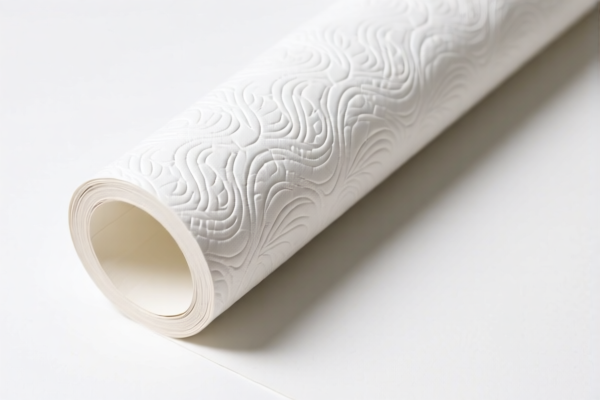

AI Analysis
📘 Self-Adhesive Book Cover (Plastic & Paper Variants)
🌐 HS Code Reference & Customs Clearance Guide | 2026 Tariff Breakdown | Strategic Entry Protocol
📌 I. Product Definition & Classification: Is It Plastic or Paper?
Self-adhesive Book Covers are protective films applied to the exterior of books to preserve them from wear, moisture, and tearing. In international trade, the classification hinges entirely on the base material:
- Plastic-Based Covers: Made of PVC, PET, PP, or other polymers. These are often transparent or colored films with a pressure-sensitive adhesive backing.
- Paper-Based Covers: Made of coated, impregnated, or surface-decorated paper/cardboard with an adhesive backing. These are often used for heavier-duty protection or specific decorative effects.
⚠️ Critical Distinction:
- If the base material is Plastic (regardless of width or roll size) → Likely Chapter 39.
- If the base material is Paper/Paperboard (cut to size/shape) → Likely Chapter 48.
- Roll Width is a decisive factor for Plastics: Is it ≤ 20 cm (narrow) or > 20 cm (wide)?
- Paper Size is a decisive factor: Are they in strips/rolls > 15cm width or large sheets > 36cm x 15cm?
📦 II. HS Code Classification Matrix (Based on Provided Data)
| HS Code | Product Description | Material Base | Dimensions/Format | Key Feature |
|---|---|---|---|---|
3919.10.20.55 |
Self-adhesive plates, sheets, film, foil, tape, strip... of plastics | Plastic | Rolls ≤ 20 cm width | Narrow plastic adhesive tape |
3919.90.50.60 |
Self-adhesive plates, sheets, film... of plastics | Plastic | Other (Not ≤ 20 cm) | Wide or non-standard plastic adhesive |
4823.90.86.80 |
Other paper, paperboard... cut to size or shape | Paper/Paperboard | Other/Arbitrary Shape | Cut-to-size paper covers |
4823.90.67.00 |
Other paper... Of coated paper or paperboard | Coated Paper | Coated Paper | Decorative/Protected paper covers |
4811.41.10.00 |
Gummed or adhesive paper... Self-adhesive | Adhesive Paper | Strips/Rolls > 15 cm OR Sheets > 36cm x 15cm | Large format adhesive paper |
4811.41.30.00 |
Gummed or adhesive paper... Self-adhesive | Adhesive Paper | Other (Smaller strips/sheets) | Standard adhesive paper rolls |
🔍 Important Note:
- Plastic Covers: The width of the roll determines if it falls under3919.10(narrow) or3919.90(other).
- Paper Covers: The dimensions of the roll/sheet determine the subheading under Heading 4811 (large vs. small) or 4823 (cut to size).
- Adhesive vs. Gummed: Most "Self-adhesive" items fall under the "Self-adhesive" subheading (4811.41), whereas "Gummed" (water-activated) is a different category, though the data groups them under "Gummed or adhesive".
💰 III. 2026 Tariff Rate Breakdown (Detailed Tax Analysis)
Based on the provided data, here is the precise tax structure. This data reflects a specific trade scenario (likely China-US trade given the "Additional Tariff" structure).
🎯 1. Plastic Book Covers (Chapter 39)
HS Code: 3919.10.20.55 & 3919.90.50.60
Material: Plastic (Self-adhesive)
| Tax Component | Rate | Status |
|---|---|---|
| Basic Tariff (MFN) | 0.0% | ✅ Duty-Free |
| Additional Tariff (Section 301) | 0.0% | ✅ No Extra Surcharge |
| Total Effective Tax | 0.0% | 🟢 Zero Duty |
📌 Explanation:
Plastic self-adhesive tapes and films in this specific classification currently face 0% Total Tax. This is highly favorable for exporters. No "Section 301" surcharge applies to these specific plastic sub-codes in this dataset.
🎯 2. Paper & Coated Paper Book Covers (Chapter 48)
HS Codes: 4823.90.86.80, 4823.90.67.00, 4811.41.10.00, 4811.41.30.00
Material: Paper / Paperboard
| Tax Component | Rate | Status |
|---|---|---|
| Basic Tariff (MFN) | 0.0% | ✅ Duty-Free |
| Additional Tariff (Section 301) | +25.0% | ⚠️ Heavy Surcharge |
| Total Effective Tax | 25.0% | 🔴 High Cost |
📌 Explanation:
- Base Tariff: The standard Most Favored Nation (MFN) rate for paper articles is 0%.
- The "Additional Tariff": A significant 25% surcharge is applied to all paper-based self-adhesive book covers in this list.
- Impact: For every $10,000 value of paper book covers, you must pay $2,500 in tariffs.
- Reasoning: This is likely due to trade measures targeting Chinese paper products or specific protectionist policies affecting the paper industry.
🛠️ IV. Customs Clearance Practical Advice (Avoiding Pitfalls)
✅ 1. Material Verification (The Golden Rule)
Before shipping, you MUST know the substrate material. * Plastic: Submit a material certificate stating "100% Plastic (PVC/PET/PP)". * Result: 0% Duty. * Paper: Submit a material certificate stating "Paper/Cardboard, Coated/Uncoated". * Result: 25% Duty. * Composite: If it is a plastic film laminated to paper, customs may classify it based on the "essential character." If the plastic layer dominates, fight for Chapter 39. If paper dominates, expect 25%.
✅ 2. Dimensional Declaration Strategy
For Plastic items:
* If the roll width is ≤ 20 cm, declare under 3919.10.20.55.
* If the roll width is > 20 cm, declare under 3919.90.50.60.
* Tip: Both are 0% in this dataset, but the HS Code must be precise to avoid customs queries.
For Paper items:
* Large Sheets/Rolls: If width > 15 cm or size > 36cm x 15cm, use 4811.41.10.00.
* Small/Standard: Use 4811.41.30.00 or 4823.90.86.80 (cut to size).
* Warning: All incur the 25% tax. There is no dimensional loophole to reduce the tax here.
✅ 3. Invoice & Labeling Requirements
- Description: Must explicitly state "Self-Adhesive Book Cover" and "Plastic" or "Paper". Do not just write "Book Cover" or "Adhesive Film".
- Dimensions: Include "Roll Width: XX cm" on the commercial invoice.
- Country of Origin: Clearly marked. If the 25% tax applies to Chinese origin, and you are shipping from a third country, you must prove the origin to see if any exemptions apply (though the data implies the 25% is tied to the HS Code + Origin context).
🚀 V. Strategic Recommendations for Importers
🟢 Scenario A: You Use Plastic Covers
- Action: Proceed with confidence.
- Cost: No tariff impact (0%).
- Strategy: Bulk order is cost-effective. No need to seek duty drawbacks.
🔴 Scenario B: You Use Paper Covers
- Action: Re-evaluate your cost structure.
- Cost: 25% added cost.
- Strategy:
- Switch Materials: Can you switch to Plastic (
3919)? If the product quality allows, this saves 25%. - Supplier Location: Check if the paper is sourced from a country not subject to this 25% additional tariff (if the 25% is specifically for China/US trade).
- Price Pass-Through: Factor the 25% into your final product pricing immediately. Do not absorb this cost as it will erode margins significantly.
- Switch Materials: Can you switch to Plastic (
📝 VI. Summary Checklist for Clearance
| Step | Action | Target HS Code |
|---|---|---|
| 1 | Identify Material | Plastic (3919) vs Paper (4811/4823) |
| 2 | Measure Width/Size | <20cm (Plastic) vs >15cm (Paper) |
| 3 | Calculate Tax | 0% (Plastic) vs 25% (Paper) |
| 4 | Prepare Docs | Material Cert, Invoice, Packing List |
| 5 | Declare | Accurate HS Code + "Self-Adhesive Book Cover" |
🎯 Final Takeaway:
The difference between 0% and 25% lies entirely in the Material.
Plastic = Free.
Paper = Expensive (25%).
Make your material choice count before you ship!
✨ Professional Customs Clearance Starts with Accurate Material Classification!
💼 Don't let a 25% surprise tax eat your profit margins!
Customer Reviews
About HS Code Classification
The Harmonized System (HS) is an internationally standardized nomenclature developed by the World Customs Organization (WCO) to classify traded products. Over 200 countries use the HS system as the basis for customs tariffs, trade statistics, and import/export regulations.
Each HS code follows a hierarchical structure:
- Chapter (2 digits) — Broad category of goods (e.g., Chapter 84: Machinery and Mechanical Appliances)
- Heading (4 digits) — More specific grouping within the chapter
- Subheading (6 digits) — Internationally standardized breakdown, used by all WCO member countries
- National subdivisions (8-10 digits) — Country-specific extensions for further classification, such as US HTSUS 10-digit codes
Correct HS code classification is essential for smooth customs clearance, accurate duty payment, and compliance with trade regulations. Misclassification can lead to customs delays, overpayment of duties, or penalties.
When importing from CN to US, the applicable tariff rates may include:
- Most-Favored-Nation (MFN) rate — The standard duty rate applied to WTO members
- General rate — Applied to countries without trade agreements
- Trade remedy duties — Additional tariffs such as Section 301 (anti-dumping), Section 232 (national security), or countervailing duties
The information provided on this page is for reference purposes only. For official classification, please consult with your local customs authority or a licensed customs broker.