Self adhesive Car Sticker
CN → US| HS Code | Tariff Rate | Origin | Destination | Doc |
|---|---|---|---|---|
| 3918905000 | 14.2% | CN | US | Official Doc |
| 4814900200 | 17.5% | CN | US | Official Doc |
| 3918105000 | 39.2% | CN | US | Official Doc |
| 3919905060 | 40.8% | CN | US | Official Doc |
| 4814200000 | 17.5% | CN | US | Official Doc |
Product Images
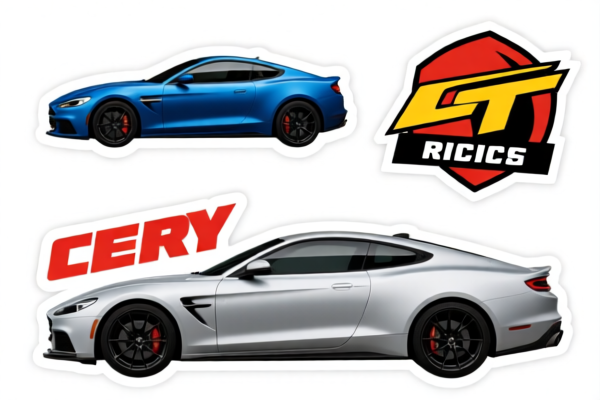
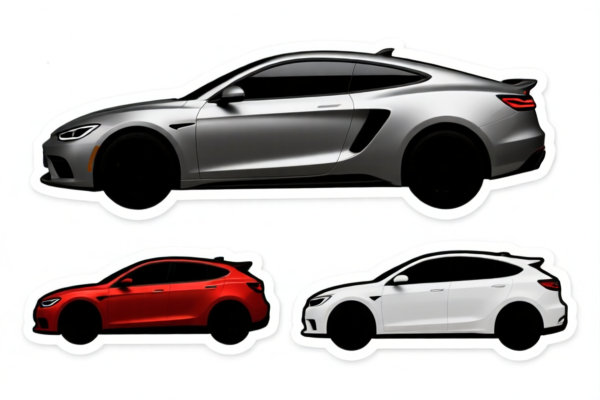
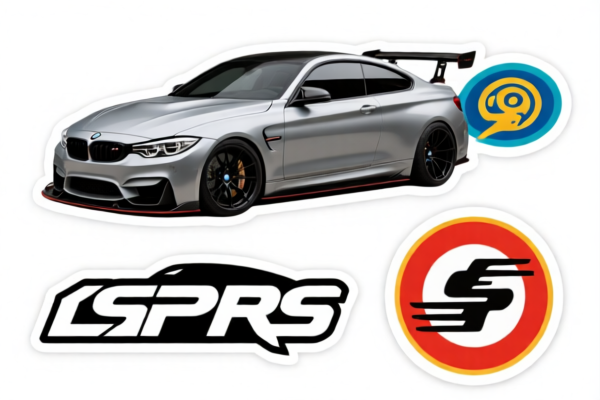
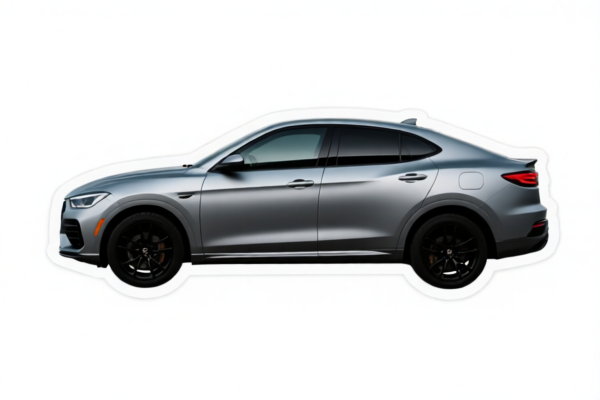
AI Analysis
🚗 Self-Adhesive Car Stickers (Vehicle Decals)
🌐 HS Code Reference & Customs Clearance Guide | 2026 Latest Tariff Analysis | Professional Clearance Strategy
📌 Part 1: Product Definition & Classification: Do You Really Understand "Self-Adhesive Car Stickers"?
Self-adhesive car stickers are decorative or functional vinyl/PVC films applied to vehicle surfaces (hoods, bumpers, windows, doors). In international trade, they are often misclassified due to their dual nature as both plastic products and paper-based printed materials. The key distinction lies in the primary material composition:
Plastic-Based Stickers (PVC/Vinyl):
Most commercial car stickers are made of Polyvinyl Chloride (PVC) or other plastics. They are flexible, waterproof, and durable. These fall under Chapter 39 (Plastics).
Paper-Based Stickers:
Less common for exterior car use, but if the backing is primarily paper with a plastic coating, they may fall under Chapter 48 (Paper). However, "Self-Adhesive Car Stickers" are overwhelmingly classified as plastic articles.
⚠️ Critical Distinction:
- If the sticker is primarily PVC/Vinyl → Classify under HS 3918 or HS 3919.
- If the sticker is primarily Paper with adhesive → Classify under HS 4814.
- Most "Car Stickers" are PVC/Vinyl, making HS 3918 or HS 3919 the most likely candidates, though HS 4814 appears in some datasets due to marketing terms like "Wallpaper-style decals."
📦 Part 2: HS Code Classification Details (Based on Provided Data)
| HS Code | Product Description | Matching Logic (from Data) | Tax Rate (Total) |
|---|---|---|---|
3918.90.50.00 |
Plastic Wall Coverings (Other) | Shape: "Wallpaper-like"; Use: Wall/Car covering; Material: Plausible inference as PVC plastic. | 14.2% |
4814.90.02.00 |
Paper Wall Coverings | Name: "Wallpaper"; Form: Self-adhesive; Material: Paper-based wall covering. | 17.5% |
3918.10.50.00 |
PVC Wall Coverings | Form: Wall covering; Material: Explicitly identified as PVC polymer. | 39.2% |
3919.90.50.60 |
Plastic Self-Adhesive Flat Shapes | Form: Self-adhesive + Flat shape; Material: Plausible inference as PVC/plastic. | 40.8% |
4814.20.00.00 |
Paper Wall Decorations | Name: "Self-adhesive wallpaper"; Material: Paper or paper with plastic coating. | 17.5% |
🔍 Key Insight:
- HS 3918 codes are for plastic wall/vehicle coverings.
- HS 3919 is for plastic self-adhesive tapes/films (flat shapes).
- HS 4814 is for paper-based wall coverings/decorations.
- "Car Sticker" is not explicitly listed, so classification relies on material inference and form factor.
💰 Part 3: 2026 Latest Tariff Rate Breakdown (Including Surtaxes & Policy Add-ons)
✅ Applicable Country: United States (US)
✅ Origin: China (CN)
✅ Effective Date: From November 10, 2025 (and subsequent imports)
🎯 1. 3918.90.50.00 —— Plastic Wall Coverings (Other)
| Item | Details |
|---|---|
| Base Tariff | 4.2% (ad valorem) |
| Surtax (Section 301) | 0.0% |
| IEEPA Surcharge (122) | +10.0% (against China/HK products) |
| Total Tariff | 14.2% |
| Tax Calculation | CIF Value × 14.2% |
| De Minimis Eligibility | ❌ No (deny_de_minimis) |
| Legal Basis Path | IEEPA:9903.01.25 → IEEPA:9903.01.24 → USITC:3918.90.50.00 → FOOTNOTE:122 |
📌 Explanation:
- Base tariff is low (4.2%), but the 10% IEEPA surcharge significantly increases the cost.
- This is the lowest cost option among plastic-based classifications.
🎯 2. 4814.90.02.00 —— Paper Wall Coverings
| Item | Details |
|---|---|
| Base Tariff | 0.0% |
| Surtax (Section 301) | +7.5% |
| IEEPA Surcharge (122) | +10.0% |
| Total Tariff | 17.5% |
| Tax Calculation | CIF Value × 17.5% |
| De Minimis Eligibility | ❌ No (deny_de_minimis) |
| Legal Basis Path | IEEPA:9903.01.25 → IEEPA:9903.01.24 → USITC:4814.90.02.00 → FOOTNOTE:122 |
📌 Note:
- Base tariff is 0%, but the 7.5% surtax and 10% IEEPA make it more expensive than3918.90.50.00.
- Only applicable if the product is primarily paper-based.
🎯 3. 3918.10.50.00 —— PVC Wall Coverings
| Item | Details |
|---|---|
| Base Tariff | 4.2% |
| Surtax (Section 301) | +25.0% |
| IEEPA Surcharge (122) | +10.0% |
| Total Tariff | 39.2% |
| Tax Calculation | CIF Value × 39.2% |
| De Minimis Eligibility | ❌ No (deny_de_minimis) |
| Legal Basis Path | IEEPA:9903.01.25 → IEEPA:9903.01.24 → USITC:3918.10.50.00 → FOOTNOTE:122 |
📌 Warning:
- This code applies if the product is explicitly identified as PVC.
- High tariff (39.2%) due to 25% Section 301 surtax.
- Avoid if possible unless the product is definitively PVC and no lower-rate alternative exists.
🎯 4. 3919.90.50.60 —— Plastic Self-Adhesive Flat Shapes
| Item | Details |
|---|---|
| Base Tariff | 5.8% |
| Surtax (Section 301) | +25.0% |
| IEEPA Surcharge (122) | +10.0% |
| Total Tariff | 40.8% |
| Tax Calculation | CIF Value × 40.8% |
| De Minimis Eligibility | ❌ No (deny_de_minimis) |
| Legal Basis Path | IEEPA:9903.01.25 → IEEPA:9903.01.24 → USITC:3919.90.50.60 → FOOTNOTE:122 |
📌 Caution:
- This is the highest tariff option.
- Applies to self-adhesive plastic films/tapes.
- Use only if the product is definitively a plastic self-adhesive film and not a "wall covering."
🎯 5. 4814.20.00.00 —— Paper Wall Decorations
| Item | Details |
|---|---|
| Base Tariff | 0.0% |
| Surtax (Section 301) | +7.5% |
| IEEPA Surcharge (122) | +10.0% |
| Total Tariff | 17.5% |
| Tax Calculation | CIF Value × 17.5% |
| De Minimis Eligibility | ❌ No (deny_de_minimis) |
| Legal Basis Path | IEEPA:9903.01.25 → IEEPA:9903.01.24 → USITC:4814.20.00.00 → FOOTNOTE:122 |
📌 Note:
- Same tax rate as4814.90.02.00.
- Applies to paper-based wall decorations.
- Less likely for exterior car stickers due to durability concerns.
🛠️ Part 4: Customs Clearance Practical Advice (Avoid Pitfalls)
✅ 1. Required Documentation Checklist
| Document | Required | Notes |
|---|---|---|
| ✅ Product Specification Sheet | ✔️ | Include material (PVC/Vinyl/Paper), dimensions, adhesive type, durability claims. |
| ✅ Material Composition Report | ✔️ | Critical for distinguishing between Chapter 39 (Plastic) and Chapter 48 (Paper). |
| ✅ Product Photos | ✔️ | Show front, back, edge, and adhesive side. Clearly indicate "Self-Adhesive." |
| ✅ Commercial Invoice | ✔️ | Accurately describe as "Self-Adhesive Vinyl Decal" or "PVC Car Sticker." Avoid vague terms like "Wallpaper." |
| ✅ Packing List | ✔️ | Detail contents, weight, and packaging type. |
| ✅ Certificate of Origin (CO) | ✔️ | Required for surtax determination. If from non-China origin, may qualify for exemptions. |
✅ 2. Declaration Strategy (Key Tips)
🔥 “Material Matters: Plastic vs. Paper, Name Matters: Decal vs. Wallpaper!”
| Scenario | Correct Declaration | Wrong Declaration |
|---|---|---|
| PVC/Vinyl Car Sticker | 3918.90.50.00 (14.2%) |
Declaring as "Wallpaper" → 4814.90.02.00 (17.5%) or 3918.10.50.00 (39.2%) |
| Paper-Based Sticker | 4814.20.00.00 (17.5%) |
Declaring as "Plastic" → 3918.90.50.00 (14.2%) or 3919.90.50.60 (40.8%) |
| Self-Adhesive Plastic Film | 3919.90.50.60 (40.8%) |
Declaring as "Wall Covering" → 3918.90.50.00 (14.2%) |
| Mixed Material (e.g., Paper backing + PVC coating) | Consult customs broker | Assume one or the other → Risk of misclassification |
📌 Key Advice:
- Most car stickers are PVC/Vinyl, so3918.90.50.00(14.2%) is often the best and most accurate classification.
- Avoid using "Wallpaper" in the description for car stickers, as it may trigger Chapter 48 codes with higher surtaxes.
- If unsure, provide a material breakdown to customs brokers for accurate classification.
✅ 3. Special Circumstances
| Scenario | Handling Advice |
|---|---|
| OEM Custom Stickers | Provide design files + material specs. Ensure description matches physical product. |
| Reflective Stickers | Still classified under HS 3918 or HS 3919. No special tariff. |
| Electroluminescent/LED Stickers | May fall under Chapter 85 (Electrical) if they contain active components. Consult broker. |
| Non-Chinese Origin | If from Vietnam, Mexico, etc., IEEPA 10% surtax may be waived. Apply for exemption. |
🌍 Part 5: Global Market Comparison (2026 Latest)
| Country/Region | Recommended HS Code | Tariff | Certification | Notes |
|---|---|---|---|---|
| 🇺🇸 USA | 3918.90.50.00 |
14.2% | N/A | Lowest tariff among plastic options. |
| 🇨🇳 China | 3918.90.50.00 |
~5% | CCC (if applicable) | Lower base tariff, no IEEPA surtax. |
| 🇪🇺 EU | 3919.90.00 |
~4% | CE | No IEEPA surtax. |
| 🇬🇧 UK | 3919.90.00 |
~4% | UKCA | Post-Brexit tariffs apply. |
| 🇦🇺 Australia | 3919.90.00 |
~5% | RCM | No surtax. |
📌 Conclusion:
- USA has the highest effective tariff due to IEEPA 10% surtax.
- EU/UK/Australia have lower base tariffs and no IEEPA surtax.
- China origin products face significant cost penalties in the US market.
📌 Part 6: Common Mistakes & Pitfalls (Lessons Learned)
❌ Mistake 1: Using "Wallpaper" for car stickers
👉 Consequence: May be misclassified under HS 4814 (17.5%) or HS 3918.10.50.00 (39.2%).
👉 Fix: Use "Self-Adhesive Vinyl Decal" or "PVC Car Sticker."
❌ Mistake 2: Ignoring material composition
👉 Consequence: Customs may reclassify under a higher-tax code.
👉 Fix: Provide material breakdown (e.g., "PVC backing, acrylic adhesive").
❌ Mistake 3: Assuming "Self-Adhesive" means HS 3919
👉 Consequence: HS 3919.90.50.60 has 40.8% tariff, which is higher than HS 3918.90.50.00 (14.2%).
👉 Fix: If it’s a "cover" (wall/car), use HS 3918. If it’s a "tape/film," use HS 3919.
❌ Mistake 4: Not providing origin documentation
👉 Consequence: IEEPA 10% surtax applied automatically.
👉 Fix: Provide Certificate of Origin to prove non-China origin if applicable.
✅ Correct Practice:
"Self-Adhesive PVC Vinyl Car Decal, 12x12 inches, Matte Finish, Model XYZ, No Electrical Components"
🎯 Part 7: Conclusion: Professional Declaration, Cost Savings, Smooth Clearance!
🎯 Remember the Mantra:
🔹 "Material Defines Code: PVC is 3918, Paper is 4814."
🔹 "Name Matters: 'Decal' is better than 'Wallpaper' for cars."
🔹 "Check Origin: Non-China? Avoid IEEPA 10% surtax!"
📌 Pro Tip:
- If your stickers are originated from Vietnam, Mexico, or Thailand, apply for IEEPA Exemption to save 10%.
- Consider Advance Ruling from US Customs for high-volume shipments to ensure correct classification.
📣 Immediate Action:
📞 Contact a licensed customs broker + Provide material specs + Apply for Advance Ruling
🚀 Ensure your self-adhesive car stickers clear customs smoothly, efficiently, and cost-effectively!
✨ Professional clearance starts with accurate classification!
💼 Every cent counts in international trade!
Customer Reviews
About HS Code Classification
The Harmonized System (HS) is an internationally standardized nomenclature developed by the World Customs Organization (WCO) to classify traded products. Over 200 countries use the HS system as the basis for customs tariffs, trade statistics, and import/export regulations.
Each HS code follows a hierarchical structure:
- Chapter (2 digits) — Broad category of goods (e.g., Chapter 84: Machinery and Mechanical Appliances)
- Heading (4 digits) — More specific grouping within the chapter
- Subheading (6 digits) — Internationally standardized breakdown, used by all WCO member countries
- National subdivisions (8-10 digits) — Country-specific extensions for further classification, such as US HTSUS 10-digit codes
Correct HS code classification is essential for smooth customs clearance, accurate duty payment, and compliance with trade regulations. Misclassification can lead to customs delays, overpayment of duties, or penalties.
When importing from CN to US, the applicable tariff rates may include:
- Most-Favored-Nation (MFN) rate — The standard duty rate applied to WTO members
- General rate — Applied to countries without trade agreements
- Trade remedy duties — Additional tariffs such as Section 301 (anti-dumping), Section 232 (national security), or countervailing duties
The information provided on this page is for reference purposes only. For official classification, please consult with your local customs authority or a licensed customs broker.