Self adhesive Color Labels
CN → US| HS Code | Tariff Rate | Origin | Destination | Doc |
|---|---|---|---|---|
| 4821902000 | 35.0% | CN | US | Official Doc |
| 3919905060 | 40.8% | CN | US | Official Doc |
| 3919102055 | 40.8% | CN | US | Official Doc |
| 4821102000 | 35.0% | CN | US | Official Doc |
| 3926909989 | 22.8% | CN | US | Official Doc |
Product Images
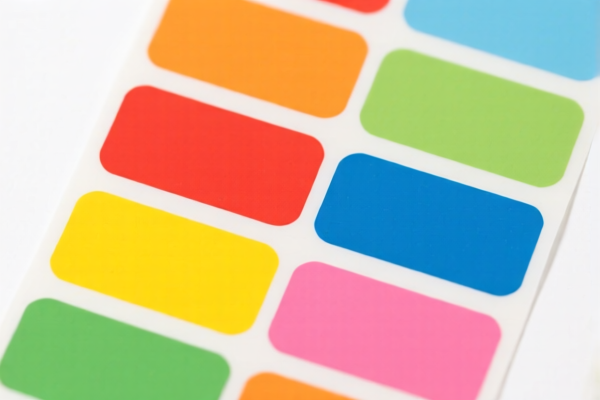
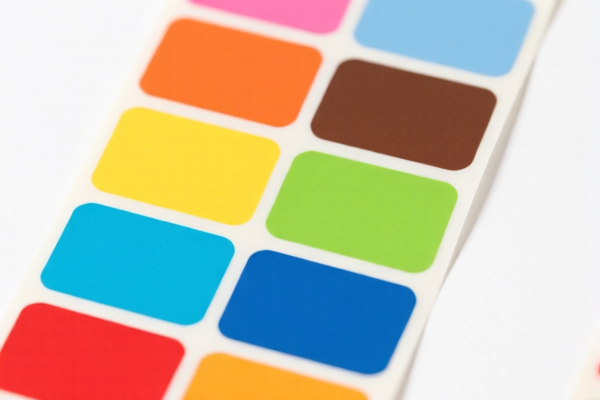
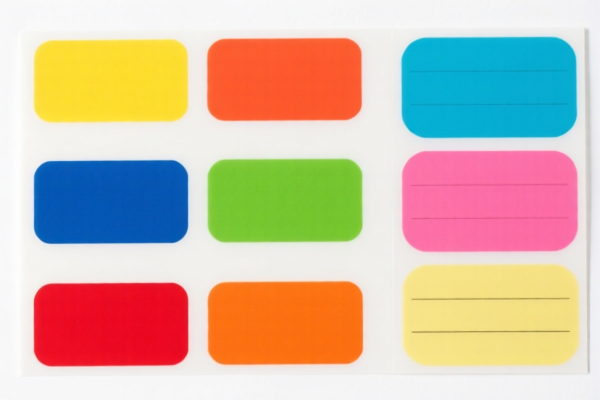
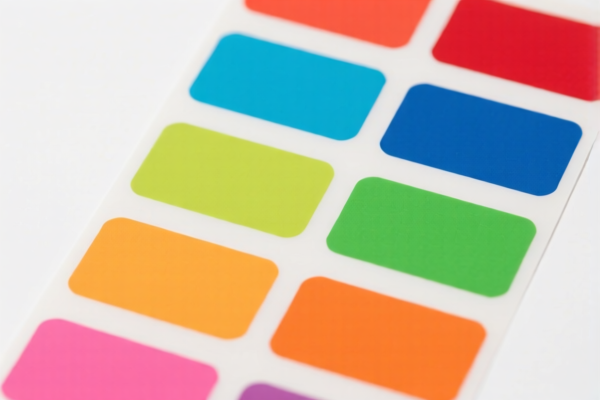
AI Analysis
🏷️ Self-Adhesive Color Labels (自粘彩色标签)
🌐 HS Code Reference & Customs Clearance Guide | 2026 Latest Tariff Analysis | Professional Entry Strategy
📌 I. Product Definition & Classification: What Exactly Are "Self-Adhesive Color Labels"?
Self-adhesive color labels are pressure-sensitive labels used for identification, branding, or information display on products, packaging, or assets. In international trade, their classification depends strictly on two factors: 1. The Material: Is it paper-based, plastic-based, or a composite? 2. The Form: Is it a sheet/film, a roll, or a specific finished article?
⚠️ Key Classification Distinction:
- Paper-Based: If the backing or face material is primarily paper or cardboard → Falls under Chapter 48.
- Plastic/Polymer-Based: If the face material or backing is primarily plastic, polymer, or rubber → Falls under Chapter 39.
- Composite/Other: If it involves complex multi-layered materials not primarily paper or simple plastic films → May fall under Chapter 39 (Other) or Chapter 49 (though 49 is usually for printed matter, labels are often 48/39).
📦 II. HS Code Classification Details (2026 Latest Tariff Authority)
Based on the provided data, here are the precise HS Codes for "Self-Adhesive Color Labels" categorized by material and form.
| HS Code | Product Description | Applicable Scenario | Material Composition |
|---|---|---|---|
| 4821.90.20.00 | Self-adhesive labels, paper/cardboard-based, other | Paper labels with adhesive backing, used for general packaging or product identification | 📄 Paper/Cardboard |
| 4821.10.20.00 | Self-adhesive labels, paper/cardboard-based, of a kind used for labeling | Specific paper labels designed for labeling purposes (often pre-printed) | 📄 Paper |
| 3919.90.50.60 | Self-adhesive plastics labels, in sheets/films | Plastic labels in sheet or thin film form, self-adhesive, not otherwise specified | 🧪 Plastic (Sheets/Films) |
| 3919.10.20.55 | Self-adhesive plastics labels, flat shape | Plastic labels that are self-adhesive and have a flat shape (rolls or sheets) | 🧪 Plastic (Flat Shape) |
| 3926.90.99.89 | Other articles of plastic or composites | Plastic labels/composites not covered by the specific film/sheet codes above | 🧩 Plastic/Composite |
🔍 Critical Reminder:
- Paper Labels (4821) generally attract lower base tariffs but still face significant US trade war surcharges.
- Plastic Labels (3919) often have a base tariff of 5.8% plus the same surcharges.
- Complex Composites (3926) may have different surcharge structures (e.g., lower Section 301 rates if classified differently).
💰 III. 2026 Latest Tariff Rate Breakdown (Including Additional Taxes & Policies)
✅ Applicable Country: United States (US)
✅ Country of Origin: China (CN)
✅ Effective Date: November 10, 2025 (and subsequent imports)
🎯 1. 4821.90.20.00 & 4821.10.20.00 —— Paper-Based Self-Adhesive Labels
| Item | Content |
|---|---|
| Base Tariff | 0.0% (ad valorem) |
| Section 301 Surcharge | +25.0% (USITC Footnote) |
| Section 122 / IEEPA Surcharge | +10.0% (Targeting China/HK products) |
| Total Effective Rate | 35.0% |
| Tax Calculation | CIF Value × 35% |
| De Minimis Exemption | ❌ No (denied for these codes due to surcharges) |
| Legal Basis Path | Base: 0% → 301: +25% → IEEPA: +10% |
📌 Explanation:
- Even though the base duty for paper labels is 0%, the US imposes heavy penalties on Chinese-origin goods.
- The 25% is the standard Section 301 tariff.
- The 10% is an additional layer (Section 122/IEEPA) targeting specific Chinese imports.
- Total: 35%. This is a high-cost category for paper labels.
🎯 2. 3919.90.50.60 & 3919.10.20.55 —— Plastic-Based Self-Adhesive Labels (Sheets/Films)
| Item | Content |
|---|---|
| Base Tariff | 5.8% (ad valorem) |
| Section 301 Surcharge | +25.0% |
| Section 122 / IEEPA Surcharge | +10.0% |
| Total Effective Rate | 40.8% |
| Tax Calculation | CIF Value × 40.8% |
| De Minimis Exemption | ❌ No |
| Legal Basis Path | Base: 5.8% → 301: +25% → IEEPA: +10% |
📌 Explanation:
- Plastic labels have a 5.8% base duty, which is higher than paper (0%).
- The surcharges are identical to paper labels (25% + 10%).
- Total: 40.8%. This is 5.8% higher than paper labels due to the base duty.
- Cost Implication: If your margin is tight, plastic labels are more expensive to import into the US than paper labels.
🎯 3. 3926.90.99.89 —— Other Plastic/Composite Articles
| Item | Content |
|---|---|
| Base Tariff | 5.3% (ad valorem) |
| Section 301 Surcharge | +7.5% (Reduced Section 301 rate for this sub-category) |
| Section 122 / IEEPA Surcharge | +10.0% |
| Total Effective Rate | 22.8% |
| Tax Calculation | CIF Value × 22.8% |
| De Minimis Exemption | ❌ No |
| Legal Basis Path | Base: 5.3% → 301: +7.5% → IEEPA: +10% |
📌 Explanation:
- This is the LOWEST tax bracket among the options provided.
- Why? Because the Section 301 surcharge is only 7.5% instead of 25%. This is a critical optimization point.
- Total: 22.8%.
- Strategy: If your self-adhesive labels are made of complex plastic composites (not simple sheets/films), classify them under 3926.90.99.89 to save ~13-18% in duties compared to 3919 or 4821 codes.
🛠️ IV. Customs Clearance Practical Advice (Real-World Pitfall Avoidance)
✅ 1. Document Preparation Checklist (Non-Negotiable)
| Document | Must Provide? | Purpose |
|---|---|---|
| ✅ Product Specification Sheet | ✔️ | Must clearly state: Face Material (Paper/Plastic), Adhesive Type (Permanent/Removable), Backing (Lin Paper/Plastic). |
| ✅ Product Photos | ✔️ | Show the label on a product, close-up of adhesive side, and overall roll/sheet form. |
| ✅ Commercial Invoice | ✔️ | Must describe item as "Self-Adhesive Labels" NOT generic "Printing Supplies." |
| ✅ HS Code Justification | ✔️ | Explain why you chose 3926 over 3919 (e.g., "Composite material structure"). |
| ✅ Origin Certificate | ✔️ | Confirm China origin to calculate correct surcharges. |
✅ 2. Classification Strategy (Key Tip)
🔥 "Paper is 0% base, Plastic is 5.8% base, Composite is 7.5% surcharge!"
| Scenario | Recommended HS Code | Total Tax | Strategy |
|---|---|---|---|
| Standard Paper Labels | 4821.10.20.00 / 4821.90.20.00 |
35.0% | Acceptable if no plastic alternative exists. |
| Simple Plastic Films | 3919.10.20.55 / 3919.90.50.60 |
40.8% | Highest Cost. Avoid if possible. |
| Complex Plastic/Composite Labels | 3926.90.99.89 |
22.8% | LOWEST COST. Optimize here! |
📌 Actionable Advice:
- If your labels are made of multi-layer plastic (e.g., PET + Acrylic Adhesive + Release Liner), argue for 3926.90.99.89.
- If they are single-layer plastic film, you are stuck with 3919 (40.8%).
- Never declare plastic labels as "Paper" (4821) to avoid the 5.8% base duty. This is fraud and will lead to penalties.
✅ 3. Special Cases & Risk Management
| Situation | Handling Suggestion |
|---|---|
| OEM Private Label | Provide customer authorization + design specs. Avoid "generic" descriptions. |
| Rolls vs. Sheets | Ensure the description matches the physical form. 3919 often requires "sheets or rolls" clarification. |
| Sample vs. Commercial | Both are subject to full duties. Do not use "gift" or "sample" to bypass 35-40% taxes. |
| Mixed Shipments | If a container has both Paper (35%) and Plastic (40.8%) labels, declare separately. Do not mix under one code. |
🌍 V. Global Market Comparison (2026 Update)
| Country/Region | Recommended HS Code | Base Duty | Additional Tariff (China) | Total Effective Rate |
|---|---|---|---|---|
| 🇺🇸 USA | 3926.90.99.89 (Optimized) |
5.3% | +17.5% (7.5% Sec 301 + 10% IEEPA) | 22.8% |
| 🇨🇳 China | 3926.90.99.89 |
6.5% | None | 6.5% |
| 🇪🇺 EU | 3919.10.00 |
3.0% | None (if compliant) | 3.0% |
| 🇬🇧 UK | 3919.10.00 |
3.5% | None | 3.5% |
| 🇦🇺 Australia | 3919.10.00 |
5.0% | None | 5.0% |
📌 Conclusion:
- The US is the most expensive market for self-adhesive labels from China due to Section 301 and IEEPA tariffs.
- Optimizing the HS Code from 3919 (40.8%) to 3926 (22.8%) can save ~18% in landed cost.
- Paper labels (4821) are cheaper than plastic films (3919) but more expensive than optimized composites (3926).
📌 VI. Common Mistakes & Pitfalls (Lessons Learned)
❌ Mistake 1: Declaring plastic labels as "Paper Labels" to get 0% base duty.
👉 Consequence: Customs inspection reveals plastic composition → 25% penalty + Retrax of goods.
❌ Mistake 2: Using "Printing Products" as a generic description.
👉 Consequence: Customs may assign a higher, unspecified code → Delays & Re-classification Fees.
❌ Mistake 3: Ignoring the "Section 122" 10% surcharge.
👉 Consequence: Underestimating landed cost by 10% → Profit Margin Erosion.
❌ Mistake 4: Assuming "De Minimis" ($800) applies to all shipments.
👉 Consequence: False! Section 301 and IEEPA surcharges waive de minimis for these HS codes. All shipments, even small ones, are taxed.
✅ Correct Approach:
"Self-Adhesive Composite Labels, Face Material: PET, Adhesive: Acrylic, Backing: Silicone Paper, Roll Form, Color: Blue."
🎯 VII. Conclusion: Professional Classification for Cost Savings
🎯 Remember the Golden Rule:
🔹 "Plastic Films = 40.8% (Expensive)"
🔹 "Paper Labels = 35.0% (Moderate)"
🔹 "Composite Articles = 22.8% (Cheapest!)"
🔹 "Base Duty + 301 + IEEPA = Your Total Landed Cost"
📌 Pro Tip:
If your self-adhesive labels can be structured as composite articles (not simple films/sheets), insist on HS Code 3926.90.99.89 during customs declaration. It reduces your tariff from 40.8% to 22.8%. This is a significant competitive advantage.
📣 Immediate Action:
📞 Consult with a licensed customs broker.
📄 Provide material composition details (Face, Adhesive, Backing) to support the best HS Code.
🚀 Optimize your HS Code to save 13-18% in duties.
✨ Smart Classification, Smarter Profits!
💼 Every percent saved in duty is pure profit in your pocket!
Customer Reviews
About HS Code Classification
The Harmonized System (HS) is an internationally standardized nomenclature developed by the World Customs Organization (WCO) to classify traded products. Over 200 countries use the HS system as the basis for customs tariffs, trade statistics, and import/export regulations.
Each HS code follows a hierarchical structure:
- Chapter (2 digits) — Broad category of goods (e.g., Chapter 84: Machinery and Mechanical Appliances)
- Heading (4 digits) — More specific grouping within the chapter
- Subheading (6 digits) — Internationally standardized breakdown, used by all WCO member countries
- National subdivisions (8-10 digits) — Country-specific extensions for further classification, such as US HTSUS 10-digit codes
Correct HS code classification is essential for smooth customs clearance, accurate duty payment, and compliance with trade regulations. Misclassification can lead to customs delays, overpayment of duties, or penalties.
When importing from CN to US, the applicable tariff rates may include:
- Most-Favored-Nation (MFN) rate — The standard duty rate applied to WTO members
- General rate — Applied to countries without trade agreements
- Trade remedy duties — Additional tariffs such as Section 301 (anti-dumping), Section 232 (national security), or countervailing duties
The information provided on this page is for reference purposes only. For official classification, please consult with your local customs authority or a licensed customs broker.