Self adhesive Copper Foil Tape
CN → US| HS Code | Tariff Rate | Origin | Destination | Doc |
|---|---|---|---|---|
| 3919102020 | 40.8% | CN | US | Official Doc |
| 3919905030 | 40.8% | CN | US | Official Doc |
| 7419800680 | 88.0% | CN | US | Official Doc |
| 7419805050 | 85.0% | CN | US | Official Doc |
| 8544499000 | 38.9% | CN | US | Official Doc |
| 8544606000 | 38.2% | CN | US | Official Doc |
Product Images
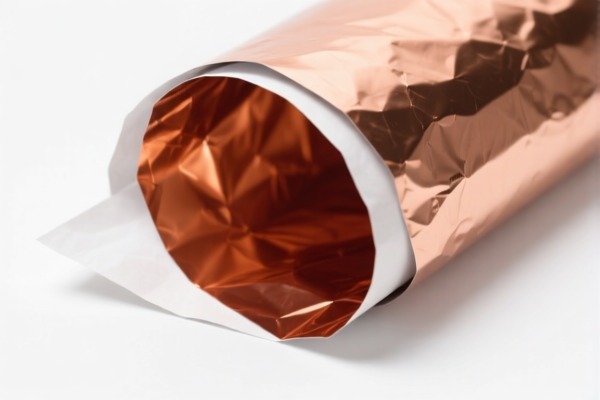
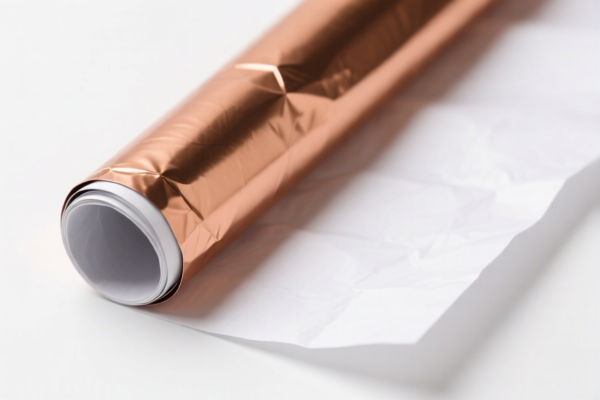
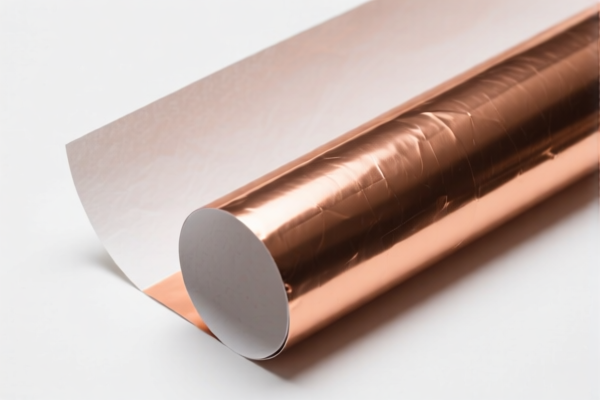
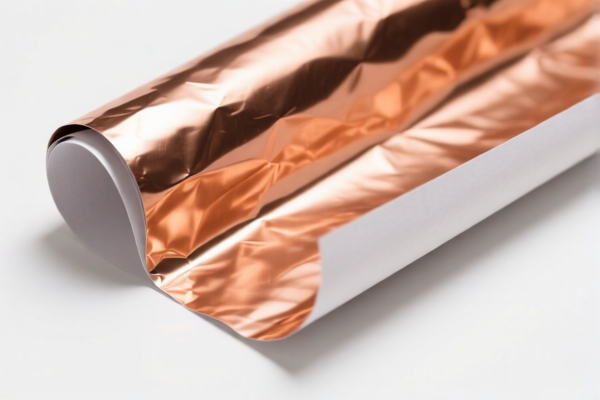
AI Analysis
🥇 Self-Adhesive Copper Foil Tape & Conductor Solutions
🌐 HS Code Classification & Customs Clearance Guide | 2026 Tariff Analysis | Strategic Import Strategy
📌 I. Product Definition & Classification: Do You Know Your Copper?
Copper foil tape and insulated conductors are critical components in electronics, EMI shielding, grounding, and electrical distribution. In international trade, they are not a single homogeneous category. Misclassification can lead to severe penalty or excessive tariffs.
We categorize them into three distinct technical groups based on function, voltage, and material form:
Group A: Insulated Electric Conductors
Cables/wires with insulation (enameled/anodized) but no voltage rating above 1,000V. These are primary transmission lines.
Group B: Plastic Adhesive Tapes (with Copper backing/lining)
Plastic-based tapes that may contain copper fibers or are used for copper-related applications. Classified under Chapter 39 (Plastics), not Chapter 74 (Copper).
Group C: Copper Articles (Mesh/Nets/Wire Cloth)
Copper wire meshes, grills, or netting. Classified under Chapter 74 (Copper). Note: Pure foil tape is often debated, but if structured as a wire mesh/cloth, it falls here.
⚠️ Key Distinction Point:
- If it is a wire/cable with insulation ≤ 1,000V → 8544.49.90.00
- If it is a plastic tape (even if used for copper) → 3919.10.20.20 or 3919.90.50.30
- If it is a copper wire mesh/cloth → 7419.80.06.80 or 7419.80.50.50
📦 II. HS Code Classification Details (2026 Latest Tariff Reference)
| HS Code | Product Description | Applicable Scenario | Voltage/Material Type |
|---|---|---|---|
8544.49.90.00 |
Other electric conductors, voltage ≤ 1,000V (Insulated wires/cables) | Low-voltage insulated wires, enamelled copper wires, coaxial cables | ≤ 1,000 V |
3919.10.20.20 |
Self-adhesive plastic tape (width ≤ 20 cm), Other Electrical Tape | Plastic adhesive tapes, including those with copper backing/lining for electrical use | Plastic-based |
3919.90.50.30 |
Self-adhesive plastic tape (other widths), Other Electrical Tape | Plastic adhesive tapes (width > 20 cm), including copper-related electrical tapes | Plastic-based |
7419.80.06.80 |
Other articles of copper: Cloth, grill, and netting of copper wire | Copper wire mesh, expanded metal copper cloth, shielding meshes | Copper Wire |
7419.80.50.50 |
Other articles of copper: Other | Other copper articles not specified (e.g., solid copper strips, complex formed copper) | Solid Copper |
🔍 Critical Reminder:
- "Self-adhesive Copper Foil Tape" is often misclassified. If the primary material is plastic with a copper layer, it is Chapter 39 (Plastics).
- If it is a copper wire mesh used for shielding, it is Chapter 74 (Copper).
- Insulated wires are always Chapter 85.
💰 III. 2026 Tariff Rate Breakdown (Including Additional Duties)
✅ Applicable Country: United States (US)
✅ Country of Origin: China (CN)
✅ Effective Date: 2025/2026 Period
🎯 1. 8544.49.90.00 —— Insulated Conductors (≤ 1,000 V)
| Item | Content |
|---|---|
| Base Duty | 0.0% |
| Additional Duty (Section 301) | 0.0% |
| Total Tariff Rate | 0.0% |
| Tax Detail | Base: 0.0%, Additional: 0.0% |
| Legal Basis | HTSUS 8544.49.90.00 |
📌 Explanation:
- Low-voltage insulated conductors from China enjoy 0% duty under current Section 301 exclusions or specific sub-headings.
- Benefit: Zero tariff cost for standard insulated wires/cables.
🎯 2. 3919.10.20.20 & 3919.90.50.30 —— Plastic Electrical Tapes
| Item | Content |
|---|---|
| Base Duty | 0.0% |
| Additional Duty (Section 301) | 0.0% |
| Total Tariff Rate | 0.0% |
| Tax Detail | Base: 0.0%, Additional: 0.0% |
| Legal Basis | HTSUS 3919.10.20.20 / 3919.90.50.30 |
📌 Explanation:
- "Electrical tape" classified under these specific plastic tape sub-headings has 0% duty.
- Benefit: Zero tariff cost for plastic-based adhesive tapes.
🎯 3. 7419.80.06.80 —— Copper Wire Cloth/Mesh
| Item | Content |
|---|---|
| Base Duty | 0.0% |
| Additional Duty (Section 301) | 0.0% |
| Copper Surcharge | 50.0% |
| Total Tariff Rate | 50.0% |
| Tax Detail | Base: 0.0%, Additional: 0.0%, Steel/Aluminum/Copper Surcharge: 50% |
| Legal Basis | HTSUS 7419.80.06.80 + Copper Surcharge Policy |
📌 Explanation:
- High Risk! Copper articles (mesh/net) from China are subject to a 50% surcharge under new copper-specific trade policies.
- Cost Impact: For $10,000 goods, duty is $5,000.
🎯 4. 7419.80.50.50 —— Other Copper Articles
| Item | Content |
|---|---|
| Base Duty | 0.0% |
| Additional Duty (Section 301) | 25.0% |
| Copper Surcharge | 50.0% |
| Total Tariff Rate | 75.0% |
| Tax Detail | Base: 0.0%, Additional: 25.0%, Steel/Aluminum/Copper Surcharge: 50% |
| Legal Basis | HTSUS 7419.80.50.50 + Combined Duties |
📌 Explanation:
- Highest Risk! If classified as "other copper articles" (e.g., solid copper strips or complex forms), it faces 25% Section 301 + 50% Copper Surcharge.
- Total: 75%. This is a prohibitive tariff.
🛠️ IV. Customs Clearance Practical Advice (Battle-Tested Strategy)
✅ 1. Documentation Checklist (Non-Negotiable)
| Document | Required? | Description |
|---|---|---|
| ✅ Product Specification Sheet | ✔️ | Must detail: Material composition (Plastic vs. Copper), Width, Voltage Rating (if applicable). |
| ✅ Composition Analysis | ✔️ | For tapes: Confirm if the backing is Plastic (Chapter 39) or Copper (Chapter 74). |
| ✅ Photos (Labeled) | ✔️ | Show cross-section to prove if it’s a plastic film or copper mesh. |
| ✅ Commercial Invoice | ✔️ | Clearly state "Self-Adhesive Electrical Tape" or "Insulated Copper Conductor". Avoid vague terms like "Metal Tape". |
| ✅ HS Code Pre-Ruling | ✔️ | Recommended for 7419 categories due to high tariffs. |
✅ 2. Declaration Strategy (Key Mnemonics)
🔥 “Plastic Tape 0%, Copper Mesh 50%, Insulated Wire 0%, Solid Copper 75%!”
| Scenario | Correct HS Code | Error Risk |
|---|---|---|
| Plastic tape with copper backing | 3919.10.20.20 or 3919.90.50.30 |
❌ Do NOT classify as 7419 → Saves 50-75% |
| Copper wire mesh for EMI shielding | 7419.80.06.80 |
✅ Must declare as Copper Article → Pay 50% |
| Insulated enameled copper wire | 8544.49.90.00 |
✅ Voltage ≤ 1,000V → 0% |
| Solid copper foil tape (no mesh) | 7419.80.50.50 |
❌ Highest tariff 75%. Try to argue as "Plastic-backed" if possible. |
✅ 3. Special Handling
| Situation | Recommendation |
|---|---|
| Product: Copper Foil Tape | If the adhesive side is plastic and the foil is thin, argue for Chapter 39 (Plastic Tape) by emphasizing the plastic substrate. |
| Product: Copper Mesh Tape | Must declare as Chapter 74. No escape from the 50% surcharge. Budget accordingly. |
| Product: Insulated Wire | Ensure voltage is clearly stated as ≤ 1,000 V. If > 1,000 V, rate jumps to 28.2%. |
🌍 V. Global Market Comparison (2026)
| Country/Region | Recommended HS Code | Tariff (China Origin) | Notes |
|---|---|---|---|
| 🇺🇸 USA | 3919.10.20.20 |
0% | Best for plastic tapes |
| 🇺🇸 USA | 7419.80.06.80 |
50% | High cost for copper mesh |
| 🇺🇸 USA | 8544.49.90.00 |
0% | Zero duty for low-voltage wires |
| 🇨🇳 China | 3919.10.20.20 |
0% | No export tax for China |
| 🇪🇺 EU | 3919.10.20.20 |
0% | No Section 301 equivalent |
📌 Conclusion:
- The USA is the most critical market for tariff optimization.
- Copper Mesh (7419) is expensive (50-75%).
- Plastic Tapes (3919) and Insulated Wires (8544) are 0%.
📌 VI. Common Errors & Pitfalls (Lessons Learned)
❌ Error 1: Classifying Copper Mesh Tape as 3919 (Plastic)
👉 Consequence: Customs audit, penalties, and back-payment of 50% duty.
❌ Error 2: Classifying Solid Copper Strip as 3919
👉 Consequence: If rejected, faces 75% total duty.
❌ Error 3: Misdeclaring Voltage of Insulated Wires
👉 Consequence: If voltage > 1,000V, rate becomes 28.2% instead of 0%.
✅ Correct Approach:
"Self-Adhesive Plastic Tape with Copper Lining, Width 12mm, for Electrical Insulation" →
3919.10.20.20
"Copper Wire Mesh, 90x50% Open Area, for EMI Shielding" →7419.80.06.80
🎯 VII. Conclusion: Smart Classification, Cost Saving!
🎯 Remember:
🔹 "Plastic Base = 0% | Wire Mesh = 50% | Solid Copper = 75% | Insulated Wire = 0%"
🔹 "HS Code determines profit margin. Misclassification costs 50-75%."
📌 Tip:
If your product is a hybrid (e.g., copper foil on plastic), provide material composition reports to argue for Chapter 39. This can save you 50-75% in tariffs.
📣 Immediate Action:
📞 Contact customs broker with material composition data
🚀 Optimize your HS Code to 3919 or 8544 where possible to achieve 0% duty.
✨ Professional Clearance, Precise Classification!
💼 Every Percentage Point Saved is Pure Profit!
Customer Reviews
About HS Code Classification
The Harmonized System (HS) is an internationally standardized nomenclature developed by the World Customs Organization (WCO) to classify traded products. Over 200 countries use the HS system as the basis for customs tariffs, trade statistics, and import/export regulations.
Each HS code follows a hierarchical structure:
- Chapter (2 digits) — Broad category of goods (e.g., Chapter 84: Machinery and Mechanical Appliances)
- Heading (4 digits) — More specific grouping within the chapter
- Subheading (6 digits) — Internationally standardized breakdown, used by all WCO member countries
- National subdivisions (8-10 digits) — Country-specific extensions for further classification, such as US HTSUS 10-digit codes
Correct HS code classification is essential for smooth customs clearance, accurate duty payment, and compliance with trade regulations. Misclassification can lead to customs delays, overpayment of duties, or penalties.
When importing from CN to US, the applicable tariff rates may include:
- Most-Favored-Nation (MFN) rate — The standard duty rate applied to WTO members
- General rate — Applied to countries without trade agreements
- Trade remedy duties — Additional tariffs such as Section 301 (anti-dumping), Section 232 (national security), or countervailing duties
The information provided on this page is for reference purposes only. For official classification, please consult with your local customs authority or a licensed customs broker.