Self adhesive Furniture Sticker
CN → US| HS Code | Tariff Rate | Origin | Destination | Doc |
|---|---|---|---|---|
| 3918905000 | 39.2% | CN | US | Official Doc |
| 4814900200 | 17.5% | CN | US | Official Doc |
| 3918105000 | 39.2% | CN | US | Official Doc |
| 3919905060 | 40.8% | CN | US | Official Doc |
| 4814200000 | 17.5% | CN | US | Official Doc |
Product Images


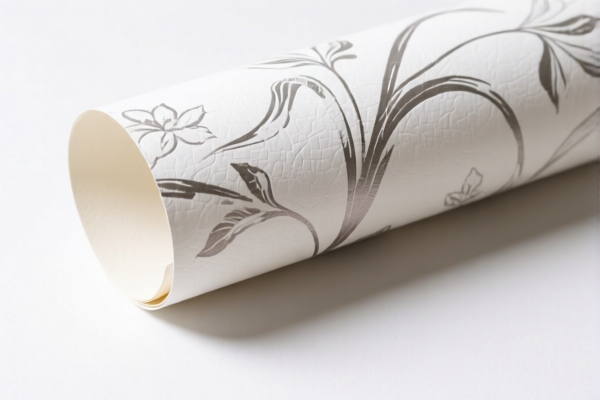
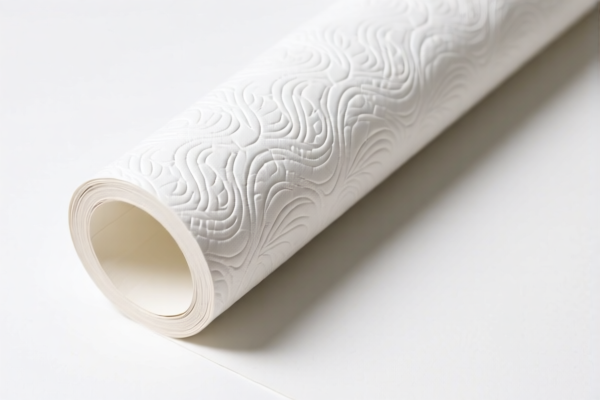
AI Analysis
🏠 Self-Adhesive Furniture Sticker (Wallpaper/Wall Covering)
🌐 HS Code Reference & Customs Clearance Guide | 2026 Latest Tariff Analysis | Strategic Entry Strategies
📌 I. Product Definition & Classification: Do You Really Understand "Furniture Sticker"?
"Self-adhesive Furniture Sticker" is a broad term often used in e-commerce and retail to describe decorative films applied to walls, cabinets, or furniture. However, in international trade and customs classification, material composition and form factor determine the HS Code, not just the usage.
There are two main categories based on the primary material:
- PVC/Plastic Based: Made of polyvinyl chloride (PVC) or other plastic materials, often with a pressure-sensitive adhesive backing. These fall under Chapter 39 (Plastics).
- Paper-Based: Made of paper, paperboard, or similar wall-covering materials, sometimes with a plastic coating, but primarily paper. These fall under Chapter 48 (Paper).
⚠️ Key Distinction Point:
- If the backing/surface is Plastic (PVC), it is classified under 3918 or 3919.
- If the backing/surface is Paper, it is classified under 4814.
- Misclassification Risk: Declaring a PVC sticker as "Paper" to avoid higher tariffs will trigger customs audits, penalties, and delays.
📦 II. HS Code Classification Details (2026 Latest Tariff Authority Mapping)
Below is the precise mapping for "Self-adhesive Furniture Sticker" based on the provided data. Each code corresponds to a specific material and form.
| HS Code | Product Description | Material Type | Key Characteristics |
|---|---|---|---|
| 3918.90.50.00 | Self-adhesive wallpaper, PVC plastic material, wall covering | Plastic (PVC) | General PVC wall coverings, non-specific sub-heading |
| 4814.90.02.00 | Self-adhesive wallpaper, paper or similar wall covering, in self-adhesive form | Paper | Paper-based decorative wall coverings with adhesive backing |
| 3918.10.50.00 | Self-adhesive wallpaper, polyvinyl chloride (PVC) plastic material, wall covering | Plastic (PVC) | Specific PVC wall coverings under heading 3918.10 |
| 3919.90.50.60 | Self-adhesive plastic, in flat shapes, such as wallpaper | Plastic (PVC) | Flat plastic rolls/sheets with adhesive, not specifically for walls but used as such |
| 4814.20.00.00 | Self-adhesive wallpaper, paper or wall covering with plastic coating | Paper (Plastic-Coated) | Paper base with a plastic layer on top, still primarily paper |
🔍 Key Reminder:
- PVC Stickers generally incur higher total tariffs due to the combination of base duty, Section 301 additional duty, and IEEPA additional duty. - Paper Stickers have a lower base duty but still face significant additional duties.
💰 III. 2026 Latest Tariff Rate Breakdown (Including Additional Taxes & Policy Surcharges)
✅ Applicable Country: United States (US)
✅ Origin: China (CN)
✅ Effective Date: As per 2026 trade policies (including Section 301 and IEEPA provisions)
🎯 1. PVC-Based Stickers (HS Codes: 3918.90.50.00, 3918.10.50.00, 3919.90.50.60)
These codes attract the highest tax burden due to the "Section 301" and "IEEPA" surcharges on plastic products from China.
A. Code: 3918.90.50.00 & 3918.10.50.00
| Item | Detail |
|---|---|
| Base Duty | 4.2% |
| Section 301 Additional Duty | 25.0% |
| IEEPA Additional Duty | 10.0% |
| Total Tax Rate | 39.2% |
| Calculation Basis | CIF Value × 39.2% |
| De Minimis Exemption? | ❌ NO (De minimis does not apply to goods subject to Section 301/IEEPA) |
| Legal Path | USITC:3918.90.50.00 → FOOTNOTE:301 → IEEPA:9903.01.10 |
📌 Explanation:
- The 25% Section 301 duty is applied to most plastic goods from China. - The 10% IEEPA duty is an additional tariff on Chinese goods under the International Emergency Economic Powers Act. - Total Effective Rate: 39.2%. This is a significant cost driver for PVC-based decor.
B. Code: 3919.90.50.60 (Plastic Self-Adhesive Tape/Film)
| Item | Detail |
|---|---|
| Base Duty | 5.8% |
| Section 301 Additional Duty | 25.0% |
| IEEPA Additional Duty | 10.0% |
| Total Tax Rate | 40.8% |
| Calculation Basis | CIF Value × 40.8% |
| De Minimis Exemption? | ❌ NO |
| Legal Path | USITC:3919.90.50.60 → FOOTNOTE:301 → IEEPA:9903.01.10 |
📌 Explanation:
- This code is often used for "flat plastic self-adhesive" products. - It has a slightly higher base duty (5.8% vs 4.2%) but the same surcharges, leading to the highest total rate of 40.8%. - Use Caution: Declaring a PVC sticker as "3919" (plastic tape/film) instead of "3918" (wall covering) may be challenged if the product is clearly marketed and used as wallpaper.
🎯 2. Paper-Based Stickers (HS Codes: 4814.90.02.00, 4814.20.00.00)
Paper-based products have a 0% base duty, which reduces the absolute value of the additional taxes, resulting in a lower total rate compared to PVC.
A. Code: 4814.90.02.00
| Item | Detail |
|---|---|
| Base Duty | 0.0% |
| Section 301 Additional Duty | 7.5% |
| IEEPA Additional Duty | 10.0% |
| Total Tax Rate | 17.5% |
| Calculation Basis | CIF Value × 17.5% |
| De Minimis Exemption? | ❌ NO |
| Legal Path | USITC:4814.90.02.00 → FOOTNOTE:301 → IEEPA:9903.01.10 |
📌 Explanation:
- The base duty is 0%, so the 7.5% Section 301 rate applies to a zero base? No, Section 301 rates are ad valorem percentages of the value. The 7.5% is the specific additional duty rate for this sub-heading. - Total Effective Rate: 17.5%. This is significantly lower than the ~40% for PVC.
B. Code: 4814.20.00.00
| Item | Detail |
|---|---|
| Base Duty | 0.0% |
| Section 301 Additional Duty | 7.5% |
| IEEPA Additional Duty | 10.0% |
| Total Tax Rate | 17.5% |
| Calculation Basis | CIF Value × 17.5% |
| De Minimis Exemption? | ❌ NO |
| Legal Path | USITC:4814.20.00.00 → FOOTNOTE:301 → IEEPA:9903.01.10 |
📌 Explanation:
- This code covers paper wall coverings with plastic coatings. - Total Effective Rate: 17.5%. - Strategic Note: If your product is "PVC-based" but you declare it as "Paper with plastic coating," you risk misclassification. Ensure the primary material is indeed paper.
🛠️ IV. Customs Clearance Practical Advice (Avoiding Pitfalls)
✅ 1. Documentation Checklist (Mandatory)
| Document | Required | Notes |
|---|---|---|
| ✅ Product Specification Sheet | ✔️ | Must clearly state Material (e.g., "100% PVC" or "Paper Base with PVC Coating") |
| ✅ Product Photos | ✔️ | Show texture, backing, and packaging. Labels should match the declared HS Code. |
| ✅ Commercial Invoice | ✔️ | Description must match HS Code: e.g., "PVC Self-Adhesive Wall Decal" vs. "Paper Wallpaper Sticker" |
| ✅ Packing List | ✔️ | Include weight, dimensions, and quantity |
| ✅ Certificate of Origin | ✔️ | Required for duty verification |
| ✅ FCC/CE/RoHS Reports | ✔️ | If applicable, though less critical for decor items, still good practice |
✅ 2. Declaration Tips (Key Rules)
🔥 "Material is King, Usage is Secondary!"
| Scenario | Correct HS Code | Common Mistake | Consequence |
|---|---|---|---|
| PVC Sticker | 3918.90.50.00 or 3918.10.50.00 |
Declaring as 4814 (Paper) |
Heavy Penalty for misclassification + Back Taxes |
| Paper Sticker | 4814.90.02.00 or 4814.20.00.00 |
Declaring as 3918 (Plastic) |
Overpayment of duties (17.5% vs 39.2%) |
| Mixed Material | Analyze primary material | Vague description "Sticker" | Customs Delay for further inspection |
✅ 3. Special Considerations
| Situation | Advice |
|---|---|
| Is it "Furniture" or "Wall" Covering? | If it’s for walls, use 3918 or 4814. If it’s strictly for furniture (like drawer liner), it might still fall under 3919, but 3918 is more common for large rolls. |
| Sample vs. Commercial | Even samples are subject to duty if they are commercial samples. Do not use "Gift" or "Sample" to avoid duties. |
| De Minimis (Section 321) | ❌ Not Applicable. Goods from China subject to Section 301/IEEPA are excluded from the $800 de minimis exemption. |
🌍 V. Global Market Comparison (2026)
| Market | Recommended HS Code | Estimated Total Duty (China Origin) | Notes |
|---|---|---|---|
| 🇺🇸 USA | 3918.90.50.00 (PVC) / 4814.90.02.00 (Paper) |
39.2% (PVC) / 17.5% (Paper) | Highest Barrier: Section 301 + IEEPA apply. |
| 🇨🇳 China | 3918.90.50.00 / 4814.90.02.00 |
~10-15% | Import duties apply, but no Section 301. |
| 🇪🇺 EU | 3918.90.90 / 4814.90.90 |
~6-7% | No Section 301 equivalent, but VAT applies. |
| 🇬🇧 UK | 3918.90.90 / 4814.90.90 |
~6-7% | Post-Brexit tariffs, no additional China tariffs. |
| 🇨🇦 Canada | 3918.90.90 / 4814.90.90 |
~6-12% | No Section 301, but CUSMA benefits if from Mexico/USA. |
📌 Conclusion:
- The US market is the most expensive due to political tariffs. - Paper-based stickers (17.5%) are significantly more cost-effective than PVC-based stickers (39.2%-40.8%). - If you are selling to the US, optimize your material choice or supply chain (e.g., third-country assembly) to mitigate duty risks.
📌 VI. Common Errors & Pitfalls (Lessons Learned)
❌ Error 1: Using "Self-Adhesive Tape" description for a Wallpaper Sticker
👉 Result: May be misclassified under 3919 (40.8%) instead of 3918 (39.2%) or vice versa. Ensure description matches the use.
❌ Error 2: Claiming "Paper" for a PVC Sticker
👉 Result: Customs will inspect and reclassify as Plastic, leading to back taxes of ~22% plus penalties.
❌ Error 3: Assuming De Minimis Applies
👉 Result: Small shipments of Chinese PVC stickers are NOT exempt from duties. You must pay duty even on small orders.
❌ Error 4: Ignoring IEEPA 10%
👉 Result: Many importers forget the additional 10% IEEPA duty, leading to underpayment.
✅ Correct Approach:
"Self-Adhesive PVC Wallpaper Roll, 50cm x 5m, Material: Polyvinyl Chloride, Origin: China" → HS Code: 3918.90.50.00
"Self-Adhesive Paper Wallpaper Roll, 50cm x 5m, Material: Paper with Acrylic Adhesive, Origin: China" → HS Code: 4814.90.02.00
🎯 VII. Conclusion: Professional Declaration, Cost Savings!
🎯 Remember the Rule of Thumb:
🔹 "PVC = ~40% Tax, Paper = ~17.5% Tax"
🔹 "No De Minimis for China Goods under 301/IEEPA"
🔹 "Declare Material Accurately to Avoid Audits"
📌 Pro Tip:
If you are a large importer, consider applying for an Advance Ruling (CBP Ruling) from U.S. Customs and Border Protection to confirm your HS Code classification before shipping. This provides legal certainty and protects against future audits.
📣 Immediate Action:
📞 Verify your product’s primary material (PVC vs. Paper).
📄 Choose the correct HS Code from the table above.
🚀 Plan your duty cost into your pricing strategy (39.2% vs 17.5% is a huge margin difference!).
✨ Professional Customs Clearance Starts with Accurate Classification!
💼 Every Percent of Duty Saved is Pure Profit!
Customer Reviews
About HS Code Classification
The Harmonized System (HS) is an internationally standardized nomenclature developed by the World Customs Organization (WCO) to classify traded products. Over 200 countries use the HS system as the basis for customs tariffs, trade statistics, and import/export regulations.
Each HS code follows a hierarchical structure:
- Chapter (2 digits) — Broad category of goods (e.g., Chapter 84: Machinery and Mechanical Appliances)
- Heading (4 digits) — More specific grouping within the chapter
- Subheading (6 digits) — Internationally standardized breakdown, used by all WCO member countries
- National subdivisions (8-10 digits) — Country-specific extensions for further classification, such as US HTSUS 10-digit codes
Correct HS code classification is essential for smooth customs clearance, accurate duty payment, and compliance with trade regulations. Misclassification can lead to customs delays, overpayment of duties, or penalties.
When importing from CN to US, the applicable tariff rates may include:
- Most-Favored-Nation (MFN) rate — The standard duty rate applied to WTO members
- General rate — Applied to countries without trade agreements
- Trade remedy duties — Additional tariffs such as Section 301 (anti-dumping), Section 232 (national security), or countervailing duties
The information provided on this page is for reference purposes only. For official classification, please consult with your local customs authority or a licensed customs broker.