Self adhesive Hook
CN → US| HS Code | Tariff Rate | Origin | Destination | Doc |
|---|---|---|---|---|
| 8302419080 | 38.5% | CN | US | Official Doc |
| 8302416080 | 88.9% | CN | US | Official Doc |
| 3926908500 | 24.0% | CN | US | Official Doc |
| 3926909989 | 22.8% | CN | US | Official Doc |
| 7326908688 | 87.9% | CN | US | Official Doc |
Product Images
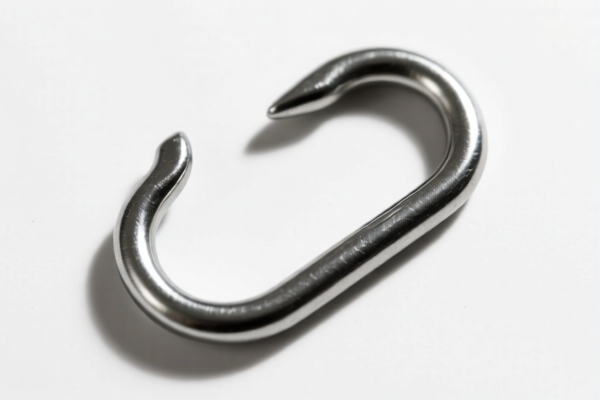
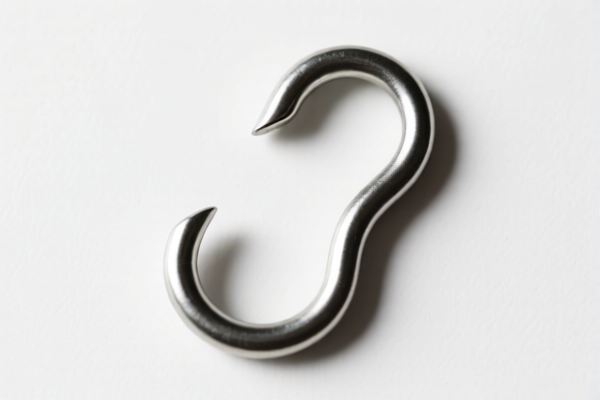


AI Analysis
🪝 Self-Adhesive Hook (Wall-Mounting Fasteners)
🌐 HS Code Reference & Customs Clearance Guide | 2026 Latest Tariff Analysis | Professional通关 Strategy
📌 I. Product Definition & Classification: What Exactly Is a "Self-Adhesive Hook"?
Self-adhesive hooks are non-permanent or semi-permanent fastening devices used in household, office, or light industrial settings. They rely on pressure-sensitive adhesive tapes (usually acrylic-based) bonded to a hook body made of plastic, metal, or composite materials.
In international trade, they are categorized not just by material, but by function and form. The key to accurate classification lies in distinguishing whether the item is a "plastic article of Chapter 39" or a "base metal fitting of Chapter 83."
⚠️ Critical Distinction Points:
- If the hook is made of plastic and serves a general fastening purpose (not specifically for doors/gates), it may fall under Chapter 39.
- If the hook is made of iron/steel or functions as a specific mounting accessory for buildings or furniture, it often falls under Chapter 83 or 73.
- Warning: Misclassification can lead to massive tariff discrepancies (e.g., 24% vs. 88.9%).
📦 II. HS Code Classification Details (2026 Latest Tariff Reference)
Based on the provided data, here are the five potential HS Codes and the logic behind each:
| HS Code | Product Description & Logic | Material/Form | Tax Rate |
|---|---|---|---|
3926.90.85.00 |
Plastic Fasteners: Clamps/Hanging fasteners used for mechanical/home fixation. | Plastic, Clip/Hanging form | 24.0% |
3926.90.99.89 |
Other Plastic Articles: Plastic items not specified elsewhere. | Plastic, General "Other" | 22.8% |
7326.90.86.88 |
Iron/Steel Articles: Non-specific iron/steel products (e.g., metal hooks with adhesive). | Iron/Steel, General Article | 87.9% |
8302.41.90.80 |
Metal/Plastic Fittings: Hooks/brackets considered as "other accessories" (fallback category). | Metal/Plastic, Hook/Bracket | 38.5% |
8302.41.60.80 |
Building/Home Mounting Accessories: Mounting fittings for buildings or homes. | Metal, Mounting Accessory | 88.9% |
🔍 Key Insight:
- Plastic hooks are significantly cheaper in tariffs (~23-24%) compared to Metal/Iron hooks (~88%).
- The difference between8302.41.90.80and8302.41.60.80lies in the specific intended use (general accessory vs. building/home mounting).
💰 III. 2026 Latest Tariff Rate Breakdown (Including Additional Duties)
✅ Applicable Country: United States (US)
✅ Origin: China (CN)
✅ Effective Date: Ongoing (as per current IEEPA/Section 301 policies)
🎯 1. 3926.90.85.00 — Plastic Clip/Hanging Fasteners
| Item | Detail |
|---|---|
| Base Tariff | 6.5% |
| Section 301 Additional | 7.5% |
| Section 122 Additional | 10.0% |
| Total Tax Rate | 24.0% |
| Calculation | CIF Value × 24% |
| De Minimis Eligibility | ❌ No (Generally subject to full scrutiny for plastics) |
📌 Explanation:
- This is the most cost-effective option for plastic self-adhesive hooks.
- "Section 122" refers to specific U.S. trade enforcement actions (often related to specific product lines or anti-dumping duties, here noted as 10%).
- Recommendation: If your product is purely plastic, strive to classify here.
🎯 2. 3926.90.99.89 — Other Plastic Articles
| Item | Detail |
|---|---|
| Base Tariff | 5.3% |
| Section 301 Additional | 7.5% |
| Section 122 Additional | 10.0% |
| Total Tax Rate | 22.8% |
| Calculation | CIF Value × 22.8% |
| De Minimis Eligibility | ❌ No |
📌 Note:
- Slightly lower base tariff (5.3%) than3926.90.85.00(6.5%), but same additional duties.
- Use this if the hook is a generic plastic item not specifically described as a "clip" or "hanging fastener."
🎯 3. 7326.90.86.88 — Iron/Steel Non-Specific Articles
| Item | Detail |
|---|---|
| Base Tariff | 2.9% |
| Section 301 Additional | 25.0% |
| Section 122 Additional | 10.0% |
| Steel/Aluminum/Copper Add-on | +50% |
| Total Tax Rate | 87.9% |
| Calculation | CIF Value × 87.9% |
| De Minimis Eligibility | ❌ No |
📌 Explanation:
- Extremely High Tariff!
- The 50% additional duty on steel/aluminum/copper products under Section 122 (or similar specific trade measures) is the key driver.
- Avoid if your hook is metal. If it’s a plastic hook with a tiny metal pin, ensure the plastic component defines the essential character to stay in Chapter 39.
🎯 4. 8302.41.90.80 — Metal/Plastic Hooks (General Accessory)
| Item | Detail |
|---|---|
| Base Tariff | 3.5% |
| Section 301 Additional | 25.0% |
| Section 122 Additional | 10.0% |
| Total Tax Rate | 38.5% |
| Calculation | CIF Value × 38.5% |
| De Minimis Eligibility | ❌ No |
📌 Explanation:
- This is a "fallback" category for hooks that don’t fit specific door/gate hardware definitions.
- Lower than steel hooks but higher than plastic.
- Use only if the product is metal-based and not intended for building mounting.
🎯 5. 8302.41.60.80 — Building/Home Mounting Accessories
| Item | Detail |
|---|---|
| Base Tariff | 3.9% |
| Section 301 Additional | 25.0% |
| Section 122 Additional | 10.0% |
| Steel/Aluminum/Copper Add-on | +50% |
| Total Tax Rate | 88.9% |
| Calculation | CIF Value × 88.9% |
| De Minimis Eligibility | ❌ No |
📌 Explanation:
- Highest Risk Category.
- If customs determines your metal hook is a "mounting accessory for buildings/homes" AND is made of steel, the 50% surcharge applies, pushing the rate to 88.9%.
- Critical: Ensure documentation clearly states it is for household/light-duty use, not structural building mounting.
🛠️ IV. Customs Clearance Practical Advice (Avoiding Pitfalls)
✅ 1. Preparation Checklist (Essential Documents)
| Document | Required? | Notes |
|---|---|---|
| ✅ Product Specifications | ✔️ | Must state material (e.g., "PP Plastic," "ABS Plastic"). |
| ✅ Photos (Clear & Detailed) | ✔️ | Show adhesive backing, hook shape, and any metal parts. |
| ✅ Commercial Invoice | ✔️ | Clearly describe as "Plastic Self-Adhesive Hook for Household Use." |
| ✅ Packing List | ✔️ | Confirm quantity and weight. |
| ✅ Material Declaration | ✔️ | Explicitly state "% Plastic vs. % Metal" to justify Chapter 39. |
✅ 2. Classification Strategy (Key Tips)
🔥 "Plastic First, Metal Second, Avoid 'Building' Label!"
| Scenario | Recommended HS Code | Tax Rate | Why? |
|---|---|---|---|
| 100% Plastic Hook | 3926.90.85.00 |
24.0% | Lowest risk, lowest rate for plastic. |
| Plastic with Small Metal Pin | 3926.90.85.00 |
24.0% | Plastic gives "essential character" if >50% by weight/value. |
| 100% Metal Hook (Household) | 8302.41.90.80 |
38.5% | Avoid 8302.41.60.80 to prevent +50% surcharge. |
| Metal Hook for Heavy Duty | 7326.90.86.88 or 8302.41.60.80 |
87-89% | High Risk. Avoid if possible. |
✅ 3. Special Handling
| Situation | Advice |
|---|---|
| Mixed Materials | If the hook is 90% plastic and 10% metal adhesive, argue under Chapter 39 (Plastic). Provide weight ratios. |
| "Adhesive" Claim | Ensure the adhesive is standard pressure-sensitive tape. If it’s a chemical bond or epoxy, it might still be plastic, but clarify. |
| Labeling | Use terms like "Decorative Hook," "Wall Organizer," or "Light-Duty Fastener." Avoid "Structural Mount," "Construction Hardware," or "Building Accessory." |
| Origin | If not made in China, you may avoid Section 301 and IEEPA duties. Check origin certificates. |
🌍 V. Global Market Comparison (2026 Update)
| Market | Recommended HS Code | Est. Tariff (CN Origin) | Key Requirement |
|---|---|---|---|
| 🇺🇸 USA | 3926.90.85.00 |
24.0% (Plastic) | Must prove plastic composition. |
| 🇪🇺 EU | 3926.90.90 | ~6-7% | CE marking, REACH compliance. |
| 🇨🇳 China | 3926.90.90 | ~5% | CCC (if electrical, not applicable here). |
| 🇬🇧 UK | 3926.90.90 | ~6% | UKCA marking (post-Brexit). |
| 🇯🇵 Japan | 3926.90.90 | ~6-8% | No special duties. |
📌 Conclusion:
- The U.S. is the most complex market due to additional Section 301 and Section 122 duties.
- Plastic hooks are vastly preferable to metal hooks for cost control.
- Avoid "Building/Construction" keywords in descriptions to prevent higher-tier classification.
📌 VI. Common Mistakes & Pitfalls (Lessons Learned)
❌ Mistake 1: Classifying a plastic hook as metal (8302.41.90.80) out of habit.
👉 Result: Tax jumps from 24% to 38.5%. Unnecessary loss of profit.
❌ Mistake 2: Describing a household hook as "Building Mounting Accessory" (8302.41.60.80).
👉 Result: Tax jumps to 88.9% due to the 50% steel surcharge. Catastrophic.
❌ Mistake 3: Ignoring the Section 122 10% duty in calculations.
👉 Result: Underpricing imports, leading to cash flow issues. Always include all 3 components (Base + 301 + 122).
✅ Correct Approach:
"ABS Plastic Self-Adhesive Hook, Household Use, No Structural Function."
🎯 VII. Conclusion: Smart Classification, Maximum Profit
🎯 Remember the Rule:
🔹 "Plastic = 24%, Metal = 38-89%!"
🔹 "Avoid 'Building,' 'Structural,' 'Heavy-Duty' Words!"
🔹 "Prove Material Composition with Photos and Specs!"
📌 Pro Tip:
If your hooks are 100% plastic, submit a Pre-Classification Request with clear photos showing no metal content. This can lock in the 24% rate and prevent customs challenges.
📣 Immediate Action:
📞 Audit your current HS Code declarations.
🚀 If using8302codes for plastic hooks, change them immediately to save ~14.5% in duties.
💼 Your profit margin depends on accurate classification!
✨ Professional Customs Clearance Starts with Precision!
💼 Every Percent Saved is Pure Profit!
Customer Reviews
About HS Code Classification
The Harmonized System (HS) is an internationally standardized nomenclature developed by the World Customs Organization (WCO) to classify traded products. Over 200 countries use the HS system as the basis for customs tariffs, trade statistics, and import/export regulations.
Each HS code follows a hierarchical structure:
- Chapter (2 digits) — Broad category of goods (e.g., Chapter 84: Machinery and Mechanical Appliances)
- Heading (4 digits) — More specific grouping within the chapter
- Subheading (6 digits) — Internationally standardized breakdown, used by all WCO member countries
- National subdivisions (8-10 digits) — Country-specific extensions for further classification, such as US HTSUS 10-digit codes
Correct HS code classification is essential for smooth customs clearance, accurate duty payment, and compliance with trade regulations. Misclassification can lead to customs delays, overpayment of duties, or penalties.
When importing from CN to US, the applicable tariff rates may include:
- Most-Favored-Nation (MFN) rate — The standard duty rate applied to WTO members
- General rate — Applied to countries without trade agreements
- Trade remedy duties — Additional tariffs such as Section 301 (anti-dumping), Section 232 (national security), or countervailing duties
The information provided on this page is for reference purposes only. For official classification, please consult with your local customs authority or a licensed customs broker.