Self adhesive PVC Mold and Bacteria Resistant Wall Film
CN → US| HS Code | Tariff Rate | Origin | Destination | Doc |
|---|---|---|---|---|
| 4814200000 | 17.5% | CN | US | Official Doc |
| 3919905060 | 40.8% | CN | US | Official Doc |
| 3919102055 | 40.8% | CN | US | Official Doc |
| 4814900200 | 17.5% | CN | US | Official Doc |
| 3926909989 | 22.8% | CN | US | Official Doc |
Product Images
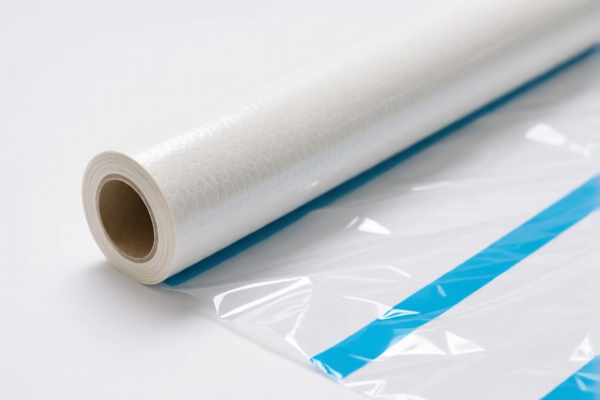
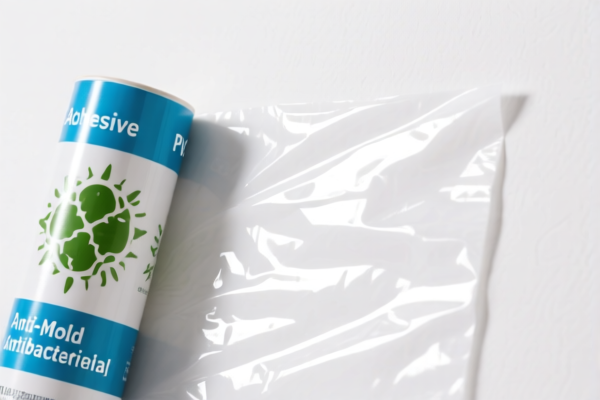
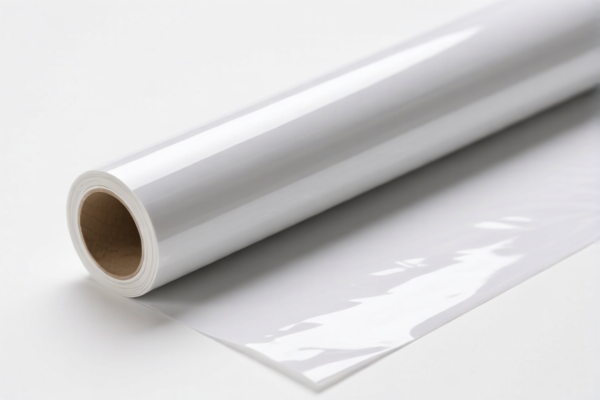
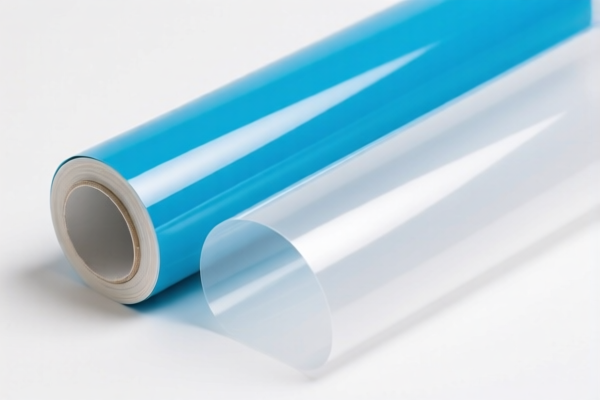
AI Analysis
🧱 Self-Adhesive PVC Mold & Bacteria Resistant Wall Film
🌐 HS Code Reference & Customs Clearance Guide | 2026 Latest Tariff Analysis | Professional Clearance Strategy
📌 I. Product Definition & Classification: What Exactly Is "Wall Film"?
Self-adhesive PVC wall film is a decorative material used primarily for interior wall coverage. It combines the durability of Polyvinyl Chloride (PVC) with adhesive properties, offering a modern alternative to traditional wallpaper.
In international trade, this product sits at the crossroads of Plastics (Chapter 39) and Paper/Paper Products (Chapter 48). The classification depends heavily on: 1. Material Composition: Is it primarily plastic-coated or paper-based with plastic layering? 2. Form Factor: Is it a self-adhesive strip/tape or a roll of wallpaper? 3. Function: Is it strictly decorative (wall covering) or a general-purpose plastic film?
⚠️ Key Distinction Point:
- If the base is paper/board with a PVC coating → Look at Chapter 48 (Wallpaper/Wall Coverings).
- If the base is pure plastic (self-adhesive sheet/film) → Look at Chapter 39 (Plastics/Self-adhesive tapes).
- "Mold & Bacteria Resistant" is a performance feature, not a classification determinant. It does not change the HS code but must be declared in the description to avoid customs queries regarding sanitary claims.
📦 II. HS Code Classification Details (2026 Latest Tariff Authority Comparison)
Based on the provided data, here are the five most likely HS Codes for clearance, along with their logic and tax implications.
| HS Code | Product Description | Matching Logic | Total Tax Rate (US) |
|---|---|---|---|
4814.20.00.00 |
Wallpaper & similar wall coverings, of paper, coated on one side with plastics | Best Fit for Paper-Base: 'PVC' matches "coated with plastic layer"; 'Wall Sticker' fits "wall decor"; 'Self-adhesive' fits decorative paper/film characteristics. | 17.5% |
4814.90.02.00 |
Other wallpaper & similar wall coverings of paper or paperboard, other than those of heading 4813 | Alternative Paper-Base: 'PVC' (plastic/paper extension); 'Wall Sticker' fits "wall coverings"; categorized under "Other" for materials/uses not specified elsewhere. | 17.5% |
3919.90.50.60 |
Self-adhesive plates, sheets, film, foil, tape, strip & other flat shapes, of plastics, not elsewhere specified | Best Fit for Plastic-Base: 'Self-adhesive' matches "Self-adhesive"; 'PVC' matches "plastics"; 'Wall Sticker' fits "flat shapes/stickers". | 40.8% |
3919.10.20.55 |
Self-adhesive plates, sheets, film, etc., of plastics, whether or not in rolls | Plastic Film/Sticker: Material is PVC (plastic); Form is wall sticker (flat self-adhesive product); fits characteristics of plastic self-adhesive films/strips without material conflict. | 40.8% |
3926.90.99.89 |
Other articles of plastics & articles of other materials of headings 3901-3914, not elsewhere specified | Generic Plastic Article: Material PVC (plastic); Form is wall sticker (other application of plastic); fits "Other articles of plastics" classification logic. | 22.8% |
🔍 Critical Observation:
- Chapter 48 Codes (4814.20.00.00,4814.90.02.00) carry a significantly lower tax burden (17.5%).
- Chapter 39 Codes (3919...) carry a high tax burden (40.8%) due to USITC 301 tariffs.
- Strategy: If the product has a paper backing, argue for Chapter 48. If it is a pure PVC sheet, Chapter 39 is unavoidable unless a generic plastic article code is accepted (though3926is riskier for customs scrutiny).
💰 III. 2026 Latest Tariff Rate Breakdown (Including Surtaxes & Policy Surcharges)
✅ Applicable Country: United States (US)
✅ Origin: China (CN)
✅ Effective Date: From November 10, 2025 (including subsequent imports)
🎯 1. Group A: Chapter 48 – Wallpaper & Wall Coverings (Low Tariff Strategy)
HS Code: 4814.20.00.00 & 4814.90.02.00
| Item | Content |
|---|---|
| Base Tariff | 0.0% (Ad valorem) |
| USITC Surtax | +7.5% (Section 301 / Additional Tariff) |
| IEEPA Surtax | +10% (Against China/HK products, effective from Nov 10, 2025) |
| Total Tax Rate | 17.5% |
| Tax Calculation | CIF Value × 17.5% |
| De Minimis Eligibility | ❌ No (deny_de_minimis) |
| Legal Basis Path | IEEPA:9903.01.25 → USITC:4814.20.00.00 → FOOTNOTE:Section 301 |
📌 Explanation:
- These codes are classified as "Wallpaper" or "Wall Coverings."
- The base rate is low (0-10% depending on specific sub-heading interpretation, but data shows 0% base here).
- However, Section 301 tariffs (7.5%) and IEEPA tariffs (10%) still apply, bringing the total to 17.5%.
- Advantage: This is 23.3% lower than the pure plastic classification!
🎯 2. Group B: Chapter 39 – Plastics & Self-Adhesive Films (High Tariff Risk)
HS Code: 3919.90.50.60 & 3919.10.20.55
| Item | Content |
|---|---|
| Base Tariff | 5.8% (Ad valorem) |
| USITC Surtax | +25.0% (Section 301 / Additional Tariff) |
| IEEPA Surtax | +10% (Against China/HK products) |
| Total Tax Rate | 40.8% |
| Tax Calculation | CIF Value × 40.8% |
| De Minimis Eligibility | ❌ No (deny_de_minimis) |
| Legal Basis Path | IEEPA:9903.01.25 → IEEPA:9903.01.24 → USITC:3919.xx.xx → FOOTNOTE:Section 301 |
📌 Note:
- These codes are classified as "Self-adhesive plastic plates/sheets/films."
- The base tariff is higher (5.8%).
- The 25% Section 301 tariff is the critical driver here.
- Disadvantage: High cost impact. Only use if the product cannot be legally argued as "wallpaper" (e.g., it's a thin plastic sheet without paper backing).
🎯 3. Group C: Chapter 39 – Other Plastic Articles (Mid-Tier Risk)
HS Code: 3926.90.99.89
| Item | Content |
|---|---|
| Base Tariff | 5.3% (Ad valorem) |
| USITC Surtax | +7.5% (Section 301 / Additional Tariff) |
| IEEPA Surtax | +10% (Against China/HK products) |
| Total Tax Rate | 22.8% |
| Tax Calculation | CIF Value × 22.8% |
| De Minimis Eligibility | ❌ No (deny_de_minimis) |
| Legal Basis Path | IEEPA:9903.01.25 → USITC:3926.90.99.89 |
📌 Caution:
- This code is for "Other articles of plastics."
- While the rate (22.8%) is lower than3919, customs may reject this if the product clearly fits3919(self-adhesive films). Misclassification risks penalties.
- Use only if the product is a rigid plastic wall panel, not a flexible film.
🛠️ IV. Customs Clearance Practical Advice (Battle-Tested Pitfall Guide)
✅ 1. Required Documentation Checklist (Non-Negotiable)
| Document | Mandatory? | Description |
|---|---|---|
| ✅ Product Specification Sheet | ✔️ | Must detail: Material composition (e.g., "Paper base with PVC coating" vs. "Pure PVC"), thickness, dimensions. |
| ✅ Product Photos | ✔️ | Clear images showing the adhesive side, texture, and packaging. Must show if it rolls or sheets. |
| ✅ Commercial Invoice | ✔️ | Description must explicitly state: "Self-Adhesive PVC Wall Film for Interior Decoration, Mold Resistant." Avoid vague terms like "Plastic Sheet." |
| ✅ Packing List | ✔️ | Net/Gross weight, dimensions, number of rolls/sheets. |
| ✅ Material Safety Data Sheet (MSDS) | ✔️ | To prove "Mold & Bacteria Resistant" claims are based on chemical treatment, not false advertising. |
| ✅ Origin Certificate | ❌ (Optional) | If shipped from China, origin is CN. If transshipped, prove substantial transformation to avoid China origin rules. |
✅ 2. Declaration Tips (Key Mantras)
🔥 "Define the Base, Not Just the Coat!"
| Scenario | Correct Declaration | Wrong Action | Consequence |
|---|---|---|---|
| Paper Backing + PVC Coating | Declare as Wallpaper (4814.20.00.00). Emphasize "Paper-based." |
Declare as "Plastic Film" → Pay 40.8% tax! | Overpayment |
| Pure PVC Sheet (No Paper) | Declare as Self-Adhesive Plastic (3919.90.50.60). |
Declare as "Wallpaper" → Customs rejection/penalty. | Customs Query/Rejection |
| "Mold Resistant" Claim | Include in description: "Treated with antimicrobial agents." | Omit or overstate ("100% Immune to Mold"). | FDA/Customs Flag for Unapproved Medical/Sanitary Claims |
| Rolls vs. Sheets | Specify: "Rolls, 50m x 0.5m" | Vague: "Wall Stickers." | Valuation Disputes |
✅ 3. Special Case Handling
| Situation | Recommendation |
|---|---|
| Hybrid Material (Paper + Plastic) | Argue for Chapter 48. The essential character is the wall covering function, and paper is the base. Cite GRI 3(b) if needed. |
| Thick PVC Wall Panels (Rigid) | If rigid, consider 3926.90.99.89 or even 3920.99.00 (other plastic sheets), but ensure it’s not "wallpaper." |
| Small Samples via Courier | Still subject to IEEPA 10% and USITC tariffs. De Minimis ($800) does NOT apply to China-origin goods under current IEEPA rules. |
| Antimicrobial Certification | Provide lab test results. US Customs does not verify efficacy, but CBP may hold goods if claims look like "drug" claims (which require FDA). Stick to "decorative/decorative film with anti-microbial treatment." |
🌍 V. Global Market Comparison (2026 Update)
| Country/Region | Recommended HS Code | Tax Rate | Certification Req. | Notes |
|---|---|---|---|---|
| 🇺🇸 USA | 4814.20.00.00 (if paper-based) |
17.5% | FCC (if electronic?), RoHS (if electronic?) | Highest risk for misclassification. Use Chapter 48 if possible. |
| 🇨🇳 China | 4814.20.00.00 |
0% - 10% | CCC (if electrical), GB Standards | Lower tax burden for import into China. |
| 🇪🇺 EU | 4814.20.00.00 or 3919.10.00 |
0% - 6.5% | CE, REACH | No Section 301-style tariffs. Easier clearance. |
| 🇬🇧 UK | 4814.20.00.00 |
0% - 6.5% | UKCA, UK REACH | Post-Brexit rules align with EU but require local compliance. |
📌 Conclusion:
- USA is the most challenging market due to Section 301 and IEEPA tariffs.
- Chapter 48 is the optimal target for cost savings (17.5% vs. 40.8%).
- Ensure your product description highlights the wallcovering nature and base material.
📌 VI. Common Errors & Pitfalls (Lessons Learned)
❌ Error 1: Calling it "Plastic Wall Sticker" and using 3919 code.
👉 Result: You pay 40.8% tax. If it has a paper backing, you could have paid 17.5%.
💡 Fix: Check the backing. If paper, use 4814.
❌ Error 2: Ignoring the "Mold Resistant" claim.
👉 Result: CBP may detain goods for potential "misbranded" or "unapproved medical device" status.
💡 Fix: Clearly state "Decorative Film" in the description. Add "Antimicrobial Treatment" only if supported by data.
❌ Error 3: Assuming De Minimis ($800) applies.
👉 Result: Packages from China are excluded from de minimis under IEEPA. Even small packages are taxed.
💡 Fix: Plan for tax payments on all shipments from China.
🎯 VII. Conclusion: Professional Declaration, Save Costs, Smooth Clearance!
🎯 Remember the Mantra:
🔹 "Paper Base = Wallpaper (17.5%); Pure Plastic = Tape/Film (40.8%)."
🔹 "Define the Backbone, Not the Coat."
🔹 "No De Minimis for China – Pay Up or Pre-Declare."
📌 Pro Tip:
If your product is 100% PVC (no paper), you cannot escape the 40.8% tax rate under 3919. However, if it is a composite material, consult a customs broker to argue for the Chapter 48 classification under GRI 3(b) (essential character), potentially saving 23.3% in taxes.
📣 Immediate Action:
📞 Contact a Licensed Customs Broker + Provide Material Composition Details + Request HS Code Advance Ruling (if high volume).
🚀 Ensure Smooth Clearance, Maximize Profit, and Avoid Customs Delays!
✨ Professional Clearance Starts with Accurate Classification!
💼 Every Percent Saved in Tariffs Is Pure Profit!
Customer Reviews
About HS Code Classification
The Harmonized System (HS) is an internationally standardized nomenclature developed by the World Customs Organization (WCO) to classify traded products. Over 200 countries use the HS system as the basis for customs tariffs, trade statistics, and import/export regulations.
Each HS code follows a hierarchical structure:
- Chapter (2 digits) — Broad category of goods (e.g., Chapter 84: Machinery and Mechanical Appliances)
- Heading (4 digits) — More specific grouping within the chapter
- Subheading (6 digits) — Internationally standardized breakdown, used by all WCO member countries
- National subdivisions (8-10 digits) — Country-specific extensions for further classification, such as US HTSUS 10-digit codes
Correct HS code classification is essential for smooth customs clearance, accurate duty payment, and compliance with trade regulations. Misclassification can lead to customs delays, overpayment of duties, or penalties.
When importing from CN to US, the applicable tariff rates may include:
- Most-Favored-Nation (MFN) rate — The standard duty rate applied to WTO members
- General rate — Applied to countries without trade agreements
- Trade remedy duties — Additional tariffs such as Section 301 (anti-dumping), Section 232 (national security), or countervailing duties
The information provided on this page is for reference purposes only. For official classification, please consult with your local customs authority or a licensed customs broker.