Self adhesive Plastic Advertising Film Roll
CN → US| HS Code | Tariff Rate | Origin | Destination | Doc |
|---|---|---|---|---|
| 3919102055 | 40.8% | CN | US | Official Doc |
| 3919102010 | 40.8% | CN | US | Official Doc |
| 3919905060 | 40.8% | CN | US | Official Doc |
| 3919102055 | 40.8% | CN | US | Official Doc |
| 3919102055 | 40.8% | CN | US | Official Doc |
Product Images
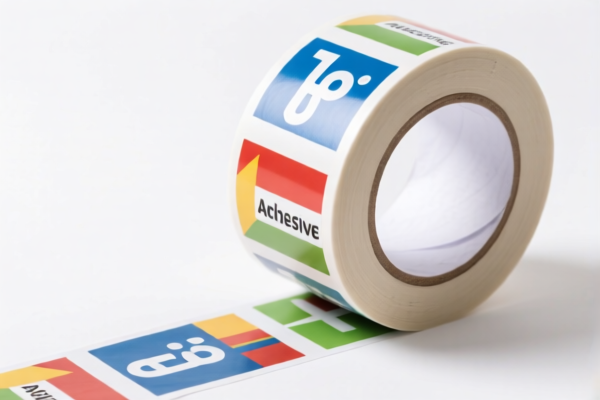
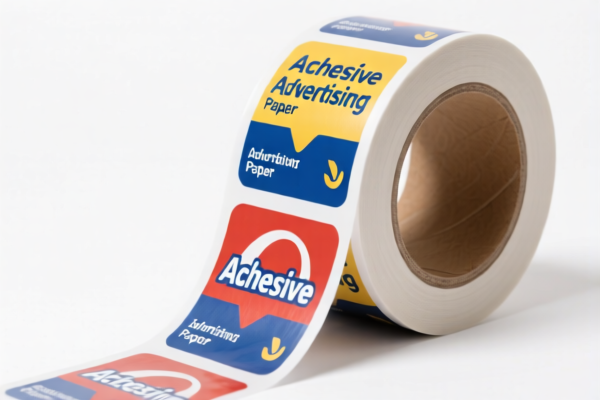
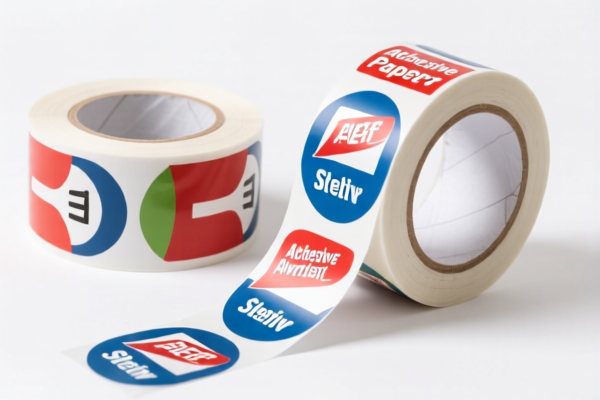
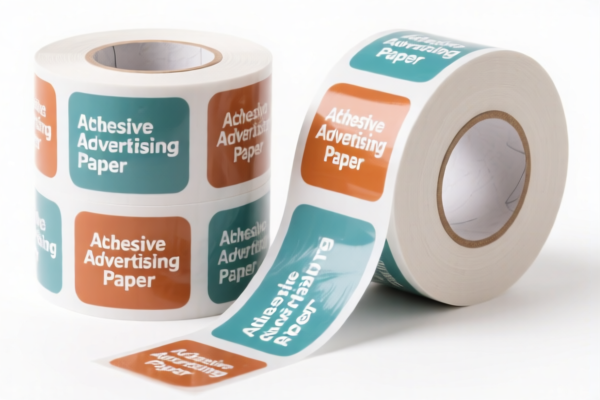
AI Analysis
🎨 Self-Adhesive Plastic Advertising Film Roll
🌐 HS Code Reference & Customs Clearance Guide | 2026 Latest Tariff Analysis | Professional Entry Strategy
📌 I. Product Definition & Classification: What Exactly Is This?
Self-adhesive plastic advertising film rolls are versatile synthetic materials used for signage, vehicle wraps, window graphics, and promotional displays. In international trade, their classification hinges on material composition (plastic), form (rolls), and application (adhesive/self-adhesive).
Key distinctions often arise between: * Strictly Advertising Use: Films specifically marketed for print advertising, billboards, or brand visibility. * Protective/Appliance Use: Films used for protecting home appliances or general surfaces, even if they have adhesive properties. * General Self-Adhesive Plastic Sheet: Unspecified uses, falling into broader "other" categories.
⚠️ Critical Distinction Point:
- If the film is explicitly for advertising and meets width specifications → Classified under 3919.10 (Specific advertising codes).
- If the film is for general self-adhesive use or appliance protection without specific advertising designation → May fall under 3919.90 or other subcategories within 3919.10.
- Width Matters: Some subcodes specify width limits (e.g., ≤20cm). Ensure your product dimensions match the declared code to avoid discrepancies.
📦 II. HS Code Classification Details (2026 Latest Tariff Authority对照)
| HS Code | Product Description | Application Scenario | Width/Format Constraint | Tax Rate (Total) |
|---|---|---|---|---|
3919.10.20.55 |
Self-adhesive plastic advertising film roll | Advertising use, self-adhesive plastic film rolls | No specific width conflict mentioned in summary | 40.8% |
3919.10.20.10 |
Self-adhesive plastic advertising film roll | Other unlisted categories, plastic material, roll form | Width ≤20cm | 40.8% |
3919.90.50.60 |
Self-adhesive plastic advertising film roll | General self-adhesive flat products, not specifically listed elsewhere | N/A (General Category) | 40.8% |
3919.10.20.55 |
Self-adhesive plastic home appliance protective film | Home appliance protection, self-adhesive plastic rolls | No specific conflict | 40.8% |
3919.10.20.55 |
Self-adhesive plastic home appliance protection film | Protection use, self-adhesive plastic rolls | Width ≤20cm logic applied | 40.8% |
🔍 Key Reminder:
- All listed HS codes carry the same total tax rate of 40.8% due to current trade policies (see Section III).
- Misclassification between 3919.10 (specific plastic sheets/plates/film) and 3919.90 (other plastic self-adhesive products) can lead to customs delays, even if the final tax rate appears similar.
- The summary descriptions in the data source provide specific nuances (e.g., "advertising" vs. "appliance protection"), which may affect customs scrutiny levels.
💰 III. 2026 Latest Tariff Rate Breakdown (Including Surcharges & Policy Add-ons)
✅ Applicable Country: United States (US)
✅ Country of Origin: China (CN)
✅ Effective Date: Post-2025 policies (including subsequent imports)
🎯 1. 3919.10.20.55 – Self-Adhesive Plastic Film (Advertising/Appliance Use)
| Item | Details |
|---|---|
| Base Tariff Rate | 5.8% (ad valorem) |
| Section 301 Surcharge | +25.0% |
| Section 122 Surcharge | +10.0% |
| Total Effective Rate | 40.8% |
| Tax Calculation | CIF Value × 40.8% |
| De Minimis Exemption | ❌ Not Applicable (Subject to full duties) |
| Legal Basis Path | Section 301: 301.99 → Section 122: IEEPA Related → USITC: 3919.10.20.55 → FOOTNOTE: 9903.xxxx |
📌 Explanation:
- The 5.8% is the standard Most-Favored-Nation (MFN) base tariff for plastic self-adhesive sheets/film.
- The +25% is the Section 301 tariff imposed on a wide range of Chinese imports, including plastic products.
- The +10% is an additional surcharge referenced as "122条款关税" (Section 122 Tariff), often linked to national security or emergency economic powers (IEEPA) applied to specific Chinese goods.
- Total 40.8% is a significant cost factor. Accurate classification is vital to avoid penalties or misdeclaration.
🛠️ IV. Customs Clearance Practical Advice (Battle-Tested Pitfall Avoidance)
✅ 1. Documentation Checklist (All Mandatory)
| Document | Required | Notes |
|---|---|---|
| ✅ Product Specification Sheet | ✔️ | Must include material composition (e.g., PVC, PET), thickness, adhesive type, and intended use (advertising vs. protection). |
| ✅ Product Photos | ✔️ | Clear images of the roll, label, adhesive side (if visible), and packaging. Show width if ≤20cm. |
| ✅ Commercial Invoice | ✔️ | Must explicitly state "Self-Adhesive Plastic Film" and specify usage (e.g., "For Advertising Graphics" or "For Appliance Protection"). |
| ✅ Packing List | ✔️ | Detail dimensions, weight, and quantity. Ensure consistency with invoice. |
| ✅ Country of Origin Certificate | ✔️ | Confirm Chinese origin to trigger applicable tariffs. |
| ✅ Material Safety Data Sheet (MSDS) | ✔️ | If applicable, especially for adhesive components. |
✅ 2. Declaration Strategy (Key Mnemonics)
🔥 “Material First, Use Second, Width Check, Tax Third!”
| Scenario | Correct Declaration | Wrong Action |
|---|---|---|
| Advertising Use, Width ≤20cm | 3919.10.20.10 |
Declare as generic plastic sheet → Risk of misclassification |
| Advertising Use, Width >20cm or Unspecified | 3919.10.20.55 |
Declare as 3919.90 → Unnecessary complexity |
| Appliance Protection Use | 3919.10.20.55 |
Declare as "advertising film" → Mismatch with usage |
| General Self-Adhesive Plastic (No Specific Use) | 3919.90.50.60 |
Declare as "advertising" → Potential fraud risk |
📌 Note:
- Ensure the product name on the invoice matches the HS code description closely.
- If the film is used for both advertising and protection, choose the code that best represents the primary commercial use stated in your sales contract.
✅ 3. Special Circumstances Handling
| Situation | Handling Advice |
|---|---|
| OEM Custom Prints | Provide artwork proof and client contract. Clarify if the value includes printing costs (which may affect duty valuation). |
| Composite Materials | If the film has multiple layers (e.g., adhesive + PET + release liner), ensure the declaration reflects the essential character (usually the plastic film layer). |
| Width Discrepancy | If actual width differs from ≤20cm when declared under 3919.10.20.10, update to 3919.10.20.55 or 3919.90.50.60 to avoid penalties. |
| High-Value Shipments | Consider Advance Ruling from US CBP to confirm HS code and duty liability before shipment. |
🌍 V. Global Market Clearance Comparison (2026 Latest)
| Country/Region | Recommended HS Code | Tariff Rate | Certification Requirements | Notes |
|---|---|---|---|---|
| 🇺🇸 USA | 3919.10.20.55 / 3919.10.20.10 |
40.8% | None specific | High duty due to Section 301 + 122. |
| 🇨🇳 China | 3919.10.20.55 |
Low (Import Duty) | CCC (if applicable) | No Section 301/122 surcharges. |
| 🇪🇺 EU | 3919.10.10 / 3919.90.90 |
6.5% - 7.5% | REACH, RoHS | No US-style surcharges. |
| 🇦🇺 Australia | 3919.10.10 |
5% | Standards Australia | Moderate duty. |
| 🇯🇵 Japan | 3919.10.00 |
6% - 8% | PSE (if electrical) | Moderate duty. |
📌 Conclusion:
- USA has the highest effective duty rate (40.8%) due to multiple surcharges.
- EU, Australia, and Japan have significantly lower and more stable tariffs.
- For US-bound goods, cost optimization strategies should include reviewing supply chain alternatives or ensuring precise classification to avoid overpayment or underpayment penalties.
📌 VI. Common Mistakes & Pitfall Guide (Lessons Learned)
❌ Mistake 1: Declaring "Plastic Roll" without specifying "Self-Adhesive"
👉 Consequence: Customs may classify under non-adhesive plastic codes, leading to underpayment and subsequent fines.
❌ Mistake 2: Ignoring Width Specifications
👉 Consequence: If width is ≤20cm but declared under a code for >20cm, it’s a misdeclaration, risking delays or seizures.
❌ Mistake 3: Confusing "Advertising Film" with "Protective Film"
👉 Consequence: Using the wrong subcode even if tax is same can trigger customs audits for inconsistent documentation.
❌ Mistake 4: Assuming De Minimis Exemption Applies
👉 Consequence: These items are subject to full duties (40.8%). No small-package exemption.
✅ Correct Practice:
“Self-Adhesive Plastic Film Roll, Material: PVC, Width: 15cm, Use: Advertising Graphics, Model: XYZ, Certified for Commercial Use”
🎯 VII. Conclusion: Precision Classification, Cost Control, Smooth Clearance!
🎯 Remember the Mantra:
🔹 “Adhesive First, Use Specific, Width Checked, Tax Calculated!”
🔹 “HS Code Dictates Duty, 40.8% is the Key, Accuracy Saves Money, Mistakes Cost More!”
📌 Pro Tip:
If your products are originating from Vietnam, Mexico, or Thailand, you may qualify for lower or zero tariffs under USMCA or ASEAN agreements.
Consider pre-classification rulings and supply chain diversification to mitigate US tariff risks.
📣 Immediate Action:
📞 Consult with a licensed customs broker + Provide product specs + Apply for Pre-Immigration Ruling
🚀 Ensure your self-adhesive plastic films clear customs smoothly, reduce costs, and maximize profit!
✨ Professional Clearance, Starting with Accurate Classification!
💼 Every Cent in Cost Deserves Precise Calculation!
Customer Reviews
About HS Code Classification
The Harmonized System (HS) is an internationally standardized nomenclature developed by the World Customs Organization (WCO) to classify traded products. Over 200 countries use the HS system as the basis for customs tariffs, trade statistics, and import/export regulations.
Each HS code follows a hierarchical structure:
- Chapter (2 digits) — Broad category of goods (e.g., Chapter 84: Machinery and Mechanical Appliances)
- Heading (4 digits) — More specific grouping within the chapter
- Subheading (6 digits) — Internationally standardized breakdown, used by all WCO member countries
- National subdivisions (8-10 digits) — Country-specific extensions for further classification, such as US HTSUS 10-digit codes
Correct HS code classification is essential for smooth customs clearance, accurate duty payment, and compliance with trade regulations. Misclassification can lead to customs delays, overpayment of duties, or penalties.
When importing from CN to US, the applicable tariff rates may include:
- Most-Favored-Nation (MFN) rate — The standard duty rate applied to WTO members
- General rate — Applied to countries without trade agreements
- Trade remedy duties — Additional tariffs such as Section 301 (anti-dumping), Section 232 (national security), or countervailing duties
The information provided on this page is for reference purposes only. For official classification, please consult with your local customs authority or a licensed customs broker.