Self adhesive Plastic Appliance Film Roll
CN → US| HS Code | Tariff Rate | Origin | Destination | Doc |
|---|---|---|---|---|
| 3919102055 | 40.8% | CN | US | Official Doc |
| 3919905060 | 40.8% | CN | US | Official Doc |
| 3926909989 | 22.8% | CN | US | Official Doc |
Product Images

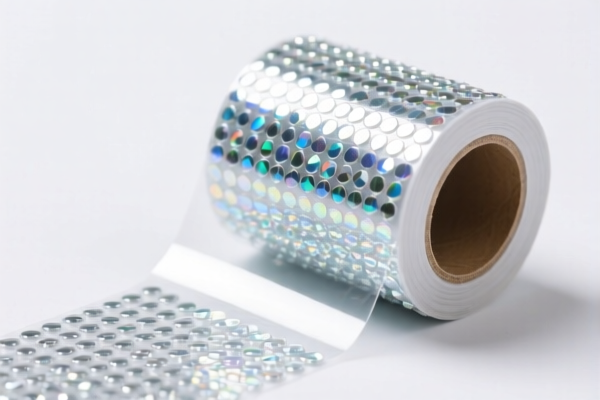
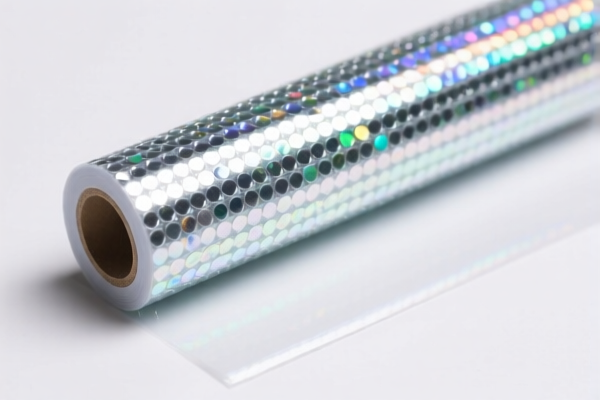
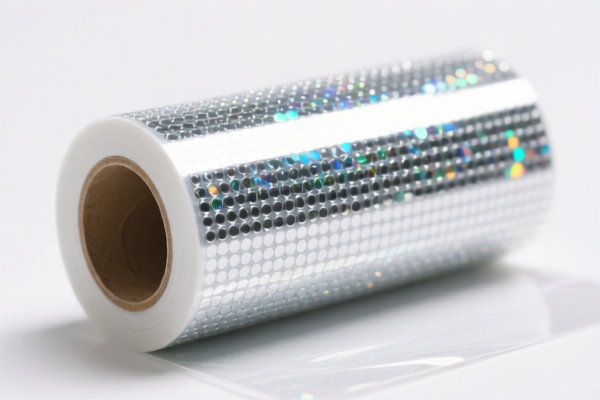
AI Analysis
📦 Self-Adhesive Plastic Appliance Film Roll (Anti-Scratch/Protective)
🌐 HS Code Reference & Customs Clearance Guide | 2026 Latest Tariff Analysis | Strategic Entry Strategy for US Imports
📌 I. Product Definition & Classification: Is It a "Plastic Film" or a "Plastic Article"?
Self-adhesive plastic films used for appliance protection (refrigerators, washers, dryers) or anti-scratch shielding are often misunderstood in customs classification. The critical distinction lies in whether the product is viewed primarily as a rolling roll of plastic material (film) or as a finished plastic article.
1. Plastic Films (Rolls) 🎞️
Definition: Flexible plastic sheets, often in rolls, designed to be applied to surfaces.
Key Feature: Sold by weight or length, often self-adhesive backing.
Classification Path:* Chapter 39, Heading 3919 (Self-adhesive plates, sheets, film, foil, tape, strip, and other flat shapes).
2. Other Plastic Articles 🛡️
Definition: Items that do not fit the specific definitions of film/foils under Heading 3919 or are considered distinct "articles" rather than raw material rolls.
Key Feature: May be pre-cut, shaped, or classified under broader "other" categories if they don't meet specific film criteria.
Classification Path:* Chapter 39, Heading 3926 (Other articles of plastics).
⚠️ Critical Distinction Point:
- If the product is a continuous roll of self-adhesive plastic, it typically falls under 3919.
- If the product is deemed an "other plastic article" (e.g., due to specific manufacturing processes, non-standard shapes, or if the "film" definition is narrowly interpreted by CBP), it may fall under 3926.
- Note: Both paths currently attract significant tariffs for Chinese-origin goods.
📦 II. HS Code Classification Details (2026 Latest Tariff对照)
| HS Code | Product Description | Application Scenario | Classification Logic |
|---|---|---|---|
3919.10.20.55 |
Self-adhesive plates, sheets, film, foil, strip, etc., of plastics: Other | Appliance protective films, anti-scratch rolls | ✅ Primary Fit: Self-adhesive plastic roll. "Other" category under 3919.10. |
3919.90.50.60 |
Self-adhesive plates, sheets, film, foil, strip, etc., of plastics: Other | Appliance protective films, anti-scratch rolls | ✅ Alternative Fit: If not specifically "of polymers of ethylene" or "of polymers of propylene," falls under "Other" in 3919.90. |
3926.90.99.89 |
Other articles of plastics and articles of other materials of heading 3901 to 3914: Other | Anti-scratch protection films not classified as films | ⚠️ Fallback Option: If CBP argues the item is an "article" rather than a "film," it goes here. |
🔍 Key Insight:
- 3919 Codes are generally more precise for rolls of self-adhesive film.
- 3926 Code is a broader "catch-all" for plastic articles.
- Tariff Impact: Both paths result in high tariffs, but the base rates differ (5.8% vs. 5.3%), and the Section 301/IEEPA add-ons may vary slightly in structure, though the final percentage is similar.
💰 III. 2026 Latest Tariff Rate Breakdown (Including Surcharges)
✅ Applicable Country: United States (US)
✅ Country of Origin: China (CN)
✅ Effective Date: Ongoing (since 2025/2026 updates)
🎯 1. 3919.10.20.55 & 3919.90.50.60 — Self-Adhesive Plastic Films
| Item | Detail |
|---|---|
| Base Tariff | 5.8% (Ad Valorem) |
| Section 301 Surcharge | +25.0% (25% tariff on Chinese goods under Section 301) |
| 122 Clause Surcharge | +10.0% (Additional 10% tariff under specific trade provisions) |
| Total Effective Rate | 40.8% |
| Tax Calculation | CIF Value × 40.8% |
| De Minimis Exemption? | ❌ NO (Denied under current trade rules for these HS codes) |
| Legal Basis Path | HTS:3919.xxxx → USITC:301 → 122 Clause |
📌 Explanation:
- The 5.8% is the standard MFN (Most Favored Nation) duty for plastic films.
- The 25% is the Section 301 tariff, heavily applied to Chinese plastic products.
- The 10% is an additional layer (often referred to as "122 clause" in trade discussions), bringing the total to 40.8%.
- Total Cost Impact: For a $10,000 shipment, you pay $4,080 in duties alone.
🎯 2. 3926.90.99.89 — Other Plastic Articles
| Item | Detail |
|---|---|
| Base Tariff | 5.3% (Ad Valorem) |
| Section 301 Surcharge | +7.5% (Note: Lower surcharge for some "other articles" compared to films) |
| 122 Clause Surcharge | +10.0% |
| Total Effective Rate | 22.8% |
| Tax Calculation | CIF Value × 22.8% |
| De Minimis Exemption? | ❌ NO |
| Legal Basis Path | HTS:3926.xxxx → USITC:301 (adjusted) → 122 Clause |
📌 Explanation:
- This code has a lower total tariff (22.8%) compared to the 3919 codes (40.8%).
- Why? The Section 301 surcharge for "other plastic articles" (3926) is often 7.5% instead of 25%, making it significantly cheaper.
- Risk: Customs may challenge this classification, arguing the product is a "film" (3919) and should pay 40.8%. Pre-ruling is critical.
🛠️ IV. Customs Clearance Operational Advice (Practical Pitfall Guide)
✅ 1. Document Preparation Checklist (Non-negotiable)
| Document | Required | Notes |
|---|---|---|
| ✅ Product Specification Sheet | ✔️ | Must specify: Material (PP/PE/PET), Thickness, Adhesive Type, Roll Dimensions |
| ✅ Product Photos | ✔️ | Show roll form, self-adhesive backing, and application on appliance |
| ✅ Commercial Invoice | ✔️ | Clearly state: "Self-Adhesive Plastic Protective Film for Appliances" |
| ✅ Packing List | ✔️ | Detail net/gross weight, dimensions, and number of rolls |
| ✅ Certificate of Origin | ✔️ | Required for determining origin and applicable tariffs |
| ✅ Third-Party Test Report | Optional | If claiming specific chemical compliance (e.g., RoHS) |
✅ 2. Declaration Strategy (Key Tips)
🔥 "Declare as Film, Justify as Article?"
Do NOT arbitrarily switch codes. Classification must reflect the principal use and physical form.
| Scenario | Recommended HS Code | Risk Level |
|---|---|---|
| Standard Roll of Self-Adhesive Plastic | 3919.10.20.55 or 3919.90.50.60 |
✅ Low (Most accurate) |
| Pre-Cut or Shaped Plastic Sheets | 3926.90.99.89 |
⚠️ Medium (May be challenged) |
| Non-Adhesive Plastic Film | 3926.90.99.89 |
✅ Low (Not self-adhesive, so not 3919) |
📌 Warning:
- If you declare as 3926 to save on tariffs (22.8% vs 40.8%), you must provide strong evidence that the product is an "article" and not a "film."
- CBP Challenge Risk: High. They may reclassify to 3919 and assess back duties + penalties.
- Best Practice: If the product is clearly a roll, stick to 3919. The 40.8% is unavoidable for Chinese-origin self-adhesive films.
✅ 3. Special Cases
| Case | Handling Advice |
|---|---|
| OEM/White Label | Provide customer PO and design specs. Do not hide the Chinese origin. |
| Multi-Material Products | If the film has a non-plastic backing (e.g., paper), classification may change. |
| Sample Shipments | Still subject to tariffs. No de minimis exemption for these HS codes. |
🌍 V. Global Market Comparison (2026 Update)
| Country/Region | Recommended HS Code | Total Tariff (China) | Certification | Notes |
|---|---|---|---|---|
| 🇺🇸 USA | 3919.10.20.55 / 3919.90.50.60 |
40.8% | None specific | High duty. 3926 at 22.8% is risky. |
| 🇨🇳 China | 3919.10.20.55 |
5.8% | None | Import duty only, no 301. |
| 🇪🇺 EU | 3919.90.00 |
6.5% | CE/RoHS | No Section 301 equivalent. |
| 🇦🇺 Australia | 3919.90.00 |
5% | N/A | Low duty, no surcharge. |
📌 Conclusion:
- USA is the most expensive market due to the combination of base tariff + Section 301 + 122 clause.
- EU/Australia are more favorable, but still require proper documentation.
📌 VI. Common Errors & Pitfalls (Lessons Learned)
❌ Error 1: Declaring self-adhesive plastic film under 3926 to avoid Section 301 tariffs.
👉 Consequence: CBP reclassification → Back duties + 20-50% penalty.
✅ Fix: Accurately declare as 3919.
❌ Error 2: Using "Plastic Wrap" or "Shrink Wrap" on the invoice for protective appliance film.
👉 Consequence: Misclassification → Delayed clearance.
✅ Fix: Use precise terms: "Self-Adhesive Protective Film."
❌ Error 3: Ignoring the 122 Clause Surcharge.
👉 Consequence: Underpayment of duties.
✅ Fix: Ensure 10% is included in cost calculations.
🎯 VII. Conclusion: Strategic Advice for Importers
🎯 Remember:
🔹 "Self-Adhesive Film = 3919 → 40.8% Tariff"
🔹 "Other Plastic Article = 3926 → 22.8% Tariff (High Risk)"
🔹 "De Minimis = NO"
📌 Pro Tip:
- If your volume is high, consider Section 301 Exclusions (if available). Check the USTR website for the latest exclusion list for HS Code 3919.
- Pre-Ruling: Apply for an ACE (Automated Commercial Environment) Pre-Ruling from CBP to confirm your HS code classification. This is the safest way to avoid penalties.
📣 Immediate Action Required:
📞 Consult a licensed Customs Broker.
📄 Submit product specs and photos for a Pre-Classification Ruling.
💰 Calculate landed cost with 40.8% duty (or 22.8% if justified).
✨ Accurate Classification Saves Money.
💼 Don’t let tariff miscalculations eat your profit margin.
Customer Reviews
About HS Code Classification
The Harmonized System (HS) is an internationally standardized nomenclature developed by the World Customs Organization (WCO) to classify traded products. Over 200 countries use the HS system as the basis for customs tariffs, trade statistics, and import/export regulations.
Each HS code follows a hierarchical structure:
- Chapter (2 digits) — Broad category of goods (e.g., Chapter 84: Machinery and Mechanical Appliances)
- Heading (4 digits) — More specific grouping within the chapter
- Subheading (6 digits) — Internationally standardized breakdown, used by all WCO member countries
- National subdivisions (8-10 digits) — Country-specific extensions for further classification, such as US HTSUS 10-digit codes
Correct HS code classification is essential for smooth customs clearance, accurate duty payment, and compliance with trade regulations. Misclassification can lead to customs delays, overpayment of duties, or penalties.
When importing from CN to US, the applicable tariff rates may include:
- Most-Favored-Nation (MFN) rate — The standard duty rate applied to WTO members
- General rate — Applied to countries without trade agreements
- Trade remedy duties — Additional tariffs such as Section 301 (anti-dumping), Section 232 (national security), or countervailing duties
The information provided on this page is for reference purposes only. For official classification, please consult with your local customs authority or a licensed customs broker.