Self adhesive Plastic Appliance Protective Film Roll
CN → US| HS Code | Tariff Rate | Origin | Destination | Doc |
|---|---|---|---|---|
| 3919102055 | 40.8% | CN | US | Official Doc |
| 3919905060 | 40.8% | CN | US | Official Doc |
| 3926909989 | 22.8% | CN | US | Official Doc |
Product Images
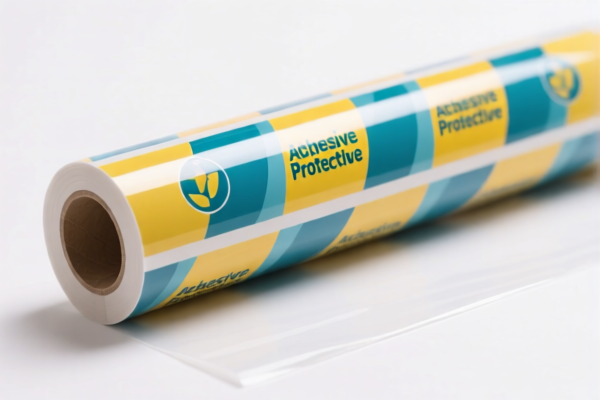
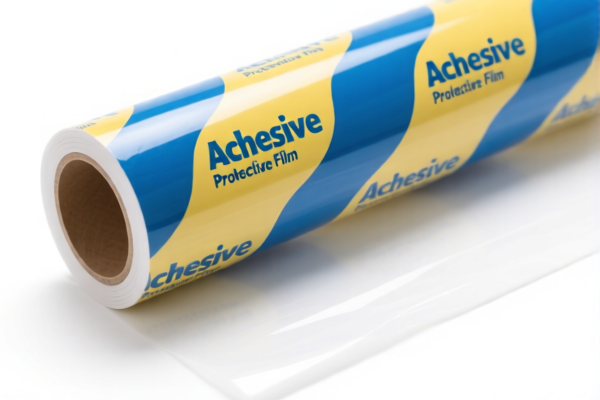
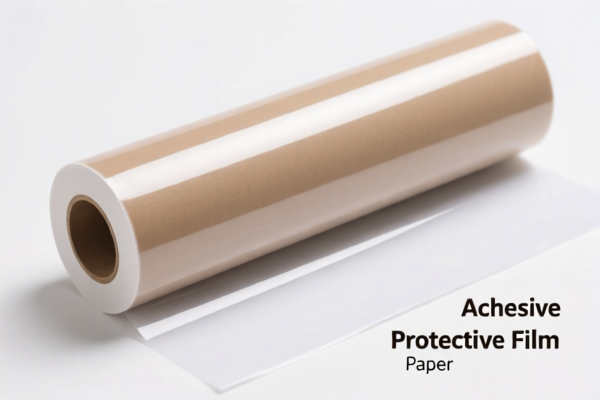
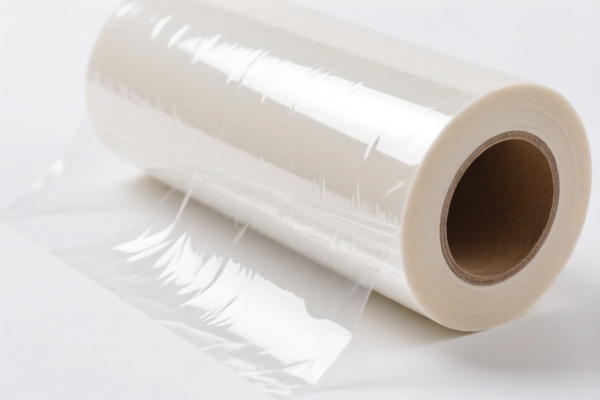
AI Analysis
🛡️ Self-Adhesive Plastic Appliance Protective Film Roll
🌐 HS Code Reference & Customs Clearance Guide | 2026 Tariff Analysis | Strategic Compliance Strategy
📌 I. Product Definition & Classification: Understanding "Protective Film"
Self-adhesive plastic protective films are essential consumables in the home appliance manufacturing and retail supply chain. Their purpose is to protect surfaces (panels, glass, metal) from scratches, dust, and fingerprints during transport, storage, and installation.
In international trade, these products are strictly classified based on their material composition, form (roll vs. sheet), and specific application exclusions.
⚠️ Key Classification Distinction:
- If it is a general-purpose plastic film with adhesive, used for general appliance protection → It often falls under Chapter 39 (Plastics and Articles Thereof) as a "self-adhesive flat product" or "other plastic article."
- Crucial Note: There is no specific HS code for "Appliance Protective Film" as a standalone category in the Harmonized System. It must be classified under generic plastic articles based on its technical characteristics.
- Misclassification Risk: Do not classify as "Appliance Parts" (Chapter 85) unless it is integral to the appliance’s function. Protective films are accessories/consumables, not functional parts.
📦 II. HS Code Classification Details (2026 Latest Tariff Authority Comparison)
Based on the provided data, there are three potential HS Codes depending on the specific manufacturing specification and customs interpretation.
| HS Code | Product Description | Application Scenario | Tax Rate (Total) | Tax Detail Breakdown |
|---|---|---|---|---|
3919.10.20.55 |
Self-adhesive Plastic Appliance Protective Film Roll Material: Plastic Form: Self-adhesive film roll Usage: Appliance protection |
Standard rolls used for large appliances (fridges, washers) | 40.8% | Base Duty: 5.8% Section 301 Surcharge: 25.0% Section 122 Tariff: 10% |
3919.90.50.60 |
Self-Adhesive Plastic Appliance Protective Film Roll Material: Plastic Form: Self-adhesive flat products Classification: Other category |
Alternative classification for similar self-adhesive films, grouped under "other" flat products | 40.8% | Base Duty: 5.8% Section 301 Surcharge: 25.0% Section 122 Tariff: 10% |
3926.90.99.89 |
Self-Adhesive Anti-Scratch Film Material: Plastic Classification: Other plastic articles, no specific exclusion |
General self-adhesive films, possibly thinner or non-standard rolls, classified as "other plastic articles" | 22.8% | Base Duty: 5.3% Section 301 Surcharge: 7.5% Section 122 Tariff: 10% |
🔍 Critical Analysis:
- Codes3919.10.20.55and3919.90.50.60represent the most common classifications for self-adhesive rolls. They are treated similarly by customs but may differ slightly in subheading details. Both incur the highest tax burden (40.8%).
- Code3926.90.99.89offers a significant cost advantage (22.8%). This code is for "Other plastic articles." It may apply if the product is deemed a generic anti-scratch film rather than a "self-adhesive flat product" under Chapter 39.19.
- Why the difference? Chapter 39.19 specifically covers "Self-adhesive plates, sheets, film, foil, tape, strip and other flat shapes." If the product fits this definition strictly, it goes to 3919. If customs deems it a more generic "plastic article" (perhaps due to thickness, adhesive type, or specific anti-scratch technology), it might fall under 3926.
💰 III. 2026 Tariff Rate Breakdown (Including Surcharges & Policy Add-ons)
✅ Applicable Country: United States (US)
✅ Origin: China (CN)
✅ Effective Date: Current tariffs apply (2026 context)
🎯 1. High-Tax Scenario: 3919.10.20.55 / 3919.90.50.60
| Item | Content |
|---|---|
| Base Duty Rate | 5.8% (General Rate) |
| Section 301 Surcharge | +25.0% (Standard US-China trade war tariff) |
| Section 122 Tariff | +10.0% (Specific tariff for certain Chinese goods, often related to national security or strategic sectors) |
| Total Effective Duty | 40.8% |
| Tax Calculation | CIF Value × 40.8% |
| De Minimis Exemption | ❌ Not Eligible (These goods are clearly not covered under Section 321 de minimis for this tariff structure) |
| Legal Basis Path | HTSUS: 3919.10.20.55 → USITC Footnote 1 → USTR Section 301 → Section 122 Proclamation |
📌 Explanation:
- The 5.8% base duty is standard for many plastic articles.
- The 25% Section 301 tariff is the primary driver of cost, applied to most Chinese plastic products.
- The 10% Section 122 tariff is an additional layer, often applied to goods deemed to threaten national security or economic stability.
- Total 40.8% makes this a high-cost item. Price competitiveness must be factored in.
🎯 2. Low-Tax Scenario: 3926.90.99.89
| Item | Content |
|---|---|
| Base Duty Rate | 5.3% (General Rate) |
| Section 301 Surcharge | +7.5% (Reduced surcharge for this specific subcategory) |
| Section 122 Tariff | +10.0% (Still applies) |
| Total Effective Duty | 22.8% |
| Tax Calculation | CIF Value × 22.8% |
| De Minimis Exemption | ❌ Not Eligible (Same as above) |
| Legal Basis Path | HTSUS: 3926.90.99.89 → USITC Footnote → USTR Section 301 (Reduced Rate) → Section 122 Proclamation |
📌 Advantage:
- The Section 301 surcharge is only 7.5% instead of 25%. This is a massive savings.
- How to qualify? This classification requires proving that the product is not primarily a "self-adhesive flat product" in the traditional sense, or that it falls under a different regulatory interpretation. It may apply to films with specific anti-scratch coatings that are considered "functional plastic articles" rather than simple adhesive films.
🛠️ IV. Customs Clearance Practical Advice (Battle-Tested Pitfall Guide)
✅ 1. Documentation Checklist (Non-Negotiable)
| Document | Mandatory? | Explanation |
|---|---|---|
| ✅ Product Specification Sheet | ✔️ | Must detail: Material (e.g., PE, PET, PVC), Thickness, Adhesive Type, Roll Dimensions, Application (Appliance Protection). |
| ✅ Commercial Invoice | ✔️ | Clearly state "Self-Adhesive Plastic Protective Film Roll." Avoid vague terms like "Plastic Film" alone. |
| ✅ Packing List | ✔️ | Show net/gross weight. Confirm no hazardous materials. |
| ✅ Labeling | ✔️ | Ensure labels match invoice. Include country of origin: "Made in China." |
| ✅ HTS Code Justification | ✔️ | Provide a written explanation for why 3926.90.99.89 is used (if chosen) vs. 3919. Cite technical differences (e.g., anti-scratch coating vs. simple adhesive). |
| ✅ Section 301 Exclusion List Check | ❌ | Verify if the specific product code is excluded from Section 301. (Currently, most plastic films are not excluded). |
✅ 2. Declaration Strategy (Key Rules)
🔥 "Be Specific, Justify the Code, Avoid Ambiguity!"
| Scenario | Correct Declaration | Incorrect Practice |
|---|---|---|
| Standard Roll | Use 3919.10.20.55 |
Declare as "Plastic Sheet" → Higher duty risk |
| Anti-Scratch Film | Consider 3926.90.99.89 with proof of coating |
Declare as "3919" when 3926 is viable → Overpaying |
| Bulk Roll | Declare as "Roll" (not "Sheets") | Declare as "Sheets" → Wrong code, penalties |
| Adhesive Type | Specify "Pressure-Sensitive Adhesive" | Omit adhesive details → Customs may reclassify |
✅ 3. Special Considerations
| Situation | Handling Advice |
|---|---|
| OEM for Appliance Brands | Provide proof of relationship. Still, HS code is based on product, not buyer. |
| Different Thicknesses | Thinner films might be argued as "films" (3919), thicker as "sheets/articles" (3926). Consult a broker. |
| Anti-Static Features | If anti-static, it might still be 3919, but could strengthen the case for a functional "article" under 3926. |
| Section 122 Impact | The 10% tax is unavoidable for most Chinese plastic goods under current rules. Factor it into pricing. |
🌍 V. Global Market Comparison (2026 Latest)
| Country/Region | Recommended HS Code | Estimated Duty | Certification | Notes |
|---|---|---|---|---|
| 🇺🇸 USA | 3919.10.20.55 or 3926.90.99.89 |
22.8% - 40.8% | None specific | High tariffs due to Section 301 & 122. |
| 🇨🇳 China | 3919.10 or 3926.90 |
0% - 5% | N/A | Imports into China are generally low duty. |
| 🇪🇺 EU | 3920.99 or 3919.10 |
6.5% - 9.5% | REACH, RoHS | No Section 301 equivalent. VAT applies separately. |
| 🇬🇧 UK | 3920.99 |
6.5% - 9.5% | UKCA | Post-Brexit rules. Similar to EU. |
| 🇯🇵 Japan | 3920.99 |
3.5% - 6.5% | PSE (if electrical) | Low tariffs, but strict quality checks. |
📌 Conclusion:
- USA is the most challenging market for these goods due to Section 301 and Section 122 tariffs.
- Cost Optimization: Try to justify3926.90.99.89to save 18% in duty (40.8% vs 22.8%). This requires strong technical documentation proving the product is not a standard self-adhesive flat product.
- Alternative Markets: Consider shipping to EU/UK first, then distributing to US? No, US tariffs apply on entry into the US, regardless of origin country (unless transshipped through a country with FTAs, but China origin still triggers penalties).
📌 VI. Common Mistakes & Pitfall Guide (Lessons Learned)
❌ Mistake 1: Declaring as "Appliance Parts" (Chapter 85)
👉 Consequence: Customs will reject it. Protective films are not functional parts. Re-classification delays cargo.
❌ Mistake 2: Ignoring Section 122 Tariff
👉 Consequence: Unexpected 10% charge at border. Always include it in cost calculations.
❌ Mistake 3: Vague Description "Plastic Film"
👉 Consequence: Customs may assign the highest possible duty. Use "Self-Adhesive Plastic Protective Film Roll for Appliances."
❌ Mistake 4: Assuming De Minimis Applies
👉 Consequence: Section 301 and 122 tariffs often do not apply to de minimis shipments for these codes. Check specific exclusions.
✅ Best Practice:
"Self-Adhesive Plastic Protective Film Roll, PET Material, Anti-Scratch Coating, 100m x 1m Roll, for Home Appliance Surface Protection, HS Code 3926.90.99.89"
🎯 VII. Conclusion: Strategic Cost Management & Compliance
🎯 Key Takeaways:
1. Two Tariff Paths:
- High Cost: 3919.10.20.55 / 3919.90.50.60 → 40.8%
- Low Cost: 3926.90.99.89 → 22.8%
2. Strategy: Aim for 3926.90.99.89 by emphasizing anti-scratch functionality and technical specifications that distinguish it from standard adhesive films.
3. Documentation: Keep technical data sheets ready to justify the lower code.
4. Budget: Always include 40.8% in worst-case scenarios, but target 22.8% with proper classification.
📌 Pro Tip:
📞 Contact a Licensed Customs Broker:
- Provide product samples and technical specs.
- Request a Pre-Ruling from US Customs and Border Protection (CBP) if the value is high.
- This locks in the HS code and avoids surprise audits.
📣 Immediate Action:
📝 Review your invoice description.
📊 Calculate costs under both3919and3926codes.
🚀 Optimize your supply chain to absorb the 22.8%-40.8% duty burden.
✨ Precision in Classification Saves Thousands!
💼 Every Percentage Point Matters in Global Trade!
Customer Reviews
About HS Code Classification
The Harmonized System (HS) is an internationally standardized nomenclature developed by the World Customs Organization (WCO) to classify traded products. Over 200 countries use the HS system as the basis for customs tariffs, trade statistics, and import/export regulations.
Each HS code follows a hierarchical structure:
- Chapter (2 digits) — Broad category of goods (e.g., Chapter 84: Machinery and Mechanical Appliances)
- Heading (4 digits) — More specific grouping within the chapter
- Subheading (6 digits) — Internationally standardized breakdown, used by all WCO member countries
- National subdivisions (8-10 digits) — Country-specific extensions for further classification, such as US HTSUS 10-digit codes
Correct HS code classification is essential for smooth customs clearance, accurate duty payment, and compliance with trade regulations. Misclassification can lead to customs delays, overpayment of duties, or penalties.
When importing from CN to US, the applicable tariff rates may include:
- Most-Favored-Nation (MFN) rate — The standard duty rate applied to WTO members
- General rate — Applied to countries without trade agreements
- Trade remedy duties — Additional tariffs such as Section 301 (anti-dumping), Section 232 (national security), or countervailing duties
The information provided on this page is for reference purposes only. For official classification, please consult with your local customs authority or a licensed customs broker.