Self adhesive Plastic Decorative Film Roll
CN → US| HS Code | Tariff Rate | Origin | Destination | Doc |
|---|---|---|---|---|
| 3919102055 | 40.8% | CN | US | Official Doc |
| 3919905060 | 40.8% | CN | US | Official Doc |
| 3919905040 | 40.8% | CN | US | Official Doc |
| 3926909989 | 22.8% | CN | US | Official Doc |
| 3919102055 | 40.8% | CN | US | Official Doc |
Product Images
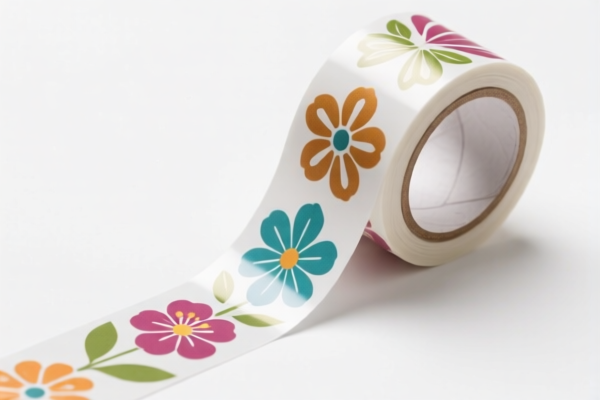

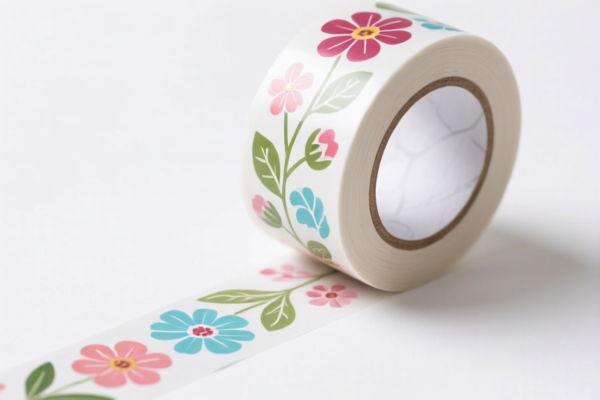

AI Analysis
🎨 Self-Adhesive Plastic Decorative Film Roll
🌐 HS Code Reference & Customs Clearance Guide | 2024/2025 Latest Tariff Analysis | Professional Strategy for US Imports 📌 I. Product Definition & Classification: What Exactly Are You Importing?
Self-adhesive Plastic Decorative Film Rolls are widely used in interior decoration, furniture lamination, automotive wrapping, and architectural glazing. They consist of a plastic substrate (PVC, PET, PE, etc.) with an adhesive layer on one or both sides, supplied in roll form.
In international trade, the classification depends heavily on two factors: 1. Width: Is it narrower than 20 cm? 2. End-Use/Specificity: Is it a general-purpose sheet or a specifically labeled item (like a label)?
⚠️ Critical Distinction Point: - General Decorative Films (Width ≥ 20 cm or unspecified width, used for wrapping/covering) → Usually fall under Chapter 39, Heading 3919. - Self-Adhesive Labels/Tags (Specifically shaped or designed for labeling products) → May fall under Heading 3926. - Material Composition: Must be plastic. If the adhesive layer or backing contains significant non-plastic materials (>50% by weight), the classification might shift, but for standard "Plastic Decorative Film," 3919 is the primary candidate.
📦 II. HS Code Classification Details (Based on Provided Data)
Based on the provided dataset, there are three distinct HS Codes applicable, all with different tax implications. Here is the detailed breakdown:
| HS Code | Product Description | Key Characteristics | Primary Use Case |
|---|---|---|---|
3919.10.20.55 |
Self-adhesive plastic film roll | Material: Plastic Form: Film & Roll Type: Self-adhesive flat sheet Note: Also covers "Building Film" |
General decorative wrapping, furniture covering, architectural window films |
3919.90.50.60 |
Other self-adhesive plastic flat products | Material: Plastic Type: Self-adhesive Category: Other (Not elsewhere specified) |
Specialized decorative films, non-standard widths, or specific industrial uses not covered by 3919.10 |
3919.90.50.40 |
Self-adhesive plastic flat product | Material: Plastic Form: Film/Roll Feature: Self-adhesive, flat shape |
Similar to above, often used for specific plastic sheeting applications |
3926.90.99.89 |
Self-adhesive label-type articles | Material: Plastic/Composite Type: Unspecified other plastic articles Form: Label/Tag |
Crucial Distinction: If the product is specifically marketed as a "Label" (e.g., product stickers, name tags) rather than a "Decorative Wrap/Film," it may be classified here. |
🔍 Important Clarification: -
3919.10.20.55is the most common code for general self-adhesive plastic decorative films (e.g., peel-and-stick wallpaper, PVC floor covering rolls, car wrap films). -3926.90.99.89is for labels. If you are importing "decorative film" for covering walls or furniture, do NOT use this code unless it is strictly a small label. Misclassification can lead to severe penalties. - The dataset lists3919.10.20.55twice: once for general decorative film and once specifically for building film. Both share the same tax structure.
💰 III. 2024/2025 Latest Tariff Rate Breakdown (Detailed)
✅ Applicable Country: United States (US) ✅ Country of Origin: China (CN) ✅ Status: High Tariff Environment
🎯 1. Category A: General Self-Adhesive Plastic Films (3919.10.20.55, 3919.90.50.60, 3919.90.50.40)
These codes represent the bulk of decorative films.
| Tax Component | Rate | Source/Description |
|---|---|---|
| Base Tariff | 5.8% | Standard Most Favored Nation (MFN) rate for plastic sheets/films |
| Section 301 Tariff | 25.0% | Added tariffs on Chinese imports under Trade Act of 1974, Section 301 |
| Section 122 Tariff | 10.0% | Specific additional duty (often related to supply chain or national security measures) |
| Total Combined Rate | 40.8% | 5.8% + 25.0% + 10.0% |
📌 Explanation: - The 40.8% total tax rate is very high. This significantly impacts profit margins. - Calculation Basis: Ad valorem (based on CIF value - Cost, Insurance, Freight). - No De Minimis Exemption: Section 301 and Section 122 tariffs generally cannot be avoided via the $800 de minimis rule for personal imports. All commercial shipments are subject to these duties.
🎯 2. Category B: Self-Adhesive Labels (3926.90.99.89)
If the product is misclassified as a label, the tax rate is lower, but the risk of misclassification is high.
| Tax Component | Rate | Source/Description |
|---|---|---|
| Base Tariff | 5.3% | Standard MFN rate for other plastic articles |
| Section 301 Tariff | 7.5% | Lower added tariff for this specific subheading under Section 301 |
| Section 122 Tariff | 10.0% | Same 10% additional duty applies |
| Total Combined Rate | 22.8% | 5.3% + 7.5% + 10.0% |
⚠️ Warning: - Do not force a decorative film into
3926.90.99.89to save 18%. US Customs and Border Protection (CBP) strictly distinguishes between "films for covering surfaces" (3919) and "labels for affixing to products" (3926). - If the film is wide enough to cover a wall, table, or car, it is not a label.
🛠️ IV. Customs Clearance Practical Advice (Real-World Pitfall Avoidance)
✅ 1. Documentation Checklist (Mandatory)
| Document | Required? | Notes |
|---|---|---|
| Commercial Invoice | ✔️ | Must clearly state "Self-Adhesive Plastic Decorative Film Roll" and specify material (e.g., PVC, PET). |
| Packing List | ✔️ | Detail roll dimensions (width, length, weight). |
| Product Specifications | ✔️ | Include adhesive type, thickness, and width. |
| Photo of Product | ✔️ | Show the roll, the adhesive side, and any branding/packaging. |
| Label/Tag Samples | ❌ | Only if claiming 3926.90.99.89. Provide samples showing it is a label, not a wrap. |
✅ 2. Classification Strategy & Declaration Tips
🔥 "Width Matters, Use Defines Code!"
| Scenario | Recommended HS Code | Why? |
|---|---|---|
| Wide Rolls (>20cm) for Walls/Furniture | 3919.10.20.55 |
Classic "self-adhesive plastic sheet" use. |
| Narrow Strips or Specialty Films | 3919.90.50.60 or .40 |
"Other" category for non-standard sizes. |
| Small Stickers/Labels for Products | 3926.90.99.89 |
Only if the product is primarily a label. |
| Building Window Film | 3919.10.20.55 |
Explicitly covered under this code in the data. |
✅ 3. Special Considerations
| Issue | Advice |
|---|---|
| Material Composition | Ensure the product is >50% plastic. If it has a fabric backing, it may not qualify for Chapter 39. |
| Adhesive Type | Mention if it's pressure-sensitive, solvent-based, or water-activated. This helps CBP confirm it's "self-adhesive." |
| Country of Origin | If shipped from China, 40.8% applies. If shipped from Vietnam/Malaysia with sufficient transformation, you might avoid Section 301, but verify rules of origin carefully. |
| De Minimis Risk | For B2C cross-border e-commerce, the $800 exemption does not apply to Section 301/122 duties for these HS codes. Plan cash flow accordingly. |
🌍 V. Global Market Comparison (Context)
| Market | HS Code (Similar) | Est. Total Duty (China Origin) | Notes |
|---|---|---|---|
| 🇺🇸 USA | 3919.10.20.55 |
40.8% | High due to Section 301 & 122. |
| 🇪🇺 EU | 3919.10 |
~1.7% + VAT | No Section 301. Standard MFN rates apply. |
| 🇨🇳 China | 3919.10 |
~5-6% | Import duty only. No retaliatory tariffs. |
| 🇬🇧 UK | 3919.10 |
~1.7% + VAT | Post-Brexit tariffs similar to EU for this category. |
📌 Conclusion: The US market is uniquely expensive for Chinese plastic films due to political trade measures. For US imports, the 40.8% duty is a fixed cost that must be priced into the product. There are no widespread exemptions for decorative films.
📌 VI. Common Mistakes & Pitfalls (Lessons Learned)
❌ Mistake 1: Classifying wide decorative rolls as "Labels" (3926) to save tax.
👉 Consequence: CBP rejection, reclassification, back-tariffs (40.8% - 22.8% = 18% difference) + penalties.
👉 Fix: Ensure the product is physically a label/sticker, not a wrap.
❌ Mistake 2: Ignoring the Section 122 Tariff. 👉 Consequence: Underpayment by 10%. 👉 Fix: Always add the 10% Section 122 tariff to your cost model for China-origin goods under these codes.
❌ Mistake 3: Assuming "Plastic" means low duty. 👉 Consequence: Shock when the total hits 40.8%. 👉 Fix: Budget for the full 40.8% Landed Cost for US imports from China.
✅ Correct Declaration Example:
"Self-Adhesive PVC Decorative Film Roll, Width 120cm, Used for Furniture Lamination, HS 3919.10.20.55"
🎯 VII. Conclusion: Smart Sourcing, Accurate Classification
🎯 Key Takeaway:
🔹 "Decorative Film = 3919 = 40.8% Duty (US/China)" 🔹 "Labels = 3926 = 22.8% Duty (US/China)" 🔹 "Do not mix them up!"
💡 Pro Tip: If your volume is high, consider: 1. Advance Ruling: Request a binding ruling from CBP to confirm the HS code before shipping. 2. Supply Chain Diversification: If feasible, source from non-China countries to avoid Section 301/122 tariffs (though this may affect material sourcing). 3. Cost Absorption vs. Price Increase: Factor the 40.8% into your B2B pricing model. It is a non-negotiable cost for US imports of this category from China.
✨ Professional Customs Clearance Starts with Precise Classification! 💼 Your Margins Depend on It!
Customer Reviews
About HS Code Classification
The Harmonized System (HS) is an internationally standardized nomenclature developed by the World Customs Organization (WCO) to classify traded products. Over 200 countries use the HS system as the basis for customs tariffs, trade statistics, and import/export regulations.
Each HS code follows a hierarchical structure:
- Chapter (2 digits) — Broad category of goods (e.g., Chapter 84: Machinery and Mechanical Appliances)
- Heading (4 digits) — More specific grouping within the chapter
- Subheading (6 digits) — Internationally standardized breakdown, used by all WCO member countries
- National subdivisions (8-10 digits) — Country-specific extensions for further classification, such as US HTSUS 10-digit codes
Correct HS code classification is essential for smooth customs clearance, accurate duty payment, and compliance with trade regulations. Misclassification can lead to customs delays, overpayment of duties, or penalties.
When importing from CN to US, the applicable tariff rates may include:
- Most-Favored-Nation (MFN) rate — The standard duty rate applied to WTO members
- General rate — Applied to countries without trade agreements
- Trade remedy duties — Additional tariffs such as Section 301 (anti-dumping), Section 232 (national security), or countervailing duties
The information provided on this page is for reference purposes only. For official classification, please consult with your local customs authority or a licensed customs broker.