Self adhesive Product Labels
CN → US| HS Code | Tariff Rate | Origin | Destination | Doc |
|---|---|---|---|---|
| 4821102000 | 35.0% | CN | US | Official Doc |
| 3926909989 | 22.8% | CN | US | Official Doc |
| 3926100000 | 15.3% | CN | US | Official Doc |
| 4821902000 | 35.0% | CN | US | Official Doc |
| 3919905060 | 40.8% | CN | US | Official Doc |
Product Images
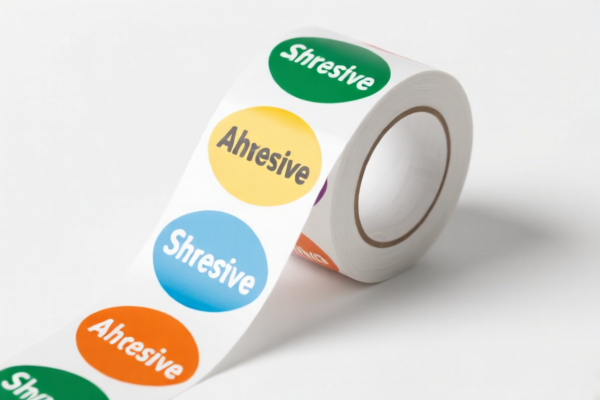
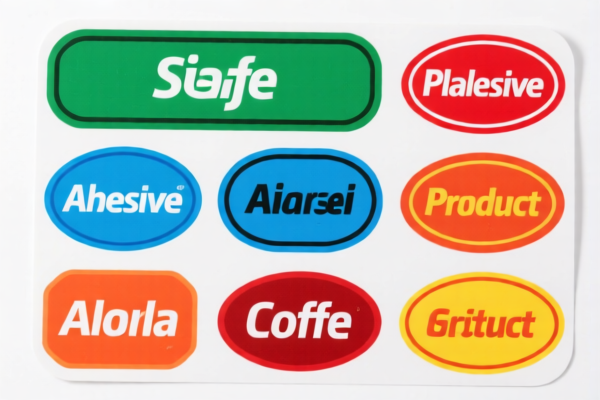
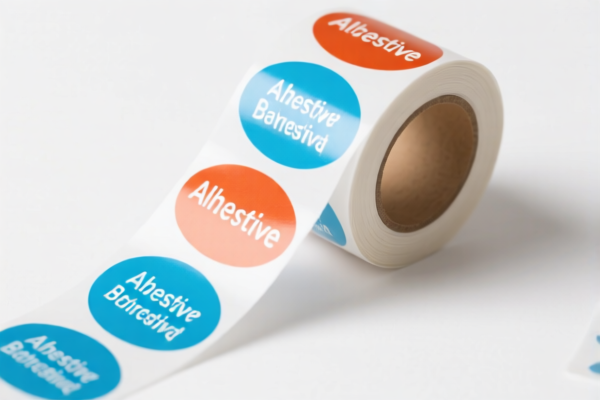
AI Analysis
🏷️ Self-Adhesive Product Labels
🌐 HS Code Reference & Customs Clearance Guide | 2026 Latest Tariff Analysis | Professional Clearance Strategy
📌 I. Product Definition & Classification: Do You Truly Understand "Self-Adhesive Labels"?
Self-adhesive product labels are versatile marking materials used in logistics, retail, manufacturing, and office environments. In international trade, classification depends heavily on the material composition (Paper vs. Plastic/Synthetic) and specific form (Sticker roll vs. Loose sheet).
Key Classification Distinctions:
- Paper-Based Labels: If the backing and face material are primarily paper/cardboard → Falls under Chapter 48.
- Plastic/Synthetic Labels: If the face material is plastic film, vinyl, or synthetic → Falls under Chapter 39.
- Self-Adhesive Rolls: If supplied in rolls with backing paper, classified as self-adhesive plastics (Ch 39) or paper articles (Ch 48).
⚠️ Critical Distinction Point:
- If the label is made of Paper → Use HS Codes 4821.xxxx
- If the label is made of Plastic/Synthetic → Use HS Codes 3926.xxxx or 3919.xxxx
- Misclassification Risk: Declaring plastic labels as paper (or vice versa) can lead to significant tariff discrepancies and customs delays.
📦 II. HS Code Classification Details (2026 Latest Tariff Authoritative Comparison)
Based on the provided data analysis for "Self-adhesive Product Labels," here are the possible classifications:
| HS Code | Product Description | Material Inference | Suitability Scenario |
|---|---|---|---|
4821.10.20.00 |
Paper Labels, other (Self-adhesive) | Paper/Cardboard | Paper labels with adhesive backing; common for shipping/logistics. |
4821.90.20.00 |
Other paper labeling stock of all kinds | Paper/Cardboard | Self-adhesive paper labels not specifically listed in 4821.10. |
3926.90.99.89 |
Other articles of plastic and articles of other materials | Plastic/Composite | Plastic labels or multi-material labels inferred as "plastic articles." |
3926.10.00.00 |
Office or school supplies, of plastic | Plastic | Plastic labels used specifically for office/school organization. |
3919.90.50.60 |
Self-adhesive plates, sheets, film, tape... of plastics | Plastic (Rolls/Film) | Self-adhesive plastic materials supplied in rolls/film form. |
🔍 Key Reminder:
- Paper vs. Plastic is the primary determinant.
- If the label material is ambiguous, customs may default to the higher-tariff or more general category.
- Self-adhesive feature is consistent across all codes, but the face material dictates the chapter.
💰 III. 2026 Latest Tariff Rate Detailed Analysis (Including Surtaxes & Policy Add-ons)
✅ Applicable Country: United States (US)
✅ Country of Origin: China (CN)
✅ Effective Time: Current rates including 25% (Section 301) and 10% (IEEPA Section 122) surtaxes.
🎯 1. 4821.10.20.00 & 4821.90.20.00 —— Paper Labels
| Item | Content |
|---|---|
| Basic Duty Rate | 0.0% |
| Section 301 Surtax | +25.0% |
| IEEPA Section 122 Surtax | +10.0% |
| Total Duty Rate | 35.0% |
| Tax Calculation | CIF Value × 35% |
| De Minimis Exemption | ❌ Not Applicable (High duty rates exclude small parcels from de minimis relief in practice for commercial shipments). |
| Legal Basis Path | Section 301: 9903.01.24 → IEEPA: 9903.01.25 → HTSUS: 4821.10.20.00 |
📌 Explanation:
- Although the basic duty for paper labels is 0%, the combined surtaxes amount to 35%.
- This is a high-cost classification due to trade restrictions on Chinese goods.
🎯 2. 3926.90.99.89 —— Plastic/Composite Articles
| Item | Content |
|---|---|
| Basic Duty Rate | 5.3% |
| Section 301 Surtax | +7.5% |
| IEEPA Section 122 Surtax | +10.0% |
| Total Duty Rate | 22.8% |
| Tax Calculation | CIF Value × 22.8% |
| De Minimis Exemption | ❌ Not Applicable |
| Legal Basis Path | Section 301: 9903.01.24 → IEEPA: 9903.01.25 → HTSUS: 3926.90.99.89 |
📌 Note:
- This code offers a moderate tariff burden (22.8%) compared to paper labels.
- Suitable for plastic, vinyl, or synthetic labels.
🎯 3. 3926.10.00.00 —— Office/School Plastic Supplies
| Item | Content |
|---|---|
| Basic Duty Rate | 5.3% |
| Section 301 Surtax | 0.0% |
| IEEPA Section 122 Surtax | +10.0% |
| Total Duty Rate | 15.3% |
| Tax Calculation | CIF Value × 15.3% |
| De Minimis Exemption | ❌ Not Applicable |
| Legal Basis Path | IEEPA: 9903.01.25 → HTSUS: 3926.10.00.00 |
📌 Advantage:
- Lowest Total Duty (15.3%) among plastic options.
- Key Condition: Must be classified as office or school supplies. If used for industrial/logistic labeling, this classification may be challenged.
🎯 4. 3919.90.50.60 —— Self-Adhesive Plastic Plates/Sheets/Film
| Item | Content |
|---|---|
| Basic Duty Rate | 5.8% |
| Section 301 Surtax | +25.0% |
| IEEPA Section 122 Surtax | +10.0% |
| Total Duty Rate | 40.8% |
| Tax Calculation | CIF Value × 40.8% |
| De Minimis Exemption | ❌ Not Applicable |
| Legal Basis Path | Section 301: 9903.01.24 → IEEPA: 9903.01.25 → HTSUS: 3919.90.50.60 |
📌 Warning:
- This is the highest duty rate (40.8%).
- Applies if labels are considered "plates, sheets, or film" rather than finished "articles."
- Generally not recommended for finished labels unless specified as raw material rolls.
🛠️ IV. Customs Clearance Practical Advice (Combat Pitfall Guide)
✅ 1. Required Documentation Checklist
| Document | Mandatory? | Description |
|---|---|---|
| ✅ Product Specification Sheet | ✔️ | Must clearly state material (Paper vs. Plastic), adhesive type, and usage. |
| ✅ Material Composition Certificate | ✔️ | Crucial for distinguishing between Ch 48 (Paper) and Ch 39 (Plastic). |
| ✅ Product Photos (Label & Roll) | ✔️ | Show self-adhesive nature, dimensions, and backing paper. |
| ✅ Commercial Invoice | ✔️ | Clearly state "Self-Adhesive Label" and intended use (Office/Industrial). |
| ✅ Packing List | ✔️ | Detail quantity, weight, and dimensions. |
✅ 2. Declaration Strategy (Key Mnemonics)
🔥 “Material First, Use Second, Name Precise, Tax Less!”
| Scenario | Correct Declaration | Wrong Approach |
|---|---|---|
| Paper Labels | 4821.10.20.00 (35% duty) |
Declaring as plastic → Risk of penalty for misdeclaration. |
| Plastic Office Labels | 3926.10.00.00 (15.3% duty) |
Declaring as industrial → Higher duty or rejection. |
| Plastic Industrial Labels | 3926.90.99.89 (22.8% duty) |
Declaring as office supplies → Audit risk. |
| Raw Material Rolls | 3919.90.50.60 (40.8% duty) |
Declaring as finished labels → Wrong classification. |
✅ 3. Special Cases Handling
| Case | Handling Advice |
|---|---|
| Mixed Material Labels | If face is plastic and backing is paper, customs may lean towards Plastic (Ch 39). Provide detailed material breakdown. |
| Small Quantities (De Minimis) | Even if under $800, high tariff rates (15%-40%) mean duties are still payable. Do not assume duty-free clearance. |
| OEM/Private Label | If labels are customized for a specific client, ensure the invoice reflects the generic description to avoid valuation disputes. |
🌍 V. Global Market Clearance Comparison (2026 Latest)
| Country/Region | Recommended HS Code | Duty Rate (China Origin) | Certification | Note |
|---|---|---|---|---|
| 🇺🇸 USA | 3926.10.00.00 (if office) |
15.3% (Best Option) | None specific | Paper labels are 35%; Plastic office is 15.3%. |
| 🇨🇳 China | 4821.10.20.00 |
~5-10% (Import Duty) | N/A | Lower duty than US. |
| 🇪🇺 EU | 4821.10.00 |
2.5% | N/A | No surtaxes. Lower cost entry. |
| 🇬🇧 UK | 4821.10.00 |
2.5% | N/A | Post-Brexit tariff independent. |
📌 Conclusion:
- USA has the highest clearance costs due to surtaxes.
- Plastic labels for office use (3926.10.00.00) offer the lowest duty (15.3%) in the US.
- Paper labels are expensive (35%). If possible, consider plastic synthetic materials for US shipments to save ~20% in duties.
📌 VI. Common Errors & Pitfall Guide (Blood & Tears Lessons)
❌ Mistake 1: Declaring Plastic Labels as Paper (4821)
👉 Consequence: If caught, customs may reclassify to plastic codes with different verification requirements, causing delays. If accidentally underpaid, back duties + penalties.
❌ Mistake 2: Claiming "Office Use" for Industrial Labels (3926.10)
👉 Consequence: Customs audit → Rejection of 15.3% rate → Applied 22.8% or higher + penalties.
❌ Mistake 3: Ignoring IEEPA 10% Surtax in Costing
👉 Consequence: Profit margin calculation error. 10% is on top of basic + 301. Always include it in landed cost.
✅ Correct Action:
"Self-Adhesive Plastic Labels, for Office Organization, 100mm x 50mm, Roll Format, HTS 3926.10.00.00"
🎯 VII. Conclusion: Professional Declaration Saves Money!
🎯 Remember the Key Takeaway:
🔹 Paper = 35% Duty
🔹 Plastic (Office) = 15.3% Duty
🔹 Plastic (Other) = 22.8% Duty
🔹 Plastic (Raw Material) = 40.8% Duty
📌 Pro Tip:
If you are importing plastic labels, explicitly state "Office or School Supplies" on the invoice and packing list to qualify for the 15.3% tariff. This can save 10-25% in import duties compared to other plastic or all paper labels.
📣 Immediate Action:
📞 Verify Material Composition (Paper vs. Plastic)
📄 Define Intended Use (Office vs. Industrial)
📝 Apply for Advance Ruling if shipment value is high
🚀 Clear Customs Smoothly, Maximize Profit!
✨ Professional Customs Clearance Starts with Accurate Classification!
💼 Every Percent Saved is Pure Profit!
Customer Reviews
About HS Code Classification
The Harmonized System (HS) is an internationally standardized nomenclature developed by the World Customs Organization (WCO) to classify traded products. Over 200 countries use the HS system as the basis for customs tariffs, trade statistics, and import/export regulations.
Each HS code follows a hierarchical structure:
- Chapter (2 digits) — Broad category of goods (e.g., Chapter 84: Machinery and Mechanical Appliances)
- Heading (4 digits) — More specific grouping within the chapter
- Subheading (6 digits) — Internationally standardized breakdown, used by all WCO member countries
- National subdivisions (8-10 digits) — Country-specific extensions for further classification, such as US HTSUS 10-digit codes
Correct HS code classification is essential for smooth customs clearance, accurate duty payment, and compliance with trade regulations. Misclassification can lead to customs delays, overpayment of duties, or penalties.
When importing from CN to US, the applicable tariff rates may include:
- Most-Favored-Nation (MFN) rate — The standard duty rate applied to WTO members
- General rate — Applied to countries without trade agreements
- Trade remedy duties — Additional tariffs such as Section 301 (anti-dumping), Section 232 (national security), or countervailing duties
The information provided on this page is for reference purposes only. For official classification, please consult with your local customs authority or a licensed customs broker.