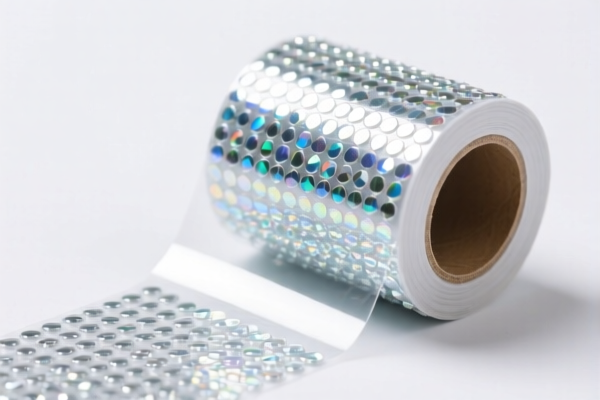
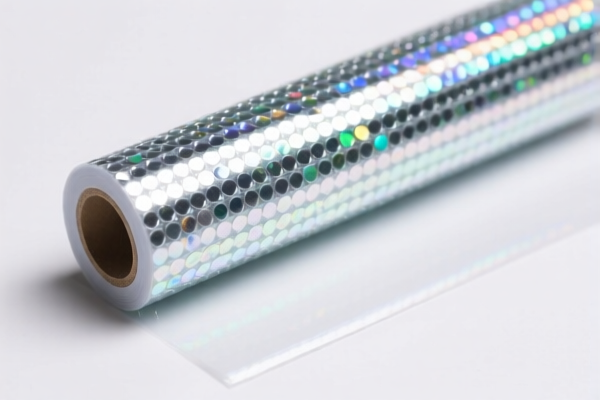
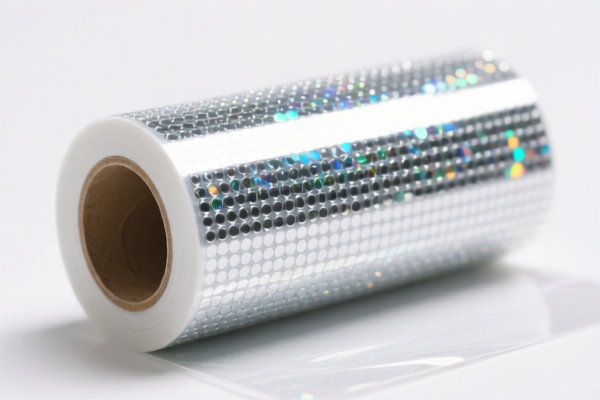
Self adhesive Reflective Glass Bead Plastic Film Roll
CN → US| HS Code | Tariff Rate | Origin | Destination | Doc |
|---|---|---|---|---|
| 3919101050 | 41.5% | CN | US | Official Doc |
| 7018200000 | 40.0% | CN | US | Official Doc |
| 7018905000 | 41.6% | CN | US | Official Doc |
| 3919901000 | 41.5% | CN | US | Official Doc |
| 3926909989 | 22.8% | CN | US | Official Doc |
Product Images

AI Analysis
🎞️ Self-Adhesive Reflective Glass Bead Plastic Film Roll (Self-Adhesive Reflective Tape/Roll)
🌐 HS Code Reference & Customs Clearance Guide | 2024/2025 Latest Tariff Analysis | Professional Clearance Strategy
📌 I. Product Definition & Classification: What Exactly Is This Product?
This product is a flexible sheet/film roll made primarily of plastic (polymer) material, coated with glass beads for retro-reflective properties, and backed with a self-adhesive layer. It is commonly used for road signs, vehicle marking, traffic safety, and industrial identification.
In international trade, the classification hinges on two key attributes: 1. Primary Material: Is the core structure plastic or glass? 2. Function: Is it a raw material (glass beads) or a finished article (reflective tape)?
⚠️ Critical Distinction:
- If the product is considered a plastic film with embedded glass beads → It falls under Chapter 39 (Plastics).
- If the product is considered a finished glass article with minimal processing → It might fall under Chapter 70 (Glass).
- Note: Most commercial self-adhesive reflective films are classified as plastic articles due to the film base.
📦 II. HS Code Classification Details (2026 Latest Tariff Authority Cross-Reference)
Based on the provided data, here are the possible HS Code classifications, ranked by likelihood and tax impact:
| HS Code | Product Description | Applicability Scenario | Key Attributes |
|---|---|---|---|
3919.10.10.50 |
Self-adhesive plates, sheets, film, foil, tape, strip and other flat shapes, of plastics, in rolls of a width exceeding 20 cm | Most Likely. The product is a plastic film roll with self-adhesive backing. Glass beads are an additive/coating, not changing the base material classification. | ✅ Plastic base ✅ Self-adhesive ✅ Roll form (>20cm) |
7018.20.00.00 |
Glass beads | Unlikely/Risky. Only applicable if customs argues the product is primarily "glass beads" fused together, ignoring the plastic/adhesive backing. | ⚠️ Misclassification Risk ⚠️ Ignores plastic/adhesive nature |
7018.90.50.00 |
Other articles of glass | Unlikely. If considered a "glass artifact," it falls here. However, since it’s a flexible plastic film, this is weak. | ⚠️ Weak classification ⚠️ Conflicts with "plastic" nature |
3919.90.10.00 |
Other plates, sheets, film, foil, tape, strip and other flat shapes, of plastics, self-adhesive | Possible. If the width is ≤20cm or specific sub-category nuances apply. Often grouped with 3919.10. | ✅ Plastic base ✅ Self-adhesive |
3926.90.99.89 |
Other articles of plastics and articles of other materials of headings 3901 to 3914 | Safe Fallback / "Catch-all". If the specific self-adhesive code doesn’t fit perfectly (e.g., width <20cm or specific composite rules), this is the residual plastic article code. | ✅ Plastic composite ✅ Reflective feature as "other" |
🔍 Key Insight:
-3919.10.10.50and3919.90.10.00are the most accurate because the product is fundamentally a self-adhesive plastic film. The glass beads serve a functional coating, not changing the base material. -3926.90.99.89is a lower-risk, lower-tax alternative if the specific self-adhesive headings are rejected, but it must still be justified as a "plastic article."
💰 III. 2026 Latest Tariff Rate Breakdown (Including Surtaxes & Policy Add-ons)
✅ Applicable Country: United States (US)
✅ Origin: China (CN)
✅ Effective Time: 2025/2026 (Current enforcement period)
🎯 1. 3919.10.10.50 & 3919.90.10.00 —— Self-Adhesive Plastic Film (Most Accurate)
| Item | Detail |
|---|---|
| Base Duty Rate | 6.5% |
| Section 301 Surcharge | +25.0% |
| IEEPA 122 Section Surcharge | +10.0% |
| Total Effective Tax Rate | 41.5% |
| Tax Calculation | CIF Value × 41.5% |
| De Minimis Eligibility | ❌ No (High-risk for 80/121 parcels) |
| Legal Basis Path | USITC:3919.10.10.50 → FOOTNOTE:301 → IEEPA:122 |
📌 Explanation:
- These codes are classified as "Plastic Self-Adhesive Products." - The 41.5% total rate is high due to the combination of standard MFN rate (6.5%) + 301 Tariff (25%) + IEEPA Section 122 (10%). - Warning: This is the most technically correct classification but carries a high tax burden.
🎯 2. 7018.20.00.00 & 7018.90.50.00 —— Glass Beads/Glass Articles (High Risk)
| Item | Detail |
|---|---|
| Base Duty Rate | 5.0% – 6.6% |
| Section 301 Surcharge | +25.0% |
| IEEPA 122 Section Surcharge | +10.0% |
| Total Effective Tax Rate | 40.0% – 41.6% |
| Tax Calculation | CIF Value × ~40-41.6% |
| De Minimis Eligibility | ❌ No |
| Legal Basis Path | USITC:7018.x.x.x → FOOTNOTE:301 → IEEPA:122 |
📌 Explanation:
- While the base rate is slightly lower (5-6.6%), the total rate (40-41.6%) is nearly identical to the plastic codes due to the same surcharges. - Risk: Customs may reject this if they determine the plastic film is the essential character, not the glass beads. Misclassification can lead to penalties and audits.
🎯 3. 3926.90.99.89 —— Other Plastic Articles (Strategic Alternative)
| Item | Detail |
|---|---|
| Base Duty Rate | 5.3% |
| Section 301 Surcharge | +7.5% (Note: This is a lower surcharge tier!) |
| IEEPA 122 Section Surcharge | +10.0% |
| Total Effective Tax Rate | 22.8% |
| Tax Calculation | CIF Value × 22.8% |
| De Minimis Eligibility | ❌ No |
| Legal Basis Path | USITC:3926.90.99.89 → FOOTNOTE:301 (7.5% tier) → IEEPA:122 |
📌 Strategic Advantage:
- Significant Tax Savings: 22.8% vs 41.5% saves 18.7 percentage points! - Justification: You can argue this is a "composite article" where the plastic film is a minor component, or that the "reflective function" makes it a "specialty plastic article" not covered under the specific self-adhesive heading. - Risk: Must be carefully defended against "self-adhesive film" classification. Requires strong product description and possibly a pre-ruling.
🛠️ IV. Customs Clearance Practical Advice (Real-World Pitfall Avoidance)
✅ 1. Documentation Checklist (Non-negotiable)
| Document | Required? | Notes |
|---|---|---|
| ✅ Product Specification Sheet | ✔️ | Must clearly state: Base material (Plastic), Thickness, Width, Reflectivity class, Adhesive type. |
| ✅ Composition Breakdown | ✔️ | % of Plastic film vs. Glass beads vs. Adhesive. Critical for proving "Plastic" is primary. |
| ✅ Product Photos | ✔️ | Cross-section view to show layers (Adhesive / Plastic Film / Glass Beads). |
| ✅ Commercial Invoice | ✔️ | Use precise description: "Self-Adhesive Reflective Plastic Film Roll, Not a finished sign." |
| ✅ HTS Code Justification Letter | ✔️ | If using 3926.90.99.89, provide a legal argument why it’s not 3919. |
✅ 2. Declaration Tips (Key Mantra)
🔥 “Plastic Base, Not Glass Bead, Adhesive Layer, Film Form!”
| Scenario | Correct Declaration | Incorrect Declaration |
|---|---|---|
| High Tax (41.5%) | "Self-Adhesive Plastic Film Roll with Glass Bead Coating" → 3919.10.10.50 |
"Reflective Glass Bead Tape" → 7018.20.00.00 (Risk of rejection) |
| Low Tax (22.8%) | "Reflective Plastic Composite Sheet/Film" → 3926.90.99.89 |
Same as above (But must prove it’s not primarily self-adhesive film) |
| Width Issue | If width < 20cm, use 3926 or specific narrow tape codes. |
Assuming 3919 applies to all widths. |
✅ 3. Special Circumstances Handling
| Situation | Handling Advice |
|---|---|
| OEM Custom Reflective Tape | Provide client specs showing it’s a raw material for manufacturing signs, not a finished sign. |
| Width ≤ 20cm | 3919 usually requires >20cm. If narrower, 3926.90.99.89 is much safer and cheaper. |
| High Value Shipment | Consider Section 301 Exclusion if applicable (check USTR list), but currently limited for plastic films. |
| Pre-Ruling Request | Highly Recommended for shipments >$10k. Get CBP confirmation on 3926 vs 3919 before shipping. |
🌍 V. Global Market Clearance Comparison (2026 Latest)
| Country/Region | Recommended HS Code | Estimated Duty (China Origin) | Certification Required | Notes |
|---|---|---|---|---|
| 🇺🇸 USA | 3919.10.10.50 |
41.5% (High) | FCC (if electronic), RoHS | High risk of audit. 3926 saves tax. |
| 🇨🇳 China | 3919.10.10.50 |
6.5% | CCC (if applicable) | No surcharges. |
| 🇪🇺 EU | 3919.10.10.10 |
0% - 4.5% | CE (if applicable) | No Section 301/IEEPA. |
| 🇬🇧 UK | 3919.10.10.10 |
0% - 4.5% | UKCA | Post-Brexit rules apply. |
| 🇦🇺 Australia | 3919.10.10.00 |
5% | RCM | Low duty, no surcharges. |
📌 Conclusion:
- USA is the only major market with punitive surcharges (Section 301 + IEEPA). - EU/UK/AU are much more favorable (0-5%). - For US imports, optimizing the HS Code to3926.90.99.89(22.8%) can save nearly half the tax compared to3919(41.5%).
📌 VI. Common Mistakes & Pitfall Guide (Lessons Learned)
❌ Mistake 1: Classifying as "Glass Beads" (7018)
👉 Consequence: Customs rejects because the product is a plastic film. Results in misclassification penalties + back taxes.
❌ Mistake 2: Using 3919 for narrow strips (<20cm)
👉 Consequence: 3919 often requires width >20cm. Narrow strips should go to 3926. Wrong code = delay + re-classification fee.
❌ Mistake 3: Ignoring the 122 Section 10% Surcharge
👉 Consequence: Underpaying tax. The 10% IEEPA surcharge applies to all these codes. Total must be 41.5% or 22.8%, not just base + 301.
❌ Mistake 4: Declaring as "Finished Reflective Sign"
👉 Consequence: If it’s a roll, it’s not a sign. Signs have different codes. Misleading description = fraud risk.
✅ Correct Approach:
"Self-Adhesive Retro-Reflective Plastic Film Roll, Width 30cm, Base Material: PET/PC, Coated with Glass Beads, Used for Sign Manufacturing"
🎯 VII. Conclusion: Precision Classification Saves Millions
🎯 Remember the Mantra:
🔹 "Plastic Base, Adhesive Back, Roll Form: 41.5% is the Standard."
🔹 "Narrow Width or Composite Arg: 22.8% Saves the Day."
🔹 "Glass Beads Don’t Define: Plastic Film Does!"
📌 Pro Tip:
If your product width is less than 20cm, or if the adhesive layer is very thin, strongly consider 3926.90.99.89 with a well-documented justification. The 18.7% tax difference is significant. Always request a CBP Pre-Ruling for new product lines to avoid surprises.
📣 Immediate Action:
📞 Contact Your Freight Forwarder + Provide Cross-Section Photos + Request HS Code Pre-Ruling
🚀 Optimize Your Tax, Clear Customs Smoothly, Maximize Profit!
✨ Professional Customs Clearance Starts with Accurate Classification!
💼 Every Percentage Point of Tax Saved Is Pure Profit!
Customer Reviews
About HS Code Classification
The Harmonized System (HS) is an internationally standardized nomenclature developed by the World Customs Organization (WCO) to classify traded products. Over 200 countries use the HS system as the basis for customs tariffs, trade statistics, and import/export regulations.
Each HS code follows a hierarchical structure:
- Chapter (2 digits) — Broad category of goods (e.g., Chapter 84: Machinery and Mechanical Appliances)
- Heading (4 digits) — More specific grouping within the chapter
- Subheading (6 digits) — Internationally standardized breakdown, used by all WCO member countries
- National subdivisions (8-10 digits) — Country-specific extensions for further classification, such as US HTSUS 10-digit codes
Correct HS code classification is essential for smooth customs clearance, accurate duty payment, and compliance with trade regulations. Misclassification can lead to customs delays, overpayment of duties, or penalties.
When importing from CN to US, the applicable tariff rates may include:
- Most-Favored-Nation (MFN) rate — The standard duty rate applied to WTO members
- General rate — Applied to countries without trade agreements
- Trade remedy duties — Additional tariffs such as Section 301 (anti-dumping), Section 232 (national security), or countervailing duties
The information provided on this page is for reference purposes only. For official classification, please consult with your local customs authority or a licensed customs broker.