Self adhesive Repair Patch
CN → US| HS Code | Tariff Rate | Origin | Destination | Doc |
|---|---|---|---|---|
| 4016990300 | 38.0% | CN | US | Official Doc |
| 4016991500 | 20.2% | CN | US | Official Doc |
| 3919102010 | 40.8% | CN | US | Official Doc |
| 3919102055 | 40.8% | CN | US | Official Doc |
| 5903102010 | 35.0% | CN | US | Official Doc |
| 5903102090 | 35.0% | CN | US | Official Doc |
| 391910 | 0.0% | CN | US | Official Doc |
| 401693 | 0.0% | CN | US | Official Doc |
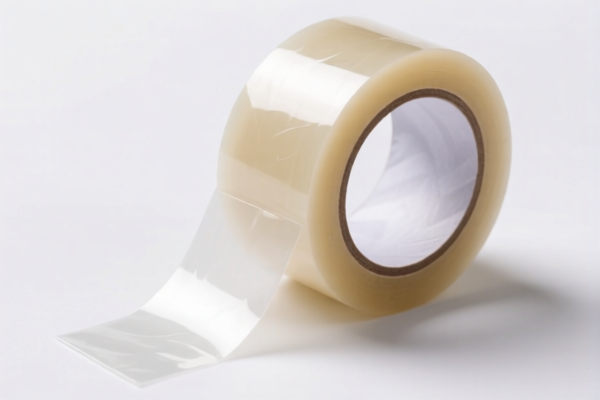
Product Images



AI Analysis
🩹 Self-Adhesive Repair Patch (The "Chameleon" of Logistics)
🌐 HS Code Reference & Customs Clearance Guide | 2024 Latest Tariff Analysis | Professional Classification Strategy
📌 I. Product Definition & Classification: Do You Really Know What "Repair Patch" Is?
"Self-adhesive repair patches" are a tricky category in international trade. They are not a single, unified product. Their classification depends entirely on the material composition (Plastic vs. Rubber) and the intended application (General vs. Specific Industrial Use).
Misclassification here is fatal because the tax rates differ by 30.8% (from 0% to 30.8%).
Core Distinction Logic: 1. Material: Is it made of Plastics (Heading 39) or Vulcanized Rubber (Heading 40)? 2. Form: Is it in rolls (tape) or cut pieces? 3. Specific Use: Does it fall into a specific sub-category like "containers" or "caps/seals"?
⚠️ Critical Warning:
- If the patch is made of plastic (e.g., PVC, PE, PU film), it generally falls under 3919 (Self-adhesive plastic plates/sheets/film). - If the patch is made of rubber (e.g., natural rubber, synthetic rubber for tires), it generally falls under 4016 or 4013 (Articles of vulcanized rubber). - Generic descriptions like "Repair Patch" without material details will lead to "Failed to retrieve tax information" (Error) as seen in the data for HS 3919.10 and 4016.93 without further specification.
📦 II. HS Code Classification Details (Based on Provided Data)
Below are the specific HS Codes derived from your data, categorized by material and tax implication.
| HS Code | Product Description | Material | Tax Details (China to US) | Risk Level |
|---|---|---|---|---|
| 3919.10.20.10 | Self-adhesive plates, sheets, film, foil, tape... in rolls ≤ 20 cm: Other Filament reinforced tape | Plastics (Reinforced) | Base: 5.8% Added: 25.0% Total: 30.8% |
🟡 High |
| 3919.10.20.55 | Self-adhesive plates, sheets, film... in rolls ≤ 20 cm: Other Other: Other | Plastics (General) | Base: 0.0% Added: 0.0% Total: 0.0% |
🟢 Low |
| 4016.99.03.00 | Other articles of vulcanized rubber...: Containers (for packing/transport) | Rubber | Base: 0.0% Added: 0.0% Total: 0.0% |
🟢 Low |
| 4016.99.15.00 | Other articles of vulcanized rubber...: Caps, lids, seals, stoppers | Rubber | Base: 0.0% Added: 0.0% Total: 0.0% |
🟢 Low |
🔍 Analysis of "Error" Entries:
- 3919.10 (Plastic Self-adhesive): Tax retrieval failed. This usually means the description is too generic. You must specify if it is "reinforced tape" (30.8%) or "other plastic" (0%). - 4016.93 (Rubber Self-adhesive Patches): Tax retrieval failed. This is likely an incomplete code or requires more specific material details.
💰 III. Tariff Rate Explanation (Detailed Breakdown)
🎯 1. The "Plastic Trap": HS Code 3919.10.20.10
- Product: Filament-reinforced plastic tape (e.g., fiberglass-reinforced PVC tape for heavy-duty repairs).
- Tax Structure:
- Base Tariff: 5.8% (Most Favored Nation rate).
- Section 301 Added Tariff: 25.0% (Specific to Chinese goods).
- Total Landed Tax Cost: 30.8% of CIF value.
- Why? Reinforced tapes are considered industrial/consumable goods with higher value-add, hence the base tariff. The 25% is a punitive tariff on Chinese manufacturing.
🎯 2. The "Plastic Loophole": HS Code 3919.10.20.55
- Product: General self-adhesive plastic film/strip (not reinforced, not exceeding 20cm width).
- Tax Structure:
- Base Tariff: 0.0%.
- Added Tariff: 0.0%.
- Total Landed Tax Cost: 0.0%.
- Why? Many simple plastic tapes (like basic duct tape without fibers, or thin adhesive films) are classified under "Other," which currently has no additional tariffs for China in this specific sub-segment.
🎯 3. The "Rubber Categories": HS Codes 4016.99.03.00 & 4016.99.15.00
- Product: Vulcanized rubber items classified as Containers or Closures/Seals.
- Tax Structure:
- Base Tariff: 0.0%.
- Added Tariff: 0.0%.
- Total Landed Tax Cost: 0.0%.
- Why? These codes classify rubber items by their function (holding liquid, sealing bottles) rather than just being a "patch." If your rubber patch is marketed as a "seal" or "closure component," it may qualify for 0% tax.
⚠️ Important Note on "Repair Patches":
If you market a product explicitly as a "Repair Patch for Tires" (HS 4016.93), the system fails to retrieve tax data. This indicates classification uncertainty. You must pivot the description to fit into 4016.99.15.00 (Seals/Stoprs) or 4016.99.03.00 (Containers) if legally permissible, OR risk the 0% plastic route if it can be argued as a plastic composite.
🛠️ IV. Customs Clearance Practical Advice (Real-World Pitfall Avoidance)
✅ 1. Preparation Checklist (Do Not Skip)
| Document | Requirement | Explanation |
|---|---|---|
| ✅ Product Composition Sheet | Mandatory | Must specify: "90% PVC, 10% Adhesive" OR "100% Vulcanized Natural Rubber." |
| ✅ Material Safety Data Sheet (MSDS) | Highly Recommended | Proves chemical composition, especially for plastic tapes. |
| ✅ Photos of Product & Roll | Mandatory | Show the roll width. Must be ≤ 20 cm for the 0%-30% bracket. If >20cm, rates change completely. |
| ✅ "Reinforcement" Proof | Critical for Plastic | If it has fiberglass/carbon fiber weave, it is 3919.10.20.10 (30.8%). If plain plastic, it is 3919.10.20.55 (0%). |
| ✅ Intended Use Declaration | Strategic | For rubber patches, declare as "Sealing Component" rather than "Repair Tool" to target 4016.99.15.00. |
✅ 2. Declaration Tactics (Key Mnemonics)
🔥 “Plastic Reinforced = 30%, Plain Plastic = 0%, Rubber Seal = 0%!”
| Scenario | Correct Declaration | Wrong Declaration | Tax Outcome |
|---|---|---|---|
| Fiberglass-reinforced tape | "Self-adhesive filament reinforced tape of plastic" | "Repair Tape" | 30.8% (3919.10.20.10) |
| Basic plastic adhesive strip | "Self-adhesive plastic strip, <20cm width, no reinforcement" | "Plastic Repair Patch" | 0.0% (3919.10.20.55) |
| Rubber patch for bottles/seals | "Vulcanized rubber sealing stopper/stopper" | "Rubber Repair Patch for Tires" | 0.0% (4016.99.15.00) |
| Rubber patch for tanks/containers | "Vulcanized rubber container part" | "Rubber Patch" | 0.0% (4016.99.03.00) |
📌 Strategic Tip:
If you have a rubber patch, try to describe it as a "seal" or "closure component" (4016.99.15.00) rather than a general "article of rubber," which triggers the "Failed to retrieve" error. This is a common customs optimization strategy.
✅ 3. Special Case Handling
| Situation | Handling Suggestion |
|---|---|
| Width > 20 cm | The 0%-30% bracket does not apply. You must look up HS 3919.90 or 4016.99.xx with different rates. Check width carefully! |
| Mixed Materials | If a patch has a plastic backing and a rubber adhesive, declare the principal material. Usually, the structural material (plastic/rubber) dominates. |
| "Failed to Retrieve" Errors | Do not submit these HS codes (3919.10, 4016.93) as final. They are incomplete. Use the specific 8-digit/10-digit codes provided above (e.g., 3919.10.20.55). |
🌍 V. Global Market Comparison (2024/2025 Context)
| Market | Recommended HS Code | Est. Duty (China Origin) | Key Requirement |
|---|---|---|---|
| 🇺🇸 USA | 3919.10.20.55 (Plastic, Non-reinforced) | 0% | Proof of non-reinforcement. |
| 🇺🇸 USA | 3919.10.20.10 (Plastic, Reinforced) | 30.8% | Declaration of filament reinforcement. |
| 🇺🇸 USA | 4016.99.15.00 (Rubber, Seal) | 0% | Classification as "seal/closure." |
| 🇪🇺 EU | Similar codes | Varies (Usually 0-6.5%) | No Section 301 equivalent, but VAT applies. |
| 🇨🇳 China | Export from China | 0% (Export Duty) | Standard export procedures. |
📌 Conclusion:
The USA is the most critical market for this item due to the 30.8% vs 0% disparity.
- Plastic Patches: Ensure they are NOT reinforced to get 0%.
- Rubber Patches: Frame them as Seals/Closures to get 0%.
📌 VI. Common Errors & Pitfalls (Blood Lessons)
❌ Error 1: Declaring a fiberglass-reinforced tape as "Other Plastic Tape" to get 0% tax.
👉 Consequence: Customs inspection reveals reinforcement. 30.8% tax + Penalty + Back Taxes.
❌ Error 2: Using "Rubber Repair Patch" (4016.93) which has no clear tax rate in the system.
👉 Consequence: Customs holds shipment for clarification. Delays of 2-4 weeks.
👉 Fix: Reclassify as "Rubber Seal/Stopper" (4016.99.15.00) if functionally accurate.
❌ Error 3: Ignoring Roll Width.
👉 Consequence: If width is 25cm, the code 3919.10.20.xx is invalid. The duty rate changes entirely.
✅ Correct Description Example:
"Self-adhesive plastic strip, 15cm width, non-reinforced, for general purpose sealing. Material: Polyethylene. HS: 3919.10.20.55"
🎯 VII. Conclusion: Precision Saves Money
🎯 Remember the Golden Rules:
🔹 "Reinforced Plastic = 30.8% (Ouch!)"
🔹 "Plain Plastic <20cm = 0% (Free!)"
🔹 "Rubber Seal/Stopper = 0% (Smart!)"
🔹 "Generic 'Patch' = Error/Delay (Bad!)"
📌 Pro Tip:
If you are exporting filament-reinforced tape, budget for the 30.8% tariff.
If you are exporting plain plastic tape or rubber seals, structure your documentation to highlight the non-reinforced and sealing nature to secure the 0% rate.
📣 Immediate Action:
📞 Audit your Bill of Lading description.
📸 Provide photos of the material cross-section (to prove no reinforcement).
📝 Reclassify from "Patch" to "Strip/Seal/Stopper" where applicable.
🚀 Zero Duty is possible with the right wording!
✨ Professional Customs Clearance, Starts with Accurate Classification!
💼 Every Percent of Duty Saved is Pure Profit!
Customer Reviews
About HS Code Classification
The Harmonized System (HS) is an internationally standardized nomenclature developed by the World Customs Organization (WCO) to classify traded products. Over 200 countries use the HS system as the basis for customs tariffs, trade statistics, and import/export regulations.
Each HS code follows a hierarchical structure:
- Chapter (2 digits) — Broad category of goods (e.g., Chapter 84: Machinery and Mechanical Appliances)
- Heading (4 digits) — More specific grouping within the chapter
- Subheading (6 digits) — Internationally standardized breakdown, used by all WCO member countries
- National subdivisions (8-10 digits) — Country-specific extensions for further classification, such as US HTSUS 10-digit codes
Correct HS code classification is essential for smooth customs clearance, accurate duty payment, and compliance with trade regulations. Misclassification can lead to customs delays, overpayment of duties, or penalties.
When importing from CN to US, the applicable tariff rates may include:
- Most-Favored-Nation (MFN) rate — The standard duty rate applied to WTO members
- General rate — Applied to countries without trade agreements
- Trade remedy duties — Additional tariffs such as Section 301 (anti-dumping), Section 232 (national security), or countervailing duties
The information provided on this page is for reference purposes only. For official classification, please consult with your local customs authority or a licensed customs broker.