Self adhesive Roll Stickers
CN → US| HS Code | Tariff Rate | Origin | Destination | Doc |
|---|---|---|---|---|
| 4811412100 | 35.0% | CN | US | Official Doc |
| 4821904000 | 35.0% | CN | US | Official Doc |
| 3919905060 | 40.8% | CN | US | Official Doc |
| 4821902000 | 35.0% | CN | US | Official Doc |
| 3919102055 | 40.8% | CN | US | Official Doc |
Product Images
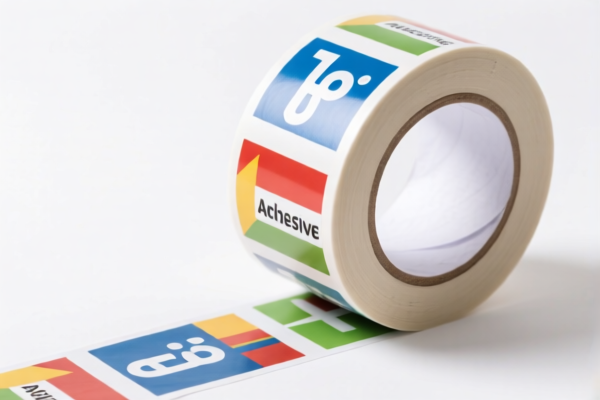
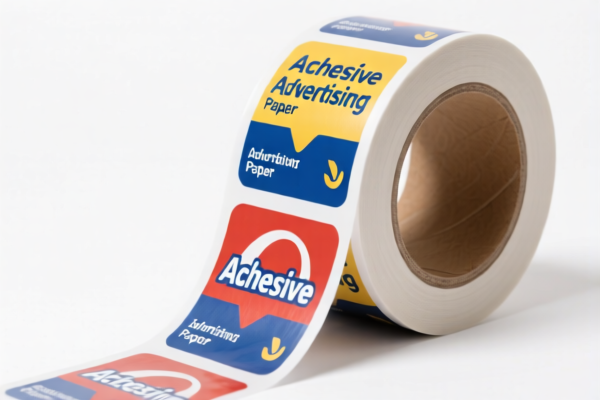
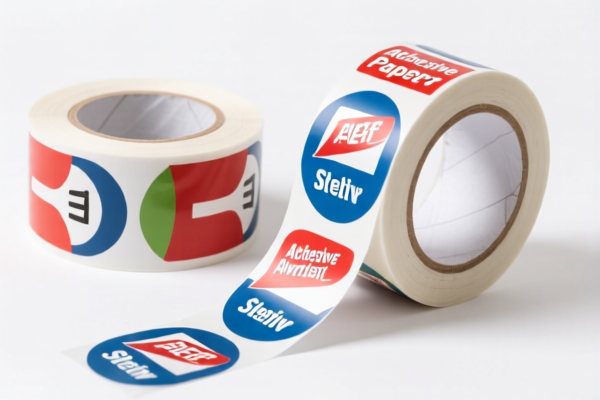
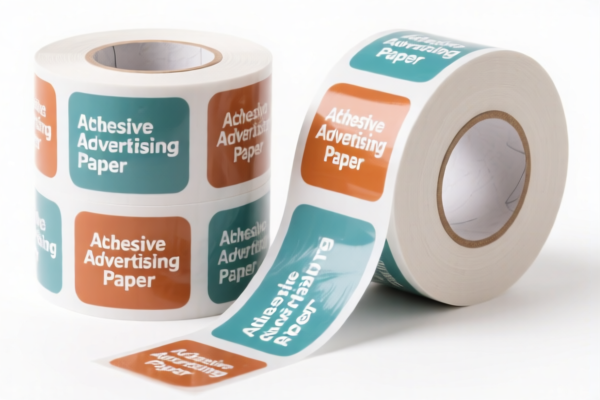
AI Analysis
🏷️ Self-Adhesive Roll Stickers (卷装自粘贴纸)
🌐 HS Code Reference & Customs Clearance Guide | 2026 Latest Tariff Analysis | Professional Compliance Strategy
📌 Part 1: Product Definition & Classification: Do You Really Know "Roll Stickers"?
Self-adhesive roll stickers are ubiquitous labeling solutions used in logistics, retail, industrial manufacturing, and e-commerce. They consist of a face material (the label itself), an adhesive layer, and a release liner. In international trade, they are classified primarily based on their material composition (Paper vs. Plastic/Film) and format (Rolls).
Key Distinction Points for Classification:
Paper-Based Stickers: If the face material is paper (even if coated for durability), they generally fall under Chapter 48 (Paper/Paperboard).
Plastic/Film-Based Stickers: If the face material is synthetic (PET, PP, PVC, PE, Vinyl), they generally fall under Chapter 39 (Plastics).
Format Matters:* Being in "rolls" is a specific characteristic mentioned in both chapters, distinguishing them from sheets or sheets cut into shapes (which might have different subheadings).
⚠️ Critical Classification Logic:
- If you import Paper Labels: Look at HS 4821.90.
- If you import Paper-Based Self-Adhesive Products (Non-Labels): Look at HS 4811.41.
- If you import Plastic/Film Labels: Look at HS 3919.90 or 3919.10.
- Note: The specific 8-digit codes depend on exact material thickness, backing, and specific regulatory interpretations of "label" vs. "self-adhesive plastic tape/film."
📦 Part 2: HS Code Classification Matrix (2026 Official Tariff Data)
The following HS Codes are derived strictly from the provided dataset. Each code corresponds to a specific material and format combination.
| HS Code | Product Description (Based on Data) | Primary Material | Format | Key Characteristics |
|---|---|---|---|---|
4811.41.21.00 |
Self-adhesive roll stickers | Paper or Thin Film | Roll | Self-adhesive; inferred paper/film base. Often used for general purpose labels. |
4821.90.40.00 |
Roll stickers (Paper Labels) | Paper or Paperboard | Roll | Specifically classified as Paper Labels. Fits the standard definition of adhesive labels on paper backing. |
4821.90.20.00 |
Self-adhesive roll stickers | Paper or Film | Roll | General self-adhesive label characteristic on paper/film. Broad category for paper-based labels. |
3919.90.50.60 |
Self-adhesive roll stickers | Plastic | Roll | Other plastic self-adhesive products. Used when the material is clearly plastic/synthetic but doesn't fit the "tape" specific sub-heading. |
3919.10.20.55 |
Self-adhesive roll stickers | Plastic | Roll | Other plastic products (Fallback/Residual category). Used for plastic rolls that don't fit other specific plastic tape definitions. |
🔍 Important Note:
- Chapter 48 (Paper) generally has a 0% Base Tariff.
- Chapter 39 (Plastic) generally has a 5.8% Base Tariff.
- The choice between these codes depends entirely on the face material of the sticker. Misclassification here leads to significant duty discrepancies.
💰 Part 3: 2026 Detailed Tariff Rate Breakdown (USA Market)
✅ Applicable Country: United States (US)
✅ Country of Origin: China (CN)
✅ Effective Date: Current US Import Regime (Post-2024 Trade Actions)
All items listed below are subject to Section 301 (Trade Act of 1974) and IEEPA (International Emergency Economic Powers Act) surcharges due to being imported from China.
🎯 1. Paper-Based Stickers (HS 48xx Series)
Applicable Codes:
- 4811.41.21.00
- 4821.90.40.00
- 4821.90.20.00
| Item | Detail |
|---|---|
| Base Tariff (MFN) | 0.0% (Ad Valorem) |
| Section 301 Surcharge | +25.0% |
| IEEPA 122 Clause Surcharge | +10.0% |
| Total Effective Tax Rate | 35.0% |
| Calculation Basis | CIF Value × 35% |
| De Minimis Eligibility | ❌ No (Subject to strict customs scrutiny; typically not eligible for $800 exemption if classified correctly as goods subject to additional duties, though de minimis rules are complex and evolving. Caution: Most professional shipments will not use de minimis for bulk stickers.) |
| Legal Pathway | USITC:4821.90.xxxx + FOOTNOTE:301 + IEEPA:9903.01.24 |
📌 Explanation:
- Paper-based self-adhesive products generally enjoy a 0% base rate under US MFN treatment.
- However, the 25% Section 301 tariff applies to most Chinese-origin paper products.
- The 10% IEEPA tariff is an additional layer for specific Chinese imports.
- Result: A flat 35% total duty rate.
🎯 2. Plastic-Based Stickers (HS 39xx Series)
Applicable Codes:
- 3919.90.50.60
- 3919.10.20.55
| Item | Detail |
|---|---|
| Base Tariff (MFN) | 5.8% (Ad Valorem) |
| Section 301 Surcharge | +25.0% |
| IEEPA 122 Clause Surcharge | +10.0% |
| Total Effective Tax Rate | 40.8% |
| Calculation Basis | CIF Value × 40.8% |
| De Minimis Eligibility | ❌ No |
| Legal Pathway | USITC:3919.xx.xx + FOOTNOTE:301 + IEEPA:9903.01.24 |
📌 Explanation:
- Plastic stickers have a higher base rate (5.8%) compared to paper.
- The 25% Section 301 and 10% IEEPA surcharges are added on top of the base.
- Result: A flat 40.8% total duty rate.
- Cost Impact: Plastic stickers are ~5.8 percentage points more expensive in duties than paper stickers.
🛠️ Part 4: Customs Clearance Practical Advice (Risk Avoidance Guide)
✅ 1. Documentation Checklist (Mandatory)
| Document | Required? | Explanation |
|---|---|---|
| ✅ Product Specification Sheet | ✔️ | Must explicitly state: Face Material (Paper vs. PET/PP), Adhesive Type (Permanent/Removable), Dimensions, and Roll Length/Width. |
| ✅ Commercial Invoice | ✔️ | Must clearly describe goods as "Self-Adhesive Stickers" or "Labels," NOT generic "Paper Products" or "Plastic Sheets" to avoid misclassification. |
| ✅ Material Composition Proof | ✔️ | If disputed, customs may require a lab test report confirming whether the face material is paper (cellulose-based) or plastic (polymer-based). |
| ✅ Packing List | ✔️ | Details net/gross weight and number of rolls. |
| ✅ Country of Origin Certificate | ✔️ | Required for Section 301 & IEEPA application. Must state "Made in China." |
✅ 2. Classification Strategy (Key Tips)
🔥 “Paper Gets 0%, Plastic Gets 5.8% Base. Choose Wisely!”
| Scenario | Recommended HS Code | Total Duty | Why? |
|---|---|---|---|
| Standard Shipping Labels (White Paper) | 4821.90.40.00 |
35.0% | Most common paper label. Clear "Label" definition. |
| Die-Cut Stickers (Paper Back) | 4811.41.21.00 |
35.0% | Self-adhesive paper/film. Good for retail stickers. |
| Waterproof Stickers (White PP/PET) | 3919.90.50.60 |
40.8% | Plastic base triggers higher base duty. |
| Vinyl Vehicle Graphics | 3919.10.20.55 |
40.8% | Plastic/film roll. Often falls under general plastic self-adhesive films. |
⚠️ Warning:
- Do NOT try to classify plastic stickers as paper to save duty. Customs agents routinely inspect the "face" material. If it tears like plastic, shreds differently, or has a plastic sheen, they will reclassify and fine you.
- De Minimis ($800): While some small packages might slip through de minimis, self-adhesive products from China are high-risk for audit. Do not rely on de minimis for consistent shipments.
✅ 3. Special Situations
| Situation | Handling Advice |
|---|---|
| Mixed Materials (e.g., Paper Sticker with Plastic Hanger) | Declare the primary material (Paper) if plastic is incidental. Provide detailed photos. |
| Stickers with Electronics (e.g., RFID Labels) | Change of Category! If the sticker contains a chip/antenna, it may fall under Chapter 85 (Electrical Machinery), NOT Chapter 48/39. This changes the HS code entirely and may have different duties. |
| Bulk Rolls vs. Pre-Cut Sheets | Rolls are explicitly covered in the provided HS codes. If shipped as sheets, the description changes, but the material-based logic (Paper=Ch48, Plastic=Ch39) remains. |
🌍 Part 5: Global Market Comparison (2026)
| Region | Recommended HS Code (Paper) | Recommended HS Code (Plastic) | Total Duty (China Origin) | Key Requirement |
|---|---|---|---|---|
| 🇺🇸 USA | 4821.90 |
3919.90 |
35% (Paper) 40.8% (Plastic) |
Section 301 + IEEPA apply. |
| 🇨🇳 China | 4821.90 |
3919.90 |
5% - 10% | No Section 301. Import duties are much lower. |
| 🇪🇺 EU | 4823.69 or 4821.90 |
3919.90 |
0% - 3.7% | No "Label" specific duty; often 0% for paper. No IEEPA. |
| 🇨🇦 Canada | 4821.90 |
3919.90 |
0% - 5% | No Section 301. NAFTA/USMCA may apply if non-China. |
📌 Conclusion for US Importers:
- Paper stickers are cheaper to duty than plastic stickers (35% vs 40.8%).
- However, plastic stickers offer better durability (waterproof, tear-proof).
- Cost-Benefit Analysis: Is the 5.8% duty difference worth the upgrade to plastic? For most industrial uses, yes. For temporary retail labeling, no.
📌 Part 6: Common Mistakes & Pitfalls (Blood & Tears Lessons)
❌ Mistake 1: Calling "Plastic Stickers" "Paper Labels" to save duty.
👉 Consequence: Customs audit, reclassification to 3919.90, back taxes + penalties.
❌ Mistake 2: Ignoring the "IEEPA 10%" surcharge.
👉 Consequence: Budgeting only for 25% (Section 301) leads to unexpected 35%/40.8% costs.
❌ Mistake 3: Shipping RFID/Barcode stickers under HS 48/39.
👉 Consequence: RFID stickers are often classified under HS 8523.52 (Electronic chips). This has a different duty rate and regulatory requirements. You must declare the "smart" nature of the sticker.
❌ Mistake 4: Vague Description: "Stickers".
👉 Consequence: CBP (Customs and Border Protection) will assess the highest possible duty or hold the shipment for inspection until you provide specs.
✅ Best Practice Description:
"Self-adhesive paper labels, roll form, 4x6 inches, permanent acrylic adhesive, for shipping logistics. HS: 4821.90.40.00. Origin: China."
🎯 Part 7: Conclusion: Professional Declaration, Cost Control!
🎯 Remember the Key Rules:
🔹 "Paper is 0% Base, Plastic is 5.8% Base."
🔹 "Section 301 (+25%) + IEEPA (+10%) = Total Duty +35% or +40.8%."
🔹 "Check for RFID! If it has a chip, it's not paper/plastic sticker anymore."
📌 Pro Tip:
If you are importing large volumes, consider:
1. Pre-Ruling: Apply for a CBP Pre-Ruling to lock in the HS code.
2. Supply Chain Shift: If possible, source stickers from Vietnam, Mexico, or Thailand to avoid Section 301/IEEPA tariffs entirely (check specific origin rules).
📣 Action Required:
📞 Verify Material: Is your sticker Paper or Plastic?
📄 Update Invoice: Ensure "Self-Adhesive Roll Stickers" is clearly stated with material composition.
💰 Calculate Cost: Apply 35% (Paper) or 40.8% (Plastic) to your landed cost model.
✨ Professional Customs Clearance Starts with Accurate Classification!
💼 Every Percentage Point Saved is Pure Profit!
Customer Reviews
About HS Code Classification
The Harmonized System (HS) is an internationally standardized nomenclature developed by the World Customs Organization (WCO) to classify traded products. Over 200 countries use the HS system as the basis for customs tariffs, trade statistics, and import/export regulations.
Each HS code follows a hierarchical structure:
- Chapter (2 digits) — Broad category of goods (e.g., Chapter 84: Machinery and Mechanical Appliances)
- Heading (4 digits) — More specific grouping within the chapter
- Subheading (6 digits) — Internationally standardized breakdown, used by all WCO member countries
- National subdivisions (8-10 digits) — Country-specific extensions for further classification, such as US HTSUS 10-digit codes
Correct HS code classification is essential for smooth customs clearance, accurate duty payment, and compliance with trade regulations. Misclassification can lead to customs delays, overpayment of duties, or penalties.
When importing from CN to US, the applicable tariff rates may include:
- Most-Favored-Nation (MFN) rate — The standard duty rate applied to WTO members
- General rate — Applied to countries without trade agreements
- Trade remedy duties — Additional tariffs such as Section 301 (anti-dumping), Section 232 (national security), or countervailing duties
The information provided on this page is for reference purposes only. For official classification, please consult with your local customs authority or a licensed customs broker.